
Kimberley Morris
Senior Lecturer in Midwifery
UCAS Code
B720
Duration
3 years full-time
BBC at A Level
DMM at BTEC
Full Time: £9,790
Updated 07/10/2026
Students on our BSc Midwifery course will commence a curriculum based on the Nursing and Midwifery Council (2019) Standards for pre-registration Midwifery education. The 2021 curriculum continues to build on the University of Northampton’s innovative active blended learning approach and will centre on case studies helping you to explore the importance of cultural competence, evidence-led practice and professional caring to ensure students can provide effective midwifery care.
Joint 1st for Career Outcomes in the Guardian University Guide 2027.
Joint 6th for Value Added in the Guardian University Guide 2027.
Data taken from the 2027 Guardian University Guide, Midwifery subject table, filtered by Career Outcomes 15 months after Graduation and Value Added.
Our Midwifery course is accredited by the UNICEF Baby Friendly Initiative meaning that our students will be equipped with knowledge and understanding of infant feeding to UNICEF UK standards.
This standard is internationally recognised as a mark of excellence as one of the top midwifery universities.

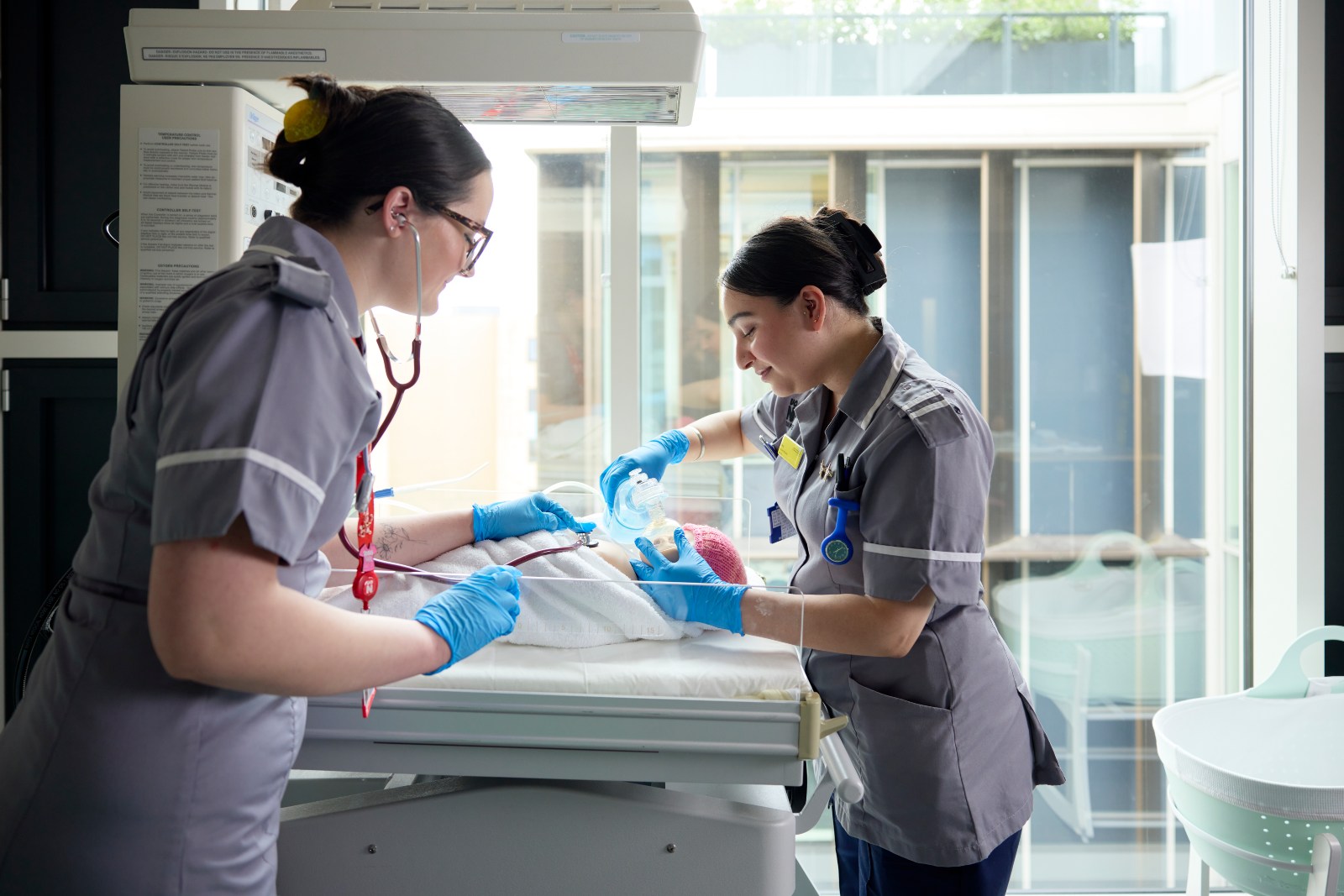
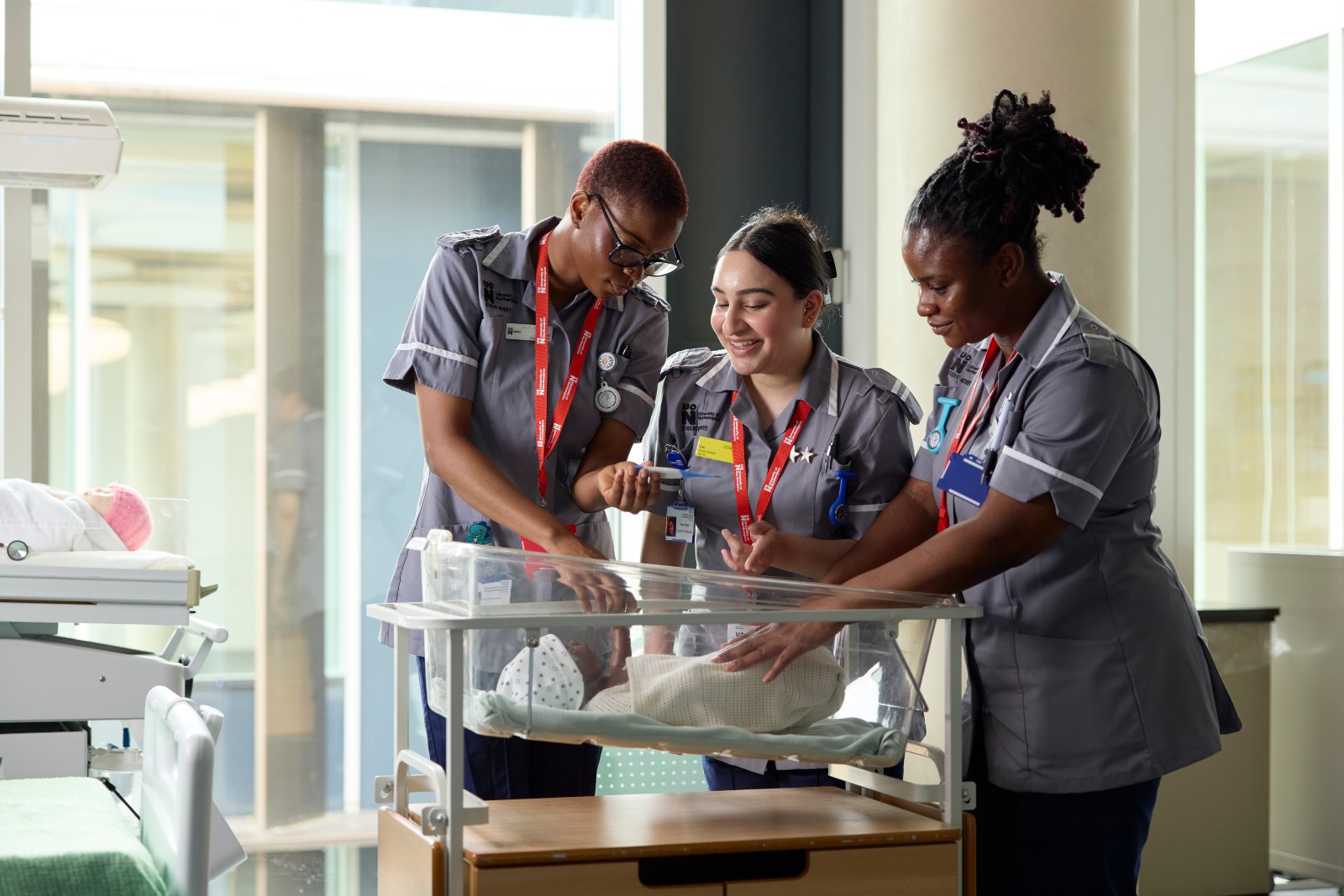
Two healthcare students stand on either side of a neonatal incubator. Both are wearing grey clinical uniforms and blue disposable gloves. One student uses a stethoscope to monitor the infant while the other holds a manual resuscitation bag and mask over the baby's face.
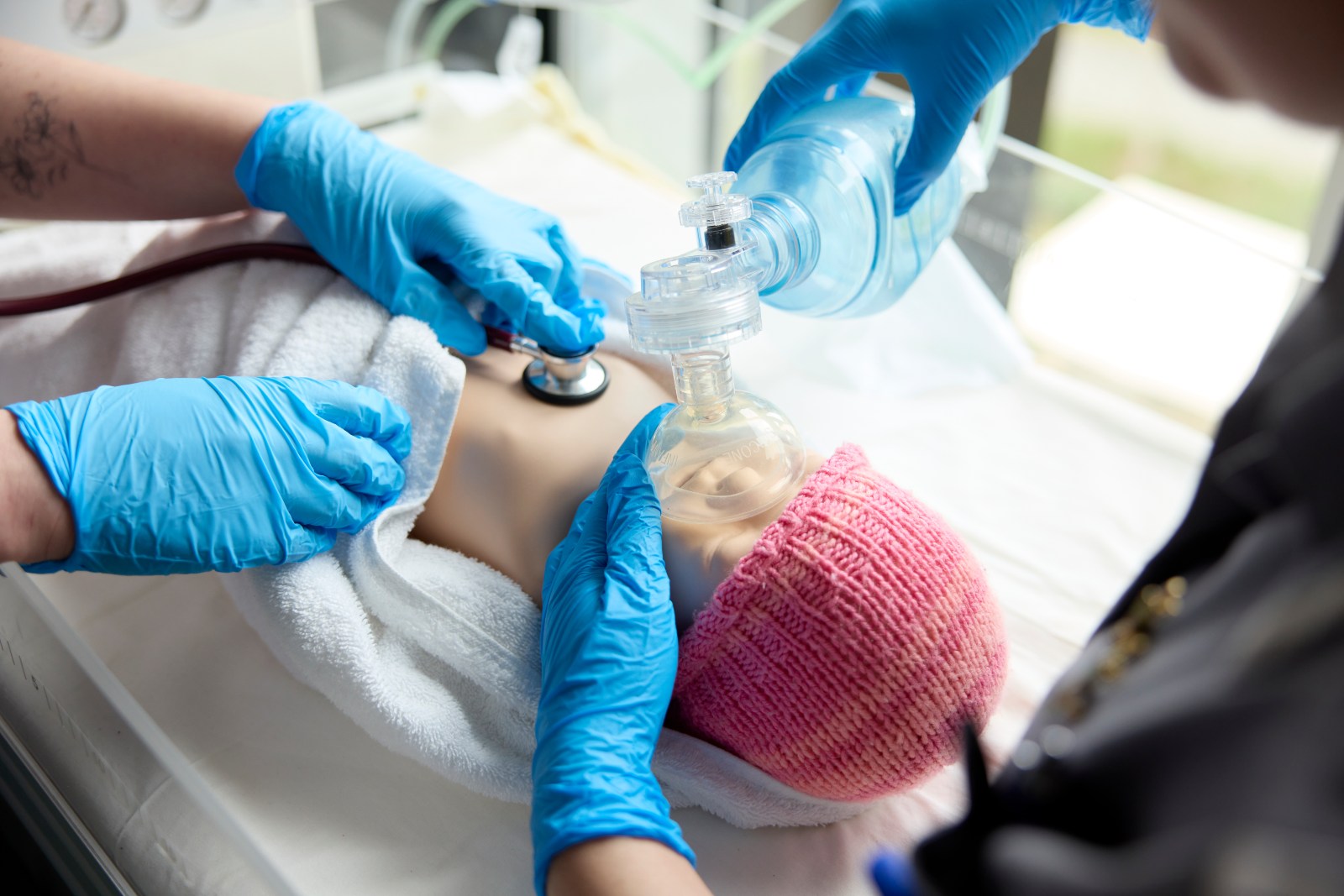
A detailed close-up shows a newborn lying on a padded clinical surface and wrapped in a white blanket. The infant is wearing a pink knitted hat. Several blue-gloved hands are visible as healthcare students perform a neonatal assessment. One hand positions a stethoscope on the baby's chest while another holds a clear resuscitation mask connected to a manual ventilation bag over the baby's nose and mouth.
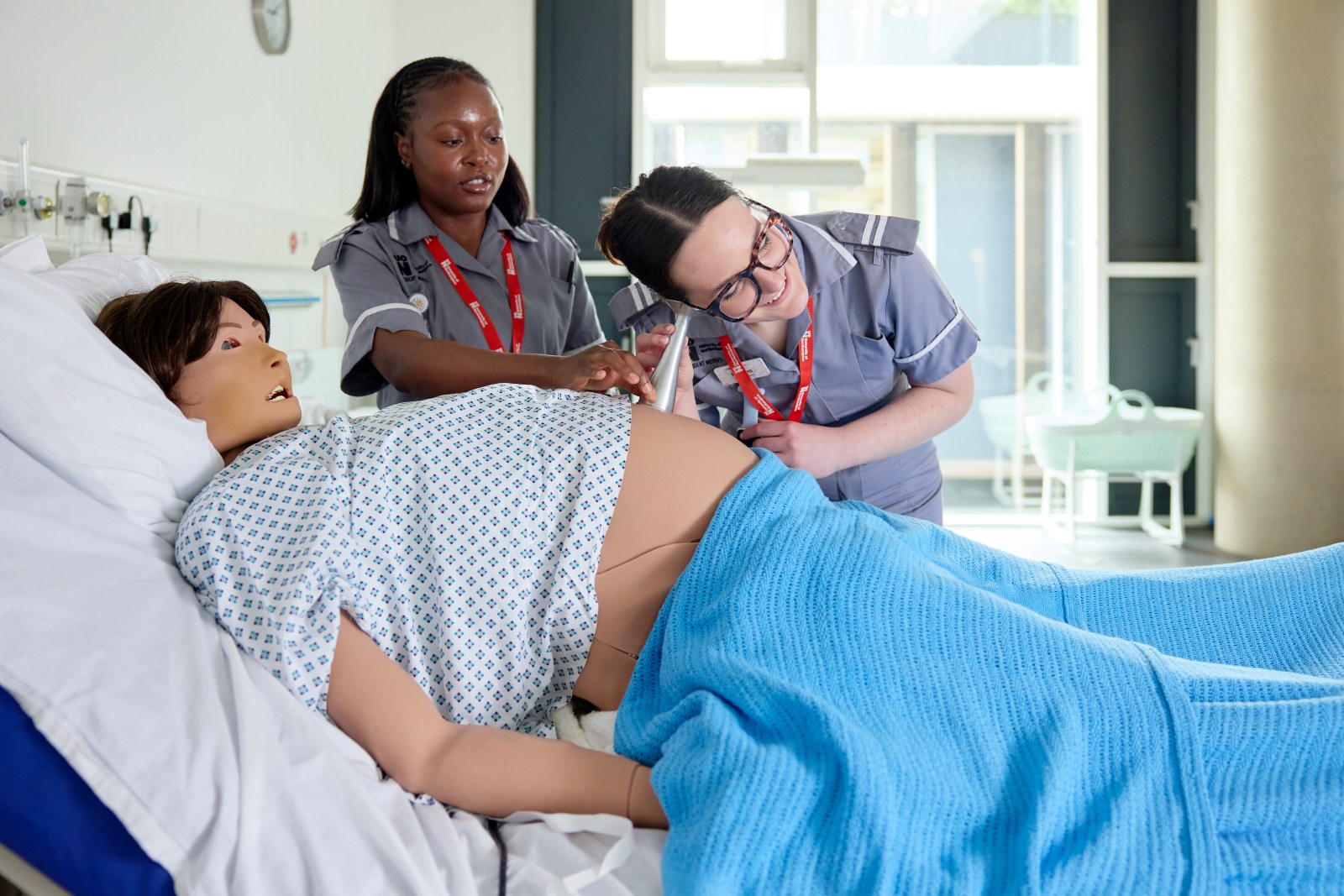
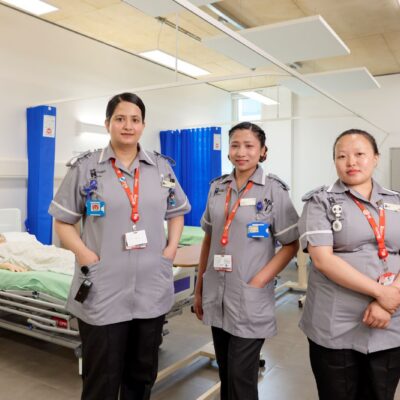
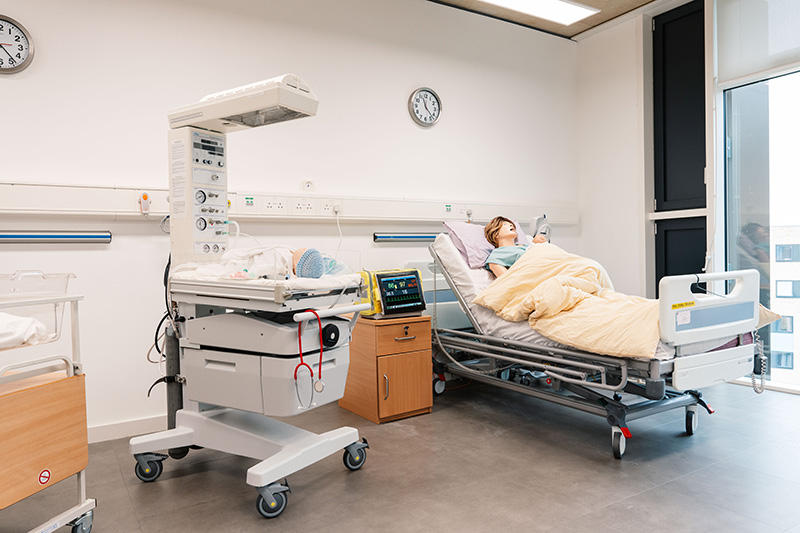
In a clinical simulation ward, two healthcare students wearing grey uniforms and identification lanyards practise an antenatal assessment on a maternity training mannequin positioned in a hospital bed. The mannequin is dressed in a hospital gown and covered with a blue blanket, with a simulated pregnant abdomen exposed for examination.
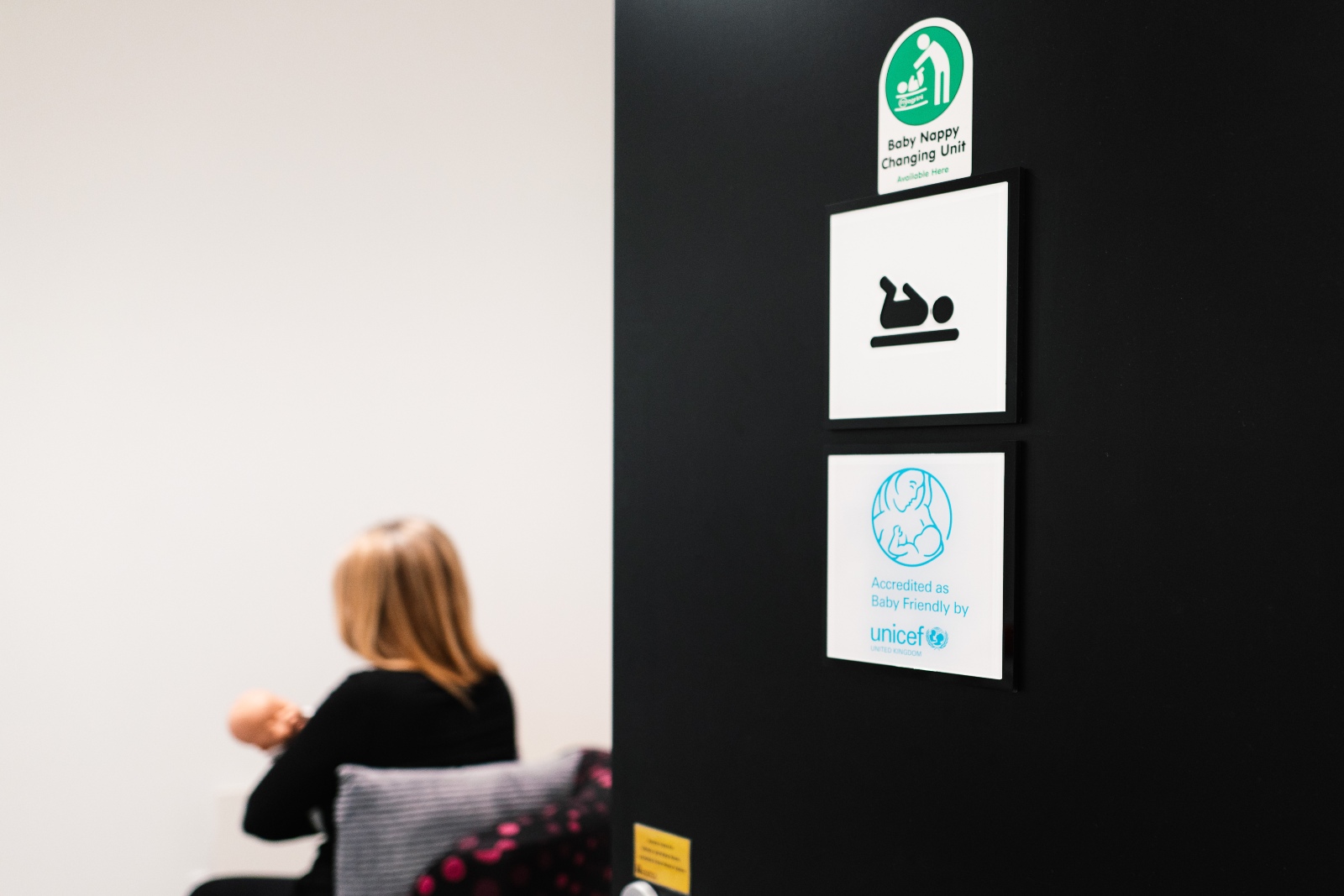
A black door displays signs indicating baby care facilities. At the top is a green sign reading “Baby Nappy Changing Unit Available Here” with a baby-changing symbol. Beneath it is a larger baby-changing icon and a sign showing UNICEF UK Baby Friendly accreditation.
A typical offer would be for level 3 qualifications to be achieved in one of the following:
We welcome applications from students with a mix of A levels and BTEC/Cambridge Technical qualifications.
In addition:
We will consider other qualifications that are not listed above, please contact our Admissions team to discuss these on an individual basis.
All offers of a place on the programme will be made to applicants after completion of successful interview by the University, and will be conditional subject to:
Occupational Health Clearance:
All healthcare students are required to undertake a standard Occupational Health Clearance which will assess your health and immunisation record and assess your fitness for the programme you have chosen. Courses such as midwifery, dental nursing and paramedic science also require an enhanced Occupational Health clearance and appropriate immunisation to undertake exposed prone procedures (EPP). Without the enhanced occupational health clearance your ability to attend some clinical placements/activities in Trust areas may be limited or refused, causing delays with course progression and employment.
Further information for healthcare students can be seen through the following link (appendix 1) Green Book: Chapter 12 Immunisation of healthcare and laboratory staff.
For more information on how to make an application, please visit our How to Apply page.
All International and EU students applying for a course with us must meet the following minimum English language requirements:
For more information on the Nursing and Midwifery Council (NMC) English language entry criteria, please follow the NMC website.
For information regarding English language requirements at the University, please see our IELTS page.
Open Days give you the best experience and insight to courses, people and facilities that interest you. Make your choice easier and come meet us.
Book NowOur University Midwifery Degree has been designed to contribute towards achieving the following United Nations Sustainable Development Goals: SDG3 of Good Health and Wellbeing and SDG5 Gender Equality.
Becoming a Midwife offers the chance to provide compassionate care, support women through childbirth, empower families, and make a positive impact on communities. To learn more about the midwifery profession, visit the NHS website.
Throughout your midwifery course you will develop and enhance your clinical skills within all areas of maternity care (labour ward, home births and birth centres). You will also have the opportunity to experience care in a variety of multi-disciplinary settings and non-maternity settings which could include the special care baby unit (SCBU), Gynaecology, theatres and high dependency units (HDU).
The purpose of this module is to enable the student to understand, apply and consolidate the principles of individualised care planning within the context of universal midwifery care. Students will apply a person-centred approach considering relevant physiological, psychosocial and cultural factors.
The purpose of this module is to enable the student, under direct supervision and direction, to provide safe universal midwifery care for women, newborns and families in a variety of models of maternity/midwifery care. Students will also begin to participate in the provision of care for women and newborns with additional care needs as part of the wider health and social care team.
The purpose of this module is to enable the student to demonstrate understanding of the culture of midwifery and apply this to the provision of psychosocial and culturally appropriate maternity care.
The purpose of this module is to develop the student¿s personal, professional and academic skills, including digital and technological literacy. Students will explore appropriate sources of information that underpin the midwife¿s role in relation to public health agendas for women, newborns and the wider family.
The purpose of this module is to develop the student¿s knowledge and understanding of the underpinning anatomical and physiological systems and principles of pharmacology to support the provision of safe and effective midwifery care.
Please note the modules shown here relate to the academic year 26/27. The modules relating to the academic year 27/28 will be available from June 2027.
You will have the opportunity to practice your midwifery skills using an active blended learning approach supported by sessions in a simulated environment in our dedicated midwifery clinical skills laboratory.
Each of the three years of the course comprise periods of theory and applied practice within semesters and you will be placed at the NHS Trust sites to gain practical midwifery training and experience:
Placements are organised by a central placements department at the University of Northampton and a designated Midwife at your allocated NHS Trust host site.
If you are studying the Midwifery course, you can expect to work and study for 37.5 hours per week over 45 weeks of the year 50% of your time will be dedicated to learning in clinical practice and the other 50% will be led by the lecturing team at the University using an active blended learning approach. This means you will have guided online theoretical study followed by discussion on its application to practice in face-to-face sessions with midwifery lecturers. There will also be dedicated time for self-directed study and reflection.
Practice hours when in placement will be on average 30 hours per week but may vary from week to week to accommodate shift patterns and continuity of care working.
For some placement periods in Years two and three, these may increase to 37.5 hours per week in order to prepare you to meet requirements of the regulator, the NMC, to ensure you are prepared for professional practice.
Practice opportunities will be within the maternity services settings in one of our NHS Trust Partner sites for 30 up to 37.5 hours per week, working with experienced midwives who will support you in their roles as practice supervisors and assessors. You will also have opportunities to work with midwives based in community hubs to develop your role within the multi-professional team and to promote shared learning.
As a student midwife you will be expected to participate in the full range of twenty-four hour care required of a registered midwife, both in hospital and community placements. Long days (between 10 and 12 ½ hour shifts), early, late and night shifts across a 7-day week, including weekends. In addition, you will have the opportunity to experience and participate in continuity of care and carer case loading models, providing care in a variety of settings as well as being on-call for 24-hour periods to support birth.
Please note that you will need to have the ability to commute between your NHS Trust host site, the wider community and University locations.
Our BSc midwifery degree has been approved by the Nursing and Midwifery Council (NMC). This means you can be confident that this programme meets the standards of education, training, conduct and performance required for midwives in the UK.
After successful completion of this midwifery programme, you’ll be awarded an Honours degree and can register as a Midwife with the Nursing and Midwifery Council (NMC). This will allow you to practice in accordance with the NHS Constitution which is underpinned by the core NHS values.
Our Midwifery course is also BFI accredited by UNICEF meaning that our students will be equipped with knowledge and understanding of infant feeding to UNICEF UK standards. This standard is internationally recognised as a mark of excellence as one of the top midwifery universities.
The university of Northampton first achieved UNICEF Baby Friendly Initiative accreditation in 2016. We were extremely proud to achieve re-accreditation successfully in 2019. Students who graduate with us have been educated to the high standards of UNICEF BFI which is an appealing attribute when seeking employment as a registrant.
The baby friendly initiative standards and content is threaded across theory and practice modules.
At the University of Northampton, everything we do, from funded trips to paid internships, is to give you everything you need to make a difference when you leave.
If you join our full-time Midwifery degree at the University of Northampton, you will receive a laptop when your course begins*. The laptops are built to a bespoke custom specification ideal for use in the seminar room, collaborative group work or studying at home.
Whatever your ambitions, we’re here to help you to achieve them. We’ll support you to identify the skills you’re learning during your course, find your strengths and secure practical experience so that when it comes to applying for jobs or further study you’ll feel confident in standing out from the crowd. We’ve created the Northampton Employability Promise because we are so confident that if you focus on your studies and complete one of our awards you’ll be highly employable by the time you graduate. Putting you in a great position to secure employment or continue your studies.
To check out the full list of perks, visit our Student Perks page or dedicated International Perks page.
* UK fee payers only (see Terms and Conditions for further details)
If you are studying the BSc (Hons) Midwifery course you can expect to work and study for 37.5 hours per week over 45 weeks of the year. The course is divided into modules which run for different lengths across the academic year. Identified theory hours on the course are compulsory and will consist of a mixture of face-to-face contact in University, individual pre-class preparation, group work, blended learning and online activities.
Practice hours when in placement will be on average 30 – 37.5 hours per week but may vary from week to week to accommodate shift patterns and continuity of care working.
What to expect during my placement?You will be expected to work a range of day and night shifts alongside a practice supervisor within a clinical setting. Depending on your year of study you will be expected to observe, participate and lead on clinical care provision under direct supervision. You will work within a range of maternity settings providing care throughout the childbirth continuum.
What is my weekly commitment on this midwifery course?The Midwifery programme plan is organised in semesters. Theory blocks consist of face to face and online teaching 9-4pm Mon-Fri. Wednesdays are typically not utilised for teaching to allow for other commitments such as sport. Placement blocks will consist of rostered day and night shifts ranging from 7 hours to 12.5 hour shifts, depending on the placement running Monday to Sunday.
What skills and experience will I gain by completing the BSc Midwife degree?After applying via UCAS and meeting the entry requirements to study midwifery at the university, you will be invited to an interview. You will receive further information and the interview preparation instructions from us by email before your interview. If you have any questions, please email us at: interviews@northampton.ac.uk
Can I work while I study BSc Midwifery course?You may find that part-time work is achievable on an flexible ad-hoc basis. However due to academic and clinical placement commitments stipulated by the Nursing and Midwifery Council (NMC) this can be difficult to achieve.
How will I learn?The aim of our teaching and learning is to transform lives and inspire change. We want our students to achieve their ambitions and to improve society for the better through the application of their skills and knowledge. Our midwifery course meets national academic standards and in addition is accredited by the NMC.
At the University of Northampton, our students learn in small groups and through close interaction between staff and students. Our midwifery courses are designed for active learning on and off campus, in digitally rich environments that integrate ‘live’, real-time sessions with activities students can undertake where they like and at the time they choose:
A wide range of assessment is used on the BSc (Hons) Midwifery programme including essays, presentations, written and spoken examinations and projects, many of which will be submitted and marked electronically / online.
Our midwifery course provides a structure that allows the course team to deliver a curriculum for the education of student midwives to an appropriate clinical, professional and academic standard. We have a clear framework for the learning and teaching of healthcare professional, through this framework we aim to train dynamic, effective and collaborative practitioners.
What other opportunities are available?Our University is a part of a well-established, professional European network for Nursing and Midwifery. The Florence Network offers opportunities for future health careers and development to staff, academics and students. For more information go to the Florence Network google site.
How will I be assessed on the Midwifery course?A wide range of assessment are used on the BSc (Hons) Midwifery degree including essays, workbooks, projects, both written and spoken examinations, care studies and presentations, many of which will be submitted and marked electronically / online.
What are the requirements in order to pass a module?In order to pass a module a student is required to obtain a minimum grade of ‘D-‘ in all assessments as this is a professional requirement. There is no compensation between assessments or between theory and practice.
How long is a Midwifery Course?A Midwifery course typically takes 3 years to complete when studied full-time. This duration provides the necessary training and experience to qualify as a midwife.
Midwifery students have been made BFI Champions to support and enhance an international parent/baby feeding, nutrition and bonding scheme that is part of their degree.
Please note, this fee is subject to parliamentary procedure. It is expected to be confirmed in early 2026 and may change in future years of study.
Fees quoted relate to study in the Academic Year 2026/27 only and may be subject to inflationary increases in future years. UON will adjust UK fees annually in line with Government Policy.
When assessing an applicant’s eligibility to pay home fees, we use the guidance provided by the UK Council for International Student Affairs (UKCISA) which sets out the regulations that have been decided by the UK Government Department of Education.
Examples of additional costs that you may incur during the three years of the Midwifery university programme include:
Students, studying nursing, midwifery and many of the allied health professions courses from September 2020, may be eligible for a payment of at least £5,000 a year which they will not need to pay back. They may be able to apply for Financial support through the NHS Learning Support Fund (NHS LSF) which offers eligible students additional support while studying for their degree. This is in addition to the Student Loan from the Student Loans Company.
Financial contribution towards your travel, and expenses in relation to your practice learning opportunities, may be available to you from the NHS Learning Support Fund. Details, including eligibility criteria, can be found on the NHS website.
As this funding is provided by the Department for Health & Social Care (UK Government) please check the NHS LSF website for full details, any changes and updates.
For more information about possible funding options, please visit our Fees and Funding pages.
Fees quoted for the midwifery degree relate to study in the Academic Year 25/26 only and may be subject to inflationary increases in future years.

Senior Lecturer in Midwifery

Senior Lecturer in Midwifery

Senior Lecturer in Midwifery

Senior Lecturer in Midwifery

Lecturer in Midwifery

Lecturer in Midwifery

Lecturer in Midwifery
The BSc Midwifery course at the University of Northampton enables support from our Careers and Employability service to ensure our midwifery graduates are well-prepared for employment. Our teaching staff are enthusiastic, experienced midwives with a wide variety of expertise and are also skilled facilitators of learning. You will work in an environment that fosters key principles of adult learning, as well as individual support for your learning and skills development.
For those studying a midwifery uni course, career opportunities are wide ranging upon qualification, within and outside of the NHS.
Initially after a period of preceptorship training and post-registration clinical experience, you can progress into fields such as clinical leadership, specialisms such as bereavement, teenage pregnancy and infant feeding, as well as education and research. Employment opportunities are available both in the UK and abroad.
Our Master’s courses are a great way to enhance the skills you have already learnt. Benefit from our 20% alumni discount .
Successful completion of this course could lead on to one of our Master’s programmes: MSc Public Health, MSc Advanced Clinical Practice.
At the University of Northampton, we offer a range of short courses and continuing professional development (CPD) programmes. These will enable you to learn new skills, progress into specialisms or take on new responsibilities.
Our midwifery students have the opportunity to learn simulated practice using equipment within our specialist skills labs. This provides them with an environment to learn and be introduced to midwifery skills before developing them out in practice.
Our Midwifery team have been awarded Gold from UNICEF’s Baby Friendly Initiative (BFI). Read more about the accreditation and how it enhances Midwifery students experience while studying.
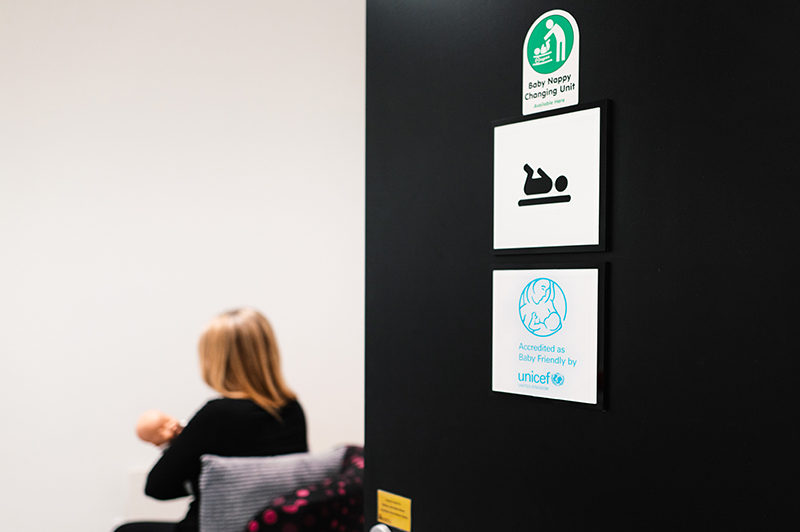
UNICEF Baby Friendly Initiative accredited Infant Feeding room.
View Facility
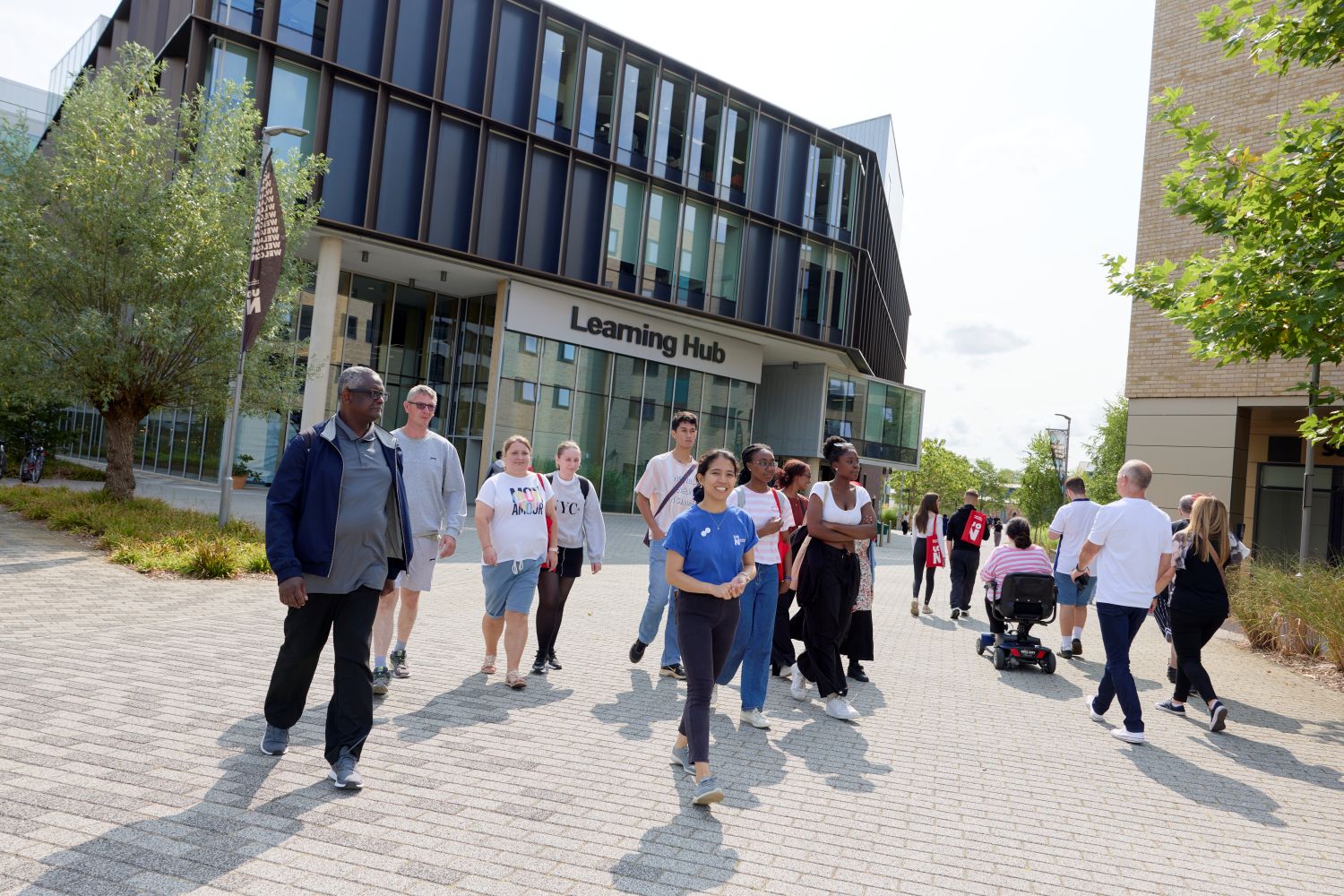
The Learning Hub is at the heart of the campus and home to the student information desk.
View Facility