Alexandra Woodacre
Head of School – Life and Environmental Science
UCAS Code
BSc: C900
BSc with Foundation: B901
Duration
Full Time: 3 years
Full Time Foundation: 4 years
Part Time: 4 years
BBC at A Level or,
DMM at BTEC
Full Time: £9,790
Part Time: £1,630 (per 20 credits)
Integrated Foundation Year: £9,790
study@northampton.ac.uk
0300 303 2772
Updated 01/10/2026
Our Biological Sciences BSc degree enables you to study and investigate the diverse aspects of the biological, environmental and life sciences in order to develop a detailed knowledge and understanding of the interconnection between organisms and the environment.
In the first year, you will study a broad programme of compulsory modules, giving you a firm knowledge base in subjects like Biochemistry, Cell Biology, Ecology, Evolution, Microbiology and Anatomy. In the second and third year, you have the opportunity to specialise in a variety of topics, choosing from a range of biology, biomedical, ecology and environmental science disciplines, which allows you to design your biological sciences degree to meet your future career.
The University of Northampton’s Biological Sciences course has been designed to contribute towards achieving the following United Nations Sustainable Development Goals:
For Student Satisfaction in the East Midlands
Complete University Guide 2027, Biological Sciences Subject Area, For Student Satisfaction (East Midlands only)
This programme has been accredited by the Royal Society of Biology following an independent and rigorous assessment.
Accredited degree programmes contain a solid academic foundation in biological knowledge and key skills, and prepare graduates to address the needs of employers. The accreditation criteria require evidence that graduates from accredited programmes meet defined sets of learning outcomes, including subject knowledge, technical ability and transferable skills.


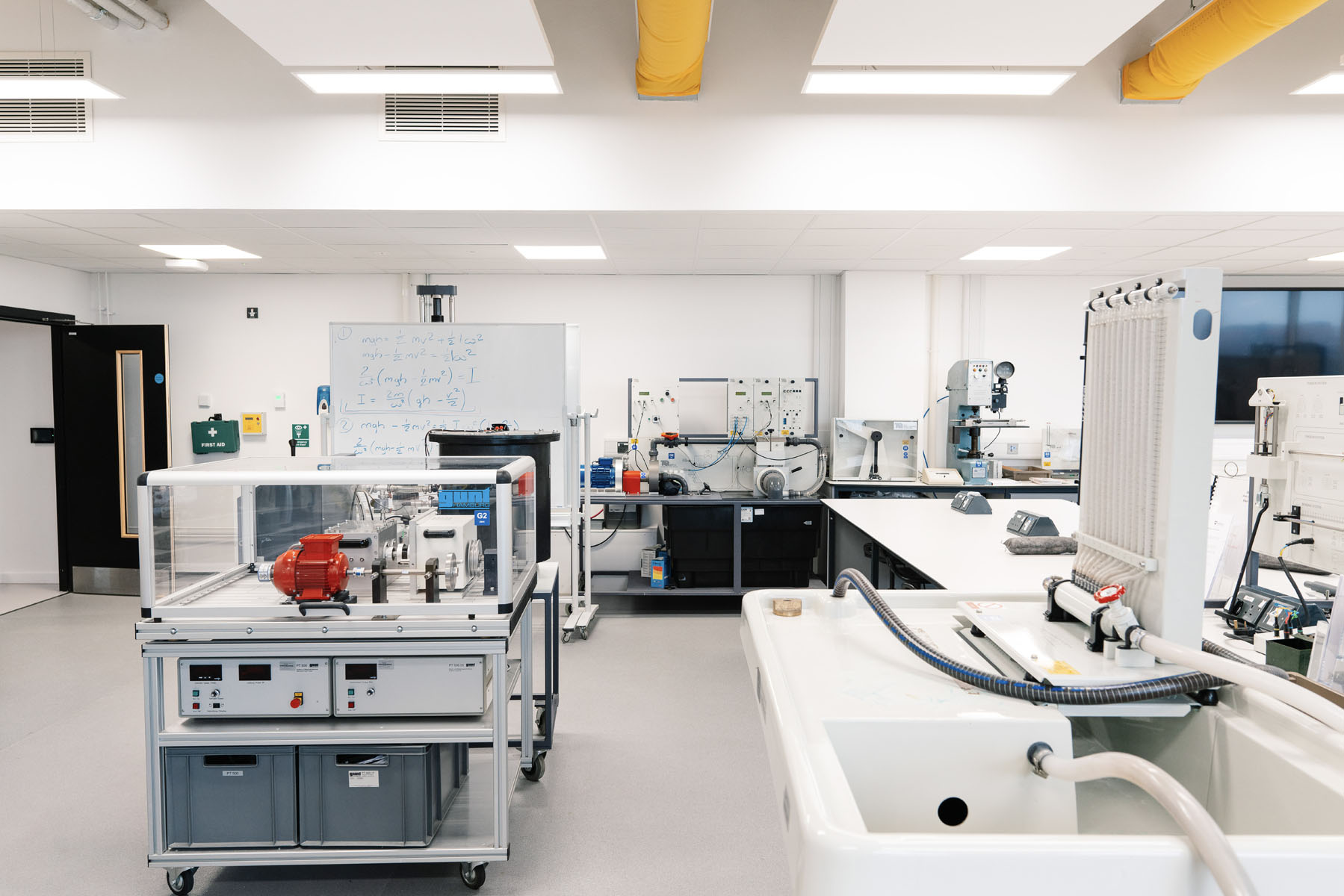
Example of the type of equipment students use within their science classes.

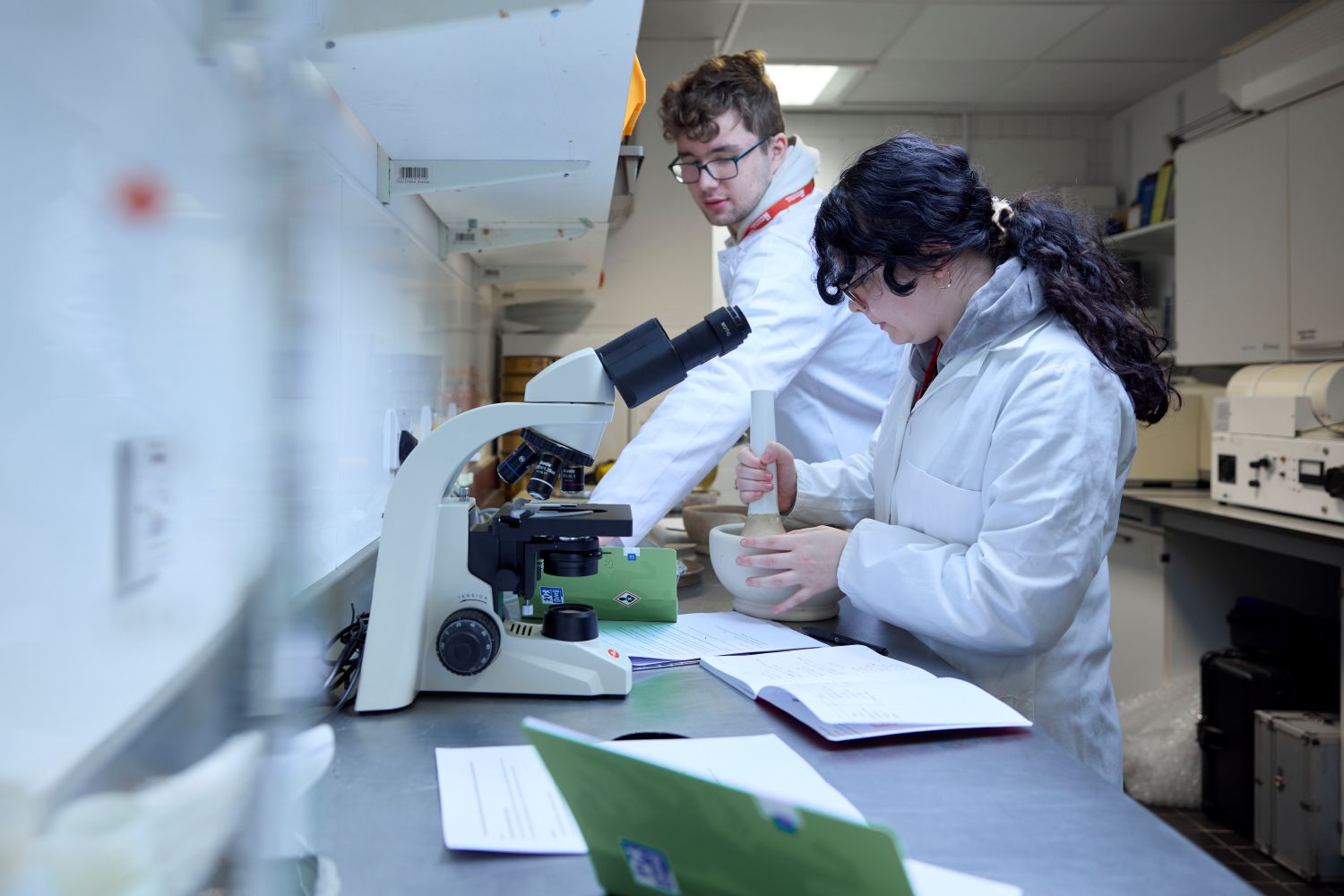
Students using equipment in science class in the Creative Hub Science Labs.
A typical offer for this biological sciences degree would be:
In addition, you are expected to have studied a natural science subject (preferably Biology or Human Biology but Chemistry and Physics are also accepted) in an A Level at grade C, or equivalent qualification such as International Baccalaureate.
We welcome international applicants and applications from students with a range of non-traditional educational or professional qualifications, as well as applications from students with a mix of A levels and BTEC/Cambridge Technical qualifications.
For more information on how to make an application for this biological sciences degree, please visit our How to Apply page.
Admission to the BSc Honours Biological Sciences 4 year Programme with Foundation Study is normally:
In addition, you are expected to have studied a natural science subject (preferably Biology or Human Biology but Chemistry and Physics are also accepted) in an A Level at grade d, or equivalent qualification such as International Baccalaureate.
However, we would also like to hear from you if you have professional or industry experience instead, a range of other qualifications or self-developed subject knowledge that relates to the course you wish to study.
All International and EU students applying for a course with us must meet the following minimum English language requirements:
For information regarding English language requirements at the University, please see our IELTS page.
If you are an International student and would like information on making an application, please see our How to Apply page.
“I learn something new every day through my lectures, which will help me to hone the skills I already have, as well as to develop new skills that will benefit me when I graduate. The tutors are very supportive and answer any questions asked.”
A wide and diverse range biological aspects of science are explored throughout this degree programme. This Biological Sciences interdisciplinary degree provides you with the opportunity to develop a broad knowledge base in the first year of study before specialising in topics and disciplines in the second and third year.
You will have the opportunity to choose modules that most interest you or ones that specifically meet your future career aspirations. You can choose from varied aspects of biological science including plant and animal biology, genetics, environmental science, microbiology, human biology, ecosystems, pharmacology, ecology, adaptations to life, neuroscience and biochemistry.
You will apply your knowledge throughout your biological sciences degree and recognise its relevance to society at national and global levels. You also have the opportunity to learn a wide range of laboratory and field skills as well as learning about current issues and research areas.
This module provides an introduction to the science of ecology. It considers fundamental ecological concepts and principles and focuses on individuals, populations, interactions (between species), communities and ecosystems.
This module provides students with specialist training in environmental and ecological practical techniques. Students will acquire the skills necessary to plan, conduct and report on environmental science investigations in both laboratory and field environments. Students will apply these skills on a residential field trip.
Major groups of living organisms will be reviewed, including higher plants, invertebrate and vertebrate animals. General taxonomy, body form, physiology and life history will be studied to give an appreciation of the multiple aspects of biodiversity.Students will also learn about the key features that define key groups and the role of those taxa in ecological processes.
The purpose of this module is to give level 4 students an introduction to human biochemistry and cell biology. You will study the molecules and chemical processes that occur in living organisms, and explore the structure and function of cells, their components, and their interactions with the external environment.
The purpose of this module is to provide an insight into how invading organisms can cause disease and relate human world health issues to populations. This module allows students to develop a broad understanding of infectious disease across the globe and the biology of the the causative agents, as well as examining intrinsic & extrinsic strategies to combat microbial pathogens.
The purpose of this module is to give you an introduction to genetics and molecular biology. You will learn about the fundamental mechanisms of DNA replication, transcription and translation. You will also explore how the tools of molecular biology, including cloning and PCR, allow the manipulation and understanding of genes and the proteins they encode.
Please note the modules shown here relate to the academic year 26/27. The modules relating to the academic year 27/28 will be available from June 2027.
Accreditation of this Biological Sciences degree is pending from the Royal Society of Biology – the leading professional body for the biological sciences in the United Kingdom.
The Integrated Foundation Year (IFY) offers a new and exciting route into studying for a degree, attracting ambitious and driven students who are willing to learn and advance.
If you have non-standard qualifications or do not quite meet the admissions requirements we can offer you a fantastic opportunity to study a four year programme which includes an Integrated Foundation Year. The Integrated Foundation Year will help you develop the theoretical/practical and academic skills you need, in order to successfully progress to the full award.
Our four year courses will enable you to successfully follow the degree pathway of your choice while gaining essential study skills. The foundation year of your chosen degree will be studied on a full-time basis and is aimed at supporting the transition to higher education. Years two, three and four are then studied as a standard degree programme.
At the University of Northampton, everything we do, from funded trips to paid internships, is to give you everything you need to make a difference when you leave.
If you join our full-time Biological Sciences degree at the University of Northampton, you will receive a laptop when your course begins*. The laptops are built to a bespoke custom specification ideal for use in the seminar room, collaborative group work or studying at home.
Whatever your ambitions, we’re here to help you to achieve them. We’ll support you to identify the skills you’re learning during your biological sciences course, find your strengths and secure practical experience so that when it comes to applying for jobs or further study you’ll feel confident in standing out from the crowd. We’ve created the University of Northampton Employability Promise because we are so confident that if you focus on your studies and complete our award, you’ll be highly employable by the time you graduate. Putting you in a great position to secure employment or continue your studies.
To check out the full list of perks, visit our Student Perks page or dedicated International Perks page.
*UK fee payers only (see Terms and Conditions for further details).
You may also elect to take the Life Science Placement Year module after your second year before returning to complete your Biological Sciences degree. This is an optional and paid placement year, working within industry. Students who complete this typically achieve higher degree outcomes and have improved employability. The University has a whole team of people to help you find a paid placement and will support you during this year.
* Guaranteed route into MSc Molecular Medicine on completion of this course at UON with a 2:2 classification, provided all standard progression requirements are met. Progression may also be subject to visa approval and compliance checks for international students, and there must be no outstanding debt that would prevent enrolment.
Our modules are informed by staff who are active researchers in their specialist areas, introducing you to scientific principles to help you develop analytical skills and encourage you to evaluate and recommend solutions to real-world biological problems.
We aim to make learning an engaging and enjoyable experience from our extensive online resources and face to face teaching. We will introduce you to science principles, help you to develop analytical skills and encourage you to evaluate and recommend solutions to real-life, local to global, biological problems.
Teaching and learning occurs through a variety of methods, with laboratory practicals, workshops, learning how to use new software, fieldwork, seminars and lectures.
Modules are typically semesterised, which means that modules are delivered in either the Autumn Term or the Spring term.
All the module tutors use our virtual learning environment (NILE) to provide additional resources to facilitate your independent learning.
You will be supported during your final year research project by a supervisor with relevant research expertise and by studying the second year research methods and specialised laboratory and/or fieldwork modules with essential training in the latest techniques. You even have the opportunity to present your own final year research dissertation at our annual research conference.
Do I have a personal tutor?All students are allocated a personal tutor before they start their degree. They will meet with their personal tutor on a regular basis and are able to book office hours with them for both academic and pastoral support.
How will I be assessed?Assessment methods in this biological sciences degree include writing scientific reports, blogs, articles, giving presentations, and taking time constrained assessment and exams. Many modules are assessed through 100% coursework but some modules have exams that could be worth up to 60% of the final module grade.
As one of only 60 institutions across the UK to receive the Office for Student (OfS) capital investment funding, the University of Northampton has committed to delivering a cutting edge biomedical laboratory teaching and data analysis suite to enhance practical training in scientific and digital skills at Waterside campus.
UON will adjust fees annually for UK (Home) Students up to the maximum allowable fee cap set by the Secretary of State for Education.
When assessing an applicant’s eligibility to pay home fees, we use the guidance provided by the UK Council for International Student Affairs (UKCISA) which sets out the regulations that have been decided by the UK Government Department of Education.
Tuition fees quoted for International Students apply only to the 2026/27 academic year. These fees may increase in future years in line with Consumer Price Index (CPI) inflation to reflect rising delivery costs. Any annual increase will be capped at a maximum of 5% of the previous year’s tuition fee. Updated tuition fees will be published on the UON website at least three months before the start of the next academic year.
For information on the scholarships available to you, please see our scholarships page.
For more information about possible funding options, please visit our Fees and Funding pages.
There are no additional costs for this course for students beginning their studies in September 2026. Should this change, applicants and students will be contacted by the university with details of the costs.
Fees quoted relate to study in the Academic Year 2025/26 only and may be subject to inflationary increases in future years. UON will adjust UK fees annually in line with Government Policy.

Head of School – Life and Environmental Science

Professor of Molecular Medicine

Senior Lecturer in Waste Management
Professor of Molecular Medicine

Associate Professor in Human Genetics & Genomics

Senior Lecturer in Microbiology

Senior Lecturer in Human Nutrition

Senior Lecturer in Molecular Bioscience
This Biological Sciences course will open up a range of career opportunities, including:
Our well-equipped Bioscience laboratories are modern research facilities enabling you to learn and develop your skills in an innovative and supportive environment. In addition, for students interested in more environmental biology, the campus is adjacent to the River Nene and has its own nature reserve.
Special course features include:
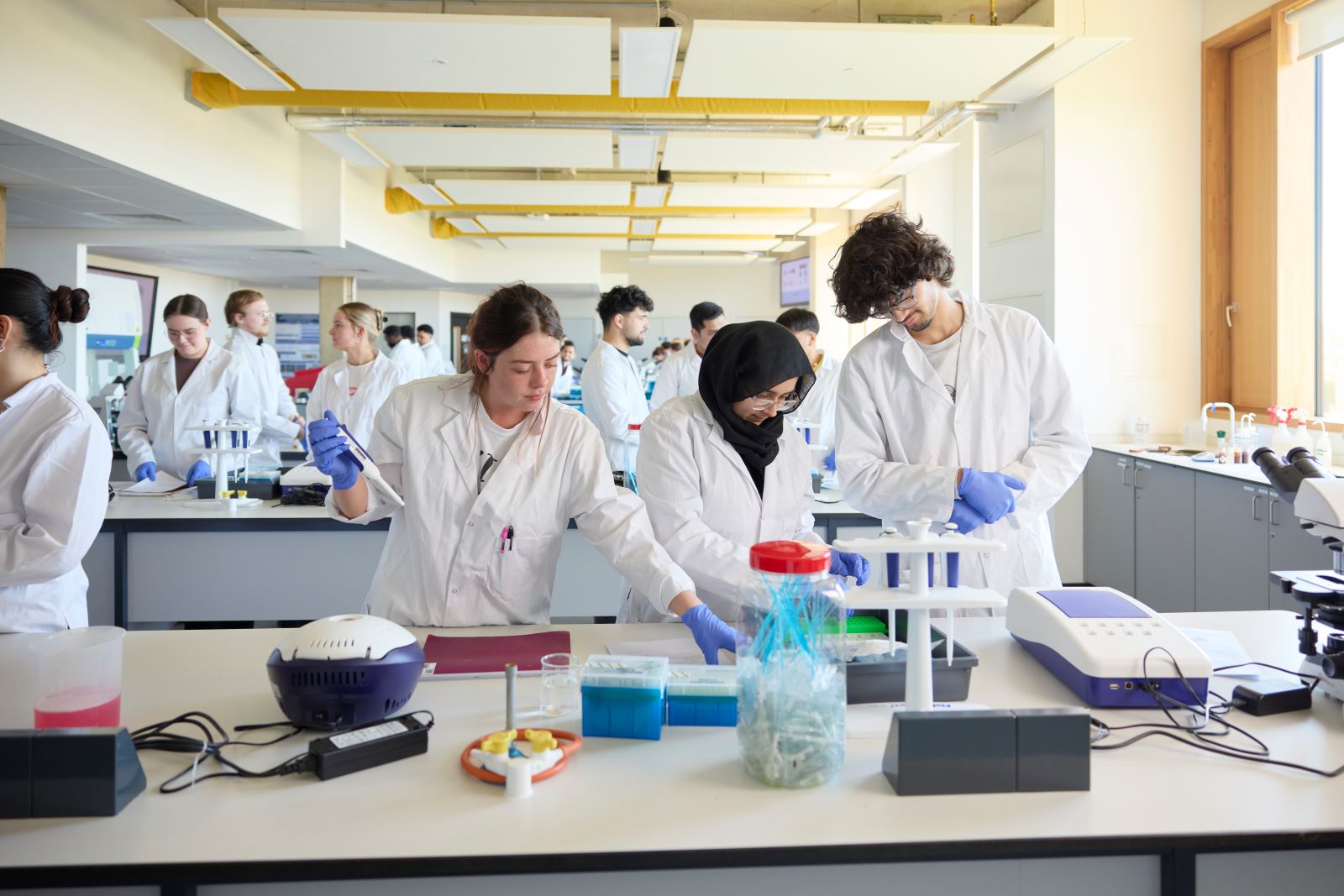
UON's Bioscience laboratories offer well-equipped, specialist facilities
View Facility