


Danielle Jex
Senior Lecturer in Immunology
To ensure we guide you through the correct application process, we just need you to answer a few quick questions.
Already applied?
Log in to view updates.
This course offers two separate application routes, depending on whether the application is submitted by the student or an international agent.
Please select your desired length of study from the available options.
This course includes a placement option. Please indicate whether you’d like to apply with or without a placement.
Please select where you would like to study.
All the available academic years are displayed below.
All the available start months for the selected academic year are listed below.
Please review the information below carefully before continuing.
If you need to make any changes, click the < Back button to return to the previous step.

UCAS Code
BSc: C910
BSc with Foundation: C911
Duration
Full Time: 3 years
Full Time Foundation: 4 years
Part Time: 4 - 6 years
BBC at A Level or,
DMM at BTEC
Full Time: £9,790
Part Time: £1,630 (per 20 credits)
Integrated Foundation Year: £9,790
study@northampton.ac.uk
0300 303 2772
Updated 19/03/2026
Biomedical Science is at the forefront of our modern healthcare system working in partnership with medical practitioners and health care professionals, to perform many different roles in the NHS, as well as in academia and the biotechnology and pharmaceutical sectors. As a biomedical science graduate you are likely to be involved in the diagnosis of disease, supporting the work of clinical departments, and developing and evaluating the next generation of treatments that could improve patient outcomes. A biomedical science degree also provides the foundation for graduate entry programmes, including medicine, dentistry or the more recently established Physician Associate (PA) programme for clinical practice within the NHS.
Our IBMS Accredited biomedical science course meets the high standards of teaching, facilities and course content expected by the IBMS, the leading professional body for Biomedical Scientists.
An IBMS accredited degree is an important prerequisite for meeting the academic standards required for statutory HCPC registration to practice as a fully-fledged Biomedical Scientist in the Pathology discipline of your choice.
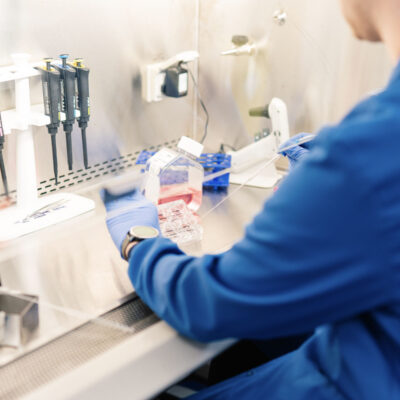
Example of the type of equipment students use within their science classes.
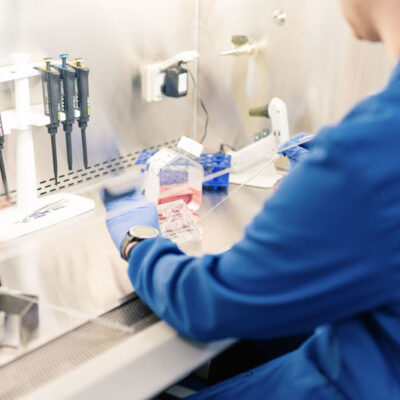
Students using equipment in science class in the Creative Hub Science Labs.
Standard entry requirements apply for the Biomed degree. A typical offer would be:
In addition, you are expected to have studied a science subject (preferably Biology or Human Biology) in an A Level at grade C or equivalent qualification.
For more information on how to make an application, please visit our How to Apply page.
For more information on how to apply as an International student, please visit our How to Apply page.
Admission to this foundation course is normally:
In addition, you are expected to have studied a science subject (preferably Biology or Human Biology) in an A Level at grade D or equivalent qualification.
However, we would also like to hear from you if you have professional or industry experience instead, a range of other qualifications or self-developed subject knowledge that relates to the course you wish to study.
All International and EU students applying for a course with us must meet the following minimum English language requirements:
For information regarding English language requirements at the University, please see our IELTS page.
If you would like information on making an application, please see our How to Apply page.
I felt that the course perfectly aligns with my educational and personal aspirations, particularly the University’s strong emphasis on practical, hands-on learning, combined with its reputation for academic excellence.
Our Biomedical Science BSc degree is designed to equip you with a fundamental understanding of how science underpins the prevention, diagnosis and treatment of disease.
Biomedical science is at the forefront of our modern healthcare system working in partnership with medical practitioners and health care professionals, to perform many different roles in the NHS, as well as in academia and the biotechnology and pharmaceutical sectors.
As a biomedical science graduate, you are likely to be involved in the diagnosis of disease, supporting the work of clinical departments, and developing and evaluating the next generation of treatments that could improve patient outcomes. A biomedical science degree also provides the foundation for graduate entry programmes, including medicine, dentistry or the more recently established Physician Associate (PA) programme for clinical practice within the NHS.
The purpose of this module is to give level 4 students an introduction to human biochemistry and cell biology. You will study the molecules and chemical processes that occur in living organisms, and explore the structure and function of cells, their components, and their interactions with the external environment.
The purpose of this module is to provide an insight into how invading organisms can cause disease and relate human world health issues to populations. This module allows students to develop a broad understanding of infectious disease across the globe and the biology of the the causative agents, as well as examining intrinsic & extrinsic strategies to combat microbial pathogens.
The purpose of this module is to give you an introduction to genetics and molecular biology. You will learn about the fundamental mechanisms of DNA replication, transcription and translation. You will also explore how the tools of molecular biology, including cloning and PCR, allow the manipulation and understanding of genes and the proteins they encode.
The purpose of this module is to introduce the student to the basic concepts in immunology and to appreciate the clinical relevance. The syllabus will cover cell types associated with different types of immune responses including B and T lymphocytes and their various roles including antibody generation and fighting pathogens.
The purpose of this module is to provide an appropriate level of understanding of the anatomy and to introduce the student to the basic principles and concepts of physiology. Enabling an understanding of different body systems and how they are integrated to produce homeostasis.The focus will be on human anatomy & physiology and will study the form and functions of the major body systems.
The purpose of this module is to equip students with a basic understanding of biomedical laboratory practice. We will explore laboratory, regulatory and ethical guidelines and introduce relevant concepts in biomedical science and laboratory procedures.
Please note the modules shown here relate to the academic year 25/26. The modules relating to the academic year 26/27 will be available from June 2026.
At the University of Northampton, everything we do, from funded trips to paid internships, is to give you everything you need to make a difference when you leave.
If you join our full time Biomedical Science degree, you will receive a laptop when your course begins*. The laptops are built to a bespoke custom specification ideal for use in the seminar room, collaborative group work or studying at home.
Whatever your ambitions, we’re here to help you to achieve them. We’ll support you to identify the skills you’re learning during your course, find your strengths and secure practical experience so that when it comes to applying for jobs or further study you’ll feel confident in standing out from the crowd. We’ve created the Northampton Employment Promise because we are so confident that if you focus on your studies and complete one of our awards you’ll be highly employable by the time you graduate. Putting you in a great position to secure employment or continue your studies.
To check out the full list of perks, visit our Student Perks page or dedicated International Perks page.
*UK fee payers only (see Terms and Conditions for further details).
The Integrated Foundation Year (IFY) offers a new and exciting route into studying for a degree in Biomedical Science, attracting ambitious and driven students who are willing to learn and advance.
If you have non-standard qualifications or do not quite meet the admissions requirements we can offer you a fantastic opportunity to study a four year programme which includes an Integrated Foundation Year. The Integrated Foundation Year will help you develop the theoretical/practical and academic skills you need, in order to successfully progress to the full award.
Our four-year courses will enable you to successfully follow the degree pathway of your choice while gaining essential study skills. The foundation year of your chosen degree will be studied on a full-time basis and is aimed at supporting the transition to higher education. Years two, three and four are then studied as a standard degree programme.
Teaching and learning will involve lectures, small group tutorials, e-learning, independent study and a final year research project. Teaching will be research led, involving research active staff with subject specific expertise who will also act as academic advisors and provide additional pastoral support. Current areas of research include infectious diseases, muscular dystrophy, sepsis, cancer biology, bioinformatics and genetic diseases.
Biomedical students will be provided with a lab coat and core textbooks will be available in the library.
The Bioscience department is located close to Northampton General Hospital and enjoys good links with the NHS and commercial partners providing opportunities for undergraduate and master’s students for collaborative research.
Linking human health and disease to underlying biology is the holy grail of biomedical science. Clearly, new developments in regenerative medicine, genome editing, molecular medicine and the 100,00 genomes project for example, are not only transforming our understanding of biology but also having an impact on society and in understanding complex disease, personality and physical traits.
The course will closely follow these developments and build up knowledge of complex systems at the level of the individual cell, tissues and the whole organism through the core disciplines of basic medical sciences, including cell biology, physiology, anatomy, biochemistry, microbiology and pharmacology. Through levels 5 and 6 specialist modules in cancer biology, medical genetics and bioinformatics will be offered alongside generic courses on statistics and research methods. The final year of the undergraduate degree will offer an opportunity to undertake a laboratory based research project.
Yes, an optional full year placement module is available for undergraduate students who have successfully completed their stage 1 and 2 studies. This will give you the opportunity to individually source and gain a year‘s extra work-based learning experience in a science related placement, spent either in the UK or abroad.
Studying this course will open up many career opportunities within the health and research sectors. If you obtain a degree in biomedical science you have the option to go into biomedical science, forensic science, clinical research and more.
You will also open up avenues for further study and gain higher level qualifications that will help you go into other medicine related careers.
As one of only 60 institutions across the UK to receive the Office for Student (OfS) capital investment funding, the University of Northampton has committed to delivering a cutting edge biomedical laboratory teaching and data analysis suite to enhance practical training in scientific and digital skills at Waterside campus.
UON will adjust fees annually for UK (Home) Students up to the maximum allowable fee cap set by the Secretary of State for Education.
When assessing an applicant’s eligibility to pay home fees, we use the guidance provided by the UK Council for International Student Affairs (UKCISA) which sets out the regulations that have been decided by the UK Government Department of Education.
Tuition fees quoted for International Students apply only to the 2026/27 academic year. These fees may increase in future years in line with Consumer Price Index (CPI) inflation to reflect rising delivery costs. Any annual increase will be capped at a maximum of 5% of the previous year’s tuition fee. Updated tuition fees will be published on the UON website at least three months before the start of the next academic year.
For information on the scholarships available to you, please see our scholarships page.
For more information about possible funding options, please visit our Fees and Funding pages.
Students are required to do a poster presentation in their final year, costs for printing a poster are approximately £20.
Fees quoted relate to study in the Academic Year 2025/26 only and may be subject to inflationary increases in future years. UON will adjust UK fees annually in line with Government Policy.
Senior Lecturer in Immunology
Associate Professor in Human Genetics & Genomics
Professor of Molecular Medicine
Senior Lecturer in Human Nutrition
Head of School – Life and Environmental Science
Senior Lecturer in Molecular Bioscience
Professor of Molecular Medicine
Senior Lecturer in Microbiology
Associate Professor in Physical Activity & Health
Senior Lecturer in Biomedical Science
A biomedical science degree provides the foundation for a wide range of career choices. Our newly established degree programme places a strong emphasis on current and future developments in biomedical science and will develop students’ research skills, transferrable skills and laboratory skills to prepare them for the broadest possible range of careers, including scientific journalism, master’s research, or working in the NHS. It will also provide the foundation for graduate entry programmes in medicine or dentistry or working in the pharmaceutical or biotechnology industry.
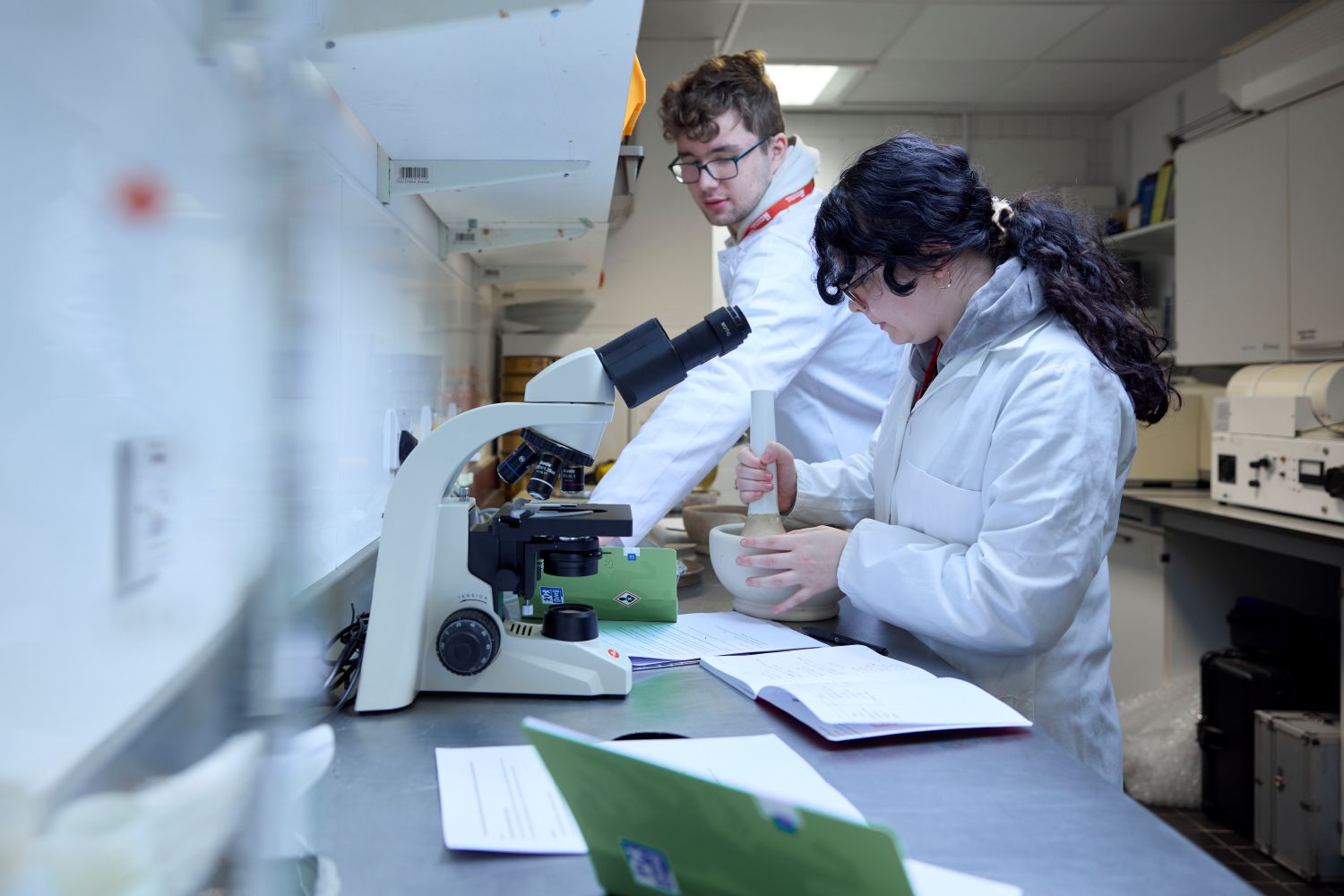
UON's Bioscience laboratories offer well-equipped, specialist facilities
View Facility