

James White
Senior Lecturer in Sociology
To ensure we guide you through the correct application process, we just need you to answer a few quick questions.
Already applied?
Log in to view updates.
This course offers two separate application routes, depending on whether the application is submitted by the student or an international agent.
Please select your desired length of study from the available options.
This course includes a placement option. Please indicate whether you’d like to apply with or without a placement.
Please select where you would like to study.
All the available academic years are displayed below.
All the available start months for the selected academic year are listed below.
Please review the information below carefully before continuing.
If you need to make any changes, click the < Back button to return to the previous step.
UCAS Code
3 year: L300
Foundation: L301
Duration
3 years full-time
4-6 years part-time
4 years full time (Integrated Foundation Year)
BBC at A Level
DMM at BTEC
Full Time: £9,790
Part Time: £1,630 per 20 credit module
Integrated Foundation Year: £5,760
Updated 19/03/2026
We live in unprecedented eventful times of intense, rapid and constant social transformation – from rising economic inequality/poverty, the climate crises, threats to liberal democracy, the impact of social media, the recognition of LGTBQ+, BLM and disability groups, to name just a few – creating an increasingly complex world of both progress and peril that sociologists are best equipped to address. So, if you are excited by contemporary questions and convincing explanations about the world around you, then studying a degree in Sociology is for you.
The University of Northampton’s Sociology team has the necessary high quality teaching and research experience to provide you with the sociological knowledge, skill and confidence to succeed in higher education. You will have the opportunity to study a diverse range of interdisciplinary topics, from identity/self, inequality/injustice, education, media/culture, crime/deviance, love/body, work/volunteering, health/wellbeing, utopianism/future, environment, and death – and actively engage with these pressing real-world contemporary issues head on.
BA Sociology teaching is made up of active blended learning in and around the classroom via small group work with a diverse student body and individualised assessment types, and through research/reflection out in the field on placements and our international field trip. On the BA Sociology degree, you will acquire employability skills required to achieve not only personal graduate success in in a wide range of career pathways in the public, private or third sectors, but also positive social change to benefit the public good, tailoring your ‘sociological imagination’ to something that you are interested in and care about.
This sociology university course has been designed to contribute towards achieving the following United Nations Sustainable Development Goals: SDG5 Gender Equality; SDG10 Reduce Inequalities and SDG11 Sustainable Cities and Communities.
Our Sociology team are celebrating 50 years of Sociology at UON!
A typical offer to study BA Sociology at the University of Northampton would be:
We welcome applications from students with a mix of A levels and BTEC/Cambridge Technical qualifications.
We welcome international applicants and applications from those with a range of non-traditional educational or professional qualifications.
Admission to the Foundation Framework for the degree in sociology is normally:
We welcome applications from students with a mix of A levels and BTEC/Cambridge Technical qualifications.
However, we would also like to hear from you if you have professional or industry experience instead, a range of other qualifications or self-developed subject knowledge that relates to the course you wish to study.
All International and EU students applying for a course with us must meet the following minimum English language requirements:
For information regarding English language requirements at the University, please see our IELTS page.
Open Days give you the best experience and insight to courses, people and facilities that interest you. Make your choice easier and come meet us.
Book NowWhile studying the degree in sociology, you will apply your sociological imagination to learn new ways of critically understanding and discussing important contemporary questions/concerns from a many different social science perspectives and approaches, not just through the dominant Western – such as: How do humans shape and are shaped by the societies they live in? How do we shape our own identities? How does our physical environment influence our lives and societies? How are social inequalities represented in our culture and media? How can we understand race, ethnicity and migration after Brexit? How have ideas of love and intimacy changed throughout history? How do different ideas of the future influence our lives?
For all three years you will receive 12 hours per week of dedicated teaching support over two semesters (for the most part divided into three modules per semester, with three hours face-to-face and one hour online for each module), as well as additional staff, personal academic tutor and professional service support and guidance – although for your second and third years you will receive incrementally less compulsory class teaching time and more optional one-to-one support in your second semester when completing your research/reflection project and dissertation.
In your first year, core compulsory modules connect with previous teaching/learning to provide you with a foundation of knowledge and understanding in the discipline of Sociology, ensuring that you get to grips with key sociological issues, theories and concepts (even if you have never studied sociology before), to more than sufficiently prepare you for your future as a budding sociologist.
The module aims to support students in developing a theoretical/conceptual and historical understanding of the social issues surrounding education. The module supports these aims by: (1) providing a solid grounding in key sociological theories and themes vis-á-vis education, (2) exploring core themes for sociology of education, for instance the role of the State, the concept of childhood, the relationship between education and the market and education and the family, and (3) giving opportunities to develop the skills to evaluate and instigate change in educational systems
Drawing on from disciplines such as Sociology, Media/Cultural/Communication Studies, Journalism, Criminology and Psychology, this module is designed to introduce students to a wide range of different topics in order to create a multi/inter-disciplinary theoretical and conceptual understanding of the relationship between the media, crime and society.
The purpose of this module is to introduce in a critical and synthesized manner that enable first-year sociology students to understand how sociology investigates and describes the social world. Important theoretical perspectives and primary methodological considerations will be a large consideration. Empirical as well as theoretical engagement with introductory sociological principles will be presented as part of the wider concept of what is perceived to be the `sociological imagination¿.
This module allows students to tackle a range of material within a specialist field. It enables students to relate the study of intimate relationships and family life to their own experience whilst developing their ability to apply sociological research and theories to understanding this area.
Please note the modules shown here relate to the academic year 25/26. The modules relating to the academic year 26/27 will be available from June 2026.
At the University of Northampton, everything we do, from funded trips to paid internships, is to give you everything you need to make a difference when you leave.
If you join this full time degree in sociology at the University of Northampton, you will receive a laptop when your course begins*. The laptops are built to a bespoke custom specification ideal for use in the seminar room, collaborative group work or studying at home.
Whatever your ambitions, we’re here to help you to achieve them. We’ll support you to identify the skills you’re learning during your sociology course, find your strengths and secure practical experience so that when it comes to applying for jobs or further study you’ll feel confident in standing out from the crowd. We’ve created the Northampton Employment Promise because we are so confident that if you focus on your studies and complete one of our awards you’ll be highly employable by the time you graduate. Putting you in a great position to secure employment or continue your studies.
To check out the full list of perks, visit our Student Perks page or dedicated International Perks page.
* UK fee payers only (see Terms and Conditions for further details)
As sociologists, we value the significance of understanding different societies/cultures to our own, and for that reason, there is an exciting opportunity to participate in an international field trips during the programme, allowing you to learn about how different societies/cultures function, and apply your sociological knowledge and understanding to real-life in-the-field scenarios.
In the past, students have travelled to New York, Abu Dhabi, Berlin, Athens, Rome, a ‘Brexit Tour of Europe’, and Istanbul. Going forward, we will within our wider school of Education and Society to participate in field trips to destinations such as Amsterdam, Sweden and/or America.
The field trip is optional. For a five-to-seven-day visit, the cost of the trip will be no more than £1,000 (that includes flights, hotel – usually bed and breakfast – and airport transfers), for which you will be asked to contribute towards the cots and day to day spending money.
The Integrated Foundation Year (IFY) offers a new and exciting route into studying for a degree in Sociology, attracting ambitious and driven students who are willing to learn and advance.
If you have non-standard qualifications or do not quite meet the admissions requirements for the degree in sociology, we can offer you a fantastic opportunity to study a four year programme which includes an Integrated Foundation Year. The Integrated Foundation Year will help you develop the theoretical/practical and academic skills you need, in order to successfully progress to the full award.
Our four-year courses will enable you to successfully follow the degree pathway of your choice while gaining essential study skills. The foundation year of your chosen degree will be studied on a full-time basis and is aimed at supporting the transition to higher education. Years two, three and four are then studied as a standard degree programme.
You will join a thriving university in general and a sociology specific learning community of academic and professional service staff, as well as a diverse range of students in a thriving interdisciplinary environment. The BA Sociology team are extremely passionate about sociology and the important role it functions for the world, on macro, meso and micro levels; we are highly motivated to inspire future generations who seek to make a difference to the world around them.
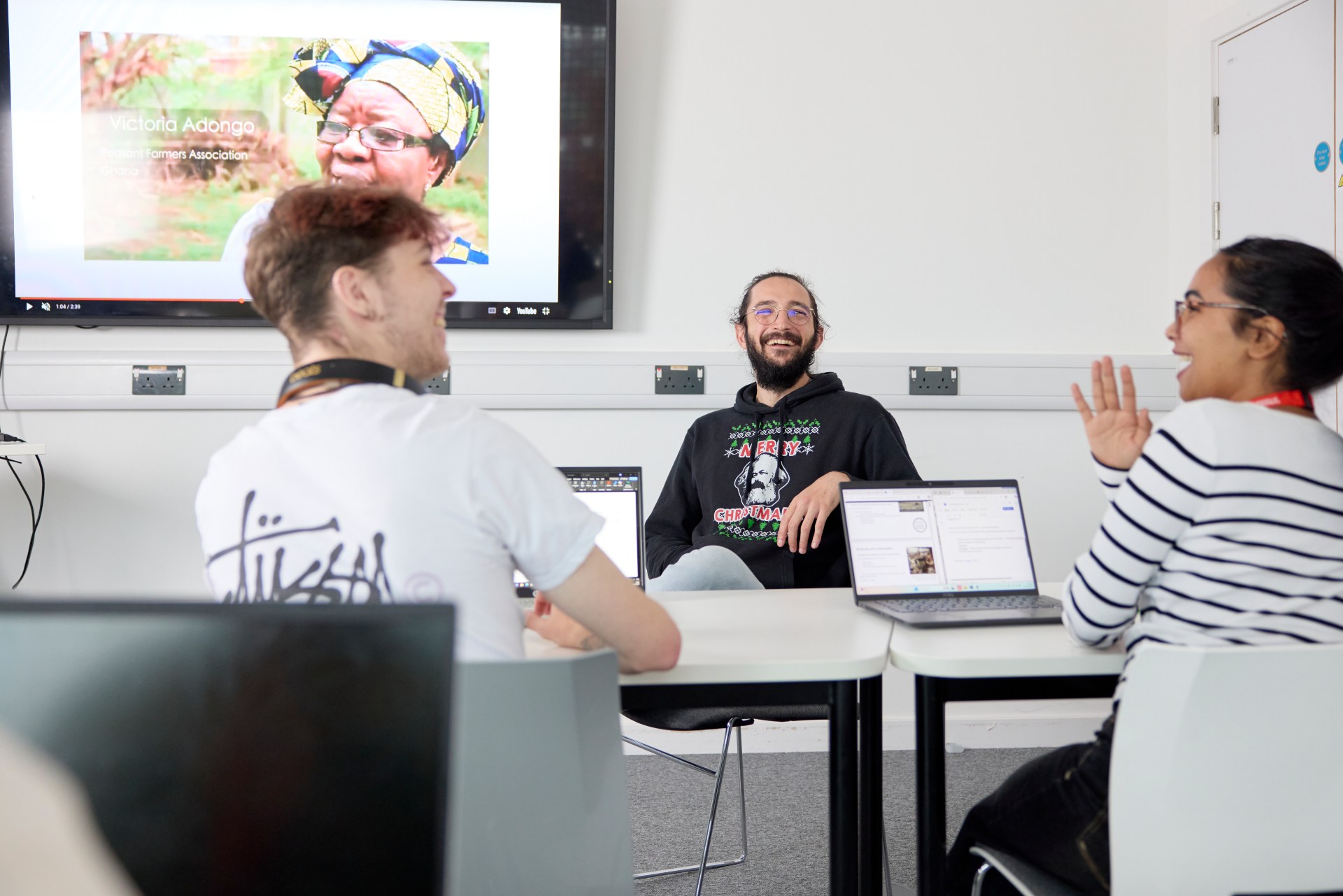
Our approach to teaching and learning on this sociology degree combines face-to-face teaching with carefully crafted digital experiences*, designed to help you take control of your own learning. Typically, you will study in small, interactive group sessions, where you learn through interactive, teamwork and problem-solving activities, and have a range of online resources and materials at your fingertips.
The BA Sociology degree programme can be taken as a full time or part time. If you are studying this course full-time, you will take 120 credits worth of modules for each stage for three years – totalling 360 credits overall. All modules are 20 credits (with the exception of the 40 credit dissertation module). Some modules are compulsory, whilst others are designated – so selected from a range of options.
The BA Sociology degree programme is delivered in a semesterised format. In year one, important core ideas, evidence and methods are introduced. This basic knowledge is built upon in years two and three to foster an advanced understanding of increasingly specialised topics and allowing you to increasingly focus on individual areas of specific interest.
The assessments on the BA Sociology university course are regularly praised by our external examiners as being imaginative and varied. Assessment methods used on this course include:
Get all the info you need ahead of time, before you can apply for funding in Spring on our fees and funding pages.
UON will adjust fees annually for UK (Home) Students up to the maximum allowable fee cap set by the Secretary of State for Education.
When assessing an applicant’s eligibility to pay home fees, we use the guidance provided by the UK Council for International Student Affairs (UKCISA) which sets out the regulations that have been decided by the UK Government Department of Education.
Tuition fees quoted for International Students apply only to the 2026/27 academic year. These fees may increase in future years in line with Consumer Price Index (CPI) inflation to reflect rising delivery costs. Any annual increase will be capped at a maximum of 5% of the previous year’s tuition fee. Updated tuition fees will be published on the UON website at least three months before the start of the next academic year.
The optional International Field Trip* is partially funded by the University. The cost of trip is on average between £600-£1,000 and students pay part of this cost.
As a part of the placement, students get a free DBS paid by the University (where required), but students need to pay for any additional expenses such as travel costs.
For information on the scholarships available to you, please see our scholarships page.
For more information about possible funding options, please visit our Fees and Funding pages.
Fees quoted relate to study BA Sociology in the Academic Year 25/26 only. They may be subject to inflationary increases in future years.
Senior Lecturer in Sociology
Graduate Teaching Assistant in Sociology
Professor of Sociology
Senior Lecturer in Sociology
Senior Lecturer in Sociology
Senior Lecturer in Sociology
Senior Lecturer in Sociology
The University of Northampton places an important emphasis on supporting you in achieving your graduate career and/or postgraduate study ambitions, by providing lots of opportunities to experience the world of work.
Employability skills are built into the Sociology degree programme throughout the three years, so that you are consistently building the skills that you will need to prepare for the world of work.
As well as the placement opportunity in your second year, you have the opportunity to complete an optional year-long work placement in between Stages 2 and 3 of study. If you choose to take a placement year, you will spend a whole year (up to 48 weeks) working in an area/organisation of interest to you, in the UK or overseas. The Student Futures team offer a lot of support in helping you to find a placement. This invaluable experience helps you to apply your learning in your final year (including your dissertation) and prepares you for your future graduate career.
What can you do with a sociology degree?
Our BA Sociology degree students have ended up with careers in fields ranging from education, youth work, charities and community organisations, to PR and marketing, media and journalism, HR and management, as well as social work, politics, and social research – to name just a few. The advantage of doing a sociology degree is that it prepares you for many different graduate careers, in an increasingly uncertain world.
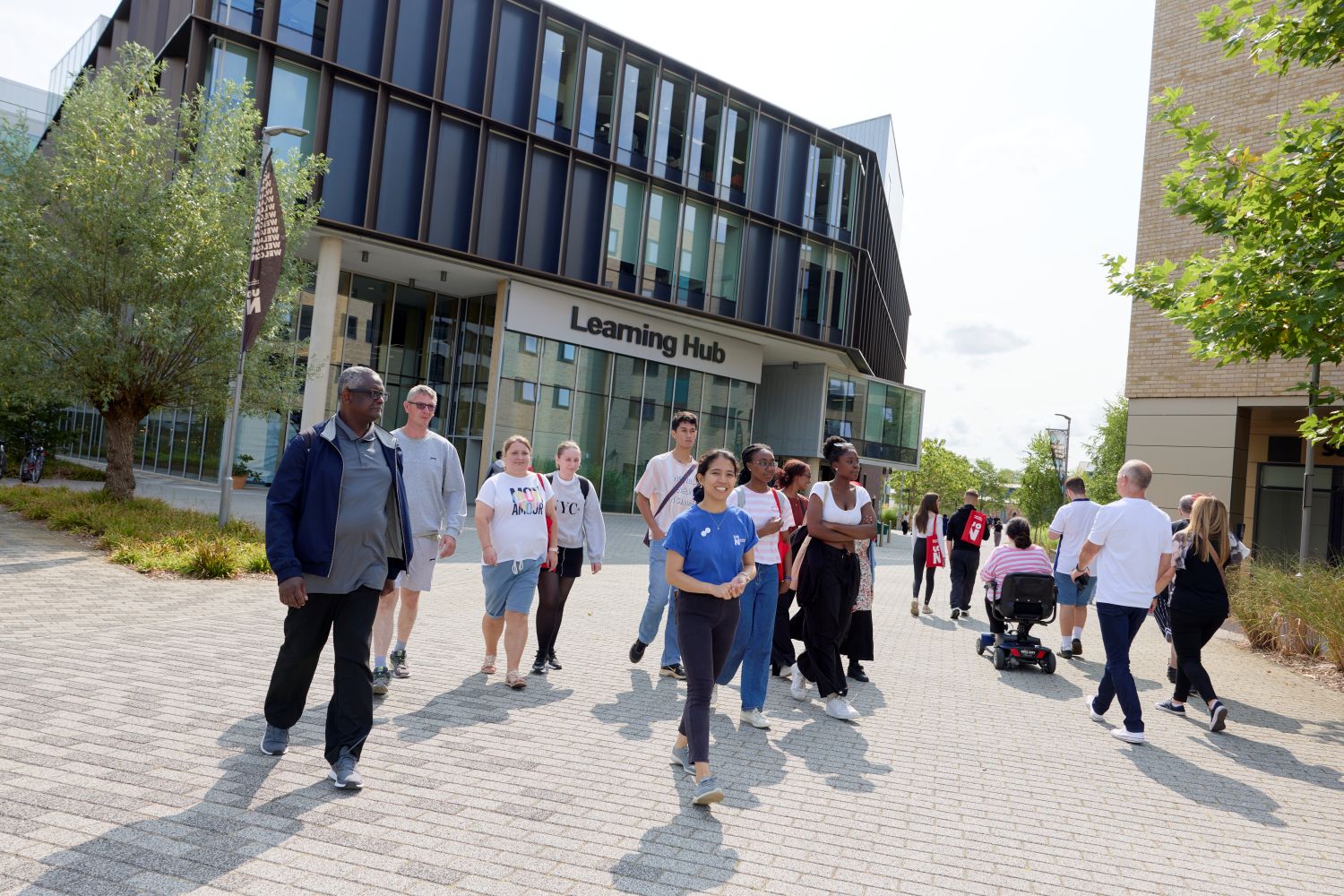
The Learning Hub is at the heart of the campus and home to the student information desk.
View Facility





The purpose of this module is to develop student¿s theoretical and conceptual knowledge and understanding about major social and cultural contextual changes over time.