

Dominic Murphy
Senior Lecturer in Education (ECYP)
To ensure we guide you through the correct application process, we just need you to answer a few quick questions.
Already applied?
Log in to view updates.
This course offers two separate application routes, depending on whether the application is submitted by the student or an international agent.
Please select your desired length of study from the available options.
This course includes a placement option. Please indicate whether you’d like to apply with or without a placement.
Please select where you would like to study.
All the available academic years are displayed below.
All the available start months for the selected academic year are listed below.
Please review the information below carefully before continuing.
If you need to make any changes, click the < Back button to return to the previous step.

Duration
1 year full time
Level
UndergraduateUG BA (Hons)
Starting
September
SEP
Full Time: £9,790
Waterside
Updated 25/03/2026
The BA Learning and Teaching Top-up degree is designed to follow on from our Foundation Degree in Learning and Teaching, or equivalent Level 5 qualifications. It is aimed at teaching assistants and those in similar educational support roles and is designed to fit around your work, with attendance at University being one day per week.
We ask that applicants have completed a Foundation Degree in Teaching and Learning or equivalent, amounting to 240 Credit Accumulation Transfer Scheme (CATS) points. We also ask that you have recent or current experience in a school or other educational establishment.
For more information on how to make an application, please visit our How to Apply page.
All International and EU students applying for a course with us must meet the following minimum English language requirements:
For information regarding English language requirements at the University, please see our IELTS page.
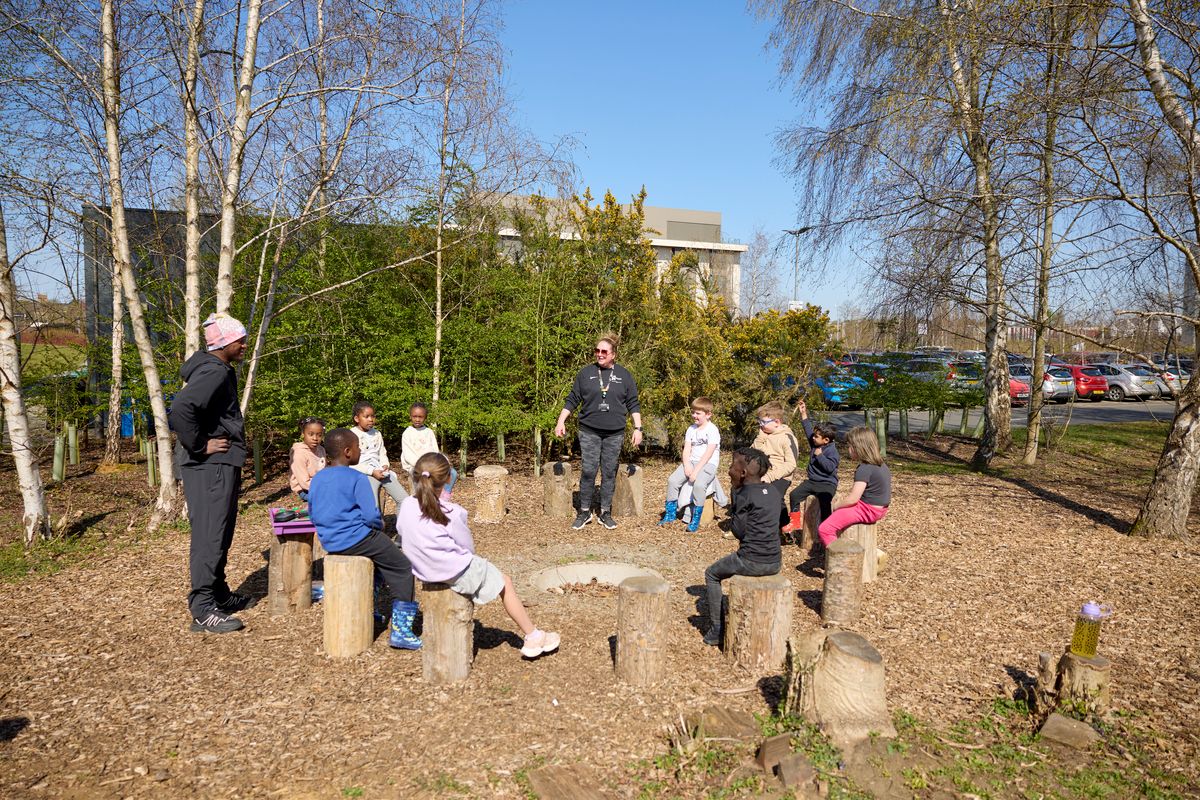
Sustainability and the natural world must be at the heart of children’s learning and we are excited about the opportunities this programme will bring to the health, education and wellbeing of our community.
This learning and teaching 1 year top-up degree builds upon your existing knowledge and experience to explore wider issues related to teaching and learning and is ideal preparation for applying to Qualified Teacher Status (QTS) programmes in Key Stage 1 and 2 and for careers linked to teaching and learning, such as learning mentors. If you would like to gain QTS at secondary level, you will need to undertake additional subject study.
A top-up degree in education provides you with an opportunity to gain an understanding of wider educational perspectives and to take part in some of the key debates that surround education and schooling.
You will study five interlinked modules and write a dissertation on a subject of your choice. You will be able to tailor your studies to your interests by the way that you approach your assignments.
This module develops students¿ ability to function as part of a professional team within an education setting through: evaluating and enhancing professional attributes; increasing knowledge and understanding; consideration and critical evaluation of theoretical perspectives and factors such as professional standards which have significant impact on professional practice in education.
Interprofessional working is an increasing important aspect of working with children and young people. Students will develop their knowledge, attitudes, skills and behaviours related to interdisciplinary working, considering the range of other professionals and the ways in which these roles work together and complement each other to procure the best possible outcome for children and young people.
The purpose of this module is for students to understand how examining educational topics in other countries can inform their own practice and and understanding of the approaches to education. Students will gain an understanding of the contextual factors that are significant when making international comparisons and the theoretical models and data available to support such activity.
The purpose of this module is for students to understand how individual and group identity is formed within society and how identity factors influence life outcomes. Students will relate what they learn to their own life and to that of others.
The purpose of this module is for students to explore research methodologies and methods in order to produce a substantial piece of work. The module will provide students with the broad characteristics of social science research practice. Students will execute and present independent research on their chosen topic of interest.
Please note the modules shown here relate to the academic year 25/26. The modules relating to the academic year 26/27 will be available from June 2026.
The method of teaching for each module will vary slightly to suit the content and to give you a broad experience of learning strategies. You will be taught via lectures, seminars, group work, case studies, presentations, reflection on practice, analytical assignments, tutorials, online forums, individual learning and observations. Overall, we hope you will see your top-up degree in education as a co-operative experience, sharing knowledge and expertise.
No, but you do need to have previous experience in educational settings. You may need to negotiate access to an educational setting to complete research for your dissertation.
You need two years’ experience of working educational settings to participate in the Learning & Teaching top-up degree at UON. This could be made up from volunteering and paid employment in a range of contexts and age groups.
You can attend this course full-time, for one year, spending one day per week at the University or you can attend the course part-time, for two years, spending an average of half a day per week at the University. Whichever route you take, this will amount to 1,200 hours of study.
There are no examinations within this degree top up in Learning and Teaching. Instead, assessments include written assignments and reports, practical projects and presentations.
“It was the best route into teaching and after already completing my Foundation degree at UON, it felt like the best place to continue my studies.
The course tutors were very experienced and shared their wealth of knowledge. The guidance and support that was given by them was tremendously appreciated, and studying this course has made me feel more confident and prepared for the journey ahead.”
Fees quoted relate to study in the Academic Year 26/27 only and may be subject to inflationary increases in future years.
When assessing an applicant’s eligibility to pay home fees, we use the guidance provided by the UK Council for International Student Affairs (UKCISA) which sets out the regulations that have been decided by the UK Government Department of Education.
For information on the scholarships available to you, please see our scholarships page.
For more information about possible funding options, please visit our Fees and Funding pages.
There are no additional costs for this course for students beginning their studies in September 2026. Should this change, applicants and students will be contacted by the university with details of the costs.
Fees quoted relate to study in the Academic Year 2025/26 only and may be subject to inflationary increases in future years.
Senior Lecturer in Education (ECYP)
Senior Lecturer in Education (ECYP)
Senior Lecturer in Education (ECYP)
Senior Lecturer in Education (ITT)
Senior Lecturer in Education (CYF)
If you complete your full time educational top-up degree with us and apply for the PGCE Primary Education (5-11) (QTS) programme at the University of Northampton during your final undergraduate year, you are guaranteed an interview.
Terms and conditions apply:
Most BALT students go on to gain Qualified Teacher Status (QTS) through PGCE or other routes, but there are plenty of other career options available within Education and related fields such as social work, counselling, pastoral care, and psychology.
Courses which might be accessible with a BALT degree: