
Mark Johnson
Senior Lecturer - Computing

UCAS Code
BSc: G600
BSc with Foundation: G601
Duration
Full Time: 3 years
Full Time Foundation: 4 years
Part Time: 4 - 6 years
BBC at A-Level or,
DMM at BTEC
Full Time: £9,790
Part Time: £1,630 per 20 credit module
Integrated Foundation Year: £9,790
study@northampton.ac.uk
0300 303 2772
Updated 23/10/2026
The Software Engineering BSc degree programme enables students to develop and apply a range of industry essential analytical and problem-solving techniques to facilitate real-world computer software development scenarios.
Our software engineering degree students will build the required academic underpinnings, interpersonal skills and professional software engineer practitioner capabilities via the use of many simulated case-studies in a very practical learning strategy.
Through their learning journey, students will study modern software engineering elicitation, analysis, specification, design, programming, testing and software evaluation theories and will devise solutions to real and simulated industry problems. Students will have the opportunity to have a hands-on approach with a variety of modern software development tools, languages and development environments.
For Satisfied with Teaching- The Times
The Times 2027 League Table for Computer Science
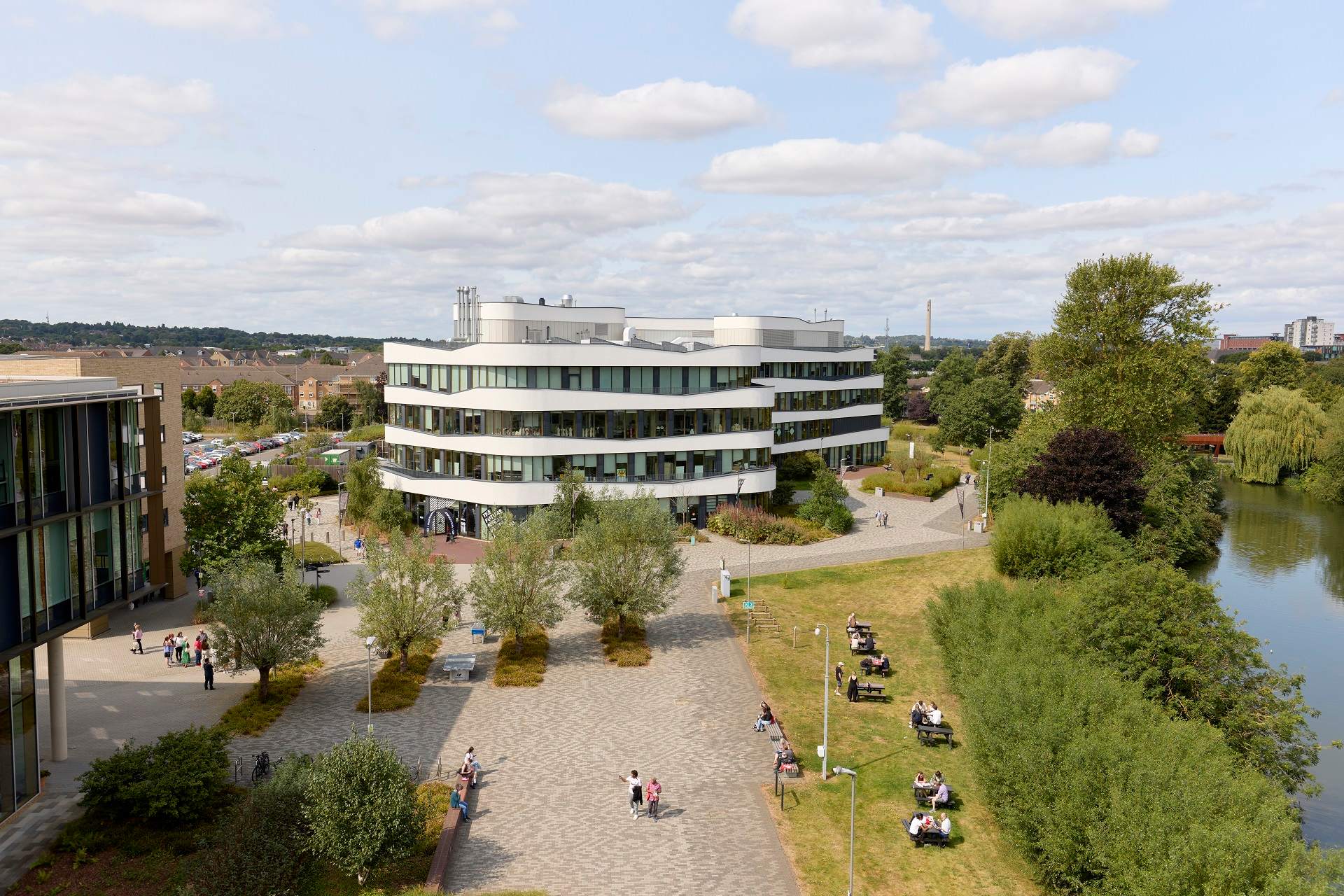
Image shows aerial view of the Creative Hub; a modern, curved building surrounded by greenery, paths, and people sitting or walking near a river on a partly cloudy day.
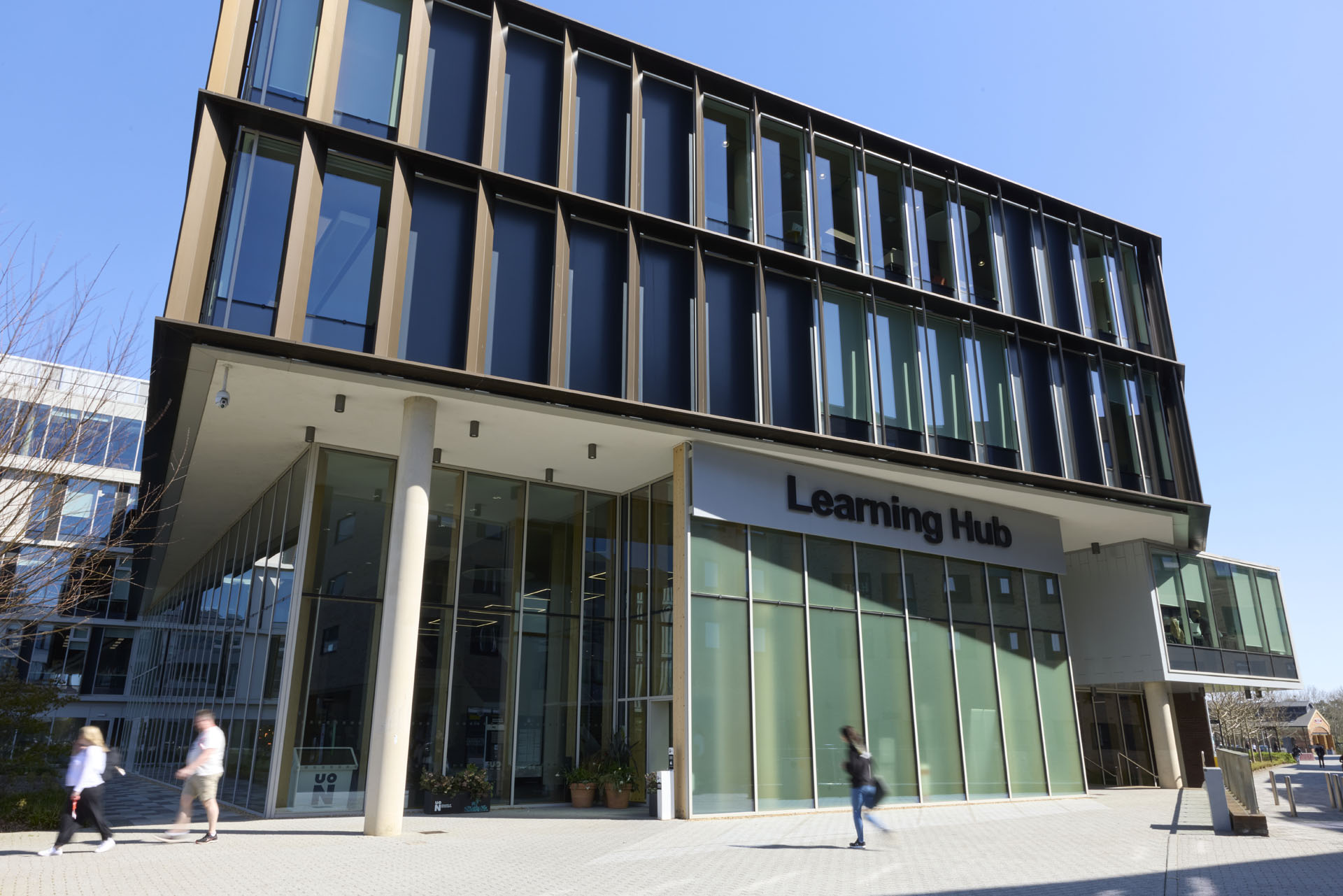
Image shows the main entrance to the Learning Hub, which is a large, multi-storied building with many large windows, with ‘Learning Hub’ in large letters on the front. It is a sunny day, and several blurred people are walking outside.
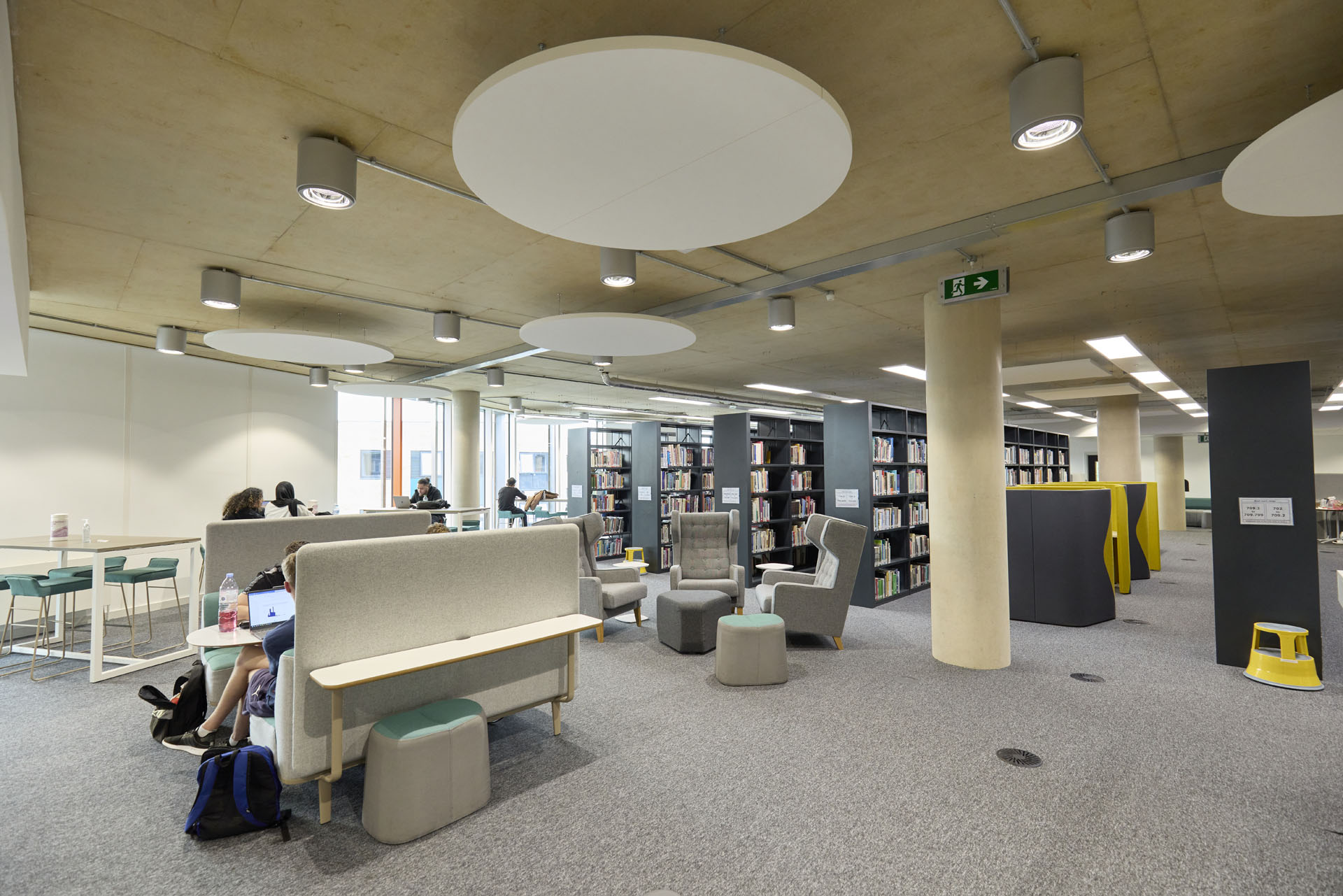
Image shows a modern library interior with people reading at tables and seated on cushioned chairs in the Learning hub. Shelves filled with books are visible in the background under circular ceiling lights.
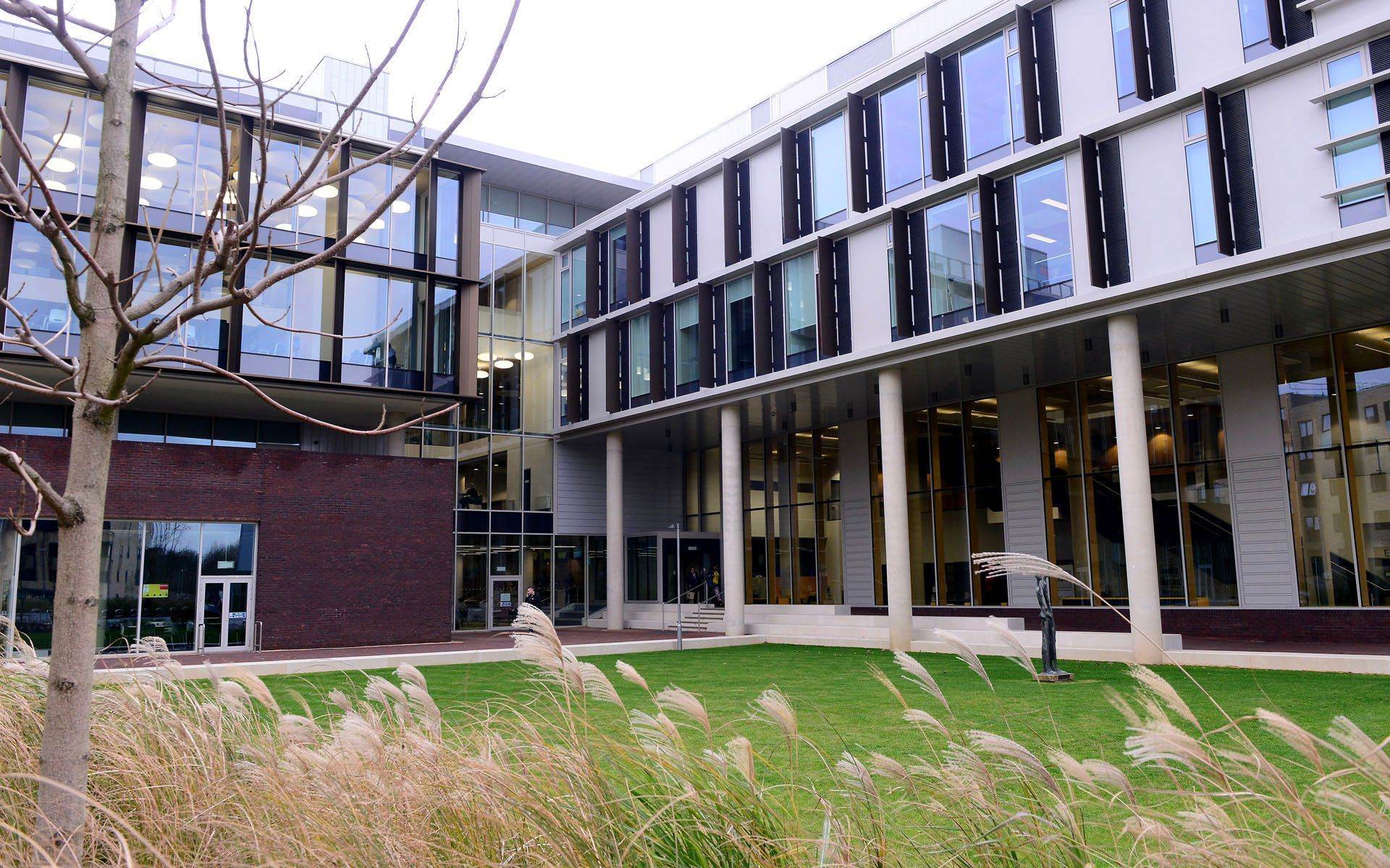
Image shows view of the lawn and courtyard outside the Learning Hub, featuring a bare tree, ornamental grasses, and an abstract sculpture. The building has several stories and features large windows.
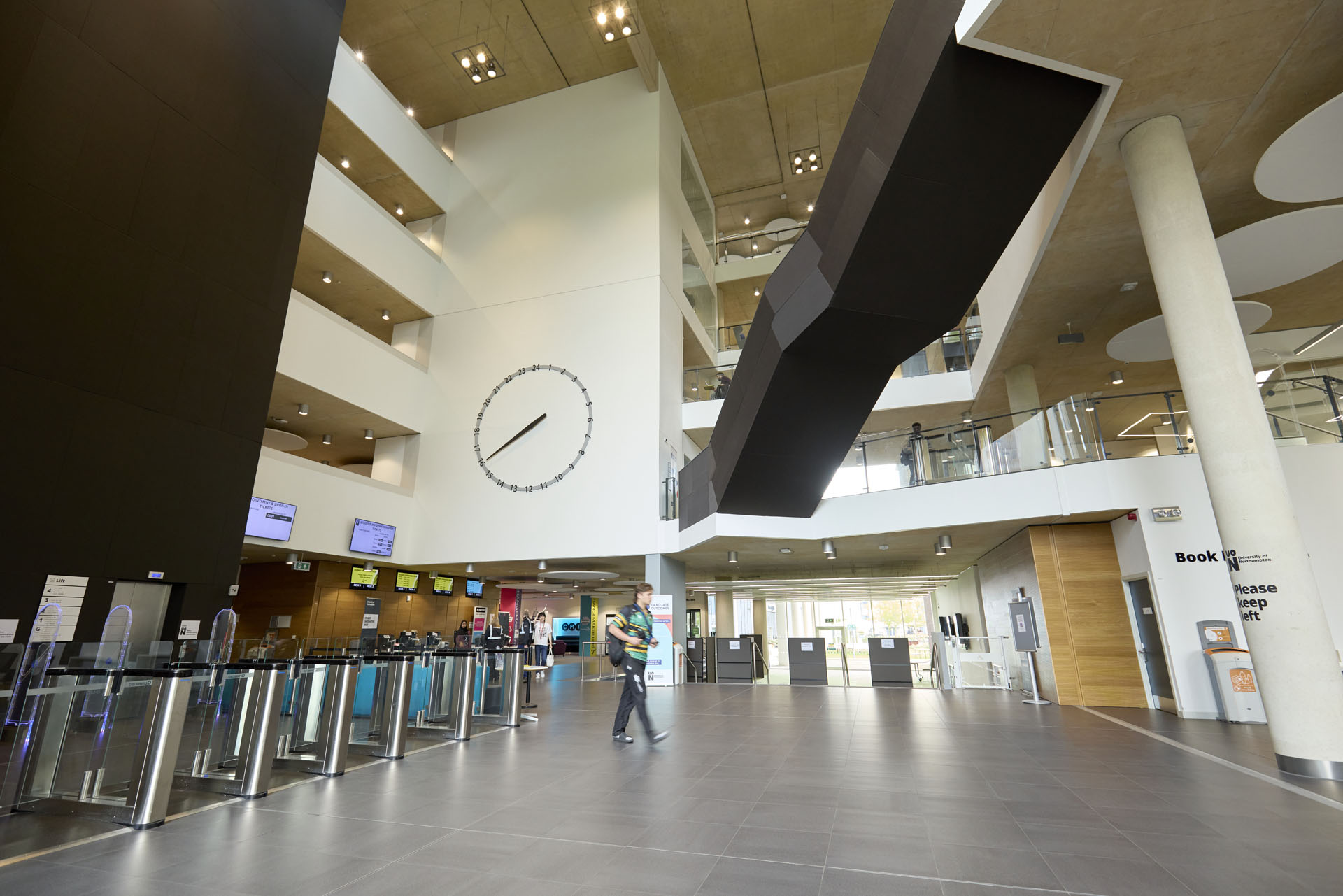
Image shows the ground floor of the Learning Hub; it is a large, modern atrium with high ceilings, a large clock on the wall, turnstile gates, and an angular black staircase. A student carrying a backpack is walking through the space.
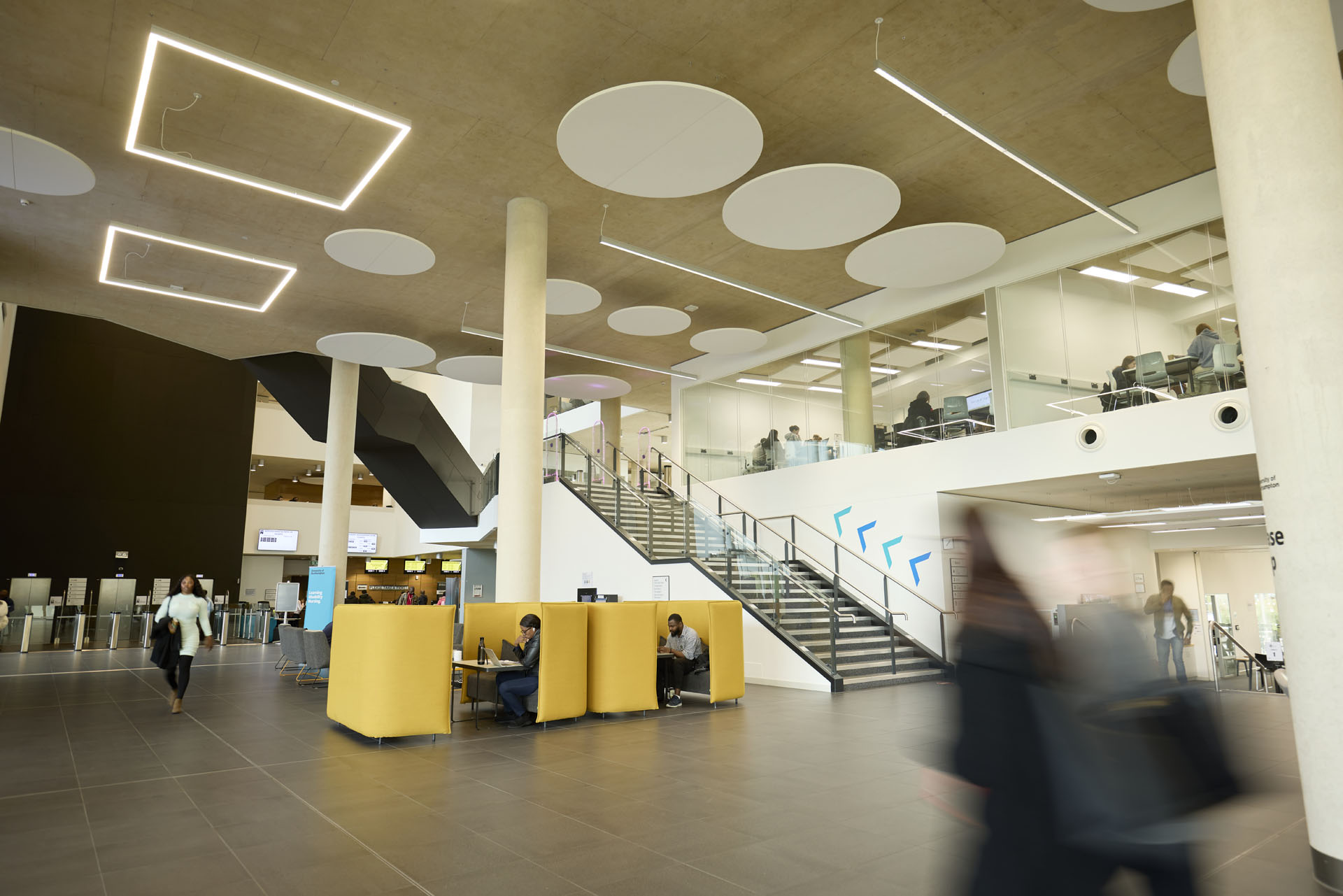
Image shows a large, modern lobby with high ceilings, circular light fixtures, and an upper floor visible. People are sitting on yellow seats and moving around. Stairs and a black staircase are also present.
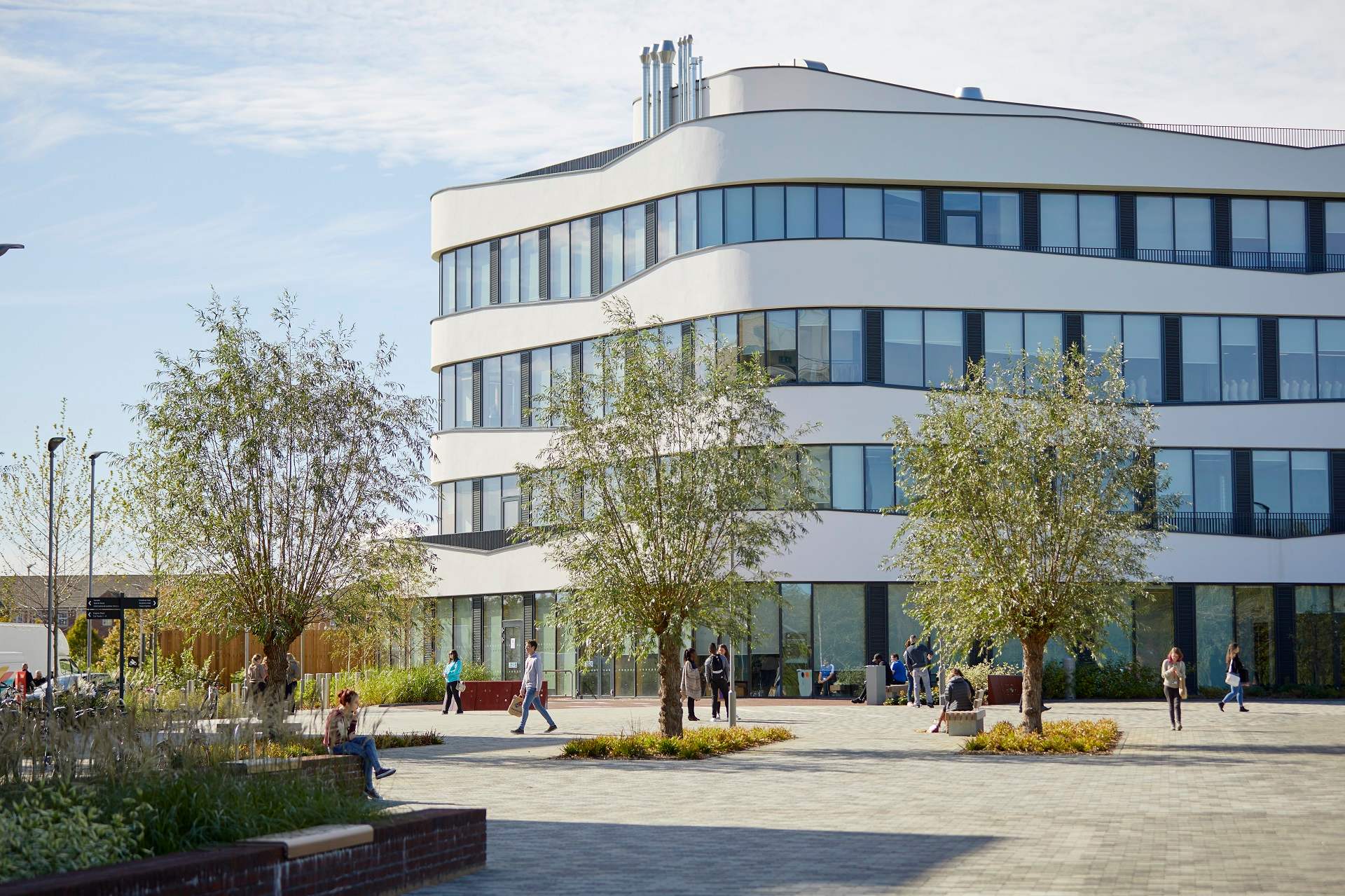
Image shows external view of the Creative Hub, which is a large modern multi-story building with curved design, large windows, and white façade. In front of the building, people walk and sit on a landscaped plaza with trees and benches.
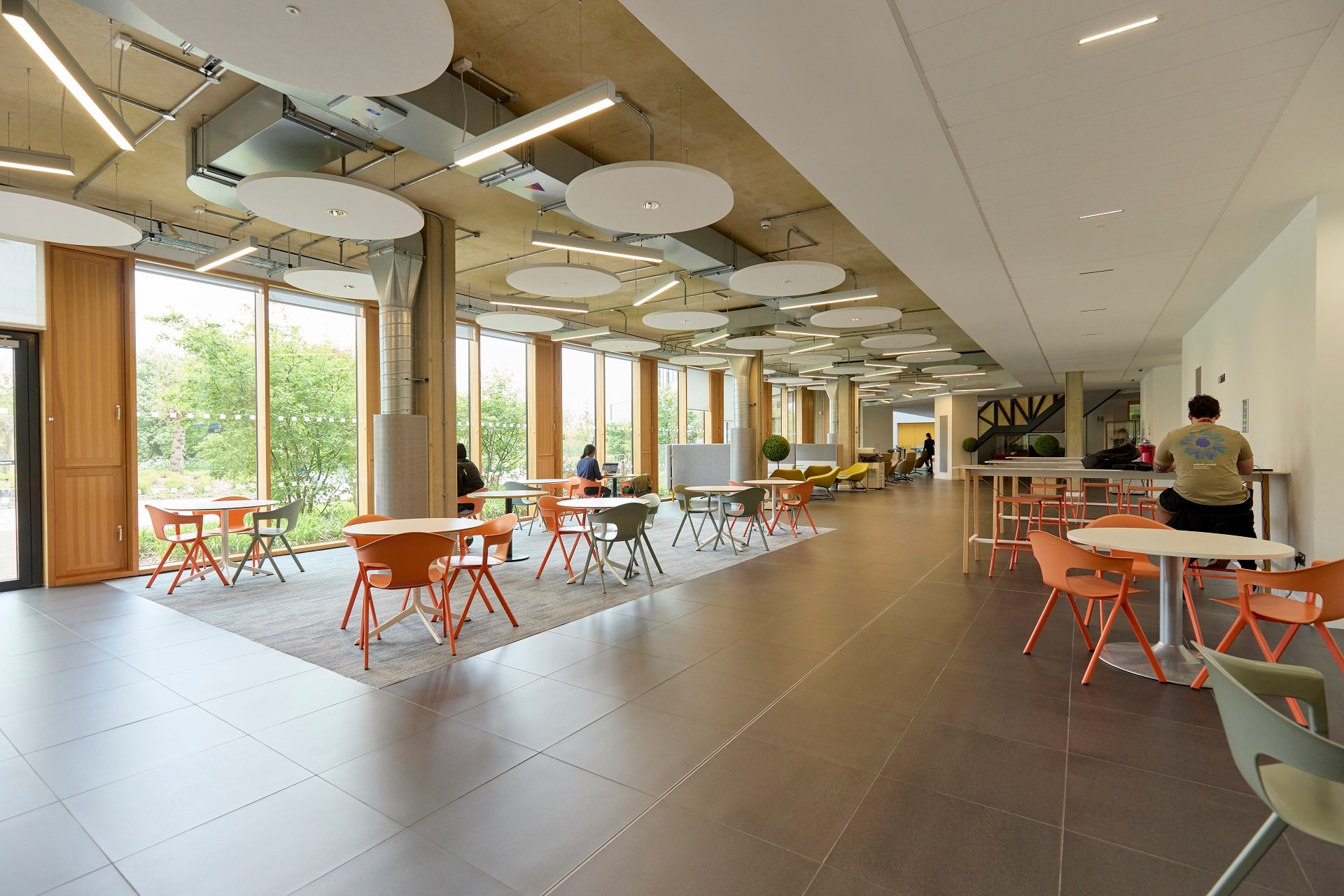
Image shows a study area on the ground floor of the Creative Hub; it has bright and modern with large windows, light fixtures on the ceiling, colourful chairs, and students seated at tables.
A typical offer to study this BSc Software Engineering Course could be:
We welcome applications from students with a mix of A levels and BTEC/Cambridge Technical qualifications.
Applicants will be expected to have achieved GCSE Mathematics (or equivalent) at grade C/4 or above. We welcome international applicants and applications from students with a range of non-traditional educational or professional qualifications.
For information on how to apply to study with us, please see our How to Apply page.
We are also able to welcome applications for September 2025 through clearing.
Admission to this foundation course is normally:
We welcome applications from students with a mix of A levels and BTEC/Cambridge Technical qualifications.
However, we would also like to hear from you if you have professional or industry experience instead, a range of other qualifications or self-developed subject knowledge that relates to software engineer courses.
All International and EU students applying for a course with us must meet the following minimum English language requirements:
For information regarding English language requirements at the University, please see our IELTS page.
“I particularly enjoyed the practical application of the course as it opened my eyes to the different aspects of the field and made me realise that you can still be involved in the software industry without necessarily having to be a developer.”
Our Software Engineering degree gives you a technical understanding of the essential academic knowledge, interpersonal abilities and practically based software development skills required to become an effective software engineer in the software industry.
Throughout the programme, you will develop and apply a range of analytical methods and problem-solving skills to real-world software development scenarios. You will build your professional capabilities individually and as part of a team in a systematic practical manner applicable to a wide range of professional roles.
Software engineering BSc develops your independent thinking and flexibility within a significant range of areas in the software engineering field including, mobile applications development, object-oriented programming, software design, interface design, artificial intelligence, software testing and software evaluation.
This purpose of this module is to: introduce students to the skills, principles and concepts necessary to solve problems in computing; to develop essential skills to enable the solution of these problems with the construction of appropriate algorithms and a computer program; introduce principles underlying the design of a high level programming language (HLPL); gain experience and confidence in the use of a HLPL to implement algorithms; implement HLPL programs using an appropriate programming language e.g. Java; introduce an object-oriented language initially as a non-object language.
This module provides knowledge of the hardware and software components that make up a computer system and overview the important concepts in preparation for future study of computer science.
This module develops student¿s understanding of the principles of communication networks and how to classify the various network devices in the appropriate layer of the protocol stack. Students will learn how to manage IP addresses in a small network and will develop confidence in using network simulation software.
This purpose of this module is to give students an understanding of client side web technologies. This module provides students with: the essential knowledge and practical skills to design, develop and implement a Web site to contemporary web standard
The purpose of this module is to develop student’s experience with the multiple stages of software engineering life-cycles from initial need and requirements identification through to the design and implementation of code in order to develop confidence in the use of terminology and techniques for each of the stages.
The purpose of this module is to apply the principles of database integrity in the design and development of database structures. This is a practical module that applies data modelling techniques to establish, modify and maintain database integrity, structures and associated components such as entities, relationships and attribute definitions.
Please note the modules shown here relate to the academic year 26/27. The modules relating to the academic year 27/28 will be available from June 2027.
If you opt to take the work placement year, you will also take the following compulsory module:
This module gives students the opportunity to apply and develop theoretical knowledge in the execution of an individual project and report. By completing the module students will gain experience of researching the necessary technical information, of solving cross-disciplinary technical problems, of sourcing and obtaining parts and components and of working to a deadline with others in a team. This module has a strong industrial focus and includes various methods of engagement.
The optional placement year enables you to put into practice what you have learned on your degree and gain practical industry experience. Your degree is extended to four years and the placement is undertaken at the end of your penultimate year, this is for one year (48 weeks) and paid. If you meet the entry criteria, and choose to take up a placement year, you will find it an invaluable experience that helps you to apply your learning in your final year and prepares you for your career. We offer a lot of support in helping you to find a placement.
The Integrated Foundation Year (IFY) offers a new and exciting route into studying for a degree in software engineering, attracting ambitious and driven students who are willing to learn and advance.
If you have non-standard qualifications or do not quite meet the admissions requirements, we can offer you a fantastic opportunity to study a four year programme which includes an Integrated Foundation Year. The Integrated Foundation Year will help you develop the theoretical/practical and academic skills you need, in order to successfully progress to the full award.
Our four-year courses will enable you to successfully follow the degree pathway of your choice while gaining essential study skills. The foundation year of your chosen degree will be studied on a full-time basis and is aimed at supporting the transition to higher education. Years two, three and four are then studied as a standard degree programme.
At the University of Northampton, everything we do, from funded trips to paid internships, is to give you everything you need to make a difference when you leave.
If you join this full time Software Engineering degree at Northampton, you will receive a laptop when your course begins*. The laptops are built to a bespoke custom specification ideal for use in the seminar room, collaborative group work or studying at home.
Whatever your ambitions, we’re here to help you to achieve them. We’ll support you to identify the skills you’re learning during your course, find your strengths and secure practical experience so that when it comes to applying for jobs or further study you’ll feel confident in standing out from the crowd. We’ve created the Northampton Employability Promise because we are so confident that if you focus on your studies and complete one of our awards you’ll be highly employable by the time you graduate. Putting you in a great position to secure employment or continue your studies.
To check out the full list of perks, visit our Student Perks page or dedicated International Perks page.
*UK fee payers only (see Terms and Conditions for further details).
The current course structure is designed to allow students to seek an industry based internship between years 2 and 3. Students will receive guidance and advice on how to find, apply for and secure these internships. Students who secure these paid internships find them invaluable in developing their software based skill-set prior to completing their degree and entering the workforce on a permanent basis, post-graduation.
Software Engineering degree students will have the opportunity to join the world’s largest professional body at discount rates and join the UON IEEE Student Branch, through which they can get in contact with students from other academic institutes worldwide.
Students will have the opportunity to attend the annual UON IoT Workshop with guest speakers and presenters from the local, national and international industry. This is a great opportunity for the students to meet and work with colleagues from different year groups but also with professionals with several years in the industry.
Yes, an optional full year placement module is available for university students who have successfully completed stages 1 and 2 of their degree in software engineering. This will give you the opportunity to individually source and gain a year‘s extra work-based learning experience in a science related placement, spent either in the UK or abroad.
How will I learn on the BSc Software Engineering degree?You will be taught through a variety of activities and problem-solving challenges, so that you can apply your theoretical knowledge. Being able to analyse problems, implement statistical methods, research solutions and apply them in new ways are all skills that are highly valued in the computing industry, and you will be able to use them throughout your career to drive the industry forward.
How will I be assessed on the Software Engineering degree?There is a wide range of assessment including essays, reports and end of year examinations on our software engineering university programme.
What is software engineering?Software engineers are professionals within the computer science industry who are responsible for developing software and systems for the operation of businesses. They apply their practical skills and knowledge of programming languages and software engineering principles to develop and improve everything from applications and software products to games, operating systems and network control systems. As the reliance on smart devices increases, so will the demand for software engineering.
What Specialist Facilities are there?All Software Engineering BSc students will have access to a number of labs with all the course relevant software needed for their course. Students will also be given details of how to obtain the course required software components for installation on their own personal machines.
Get all the info you need ahead of time, before you can apply for funding in Spring on our fees and funding pages.
UON will adjust fees annually for UK (Home) Students up to the maximum allowable fee cap set by the Secretary of State for Education.
When assessing an applicant’s eligibility to pay home fees, we use the guidance provided by the UK Council for International Student Affairs (UKCISA) which sets out the regulations that have been decided by the UK Government Department of Education.
Tuition fees quoted for International Students apply only to the 2026/27 academic year. These fees may increase in future years in line with Consumer Price Index (CPI) inflation to reflect rising delivery costs. Any annual increase will be capped at a maximum of 5% of the previous year’s tuition fee. Updated tuition fees will be published on the UON website at least three months before the start of the next academic year.
There are no additional costs for this course for students beginning their studies in September 2026. Should this change, applicants and students will be contacted by the university with details of the costs.
For information on the scholarships available to you, please see our scholarships page.
For more information about possible funding options, please visit our Fees and Funding pages.
Fees quoted for the degree in software engineering courses relate to study in the Academic Year 25/26 only and may be subject to inflationary increases in future years.

Senior Lecturer - Computing
There is an increasing demand for skilled and qualified software engineering university graduates. This course will give you the skills and knowledge you need to work in a range of roles including your career in Software Engineering, including software programming, systems analysis and software testing.
Our graduates have gone on to work in Software Engineering jobs with employers such as Microsoft, IBM, Oracle and Barclaycard.
Commonly, they work in the following job roles:
Graduates will also be equipped with the required skills to undertake additional master’s programmes such as MSc, MPhil or PhD.
The University of Northampton’s master’s courses are a great way to enhance the skills you have already learnt. Benefit from our 20% alumni discount on master’s fees to give you a CV that will catch the eye of employers.