
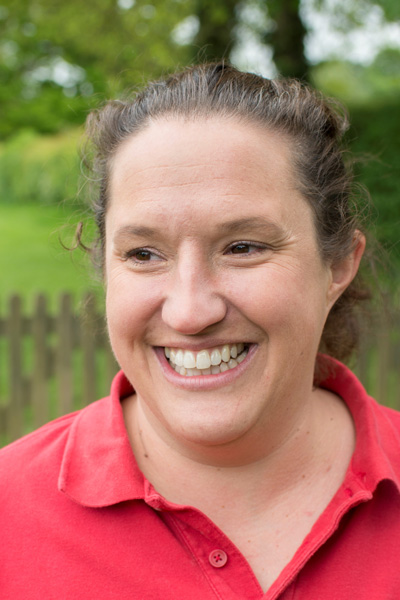
Tanya Richardson
Senior Lecturer in Education (CYF)
UCAS Code
X310
Duration
3 years Full Time
4 years with Foundation
3-6 years Part Time
CCC at A Level
MMM at BTEC
Full Time: £9,790
Part Time: £1,630 per 20 credit module
Integrated Foundation Year: £5,760
Updated 10/11/2026
The BA Early Childhood Studies degree takes a holistic approach to the development of young children, from conception to the age of eight and provides opportunities to apply this learning in placement settings. The Early Childhood degree draws on a range of disciplines, including psychology, sociology, early years pedagogy, policy, law, health, philosophy, and leadership and management, providing you with the breadth of knowledge to pursue careers in early childhood education and care, education, health and social care.
The part time route is ideal for anyone looking to fit study around existing commitments. You could expect to be on campus for approximately eight hours per week. If you are not already working in a related role you would also need to attend a placement for half a day per week. In addition to the taught sessions you would need to commit around six hours per week to independent study.
For Student Satisfaction in the East Midlands*
For Student Experience**
*Complete University Guide 2027, Childhood and Youth Studies Subject Area, For Student Satisfaction (East Midlands only)
**The Times 2027 League Table for Education
Our BA Early Childhood Studies Degree has been awarded with the Early Childhood Studies Degrees Network (ECSDN) quality mark for the Graduate Practitioner Competencies, indicating our commitment to an excellent application of knowledge to practical skills.
*See eligibility criteria, terms and conditions apply
A typical offer would be:
We welcome applications from students with a mix of A levels and BTEC/Cambridge Technical qualifications.
Applicants are expected to hold GCSE grade C/4 or equivalent in English and Mathematics.
You will be expected to demonstrate your commitment to Early Childhood Studies by having previous experience of working with children under the age of eight.
Disclosure and Barring Service (DBS) checks are also required.
The standard entry requirements for the Early Childhood Studies Foundation Year are:
We welcome applications from students with a mix of A levels and BTEC/Cambridge Technical qualifications.
All International and EU students applying for a course with us must meet the following minimum English language requirements:
For information regarding English language requirements at the University, please see our IELTS page.
“My UON experience was one of transformative growth, providing the academic backbone for national professional excellence.”
Our Degree in Childhood Studies has been designed to contribute towards achieving the following United Nations Sustainable Development Goals: SDG3 Good Health and Wellbeing and SDG4 Quality Education.
This Early Childhood Education course will give you a broad understanding of the theoretical and professional issues that underpin the care and education of infants and young children. By studying the perspectives of various disciplines and professions you will be prepared for a career in any aspect of Early Childhood Education and Care, equipped to work with families and colleagues from a variety of professions.
You will gain an understanding and awareness of the rapidly evolving nature of early childhood education and care provision in England, Europe and throughout the world. Divided into specific modules, this childhood studies degree covers children’s development and learning in the context of the family, the community and wider national and international contexts. You will benefit from specialist sessions with professionals in the fields of special educational needs, social work, cultural diversity and creative and therapeutic approaches. You will receive paediatric first aid training as part of the course.
In this module, you will explore the relationship between children’s health, wellbeing and holistic development. You will examine the importance of child health and development alongside health models, health promotion strategies and contemporary health policy.
You will investigate epidemiological trends in children’s health and learn to interpret related data. This will help you consider how health needs can affect children and families and influence children’s wider development. You will also explore the responsibilities of professionals working across health, education and social care, developing your understanding of why a multi-professional approach matters when promoting children’s health.
You will apply this learning by designing a health promotion resource for young children and explaining its effectiveness within Early Years practice. Through this work, you will develop your ability to select communication approaches suited to children, young people and families and to use evidence to think about children’s health and wellbeing in a wider professional context.
This module introduces the professional expectations associated with working in Early Childhood Education and Care. You will explore the principles, values and ethics that underpin professional roles and consider the responsibilities of people working across health, education and social care.
You will examine different workforce roles and develop communication and engagement skills for working with children, parents, carers and colleagues. Reflection is an important part of the module. You will be introduced to reflective models and learn how to select and apply them when planning and evaluating your development. Through a Personal Learning Portfolio, self-reflection and target setting, you will consider your strengths and identify opportunities for further development.
The module connects knowledge with practice and provides a foundation for reflective professional practice. It will help you become more aware of your own development and recognise where positive change may be possible within your personal and professional learning.
This module will introduce you to university study while helping you explore some of the key ideas, language and perspectives used to understand children, young people and education. You will consider concepts relating to children, families, education, learning, care and professional practice, while exploring how different disciplines approach these areas.
You will develop important academic skills, including structuring ideas, academic writing, referencing and engaging with different viewpoints. You will learn how to find, select and evaluate academic and digital sources, including the responsible use of generative artificial intelligence, and consider academic integrity and ethical engagement. You will also reflect on how your own experiences, assumptions and values can influence the way you understand and discuss issues.
Through reflection and target setting, you will identify your strengths and areas for development, supporting your transition towards more independent university study and your developing academic and professional identity.
In this module, you will explore how babies and young children develop from birth to eight, considering social, emotional, physical, language and cognitive development. You will examine Early Childhood theories and contemporary theoretical perspectives, looking at how they can help you understand children’s development, play and learning.
You will develop skills in observing children and explore different approaches to monitoring and recording development. You will consider the influence of parents, caregivers and the local community, including the ways play can support children’s development. The module also considers difference and diversity and introduces the ethical principles that need to guide observation and research involving children.
By connecting theory, research evidence and observations, you will develop a more holistic understanding of children’s development. You will also strengthen your ability to organise information, build an evidence-informed argument and communicate appropriately with children, parents, carers and other professionals.
In this module, you will explore how policy, rights and advocacy affect children, young people, families, education and related services. You will consider how social change has influenced policy over time and examine some of the factors that shape policy development, implementation and reform.
Topics include children’s rights and participation, human rights, the United Nations Convention on the Rights of the Child, advocacy and activism, and the promotion of marginalised voices. You will also explore legislation, guidance and policy relating to education, childcare and family services, alongside equality, safeguarding and professional practice.
You will examine how evidence, research and data can inform policy and service provision and consider the roles of professionals and multi-agency services. By reflecting on current debates and communicating information in written, verbal or visual formats, you will develop your ability to examine different viewpoints and make informed recommendations for improvement.
This module gives you the opportunity to connect academic learning with professional practice through work-based learning. You will consider how theoretical perspectives relate to a setting while developing your understanding of reflective practice, workplace ethics and professional communication.
Your work-based learning can include up to 140 hours of placement experience in a setting appropriate to your area of focus. You will examine the policies and legal and regulatory requirements relevant to your setting and develop observation skills by working alongside practitioners and evaluating activities. You will also develop communication and engagement skills for working professionally with stakeholders.
Throughout the module, you will reflect on your own learning and development, using observation, information and self-evaluation to inform your practice. This gives you an opportunity to understand how theory connects with professional contexts while developing initiative, responsibility and reflective practice.
Please note the modules shown here relate to the academic year 26/27. The modules relating to the academic year 27/28 will be available from June 2027.
We’re updating our courses to help you develop the skills and experience you’ll need for a changing world of work.
This may include more opportunities to work with students from other subjects and learn through a wider range of experiences. As this course is being refreshed, some information on this page may change before you start your studies.
We’ll make sure you have the latest information before you begin your course.
Find out more about our Curriculum Redesign.
At the University of Northampton, everything we do, from funded trips to paid internships, is to give you everything you need to make a difference when you leave.
If you join our full-time degree, you will receive a laptop when your course begins*. The laptops are built to a bespoke custom specification ideal for use in the seminar room, collaborative group work or studying at home.
Whatever your ambitions, we’re here to help you to achieve them. We’ll support you to identify the skills you’re learning during your course, find your strengths and secure practical experience so that when it comes to applying for jobs or further study you’ll feel confident in standing out from the crowd. We’ve created the Northampton Employability Promise because we are so confident that if you focus on your studies and complete our award, you’ll be highly employable by the time you graduate. Putting you in a great position to secure employment or continue your studies.
To check out the full list of perks, visit our Student Perks page or dedicated International Perks page.
* UK fee payers only (see Terms and Conditions for further details)
The Integrated Foundation Year (IFY) offers a new and exciting route into studying, attracting ambitious and driven students who are willing to learn and advance.
If you have non-standard qualifications or do not quite meet the admissions requirements we can offer you a fantastic opportunity to study a four year programme which includes an Integrated Foundation Year. The Integrated Foundation Year will help you develop the theoretical/practical and academic skills you need, in order to successfully progress to the full award.
Our four-year courses will enable you to successfully follow the degree pathway of your choice while gaining essential study skills. The foundation year of your chosen degree will be studied on a full-time basis and is aimed at supporting the transition to higher education. Years two, three and four are then studied as a standard degree programme.
The Early Childhood Graduate Practitioner Competencies evidence your development of skills within this field and indicate that you have the enhanced skills, and knowledge, that are needed when working with young children and their families.
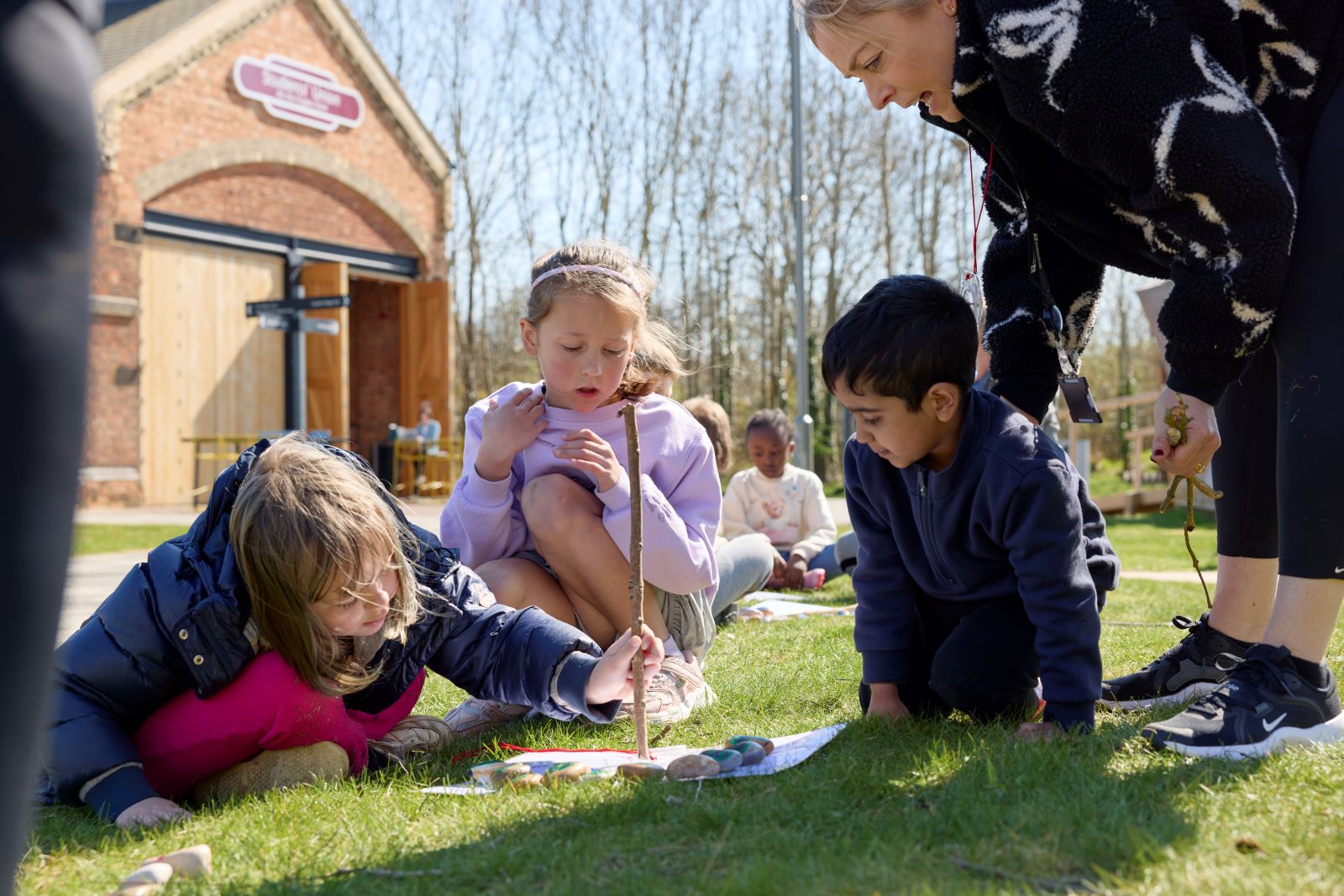
Placement opportunities are a real strength of our early childhood studies degree, enabling you to consolidate your academic learning in practice. You will also have an opportunity to visit or study in a European country to see the early years provision in a different context.
Graduate Practitioner Competencies
Early Childhood Graduate Practitioner Competencies
These Competencies focus heavily on the application the academic elements of degree programmes in placements. You will meet the nine competencies through assessed observations of practice, practice-based tasks and academic assessment.
The nine Competencies are:
The course is taught by a team of experts in the fields of early childhood studies, education, health, inclusion and social care, giving you real, practical knowledge that will be invaluable in your future career.
Studying an early childhood degree will provide you with a range of skills that could make you employable for any job that involves working with children and their families. From the educational sector to health and social sectors you will open up a lot of avenues for your future career.
Other benefits of an early childhood degree include:
This course will help you to:
Taught sessions, reflective written tasks and self-evaluation in the Personal Learning Portfolio (PLP) will ensure that you have the opportunity to fully analyse the significance of the context for your academic study and research. Your tutors and placement mentors will provide ongoing feedback to support your personal, professional and academic development.
You will study a range of subjects relevant to early childhood over the three years of the programme including:
In your second year, you will have the opportunity to spend a term studying and on placement in another European country. If a term is too long then you may prefer to spend a week in an alternative country to compare the Early Years in an alternative culture and context. This will cost around £370.
We also offer optional study trips within the UK, such as visits to London (approximately £10) and Burghley House (approximately £6). These costs have been covered by the University in the past.
Are there work placements?The Early Childhood Studies degree includes placements in each of the three years, giving context to your academic study and providing you with professional development. You will have up to 25 days on placement in years 1 and 3, and 30 days placement in year 2. You may find that there are additional costs involved with your placements, such as travel. Placements are linked to the graduate competencies and ensure that you will be able to meet the full and relevant criteria at Level 3 to work in early childhood education and care settings.
How will I be assessed?There are no exams on this course. Instead, you will complete written assignments, presentations, projects, posters and professional development portfolios.
Who can I contact for more information about this BA Hons Early Childhood Studies?For more information about the Early Childhood Studies BA (Hons) please contact Tanya Richardson.
“The course has driven me to want to learn even more about Early Years and to drive high quality teaching and learning – not only in my setting, but in other settings too.”
UON will adjust fees annually for UK (Home) Students up to the maximum allowable fee cap set by the Secretary of State for Education.
When assessing an applicant’s eligibility to pay home fees, we use the guidance provided by the UK Council for International Student Affairs (UKCISA) which sets out the regulations that have been decided by the UK Government Department of Education.
Tuition fees quoted for International Students apply only to the 2026/27 academic year. These fees may increase in future years in line with Consumer Price Index (CPI) inflation to reflect rising delivery costs. Any annual increase will be capped at a maximum of 5% of the previous year’s tuition fee. Updated tuition fees will be published on the UON website at least three months before the start of the next academic year.
Placement is compulsory on this Early Childhood Studies BA degree and this may involve you travelling between campus and the placement setting. You will be the responsible for the cost of this travel. There are a number of recommended texts to buy during your studies.
The typical price of course books for each year is as follows:
During this degree in Childhood Studies, you will have the opportunity to join study trips. Previously, these have included a week in Sweden, an opportunity to study for a short time in a European country (through the Turing scheme) and trips within the UK. Study trips are optional and the costs vary year on year. Typically, this is around £400 for Sweden, flights and in-country expenses for the Turing scheme. Trips within the UK are funded by the university and students would need to fund own food/refreshments . Students normally allow an additional £100-£250 for their overseas expenses.
For information on the scholarships available to you, please see our scholarships page.
For more information about possible funding options, please visit our Fees and Funding pages.
Fees quoted relate to study in the Academic Year 2025/26 only and may be subject to inflationary increases in future years. UON will adjust UK fees annually in line with Government Policy.

Senior Lecturer in Education (CYF)

Senior Lecturer in Education (CYF)

Senior Lecturer in Education (CYF)

Professor of Education

Senior Lecturer in Education (CYF)

Lecturer in Education and Society

Senior Lecturer in Education (CYF)
If you complete your degree in Early Childhood Studies with us and apply for the PGCE Primary Education (5-11) (QTS) programme at the University of Northampton during your final undergraduate year, you are guaranteed an interview.
Terms and conditions apply:
Successful completion of this course can lead onto further studies if required. BA (Hons) Early Childhood Studies graduates could progress on to study PGCE Primary Education (5-11) (QTS), MA Social Work, MSc Child and Adolescent Mental Health, MA Special Educational Needs and Inclusion and many more.
Our BA Hons Early Childhood Studies graduates have gone on to a range of professions, including, but not limited to: early years practitioners, teachers, social workers, child protection roles, advisory roles, play therapists, university lecturers and nursery managers.
Please see the careers map for more information.