
Steve Buckle
Senior Lecturer in Paramedic Science
To ensure we guide you through the correct application process, we just need you to answer a few quick questions.
Already applied?
Log in to view updates.
This course offers two separate application routes, depending on whether the application is submitted by the student or an international agent.
Please select your desired length of study from the available options.
This course includes a placement option. Please indicate whether you’d like to apply with or without a placement.
Please select where you would like to study.
All the available academic years are displayed below.
All the available start months for the selected academic year are listed below.
Please review the information below carefully before continuing.
If you need to make any changes, click the < Back button to return to the previous step.
UCAS Code
B950
Duration
3 years full-time
BBC at A Level
DMM at BTEC
Full Time: £9,790
Updated 20/03/2026
We have received strong applications for 2026 entry and the BSc Paramedic Science course is expected to be full – so we are currently closed to new applications. Applications for 2026 are still welcome on our other health and sports courses.
The programme will reopen in September 2026 for the 2027/28 academic year.
The University of Northampton’s Paramedic Science degree programme will provide you with a wide range of academic and practical components to equip you with the required competencies to become a Paramedic registered with the Health and Care Professions Council (HCPC).
Overall for Paramedic Science
For Satisfied with feedback in Paramedic Science
Overall for Health Professions
For Student Positivity – National Student Survey 2025
Based on Office for Students (OfS) data from the National Student Survey. Guardian data from the 2026 Paramedic Science subject table and Health Professions subject table.
This programme is accredited by the Health and Care Professions Council (HCPC) and is endorsed by the College of Paramedics. Upon successful completion of the BSc Paramedic Science course, you will be eligible to apply for registration with the Health and Care Professions Council (HCPC) and membership with the College of Paramedics.
The BSc Paramedic Science entry requirements for eligibility to apply are as follows:
We welcome applications from students with a mix of A levels and BTEC/Cambridge Technical qualifications.
It is essential that you have a standard full UK driving license prior to starting the paramedical science course. The cost of this is your responsibility.
In addition to the requirements above, you will need to have five or more GCSEs (or equivalents) at grade C/4 or above, including English, Mathematics and a Science subject.
Transferable skills relevant to Paramedic practice are essential with an excellent recommendation reference.
All offers of a place on the paramedic course will be made to applicants after completion of successful interviews by the University, and will be conditional subject to:
Occupational Health Clearance:
All healthcare students are required to undertake a standard Occupational Health Clearance which will assess your health and immunisation record and assess your fitness for the programme you have chosen. Courses such as midwifery, dental nursing and paramedic science also require an enhanced Occupational Health clearance and appropriate immunisation to undertake exposed prone procedures (EPP). Without the enhanced occupational health clearance your ability to attend some clinical placements/activities in Trust areas may be limited or refused, causing delays with course progression and employment.
Further information for healthcare students can be seen through the following link (appendix 1) Green Book: Chapter 12 Immunisation of healthcare and laboratory staff.
For more information on how to make an application for the Paramedic Science course, please visit our How to Apply page.
Open Days give you the best experience and insight to courses, people and facilities that interest you. Make your choice easier and come meet us.
Book NowBecoming a paramedic offers the opportunity to provide critical medical care in emergencies, making a direct and positive impact on people’s lives. Explore Paramedic career to find out more about whether this is the career for you.
Our teaching team is made up of a Professional lead and a number of academics who are experienced Paramedics or Specialist Paramedics working in pre-hospital and hospital settings. All of our Paramedic Science degree teaching staff have significant practice experience and qualifications in a variety of Masters level qualifications, with the majority having completed post-graduate certificates in Medical Education.
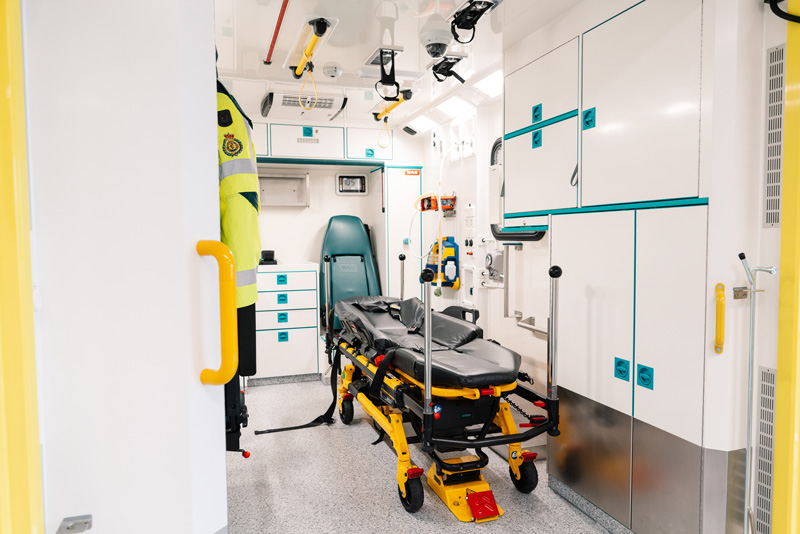
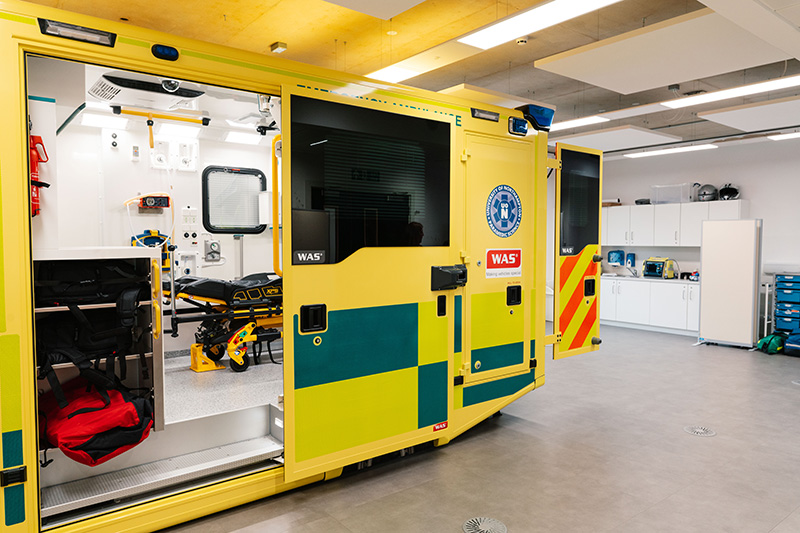
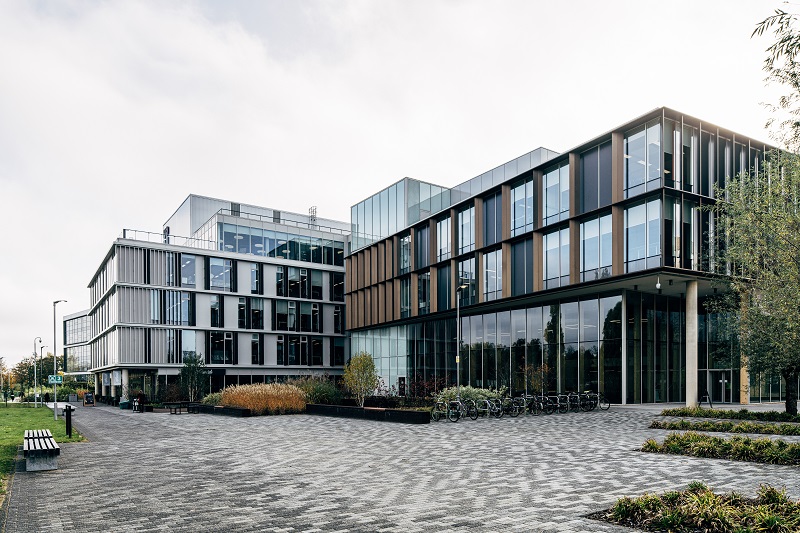
Our Paramedical Science clinical skills suite, located at our Waterside Campus, has a purpose-built ambulance simulator, specialised equipment, manikins and a full range of paramedic patient management equipment and patient handling aids to assist students in their learning.
Our Paramedic Science degree has a modular curriculum, ensuring that you are able to develop both academically and practically. This paramedic course combines practical placements with blended academic study in each term.
The purpose of this module is to provide an underpinning of the key concepts of patient assessment and professional understanding and requirements in Ambulance care. The module will allow students to develop clinical assessment skills and understand the ethics and law associated with patient care.
The purpose of this module is to ensure students demonstrate a robust knowledge base of anatomy, physiology and pharmacology, increasing their understanding of the normal physiological processes within human bioscience systems. This strong foundational knowledge and understanding will then facilitate the linking of clinical and bioscientific presentations encountered in practice.
The purpose of this module is to understand and apply the knowledge of how to assess and manage patients with a variety of different conditions through their life span. This module will allow students to develop clinical assessment and management skills using a range of equipment and technologies.
The purpose of this module is to enable students to develop their knowledge and understanding of professional issues related to paramedic practice. The student will view the patient from a holistic perspective, developing their knowedge in a range of important areas to ensure safe, ethical, legal and socially aware practice.
The purpose of this module is Professional socialisation (Communicating in a professional environment with staff and patients) and becoming familiar with basic concepts of ambulance care, developing into reflective practitioners.
Please note the modules shown here relate to the academic year 25/26. The modules relating to the academic year 26/27 will be available from June 2026.
At the University of Northampton, everything we do, from funded trips to paid internships, is to give you everything you need to make a difference when you leave.
If you join our full-time Paramedic Science degree at Northampton, you will receive a laptop when your course begins*. The laptops are built to a bespoke custom specification ideal for use in the seminar room, collaborative group work or studying at home.
Whatever your ambitions, we’re here to help you to achieve them. We’ll support you to identify the skills you’re learning during your paramedical science course, find your strengths and secure practical experience so that when it comes to applying for jobs or further study you’ll feel confident in standing out from the crowd. We’ve created the Northampton Employment Promise because we are so confident that if you focus on your studies and complete one of our awards you’ll be highly employable by the time you graduate. Putting you in a great position to secure employment or continue your studies.
To check out the full list of perks, visit our Student Perks page or dedicated International Perks page.
* UK fee payers only (see Terms and Conditions for further details)
Placements give you a great opportunity to learn from current healthcare professionals, as well as the Police and Fire Service, who can share their learning and experience with you which will enhance your knowledge and experience.
This paramedic course offers an even split between taught university sessions and practical placements. The course will be studied over 45 weeks per year. You will spend 37.5 hours on average per week in practice blocks, with your taught time being approximately 30 hours per week. You will need to complete approximately 750 hours of self-directed/private study for each year of the course.
Students will complete their ambulance placements at one of the ambulance stations within Northamptonshire. Hospital placements will be completed at either Northampton General Hospital, Kettering General Hospital, Milton Keynes University Hospital or Bedford Hospital. The placements will be in a wide range of healthcare settings, including but not limited to, A&E. Cardiac, Paediatrics. Theatres. Maternity, Minor injuries, GP surgery, Community (EOL) and SDEC.
Placements can be in ambulance service work areas such as emergency ambulances, response cars, or in specialist roles such as paramedic practitioners. Other practice areas include experience in theatre departments/anaesthetics, A&E, maternity, minor injury/minor illness, coronary care and paediatrics.
If you were once a registered allied health professional but took a career break and are looking for more information about financial, clinical and academic support available to return to practice, please visit the Health Education England site.
Throughout the paramedic science degree, we use a broad range of assessments , for example: range of essays, written exams, oral exams, presentations and practical (OSCE) exams.
This is balanced through the years, so there is an even mix in each year and you must pass all the modules in the previous year to progress to the next.
You are required to obtain a standard full UK driving license prior to starting the paramedic course. You will have an opportunity to complete the C1 driving theory qualification during your studies at the University of Northampton.
You will be expected to conduct yourself in line with the Code of Conduct relating to student paramedics registering with the Health and Care Professions Council.
Yes, one of our entry requirements is that you have passed your driving test by the 1st of September of the year you start the course.
Most ambulance trust require their paramedics to have what is known as a C1 driving qualification before starting employment. This is not needed to be accepted on to the course but could delay your ability to start in employment after graduation. We encourage you to research the NHS trust you wish to work for to inform you of any specific requirements they have.
Newly qualified paramedics (NQP) have a range of options in terms of employment after completing the course and registering with the HCPC. Different NHS trusts will offer varying roles for NQPs this could be frontline ambulance roles, Primary care or hospital based. There are also options to work in the private sector.
Unfortunately not, many trusts recruit NQPs before graduation and you may choose to apply for a range of roles, but there is no guarantee of a job.
Yes, you may wish to pursue a variety of careers as a paramedic, these include but are not limited to frontline ambulance work, GP surgery, hospitals, events, offshore, Air Ambulance, education, military, custody, voluntary organisations, search and rescue, remote/expedition.
You will need to consider some extra expense whilst on the course. Getting to and from placement will need access to a vehicle and the cost of fuel, maintenance and potential repair should your vehicle breakdown. As a paramedic student you can claim some of the fuel cost back through the NHS learning support fund (LSF).
You will need to purchase a stethoscope, but all other equipment you will need will be provided during the course. All the uniform you will need for the course is included. If for any reason you need replacement uniform during the course you will need to fund your own replacement uniform.
No, there is no expectation or requirement to buy any books during the course. We have multiple resources available to you for the whole programme both in hard and electronic copy. Should you wish to buy your own books though, we are more than happy to recommend literature to you, but there is no expectation to.
JRCALC stands for the Joint Royal Colleges Ambulance Liaison Committee. It is a committee that develops and provides clinical guidelines for UK ambulance services, particularly for paramedics. These guidelines, often referred to as the “JRCALC guidelines,” are essential resources for pre-hospital care and are used in paramedic training and education. You do not need to purchase, or subscribe to JRCALC it is provided and included within the course at no additional cost to yourself.
All applications will need to comply with occupational Health requirements as a condition of entry. This essentially consists of a general health check and the provision or confirmation of any necessary inoculations that are associated with being a health care professional.
There is no specific physical or fitness test for this course. However, you need to have a certain level of fitness that will allow you to be able to perform CPR for a considerable time, lift and carry patients when needed and to carry equipment when on placement.
Yes, you can still apply. The course and profession are open to individuals with long-term health conditions or disabilities, and support is available to help you succeed. However, it’s important to consider that paramedic work is physically demanding and typically involves shift work, including nights and weekends. The role may require lifting, working in challenging environments, and responding quickly in emergencies. As part of the application process, you’ll undergo an occupational health assessment to ensure you can meet the physical and emotional demands of the role, with or without reasonable adjustments. What are the HCPC requirements for becoming a registered paramedic?
To work as a paramedic in the UK, you must be registered with the HCPC. After successfully completing an HCPC-approved paramedic science degree, you can apply for registration. This confirms that you meet the professional standards required to practise safely and effectively. Without HCPC registration, you cannot legally work as a paramedic in the UK.
‘Fitness to practise’ refers to having the skills, knowledge, health, and character to carry out your professional duties safely and effectively. As a student, you’re expected to demonstrate professionalism throughout your training, especially during placements. Issues such as dishonesty, misconduct, or health concerns that are unmanaged can affect your fitness to practise. If these arise, the university or HCPC may investigate, which could affect your ability to register or continue on the course.
Yes, once registered, you are legally required to maintain Continuing Professional Development (CPD). This means regularly updating your knowledge and skills throughout your career. CPD can include formal training, reflective practice, attending conferences, or on-the-job learning. The HCPC audits a percentage of registrants each year, so you must keep a record of your CPD activities to show that you’re staying up to date with professional standards.
The Standards of Proficiency (SOPs) are a set of requirements set by the HCPC that outline what every paramedic must know, understand, and be able to do to register and practise safely. Your course is designed to ensure you meet these standards by the time you graduate. They cover areas such as professional conduct, communication, risk management, clinical skills, and decision-making. Familiarising yourself with the SOPs will help you understand what’s expected both during your training and in your professional role. You can find more detail on the HCPC website – Health and Care Professions Council.
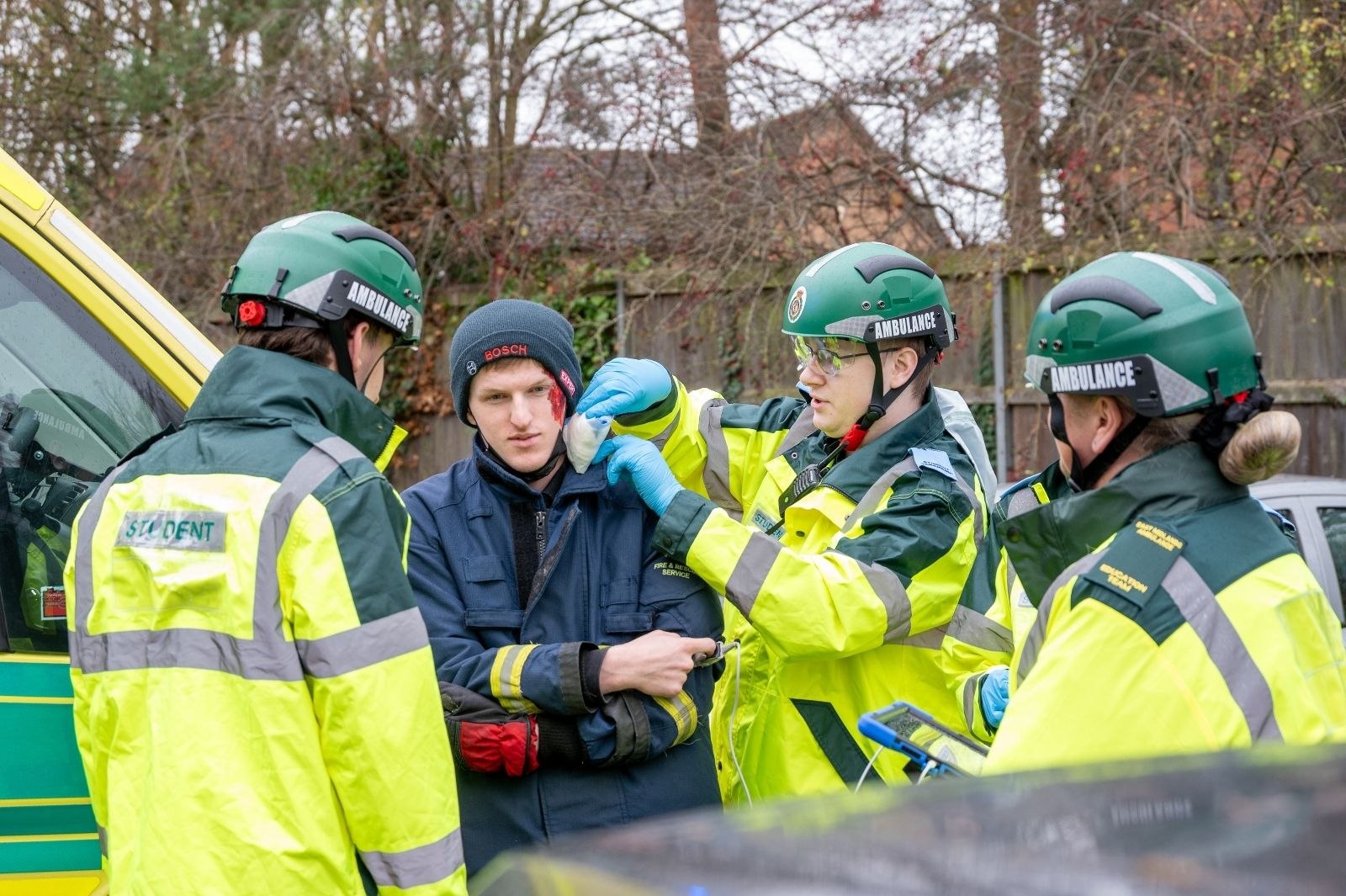
Students joined forces with Northamptonshire Fire and Rescue Service for a training exercise designed to strengthen joint emergency response skills during Road Safety Week.
UON will adjust fees annually for UK (Home) Students up to the maximum allowable fee cap set by the Secretary of State for Education.
When assessing an applicant’s eligibility to pay home fees, we use the guidance provided by the UK Council for International Student Affairs (UKCISA) which sets out the regulations that have been decided by the UK Government Department of Education.
Students, studying nursing, midwifery and many of the allied health professions courses from September 2020, may be eligible for a payment of at least £5,000 a year which they will not need to pay back. They may be able to apply for Financial support at the university through the NHS Learning Support Fund (NHS LSF) which offers eligible students additional support while studying for their degree. This is in addition to the Student Loan from the Student Loans Company.
Financial contribution towards your travel, and expenses in relation to your practice learning opportunities, may be available to you from the NHS Learning Support Fund. Details, including eligibility criteria, can be found on the NHS website.
The information provided above is correct for the academic year 2025/26 but please check the NHS LSF website for full details, any changes and updates.
For more information about possible funding options for the paramedic science course, please visit our Fees and Funding pages.
Fees quoted relate to study in the Academic Year 25/26 only and may be subject to inflationary increases in future years.
Senior Lecturer in Paramedic Science
Senior Lecturer in Paramedic Science
Senior Lecturer in Paramedic Science
Senior Lecturer in Paramedic Science
Successful completion of our Paramedic Science university degree will enable you to apply for registration as a Paramedic with the Health Professions Council (HCPC), meeting the HCPC’s education requirements for registration.
Our Master’s courses are a great way to enhance the skills you have already learnt. Benefit from our 20% alumni discount on Master’s fees.
Successful completion of this course could lead on to one of our postgraduate programmes: MSc Public Health, MSc Advanced Clinical Practice, MSc Physiotherapy (pre-registration)
At the University of Northampton, we offer a range of short courses and continuing professional development (CPD) programmes. These will enable you to learn new skills, progress into specialisms or take on new responsibilities.
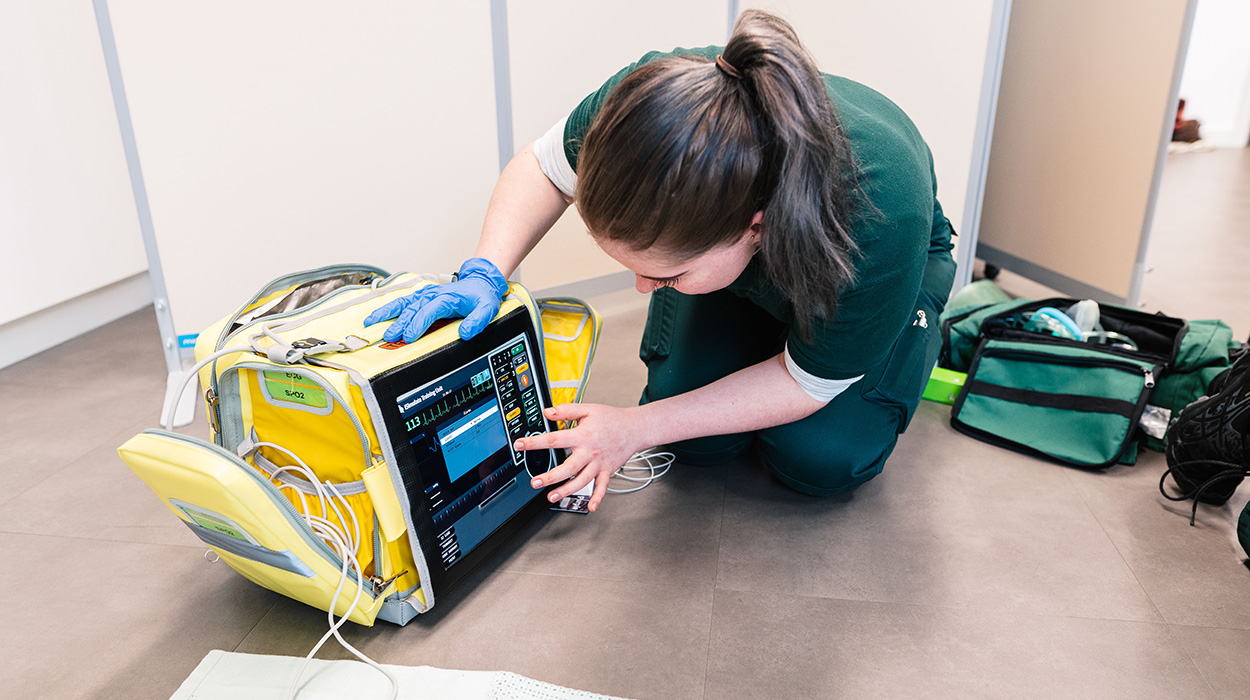
Equipment used in the Ambulance Service in a real ambulance environment.
View FacilityPurpose-built ambulance simulator and immersive environment to prepare students for real-life scenarios.
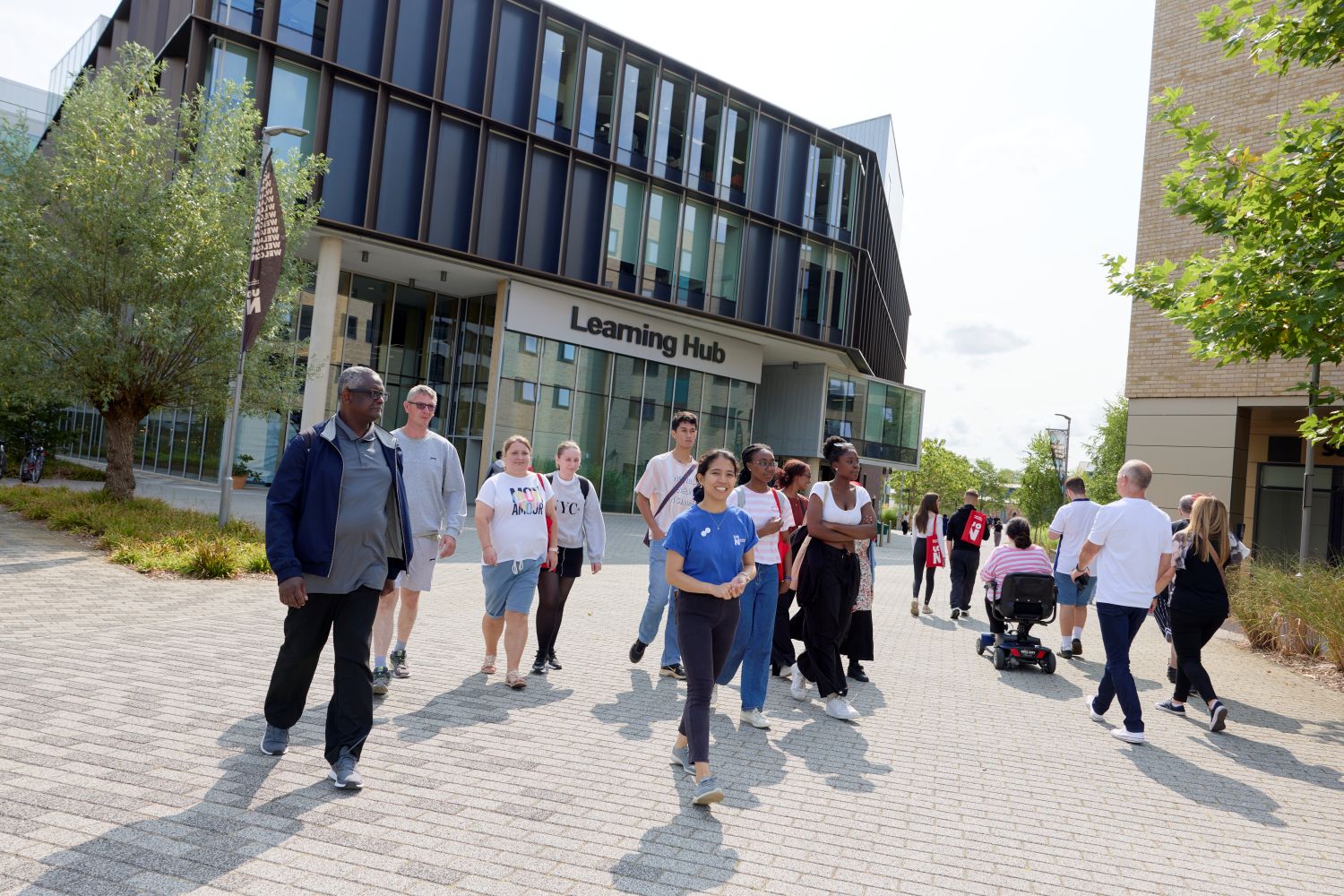
View FacilityThe Learning Hub is at the heart of the campus and home to the student information desk.
View Facility