Zhimin He
Senior Lecturer in Psychology
To ensure we guide you through the correct application process, we just need you to answer a few quick questions.
Already applied?
Log in to view updates.
This course offers two separate application routes, depending on whether the application is submitted by the student or an international agent.
Please select your desired length of study from the available options.
This course includes a placement option. Please indicate whether you’d like to apply with or without a placement.
Please select where you would like to study.
All the available academic years are displayed below.
All the available start months for the selected academic year are listed below.
Please review the information below carefully before continuing.
If you need to make any changes, click the < Back button to return to the previous step.
Duration
1 year full time
2-4 years part time
Level
Master'sPG MSc
Full Time: £8,700
Part Time: £967 per 20 credit module
Full Time: £19,000
study@northampton.ac.uk
0300 303 2772
Updated 27/03/2026
The University of Northampton’s Child and Adolescent Mental Health MSc is a multidisciplinary course which will develop your understanding of child development and mental health difficulties experienced by children and adolescents. The course provides a critical platform to explore the diverse and lived experiences of children, young people and their families. On the children’s mental health course, you will use your developed theory and experience to explore the socio-cultural context through which children and young people experience distress.
This child and adolescent mental health course is taught by practitioners and academics from various backgrounds, including but not limited to: mental health, education, counselling, therapeutic work, speech and language-offering a diverse range of perspectives.
This Child and Adolescent Mental Health training course has been designed to contribute towards achieving the following United Nations Sustainable Development Goal: SDG3 Good Health and Wellbeing.
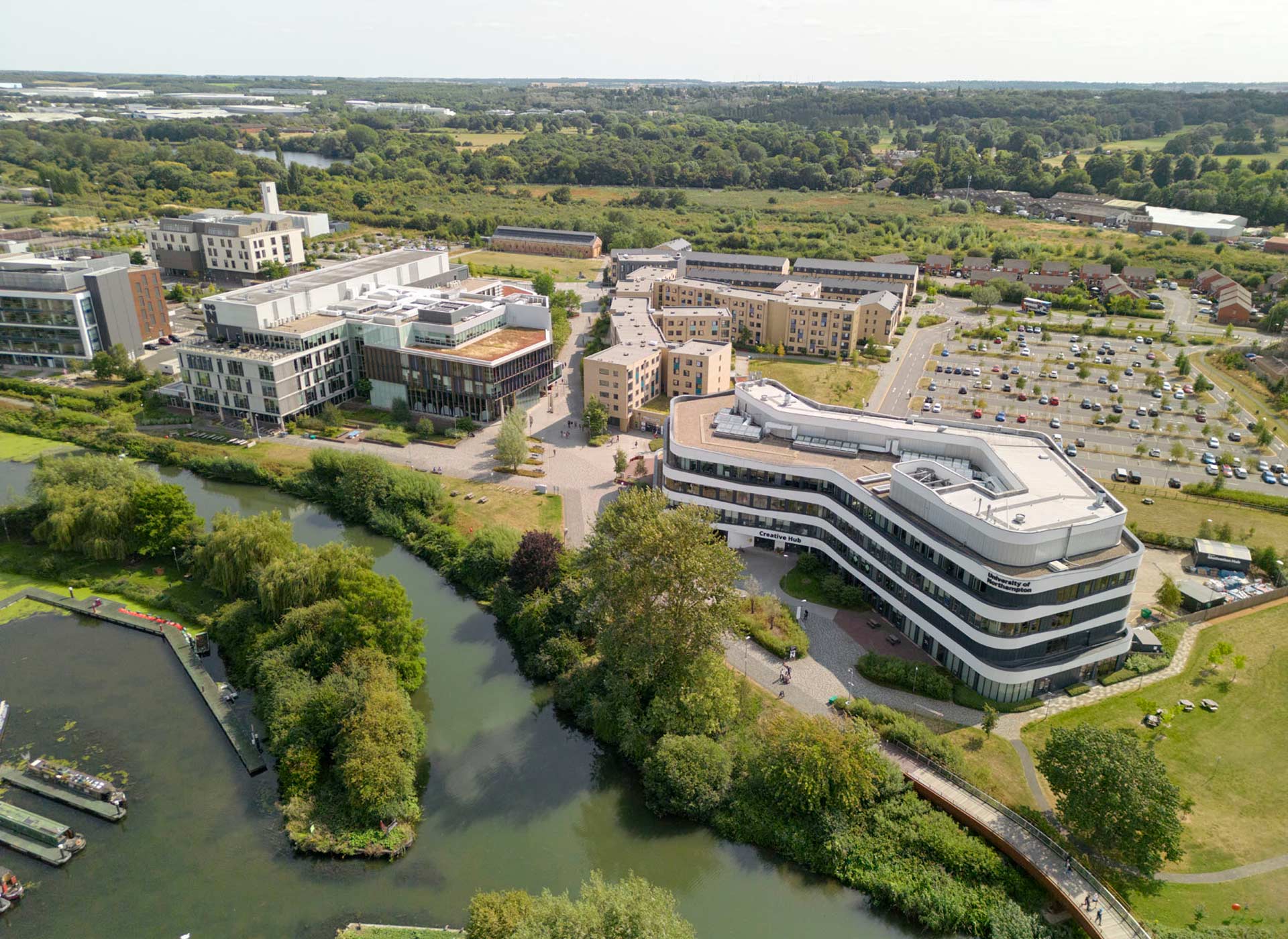
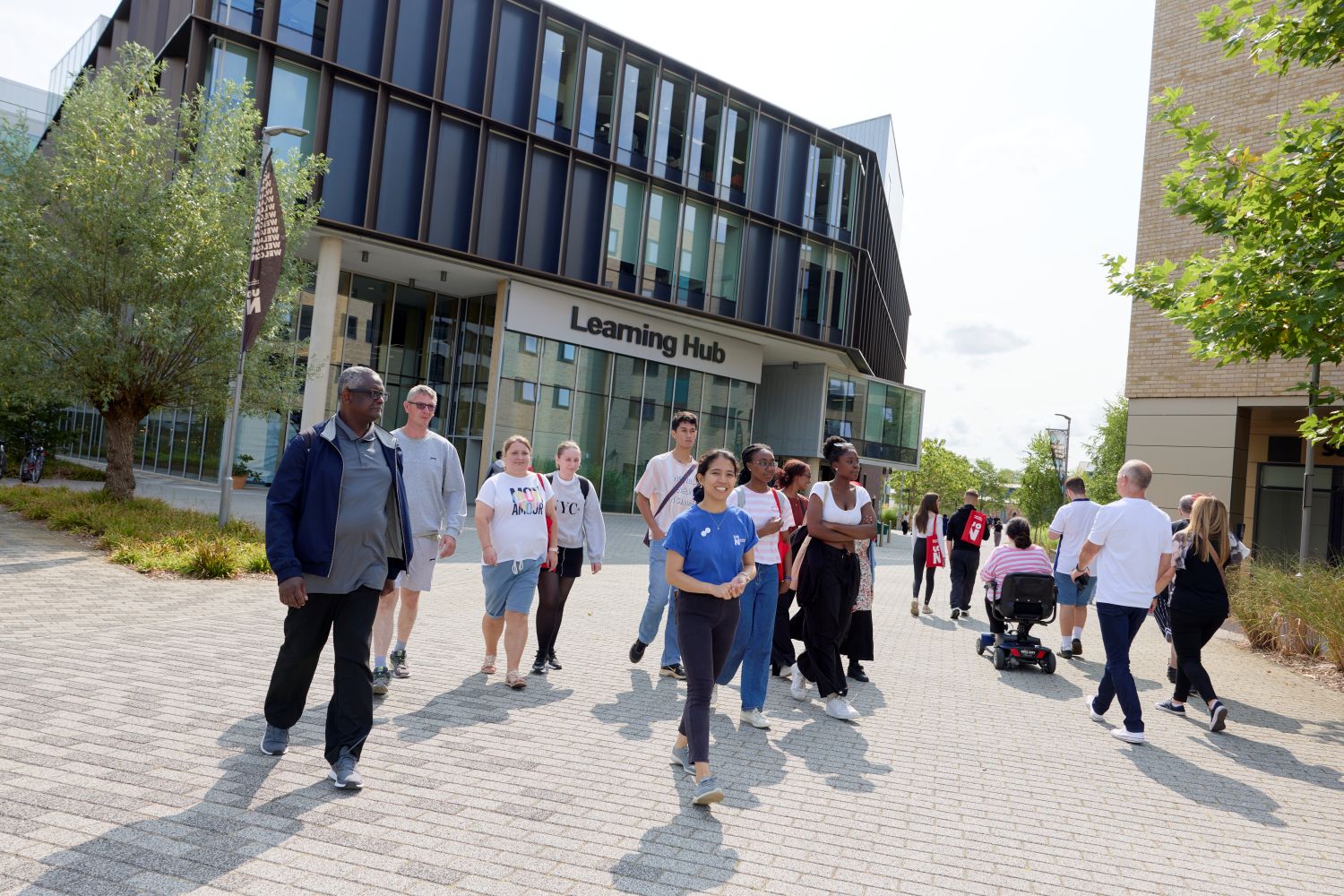
Waterside campus has everything students needs from: Learning Hub featuring 24/7 library, Creative Hub, on-site shop, restaurant, cafes and food outlets, multi-faith chaplaincy, student village hall, Students' Union and more. With only a short walk over the bridge into the town centre.
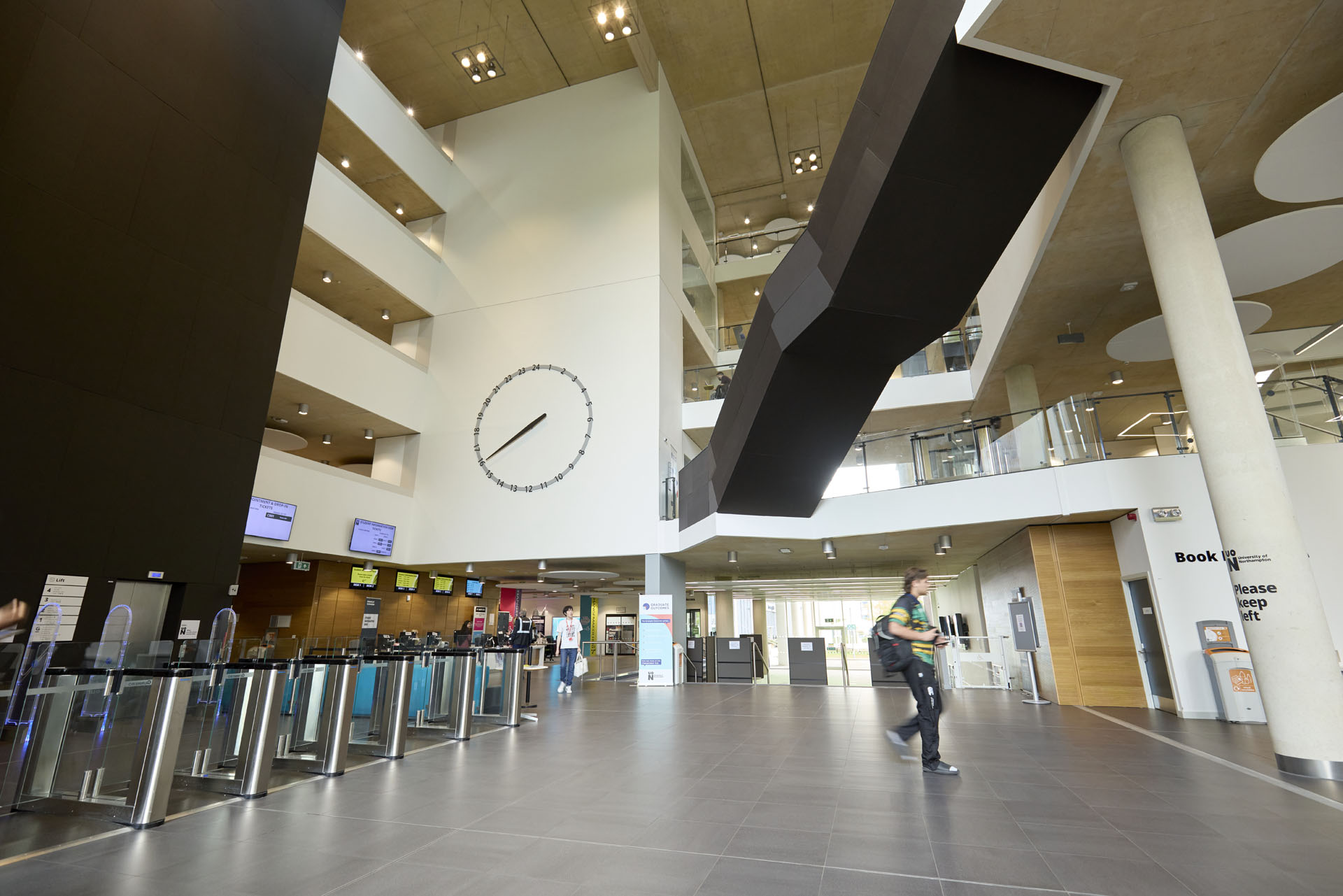
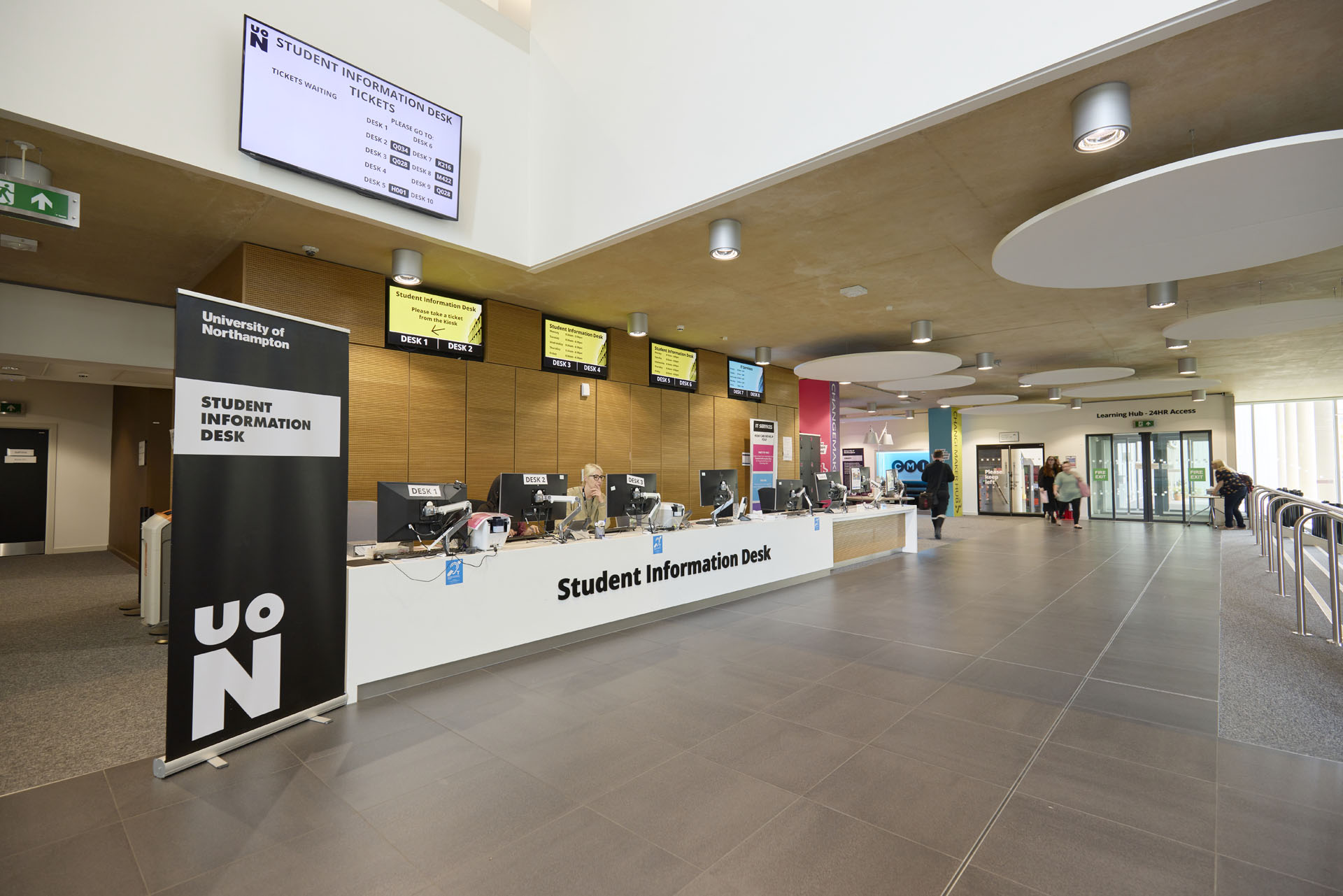
The Learning Hub and Student Information Desk would be a student's first point of call when needing support.
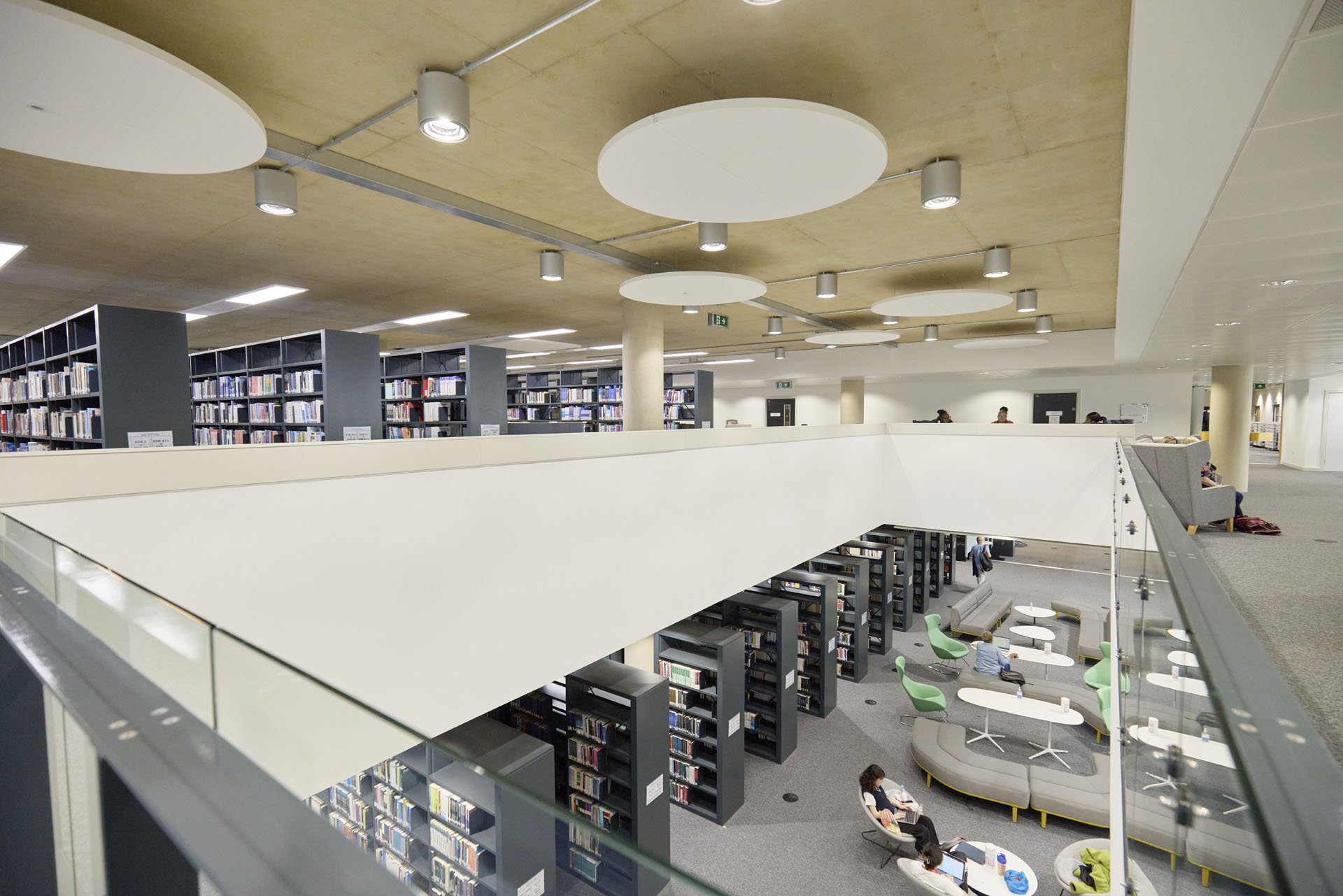
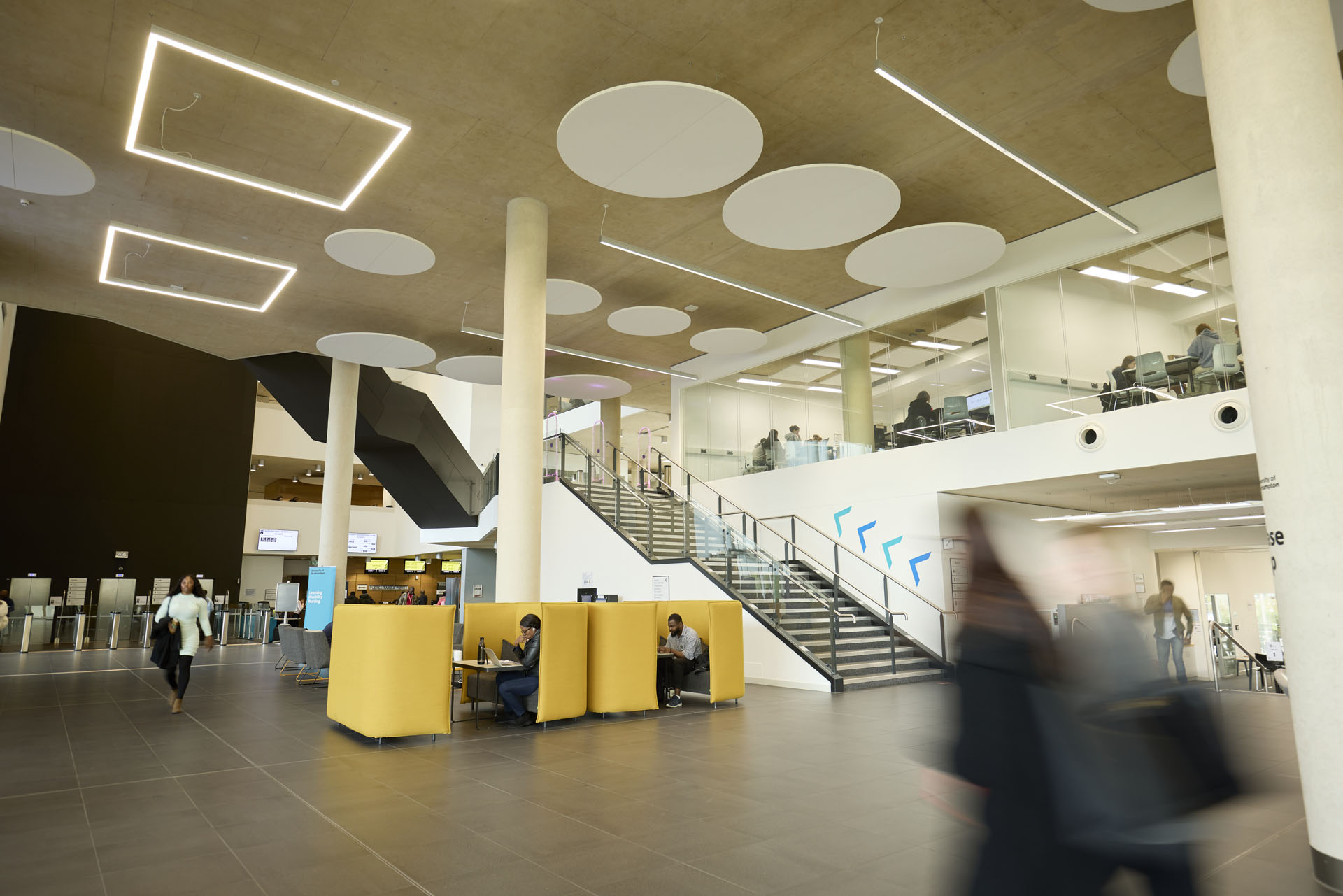
Our library covers three floors of the Learning Hub, with IT rich learning environments, including silent and group study spaces, physical books. Don't forget there are plenty more resources available online!
The Student Information Desk is the first place a student should go if they need any help. Here the team can direct you to academic support, mental health support, financial support, IT support, and more.
The Learning Hub is where every student will go for library support and classes, as well as food outlets and social events.
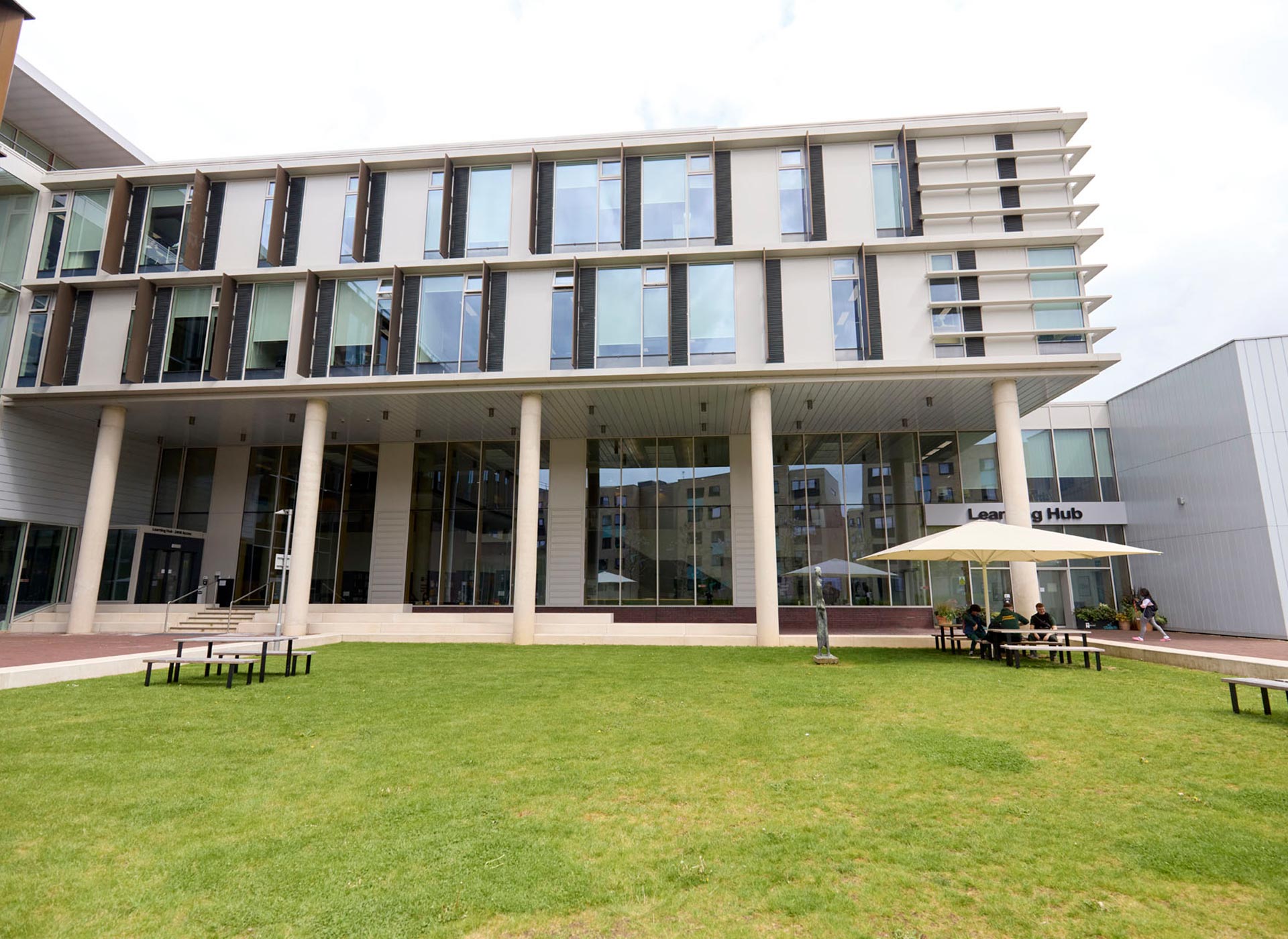
The Learning Hub also has lots of outdoor space for meeting with friends or finding some silent time between classes.
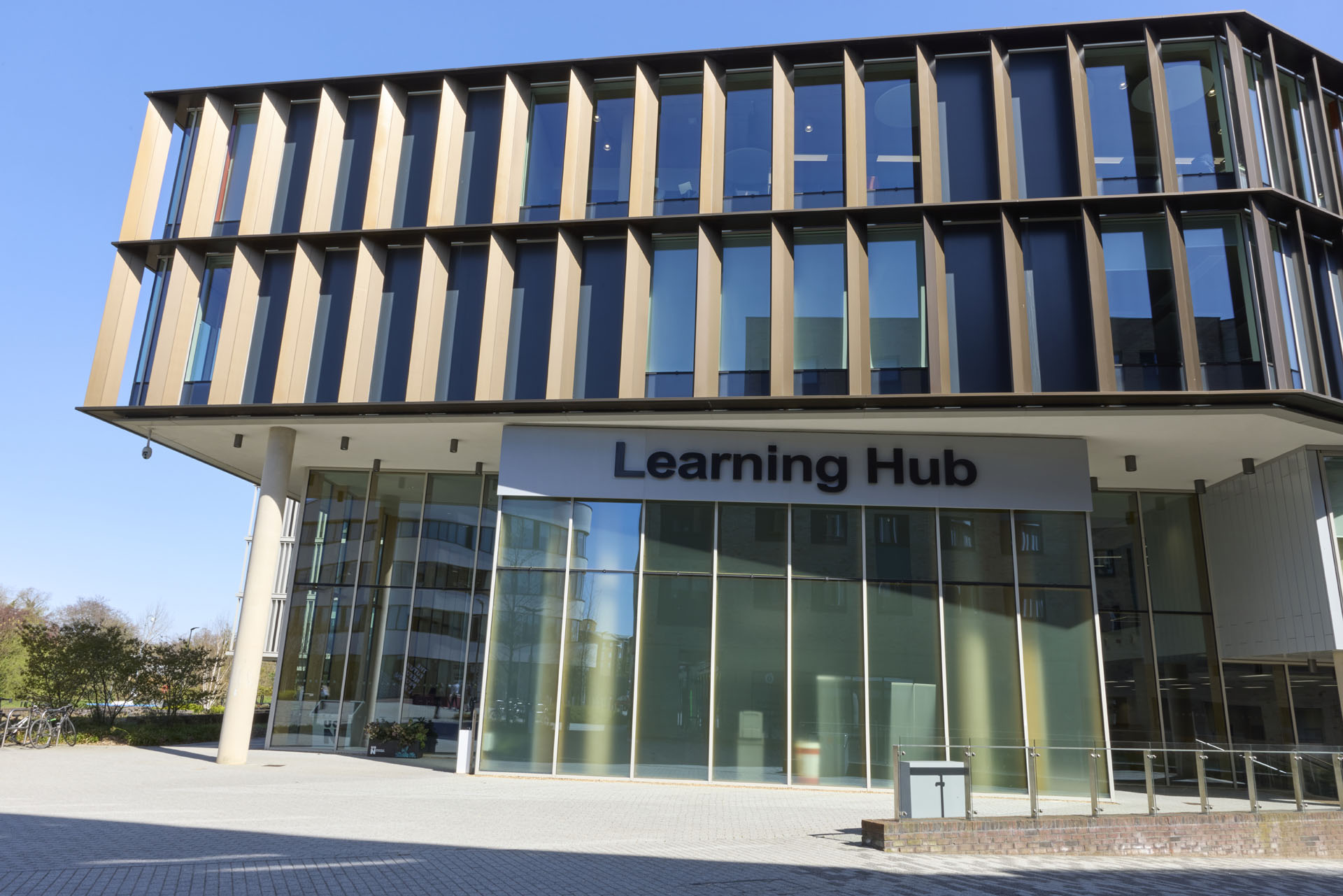
The Learning Hub is the biggest building on campus, home to our Student Information Desk, 24/7 library, teaching spaces, cafes, and more.
The big and spacious modern Senate building has various types of learning spaces, teaching rooms, our Bloomberg suite, Morley Room lecture hall, and cafes.
For the child and adolescent mental health MSc, you will normally need to hold a first class or upper second class (2:1) honours degree in a relevant discipline from a UK institution or the CNAA or equivalent.
If you have a lower second class (2:2) degree or practitioner qualification at diploma level and can demonstrate your ability to work at Master’s level you will also be considered. A Disclosure and Barring Service (DBS) check is mandatory for entry onto this course.
You will need an Overseas Police check for those who have resided outside of the UK at any time in the last five years prior to the course start date. (This is in addition to completing the UK DBS unless you have not lived in the UK during the last five years). It is recommended that you try to obtain the police check prior to coming to the UK, if you are currently living outside of the UK.
All International and EU students applying for a course with us must meet the following minimum English language requirements:
For information regarding English language requirements at the University, please see our IELTS page.
Open Days give you the best experience and insight to courses, people and facilities that interest you. Make your choice easier and come meet us.
Book NowThe child and adolescent mental health services course is innovative in its content and teaching methods, designed to provide you with a critical route to better understand the experiences of children, young people and their families. This programme is for practitioners from education, health, social or voluntary services working in some capacity with children and young people with mental health challenges at first or second tiers of service provision. Alternatively, if you are a psychology graduate or have studied similar disciplines like social and behavioural sciences (e.g. Psychology), education and more, then this course is also suitable for you. Relevant experience with young people is desirable, but not essential.
You can choose to graduate with either a Child and Adolescent Mental Health Postgraduate Diploma by completing 120 credits or you can complete all of the recommended course modules, including the dissertation, and be awarded with an MSc. The children’s mental health course is not accredited by the BPS or a related body. This is due to the diversity of its content, further reflecting the multiplicity of roles within CAMHs and related services (i.e. there is not a singular ‘CAMH’ role, rather there are lots of opportunities within a very diverse sector).
The purpose of this module is to provide students with the opportunity to critically engage with core therapeutic interventions which are used within CAMHs. Students will also develop a working and critical understanding of the cultural, legal, political and interdisciplinary contexts relative to working within CAMH and related services. .
The purpose of this module is to provide students with the opportunity and resources to develop a critical understanding of research methods so that they can evaluate research they read and/or propose research of an acceptable standard.
The purpose of this module is ¿To build on basic research methods skills from modules PSYM085 or PSYM102. The module is designed to develop advanced research skills enabling students to autonomously formulate and conduct an empirical research project in a field relevant to individual masters programs under supervision.
This module will critically explore the construction of `childhood¿, with relation to both traditional and diverse understandings of child and adolescent development. Specifically, the module will focus on the complexities surrounding `typical¿ and `atypical¿ development, unpacking the social, political and cultural nature through which children and adolescent¿s development is understood.
The purpose of this module is to provide students with an experiential learning environment where they can explore and practice the skills needed to work with children, young people and their families. This module will build on critical reflection from PSYM105 and theory from PSYM065.
The purpose of this module is to explore the school and community as a context for intervention with children, young people and their families. The module will provide an opportunity to design a project as a group or individually, working within a school or community setting.
The purpose of this module is to provide students with the opportunity to apply their skills and knowledge within either a community, clinical or educational setting.
Please note the modules shown here relate to the academic year 25/26. The modules relating to the academic year 26/27 will be available from June 2026.
Teaching methods used on the CAMH MSc include:
Each 30 credit module for the CAMHs training course involves approximately 70 hours of formal teaching (split between face to face and online delivery).
Formal teaching takes place on approximately one day a week for part-time students and two days each week for full-time students. You are however advised to have at least one other day ‘free’ for the purpose of meeting your personal tutor and/or your dissertation supervisor, and for independent study.
The adolescent mental health course also features opportunities for Work-based learning. The new placement module, beginning in 2020/21 has been developed to provide you with experiential learning opportunities. In addition, as a Changemaker Campus and with connections with the local community, there is support with paid and/or voluntary placements.
Our assessment strategy is designed to include a broad range of assessment methods, in order to ensure that you have the maximum opportunity to demonstrate that you have met the learning outcomes for the child and adolescent mental health course.
Assessment strategies used on this course include:
There are no examinations on this children’s mental health course. The Research Methods and Dissertation module supports you in completing a supervised, but original and independently undertaken, piece of research that is assessed through a 12,000 word dissertation.
Fees quoted for the children’s mental health masters relate to study in the Academic Year 26/27 only and may be subject to inflationary increases in future years.
When assessing an applicant’s eligibility to pay home fees, we use the guidance provided by the UK Council for International Student Affairs (UKCISA) which sets out the regulations that have been decided by the UK Government Department of Education.
Tuition fees quoted for International Students apply only to the 2026/27 academic year. These fees may increase in future years in line with Consumer Price Index (CPI) inflation to reflect rising delivery costs. Any annual increase will be capped at a maximum of 5% of the previous year’s tuition fee. Updated tuition fees will be published on the UON website at least three months before the start of the next academic year.
There are no additional costs for this child and adolescent mental health course for students beginning their studies in September 2026. Should this change, applicants and students will be contacted by the university with details of the costs.
For information on the scholarships available to you, please see our scholarships page.
For more information about possible funding options, please visit our Fees and Funding pages.
Fees quoted for the children’s mental health masters relate to study in the Academic Year 25/26 only and may be subject to inflationary increases in future years.
Senior Lecturer in Psychology
Senior Lecturer in Child, Adolescence Mental Health
Lecturer in Social Psychology
Lecturer in Child & Adolescent Mental Health
The CAMHs training course is intended to develop your specific mental health knowledge and skills in a range of backgrounds and perspectives, to enable you to work more effectively with children and young people. It will also provide you with the theoretical underpinning to better understand the nature of children and young people’s distress, as well as some broad practical skills. The foundational aim of the children’s mental health course is to explore children and young peoples lives, and what may contribute to the traumas, difficulties and challenges that they experience on a day-to-day basis.
Students who enter the course with a profession use the course to specialise their knowledge and/or increase their opportunities for progression within their own organisations. The child and adolescent mental health course is also popular for students who have recently finished an undergraduate degree in a relevant discipline, and are looking to provide a firmer academic foundation for future applications in CAMHs and related services. The diversity of the cohort is a key benefit of the course and its group culture, providing all students with many opportunities to reflect on their own practice, experiences, backgrounds and presumptions around mental health.
In an increasingly competitive market, a Master’s qualification is positioned as an essential requirement for working with children, young people and their families. MSc CAMH students have entered into a variety of positions from education (e.g. Assistant SENCo), therapeutic/intervention work (e.g. Therapeutic Care Worker, Intense Support Worker etc.), self-created opportunities (e.g. founding of new support/education organisations in their country of origin) and further study (e.g. Clinical Doctorates, PhD Study, Mental Health Nursing, Teacher Training, IAPT). The course outcomes are not limited to a single thought of study, and therefore the opportunities are diverse upon completion.
This child and adolescent mental health services masters will provide you with opportunities to engage in critical and reflective practice, encouraging you to explore the diverse worlds of children and young people. Research methods and the development of academic skills are integral to the course. Course tutors prioritise the facilitation of a supportive environment through which you will develop both personally and professionally, within the MSc CAMH community.