
level:UG;top_up:false;international:true;foundation:false;clearing:false;full_time:true;part_time:false;start_month:September;location:Waterside

Professional Policing BA (Hons)
Key Facts
-
UCAS Code
N478
-
Duration
Full Time: 3 Years
-
Full Time: £9,790
-
Full Time New students: £17,000
Get in touch
UK STUDENTS ENQUIRIES
study@northampton.ac.uk
0300 303 2772
INTERNATIONAL STUDENTS ENQUIRIES
Updated 13/08/2026
If you are interested in entering the police force, preparing for a non-operational role or even considering positions in the military, security services, HM prison services or probation services then our Professional Policing degree BA is the course for you. We have extremely close professional links with Northants Police and this means that you are exposed to a wide range of guest speakers from detectives to child protection officers.
You will have the chance to apply what you learn in real-life scenarios in our purpose-built facilities through working with colleagues from across the University. This collaborative working results in you gaining a highly effective and complete qualification that is valued and recognised by all the forces across the East Midlands and beyond.
90percent
For student positivity in the National Student Survey 2026.
NSS Calculations are based on Office for Students (OfS) data from the average positivity score.
Prior Experiential Learning
If you have experience in law enforcement as an officer or a detective, are a dedicated security professional or an investigator in public safety or security, you may be eligible to a fast-tracked degree via Accreditation of Prior Experiential Learning.
Highlights
- Accreditation of Prior Experiential Learning is available on this course.
- Gain insight into legislation, conducting investigations and the criminal justice from experienced serving or retired police officers
- Industry approved course with a curriculum that aligns with current industry standards
- HP laptop and software included with this course for eligible student. Eligibility criteria and terms and conditions apply.

Professional Policing student observing a fake crime scene

Students on our Professional Policing degree will get to experience mock crime scenes in our purpose-built flat.

Two students holding blue and white POLICE tape.

A clothed mannequin lies on a sofa in a crime scene staged for Professional Policing students in our purpose-built flat.
Entry Requirements
Typical offers for our degree in Policing would be:
- BBC at A Level or
- DMM at BTEC/Cambridge Technical or
- Merit at T Level or
- An Access Course that includes 30 level 3 credits at Merit
We welcome applications from students with a mix of A levels and BTEC/Cambridge Technical qualifications.
In addition, you will be expected to have GCSE English Language at a grade C/4 or above. We do accept equivalences (e.g. Level 2 Functional / Key Skills). If you have qualifications preceding GCSEs and do not have English Language at grade C/4 then we will consider your application on an individual basis.
For more more information on how to make an application, please visit our How to Apply page.
If you are an International student and would like information on making an application, please see our How to Apply page.
All International and EU students applying for a course with us must meet the following minimum English language requirements:
- IELTS 6.0 (or equivalent) with a minimum of 5.5 in all bands for study at undergraduate level.
For information regarding English language requirements at the University, please see our IELTS page.
Upcoming Open Days
Open Days give you the best experience and insight to courses, people and facilities that interest you. Make your choice easier and come meet us.
Book Now
What You'll Learn
Our Professional Policing degree is taught by serving and retired police officers and other industry professionals. Using their experience, they are able to give you extensive insight into legislation, conducting investigations and the criminal justice system in the United Kingdom.
We are dedicated to giving you the skills that you will you need to pursue a career in Law enforcement.
Please note that having obtained a degree in ‘Professional Policing’ you are not guaranteed a job as a police officer. There is a strict eligibility criterion and several stages to the police application process which can be found on the College of Policing website.
Also, your degree has a currency of 5 years from graduation until you join the service (this applies to all College of Policing approved pre-join degrees offered elsewhere). It means that you have 5 years to join the police service following your graduation. The reason is that with there being so many changes in policing and legislation, any longer than 5 years would make it outdated.
Compulsory Modules
This module is mapped against the National Police Curriculum, and meets the requirements of the module ‘Valuing Difference and Inclusion’. It examines the legislative framework around equality and diversity, and how it translates into operational policy and practice.
This module examines legislation that impacts on the practices of the police and investigators such as the Police and Criminal Evidence Act 1984, and the Regulation of Investigatory Powers Act 2000. It also looks at the practical application of legislation, such as, the Theft Act 1968, Fraud Act 2006 and the Protection from Harassment Act 1997.
This module is mapped against the National Police Curriculum as set by the College of Policing, it explores and develops contemporary themes in policing, enabling students to view them from a critical perspective. It introduces students to police ethics and values providing them with an understanding of how they are translated into policy and applied in the operational setting.
This module is mapped against the National Police Curriculum as set by the College of Policing. Students will demonstrate their knowledge and understanding through a range of skills based exercises, following which, they will reflect on their own personal development encouraging them to become reflective practitioners.
This module complies with the National Police Curriculum as set by the College of Policing, in particular the module entitles `Research Methods & Skills’. It is designed to ensure that students develop the correct skills, attitudes and approaches to learning which will enable success at HE level.
This module complies with the College of Policing’s National Police Curriculum, particularly the module Criminology and Crime Prevention. It enables students to consider how crime is constructed, perceived and responded to within contemporary society. Students will explore the inter-relationships between crime, conformity, social problems, and the context in which crime occurs.
This module is mapped against the learning outcomes of the College of Policing’s National Police Curriculum, and it introduces students to the initial response to volume crimes, critical and major incidents including joint inter-operability of the emergency services; and also the theoretical principles underpinning forensic investigations, and importance of fast track actions.
Please note the modules shown here relate to the academic year 26/27. The modules relating to the academic year 27/28 will be available from June 2027.
At the University of Northampton, everything we do, from funded trips to paid internships, is to give you everything you need to make a difference when you leave.
If you join our full-time BA Professional Policing degree, you will receive a laptop when your course begins*. The laptops are built to a bespoke custom specification ideal for use in the seminar room, collaborative group work or studying at home.
Whatever your ambitions, we’re here to help you to achieve them. We’ll support you to identify the skills you’re learning during your course, find your strengths and secure practical experience so that when it comes to applying for jobs or further study you’ll feel confident in standing out from the crowd.
We’ve created the Northampton Employability Promise because we are so confident that if you focus on your studies and complete one of our awards you’ll be highly employable by the time you graduate. Putting you in a great position to secure employment or continue your studies.
To check out the full list of perks, visit our Student Perks page or dedicated International Perks page.
*UK fee payers only (see Terms and Conditions for further details).
Are you a law enforcement officer or detective, a dedicated security professional, or a passionate investigator in public safety or security?
You may be able to earn a BA degree in Professional Policing or Criminal and Corporate Investigation, in just one year full-time or two years part-time.
Why choose our programme?
- Fast-track to Success: Have the first two years of existing experience and learning approved and move straight into the final year of your degree
- Flexible Learning: Attend classes on your terms, a blend of online and face-to-face, whether full-time or part-time
- Tailored for Professionals: We will recognise your expertise and prior learning, allowing you to focus on advanced topics
- Industry Approved: Our curriculum aligns with the latest industry standards.
What you’ll gain
- A BA (Hons) degree: Professional Policing BA (Hons) or Criminal and Corporate Investigation BA (Hons)
- Critical Skills: Enhance your existing analytical, communication and leadership abilities
- Advanced Knowledge: Go deeper into criminal investigations, corporate threats, and ethical policing strategies
- Career Boost: Elevate your professional standing and potential to open doors to new opportunities.
Join our Community of Investigators:
Connect with like-minded professionals, learn from experienced tutors and industry leaders with the Criminal Justice department, in the Faculty of Business and Law, and build professional networks.
For more information and how to apply:
If you’d like to know more about the APEL opportunities and how to apply please contact:
- Simon Feist – Deputy Head of Criminal Justice
How will I learn on the Policing degree?
Teaching methods include lectures, seminars, tutorials, assessed role plays, independent and group work. We encourage you to actively engage with seminars and group discussions to apply your learning to different scenarios. Practical work will represent an important component of our degree in policing throughout each of the three years of study.
Taught sessions are usually between two or three hours per module per week. Pre-reads are provided for most sessions and you should arrive prepared, having already read the assigned texts so that you can maximise your understanding.
How will I be assessed?Assessments are varied and consist of presentations, essays, assignments, skills labs, practical exercises, reports, reflective accounts and video presentations, exams and multiple choice tests. These reflect the National Occupational Standards for the Police Service and the Initial Police Learning and Development Programme. If you choose to take alternative placements you will be assessed against relevant appropriate standards.
Are there any special features?You can practice real life scenarios in one of our specialist facilities. For interview training, there are purpose-built interview rooms and a realistic custody suite as well as a mock flat with one way mirrors.
In addition, we are one of only a few universities in the country that have fully functioning Hydra simulation room used for immersive learning. Hydra is a sophisticated piece of technology that is used to simulate the reality of critical incident management.
Facilities includes:
- tutoring to the same level as regular officers
- mentoring
- role plays in partnership with actors, paramedics and lawyers from across the University
- interview training in purpose-built interview rooms
- mentoring groups
- guest speakers from across the industry
- bespoke fast track application for Northants Police for successful applicants
- realistic Custody suite
- mock flat with one way mirrors.
There are opportunities to go on work placements, either with the Northamptonshire Police, Northampton Borough Council or with not-for-profit groups who deal with prevention of offending behaviour amongst vulnerable groups, or substance abuse such as Free to Talk.
Please note that placements are not guaranteed, they must be earned and if you do not display the relevant professional standards or acquire the relevant standards in your coursework you will not receive a placement.
Does this course take part in the Enhanced Learning Credits Scheme?Our Policing Degree is part of the Enhanced Learning Credits Scheme (ELCS). The ELCS is an opportunity for members of the Armed Forces to further or expand on their education. The scheme offers support financially in a maximum of three separate financial years for higher level learning of a nationally recognised qualification at a Level three or above.
What can you do with a degree in professional policing?With a professional policing degree, you can open up the opportunity to apply for a career in policing at the College of Policing website. You will have obtained all the skills and knowledge you will need to be successful during the application process. You will also have a deep understanding of the policing professional standards required of serving police officers in the UK.
However, please note that having this degree does not guarantee that you will be employed after being interviewed for a policing job.
Who are the Student Support Team?The Student Experience Support Team are a team of previous graduates of the University of Northampton, they are here to support all Faculty of Business and Law students by offering a friendly listening ear and ensuring students are aware of the numerous support systems that the University has to offer.
The team provides confidential 1-1 meetings in person and online where they will signpost the students to the relevant support teams to ensure they are aware of the support available for them throughout their studies. You can follow the Student Experience Support Team to see the services they offer.
Lara's Story
“The course is fantastic, and you gain so much experience which you can use in everyday life. This includes multi-agency working, report writing, laws and legislation, increases your confidence and increases your ability to problem solve when working under pressure.”

Fees and Funding
2026/27 Tuition Fees
- Full Time: £9,790
UON will adjust fees annually for UK (Home) Students up to the maximum allowable fee cap set by the Secretary of State for Education.
When assessing an applicant’s eligibility to pay home fees, we use the guidance provided by the UK Council for International Student Affairs (UKCISA) which sets out the regulations that have been decided by the UK Government Department of Education.
- Full Time New Students: £17,000
- Full Time Continuing Students: £16,300
Tuition fees quoted for International Students apply only to the 2026/27 academic year. These fees may increase in future years in line with Consumer Price Index (CPI) inflation to reflect rising delivery costs. Any annual increase will be capped at a maximum of 5% of the previous year’s tuition fee. Updated tuition fees will be published on the UON website at least three months before the start of the next academic year.
Additional Information
There are no additional costs for this course for students beginning their studies in September 2026. Should this change, applicants and students will be contacted by the university with details of the costs.
For information on the scholarships available to you, please see our scholarships page.
For more information about possible funding options, please visit our Fees and Funding pages.
Fees quoted relate to study in the Academic Year 2025/26 only and may be subject to inflationary increases in future years.
- UK Full Time: £9,535
- International Full Time: £15,700
Staff

Simon Feist
Senior Lecturer in Criminal Justice Studies

Lorraine Taylor
Lecturer in Criminal Justice Studies

Steve Haycroft
Senior Lecturer in Criminal Justice Studies

Ginny Field
Senior Lecturer in Criminal Justice Studies

Tara Fowley
Senior Lecturer in Criminal Justice Studies
Careers and Employability
Graduates with a degree in Professional Policing are likely to find employment as police officers or within the wider police service performing support roles. You could also pursue careers as officers within the armed forces, the security services, or within research roles relating to crime and disorder, investigative roles and the security industry upon completing this policing course.
If you are wishing to join the Special Constabulary, you will need to make a separate application when you join the course. Please note that acceptance to the Special Constabulary is not guaranteed and is dependent on a successful evidence-based application, interview, fitness test, medical and vetting procedure.
Master’s Opportunities
Our master’s courses are a great way to enhance the skills you have already learnt. Benefit from our 20% alumni discount on postgraduate fees to give yourself a CV that will catch the eye of employers.
Facilities
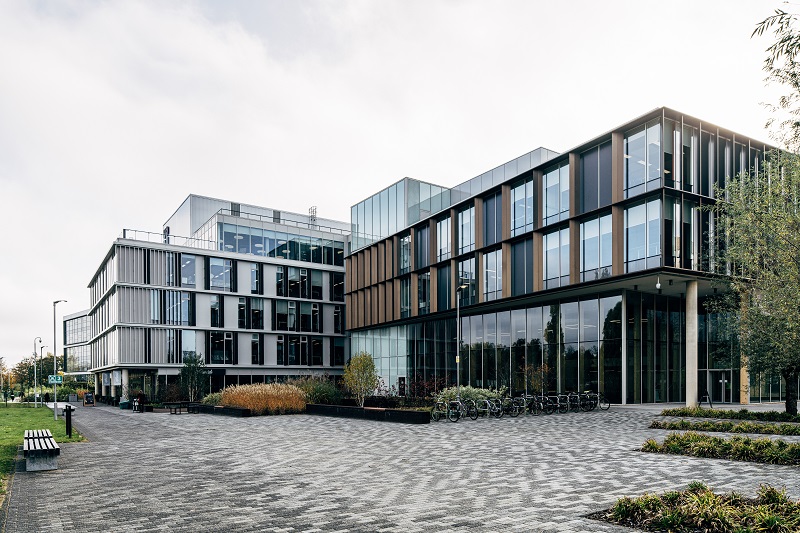
Learning Hub Building
The Learning Hub is at the heart of the campus and home to the student information desk.
View Facility