
Robert Lyon
Senior Lecturer in Exercise and Health Psychology
To ensure we guide you through the correct application process, we just need you to answer a few quick questions.
Already applied?
Log in to view updates.
This course offers two separate application routes, depending on whether the application is submitted by the student or an international agent.
Please select your desired length of study from the available options.
This course includes a placement option. Please indicate whether you’d like to apply with or without a placement.
Please select where you would like to study.
All the available academic years are displayed below.
All the available start months for the selected academic year are listed below.
Please review the information below carefully before continuing.
If you need to make any changes, click the < Back button to return to the previous step.
UCAS Code
BSc: CC68
BSc with Foundation: CC86
Duration
Full Time: 3 years
Full Time Foundation: 4 years
Part Time: 4 years
BBC at A Level or,
DMM at BTEC
Full Time: £9,790
Part Time: £1,630 per 20 credit module
Integrated Foundation Year: £9,790
study@northampton.ac.uk
0300 303 2772
Updated 19/03/2026
Our British Psychological Society (BPS) accredited Psychological Science of Sport and Exercise degree provides a study route for careers in the field of sport and exercise psychology; for sport psychologists to improve coaching, athletic performance, and wellbeing in sport, and for exercise psychologists to improve the adoption, enjoyment, and maintenance of physical activity for health and wellbeing in general populations.
Studying sports psychology courses is a first step in the teaching and support for those who wish to embark on the journey of becoming an accredited sport and exercise psychologist. It will also serve those who wish to improve their knowledge and skills of sports performance and/or lifestyle health behaviour change, whether this be as a personal trainer, coach, or health and fitness advocate.
To receive a British Psychological Society (BPS) accredited degree, students must complete compulsory modules identified, and obtain a minimum of a 2:2 degree to receive accreditation. The BPS requires students to do an empirical research project for their dissertation.
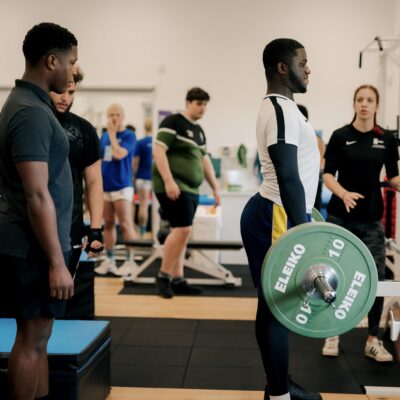
Students use the Sports Dome facility as part of their practical, hands-on learning.
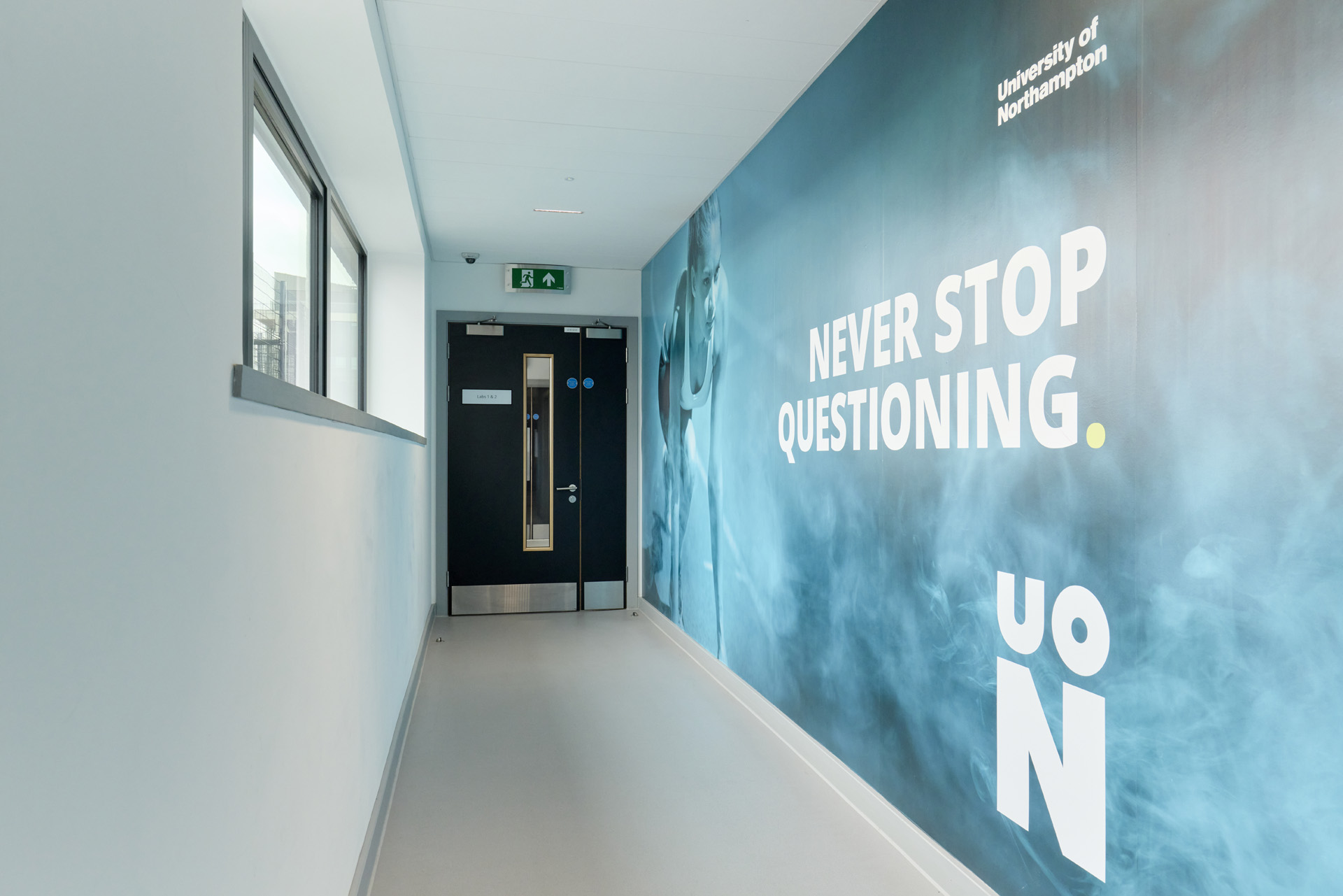
The corridor of the Sports Lab. This is where students can do some of their study.
A typical offer for for sports psychology courses would be:
We welcome applications from students with a mix of A levels and BTEC/Cambridge Technical qualifications.
In addition, you will need to have studied PE Sport, Science or Psychology at A Level or BTEC level 3 diploma. You will also be expected to have achieved GCSE Mathematics at grade C/4 or above, or equivalent approved qualifications.
For more information on how to make an application for the psychology of sport and exercise degree, please visit our How to Apply page.
If you are an International student and would like information on making an application, please see our How to Apply page.
Admission to this foundation sports psychology course normally requires:
We welcome applications from students with a mix of A levels and BTEC/Cambridge Technical qualifications.
However, we would also like to hear from you if you have professional or industry experience instead, a range of other qualifications or self-developed subject knowledge that relates to the course that you wish to study.
All International and EU students applying for a course with us must meet the following minimum English language requirements:
For information regarding English language requirements at the University, please see our IELTS page.
Open Days give you the best experience and insight to courses, people and facilities that interest you. Make your choice easier and come meet us.
Book NowFrom becoming more active to thriving in the world of elite sport: It’s all in the mind.
Understanding factors affecting the thoughts, feelings, and behaviours associated with peak sport performance and optimal functioning in exercise and physical activity has always been important and is becoming increasingly more so in today’s world. Whether you have aspirations to work with top sports performers, or to focus on encouraging more people to become more active, when you study our psychology in sports degree, you will embark on a journey that will equip you with the knowledge and skills to be able to work critically and effectively within these realms.
In year 1 of this sport psychology course, you will begin to learn about what it’s like to work as a psychologist, as well as developing a sound knowledge of specific sport and exercise psychology-related factors. This will include key behavioural theories, and factors affecting motivation and performance. You will also learn how to be successful at university.
The purpose of this module is to provide students with a broad understanding of psychology by introducing four core areas (social, developmental, cognitive and biological psychology). Students will develop critical thinking and evaluative skills of psychological material by focusing on theory, empirical research and real-life examples.
The purpose of this module is to provide a fundamental introduction to research design, analysis and interpretation in psychology. Students need to understand common methods of investigation, in order to appreciate the source and context of theories and research findings encountered in specific subject areas studied in other psychology modules.
Sport and exercise psychology is an exciting discipline area providing the opportunity to explore the psychological influences on human behaviour. The module offers an introduction to key psychological theories and concepts relevant to sport, exercise, physical activity and coaching contexts.
The purpose of this module is to give students the essential academic and employability skills in order to improve their capabilities and excel at university, and then onto their chosen career.
This module provides an introduction to how psychological theory and research can be applied to enhance health, wellbeing, and performance in sport and exercise settings. A significant emphasis will be placed on how practitioners intervene with athletes and `at-risk¿ populations through the use of digital technologies alongside more traditional face-to-face methods.
The purpose of the module is to provide students with an understanding of the core principles related to motor learning and skill acquisition in sport and exercise settings, developing knowledge from both an athlete and coach perspective, enabling them to apply theortetical-based information into practical environments to enhance optimal performance.
Please note the modules shown here relate to the academic year 25/26. The modules relating to the academic year 26/27 will be available from June 2026.
This programme is accredited by the British Psychological Society (BPS) and is the first step towards becoming a Chartered Psychologist.
This means that upon completion of your sports psychology degree (with an overall classification of a 2:2 or above), you are eligible for Graduate Basis for Chartered Membership (GBC) to the BPS. Acquiring your GBC has a host of benefits for a future career in Psychology. The accredited Psychology degree means that you could move into Postgraduate Study in a number of areas in Psychology and beyond, without needing to do a further Psychology Conversion course to obtain GBC status.
Graduate Basis for Chartered (GBC) Membership is considered as the starting point to your career in psychology. Obtaining GBC encompasses many benefits, including access to journals, conferences, and events. You will have the opportunity to enhance your employability through volunteering opportunities and research placements, as well as through the courses focus on analysing human behaviour from many psychological perspectives.
At the University of Northampton, everything we do, from funded trips to paid internships, is to give you everything you need to make a difference when you leave.
If you join this full time degree, you will receive a laptop when your course begins*. The laptops are built to a bespoke custom specification ideal for use in the seminar room, collaborative group work or studying at home.
Whatever your ambitions, we’re here to help you to achieve them. We’ll support you to identify the skills you’re learning during your course, find your strengths and secure practical experience so that when it comes to applying for jobs or further study you’ll feel confident in standing out from the crowd. We’ve created the Northampton Employment Promise because we are so confident that if you focus on your studies and complete one of our awards you’ll be highly employable by the time you graduate. Putting you in a great position to secure employment or continue your studies.
To check out the full list of perks, visit our Student Perks page or dedicated International Perks page.
*UK fee payers only (see Terms and Conditions for further details).
The Integrated Foundation Year (IFY) offers a new and exciting route into studying for this Sport and Exercise Psychology degree, attracting ambitious and driven students who are willing to learn and advance.
If you have non-standard qualifications or do not quite meet the admissions requirements we can offer you a fantastic opportunity to study a four year programme which includes an Integrated Foundation Year. The Integrated Foundation Year will help you develop the theoretical/practical and academic skills you need, in order to successfully progress to the full award.
Our four-year courses will enable you to successfully follow the degree pathway of your choice while gaining essential study skills. The foundation year of your chosen degree will be studied on a full-time basis and is aimed at supporting the transition to higher education. Years two, three and four are then studied as a standard degree programme.
The Psychological Science of Sport and Exercise degree offers the opportunity to gain work experience* to develop professional behaviour and competencies in Sport and Exercise settings. Students explore future career opportunities within the sport and exercise discipline and learn about the application of Sport and Exercise Psychology in different settings such as sport clubs, governing bodies, NHS, industry, media or an research laboratories.
*NB: This is an optional module and students choosing this module must source their own placements.
This Sports and Exercise Psychology course is delivered through active blended learning, a hallmark of teaching at UON. This means students will be encouraged to take a very active part in their own learning rather than sit for long hours in tiered lecture theatres. Our sport psychology modules cover a wide range of fascinating topics in psychology, sport, and exercise. Many of our teaching staff are active researchers in their specialist areas, which means module content is always current. At Waterside, we aim to provide an environment that maximises your engagement and enjoyment of learning.
Modules will be delivered utilising our fantastic sports facilities, labs, and the variety of classroom-based venues on the campus. As a semesterised programme, each module will comprise four learning contact hours per week, usually as a 2-hour face-to-face, 1-hour online, 1-asynchronous teaching format. All modules are worth 20-credits and you will accrue a total of 360 credits by your final year in order to achieve an honours degree in BSc sport and exercise psychology.
Studying this BSc Psychological Science of Sport and Exercise degree, you will cover all the core areas of psychology required for BPS accreditation, along with modules that will develop your understanding of key psychological factors associated with enhanced performance and well-being in sports, exercise, and physical activity across the life span.
The topics that will be covered include:
All subject-specific psychologist titles are now protected by the Health Care Professions Council (HCPC). This means that to become a qualified sport and exercise psychologist and use this title, you would need to progress through a series of accredited training. This typically begins with a course, such as this, which is accredited by the British Psychological Society (BPS), conferring Graduate Basis for Chartership (GBC) to graduates. To find out more about the next steps you could take, as well as career opportunities for psychologists, please visit the BPS site, which gives further details about how to become a Chartered Sport and Exercise Psychologist.
Another route to becoming qualified, albeit without the Chartered status, is through the Chartered Association of Sport and Exercise (CASES). This route requires accredited training to a Masters level in sport and exercise psychology and does not necessarily have the research requirement that the BPS route has, but it does include a period of ‘supervised practise’ subsequent to this with a qualified psychologist. To find out more visit CASES.
The answer to this is very broad and dependent upon the level of experience and qualification, nature of the working environment, and area of employment e.g. private practise, NHS, Govt, etc. Qualified Sport and Exercise Psychologists working independently are able to set their own working rate to some extent and, again, this will depend on the nature and demand of their expertise. However, those working in an organisation may be able to expect anywhere between £25-30k.
You will be assessed through varied range of assessments including essays, exams, presentations, and practicals.
Get all the info you need ahead of time, before you can apply for funding in Spring on our fees and funding pages.
UON will adjust fees annually for UK (Home) Students up to the maximum allowable fee cap set by the Secretary of State for Education.
When assessing an applicant’s eligibility to pay home fees, we use the guidance provided by the UK Council for International Student Affairs (UKCISA) which sets out the regulations that have been decided by the UK Government Department of Education.
Tuition fees quoted for International Students apply only to the 2026/27 academic year. These fees may increase in future years in line with Consumer Price Index (CPI) inflation to reflect rising delivery costs. Any annual increase will be capped at a maximum of 5% of the previous year’s tuition fee. Updated tuition fees will be published on the UON website at least three months before the start of the next academic year.
There are no additional costs for this course for students beginning their studies in September 2026. Should this change, applicants and students will be contacted by the university with details of the costs.
For information on the scholarships available to you, please see our scholarships page.
For more information about possible funding options, please visit our Fees and Funding pages.
Fees quoted relate to study in the Academic Year 25/26 only and may be subject to inflationary increases in future years.
Senior Lecturer in Exercise and Health Psychology
Senior Lecturer in Sport Psychology
Senior Lecturer in Sport Psychology
Lecturer in Sport & Exercise Psychology
Graduate Teaching Assistant
Graduates in all courses of psychology tend to be viewed in high regard by employers because of the transferable skills and nature of their education to many workplace environments. The BSc Psychological Science of Sports and Exercise degree at UON is no exception and, whilst a career in sport may be your aspiration, the course provides you with the skills necessary to secure employment in a range of sectors including sport science support, teaching, coaching, performance enhancement, the health and fitness industry, the NHS, as well as County or Government organisations. Many graduates also use their degree to enhance and develop their own private practise in fitness or health.
Psychology graduates tend to develop excellent communication and analytical skills, giving them a great advantage in a vast range of employment opportunities. Graduates of this course will also be eligible for Graduate Basis for Chartership with the BPS. This will provide the platform for continued study at Masters level on a range of courses, not least of which are the other accredited courses of the BPS. Please visit BPS for further details about employment as a graduate in a psychology specialism.
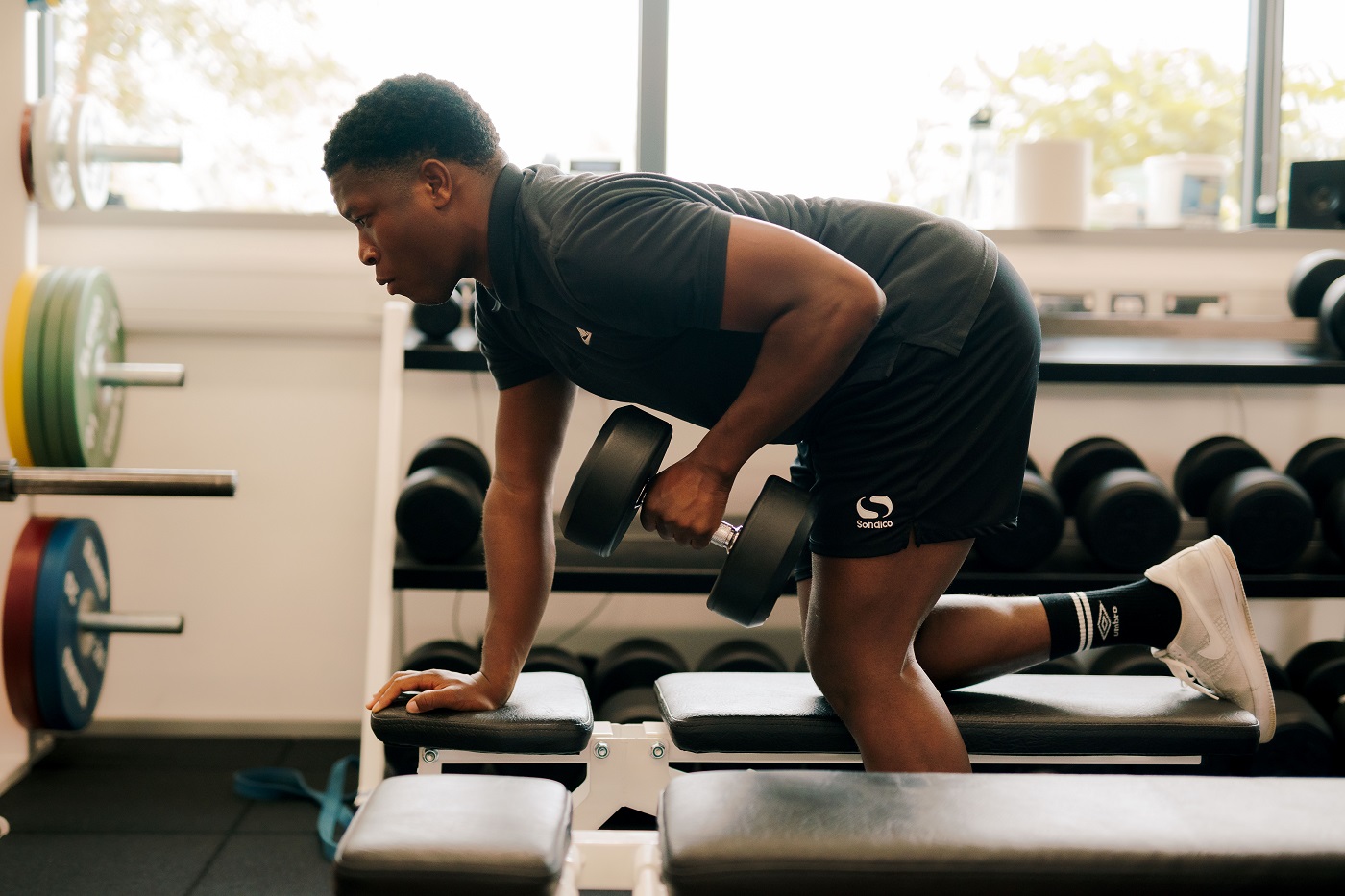
Sports Zone at Waterside is home to a multi-use sports dome suitable for a variety of sports, including football, badminton and netball. The facilities include two sports performance labs, a pair of teaching rooms and changing rooms. In addition, there also are three outdoor multi-use games areas and floodlit full-size all-weather sports pitch. The sports dome is used for teaching, research and recreational activities.
Our purpose-built laboratories and research facilities enable you to undertake performance analysis within a supportive environment.
You will learn about and experience theoretical and practical applications of sport and exercise psychology. In particular, you will use state-of-the-art eye-tracking equipment in learning about decision making in sport performance and officiating.
You are encouraged throughout your course to become members of the British Association of Sport and Exercise Sciences (BASES). There is also the opportunity for you to gain additional coaching qualifications during the degree in sport and exercise psychology.