
Aman Asif-Malik
Senior Lecturer in Forensic Psychology

UCAS Code
3 year: C816
4 year: C817
Duration
Full Time: 3 Years
Foundation: 4 Years
BBC at A Level
DMM at BTEC
Full Time: £9,790
Integrated Foundation Year: £9,790
Updated 14/10/2026
We are changing the name of our course from BSc Forensic Psychology to BSc Forensic Applications in Psychology from September 2026 to comply with the British Psychological Society (BPS) requirements and better reflect the accreditation students will be receiving once they successfully pass their course. This change will not entail any change to course content or pathway for career trajectory.
The Forensic Applications in Psychology BSc (Hons) course offers a unique opportunity to explore how psychological principles inform forensic practice. You’ll gain hands-on experience conducting scientific research on forensic topics while also developing core skills in developmental, cognitive, social, and biological psychology.
Throughout our Forensic Applications in Psychology degree, you’ll have the flexibility to choose from a diverse range of modules. This selection will enable you to explore various aspects of criminal behaviour, from pathways into crime and addiction, crime scene behaviours to advanced criminal profiling techniques. Additionally, you will delve into key areas such as forensic risk assessment, intervention strategies, and rehabilitation, gaining a comprehensive understanding of how to assess, manage, and support individuals within forensic settings.
This programme is accredited by the British Psychological Society (BPS), serving as the first step towards becoming a Chartered Psychologist. Upon completing your degree with at least a 2:2 classification, you will be eligible for Graduate Basis for Chartered Membership (GBC) with the BPS.
Gaining GBC status offers numerous advantages for your future career in psychology. Additionally, our accredited psychology undergraduate degree allows you to progress into postgraduate study in various areas of psychology – and beyond – without the need for a further Psychology Conversion course to obtain GBC status.

Typical requirements for this Forensic Applications in Psychology Course are:
We welcome applications from students with a mix of A levels and BTEC/Cambridge Technical qualifications.
In addition, you will be expected to have achieved:
For information on how to apply to study with us, please see our How to Apply page.
The University of Northampton now offers on a range of our courses an alternative route to study; the integrated foundation year (IFY). The standard entry requirements for the Integrated Foundation Year are:
We welcome applications from students with a mix of A levels and BTEC/Cambridge Technical qualifications.
All International and EU students applying for a course with us must meet the following minimum English language requirements:
For information regarding English language requirements at the University, please see our IELTS page.
For information on how to apply to study with us as an International student, please see our How to Apply for International Study page.
“I chose to study at the University of Northampton because of the bright campus life, experienced staff, and the many different cultural backgrounds of the students.”
The Forensic Applications in Psychology course offers a comprehensive foundation for those aspiring to build a career in psychology, particularly in forensic settings. Accredited by the British Psychological Society (BPS), the programme provides eligibility for the Graduate Basis for Chartered (GBC) Membership – an essential starting point for your career as a professional psychologist. GBC membership offers several benefits, including access to academic journals, professional conferences, and networking events.
In addition, you’ll have the opportunity to attend talks with external experts within forensic settings, spanning both research and practice across various career paths. These sessions will offer valuable insights into the field, helping you make informed decisions about your future aspirations in forensic psychology.
In year 1, you’ll be introduced to key themes, theories, and foundational research in the field. You’ll explore critical topics such as offence types, ethical decision-making, and the role of forensic psychologists. The curriculum also covers essential areas like profiling, prison systems, behavioural management, and mental health in the justice system, giving you a well-rounded understanding of forensic psychology. With dedicated assignment support and practical application, you’ll be fully prepared to advance to year 2.
This module introduces students to applications of psychological knowledge in the real world. It aims to help students acquire knowledge and understanding of theory and research relating to key topics in Applied Psychology and to develop the critical skills necessary to the evaluation of different approaches within Applied Psychology.
The purpose of this module is to provide students with a broad understanding of psychology by introducing four core areas (social, developmental, cognitive and biological psychology). Students will develop critical thinking and evaluative skills of psychological material by focusing on theory, empirical research and real-life examples.
The purpose of this module is to promote reflective critical thinking and evaluation skills using a wide variety of psychological materials, and develop student confidence in evaluating and conducting Psychological research.
The purpose of this module is to provide a fundamental introduction to research design, analysis and interpretation in psychology. Students need to understand common methods of investigation, in order to appreciate the source and context of theories and research findings encountered in specific subject areas studied in other psychology modules.
This module aims to develop student?s intra-and-inter-personal skills through exploring Positive Psychology theory and application and increasing self-awareness. Throughout the module, you will gain understanding for how these are experienced, how we relate to them, and what psychology has begun to understand about them.
Please note the modules shown here relate to the academic year 26/27. The modules relating to the academic year 27/28 will be available from June 2027.
At the University of Northampton, everything we do, from funded trips to paid internships, is to give you everything you need to make a difference when you leave.
If you join our full-time Forensic Psychology course, you will receive a laptop when your course begins*. The laptops are built to a bespoke custom specification ideal for use in the seminar room, collaborative group work or studying at home.
Whatever your ambitions, we’re here to help you achieve them. We’ll support you to identify the skills you’re learning during your course, find your strengths and secure practical experience so that when it comes to applying for jobs or further study you’ll feel confident in standing out from the crowd. We’ve created the Northampton Employability Promise because we are so confident that if you focus on your studies and complete one of our awards you’ll be highly employable by the time you graduate. Putting you in a great position to secure employment or continue your studies.
To check out the full list of perks, visit our Student Perks page or dedicated International Perks page.
* UK fee payers only (see Terms and Conditions for further details)
The Integrated Foundation Year (IFY) offers a new and exciting route into studying for a degree, attracting ambitious and driven students who are willing to learn and advance.
If you have non-standard qualifications or do not quite meet the admissions requirements we can offer you a fantastic opportunity to study a four year programme which includes an Integrated Foundation Year. The Integrated Foundation Year will help you develop the theoretical/practical and academic skills you need, in order to successfully progress to the full award.
Our four-year courses will enable you to successfully follow the degree pathway of your choice while gaining essential study skills. The foundation year of your chosen degree will be studied on a full-time basis and is aimed at supporting the transition to higher education. Years two, three and four are then studied as a standard degree programme.
The main employer of forensic psychologists is HM Prison Service. However, there are several other opportunities for employment such as:
The mode of teaching for this BSc Forensic Applications in Psychology is designed to provide as much face-to-face contact for students as possible. However, we also provide flexibility for those students who are unable to work on campus for travel, personal or other reasons.
You will be given the opportunity to apply for research assistant roles with members of the programme team. This involves collaborations with researchers in Universities across the UK, as well as international collaborations.
Is forensic psychology well paid?A career in forensic psychology can lead to a well -paid salary with strong career progressions. The amount of money earned will differ depending on area of specialisation or institution you are employed by.
However, the starting salary for a forensic psychology graduate could be as high as £46,000 per year if you are employed within the NHS.
“The course academic team gave me invaluable support when preparing me for my first interview within prisons, giving me advice on how to interpret the interview brief and task, and providing feedback on my presentation.”
UON will adjust fees annually for UK (Home) Students up to the maximum allowable fee cap set by the Secretary of State for Education.
When assessing an applicant’s eligibility to pay home fees, we use the guidance provided by the UK Council for International Student Affairs (UKCISA) which sets out the regulations that have been decided by the UK Government Department of Education.
Tuition fees quoted for International Students apply only to the 2026/27 academic year. These fees may increase in future years in line with Consumer Price Index (CPI) inflation to reflect rising delivery costs. Any annual increase will be capped at a maximum of 5% of the previous year’s tuition fee. Updated tuition fees will be published on the UON website at least three months before the start of the next academic year.
For information on the scholarships available to you, please see our scholarships page.
For more information about possible funding options, please visit our Fees and Funding pages.
Fees quoted relate to study in the Academic Year 2025/26 only and may be subject to inflationary increases in future years. UON will adjust UK fees annually in line with Government Policy.

Senior Lecturer in Forensic Psychology

Associate Lecturer (Psychology)

Lecturer in Forensic Psychology

Graduate Teaching Assistant

Graduate Teaching Assistant
Once you graduate with the Forensic Applications in Psychology undergraduate degree, you will be eligible for graduate membership of the British Psychological Society (BPS). Graduates can apply directly for postgraduate study to work towards becoming professional forensic psychologists. Graduate employability in forensic psychology is very good, graduates can provide vital services in the legal and criminal justice system of a specific area. They can also work in universities, research centres, hospitals, medical examiners’ offices, forensic laboratories, police departments or as independent consultants.
Successful completion of our forensic applications in psychology course can lead onto further studies if required:
Across our Forensic Applications in Psychology programme, we facilitate independent self-study by providing access to library resources, the opportunity to sign up to internal and external workshops as well as skills training events, and the opportunity to apply for small grants to cover academic activities such as conference entry.

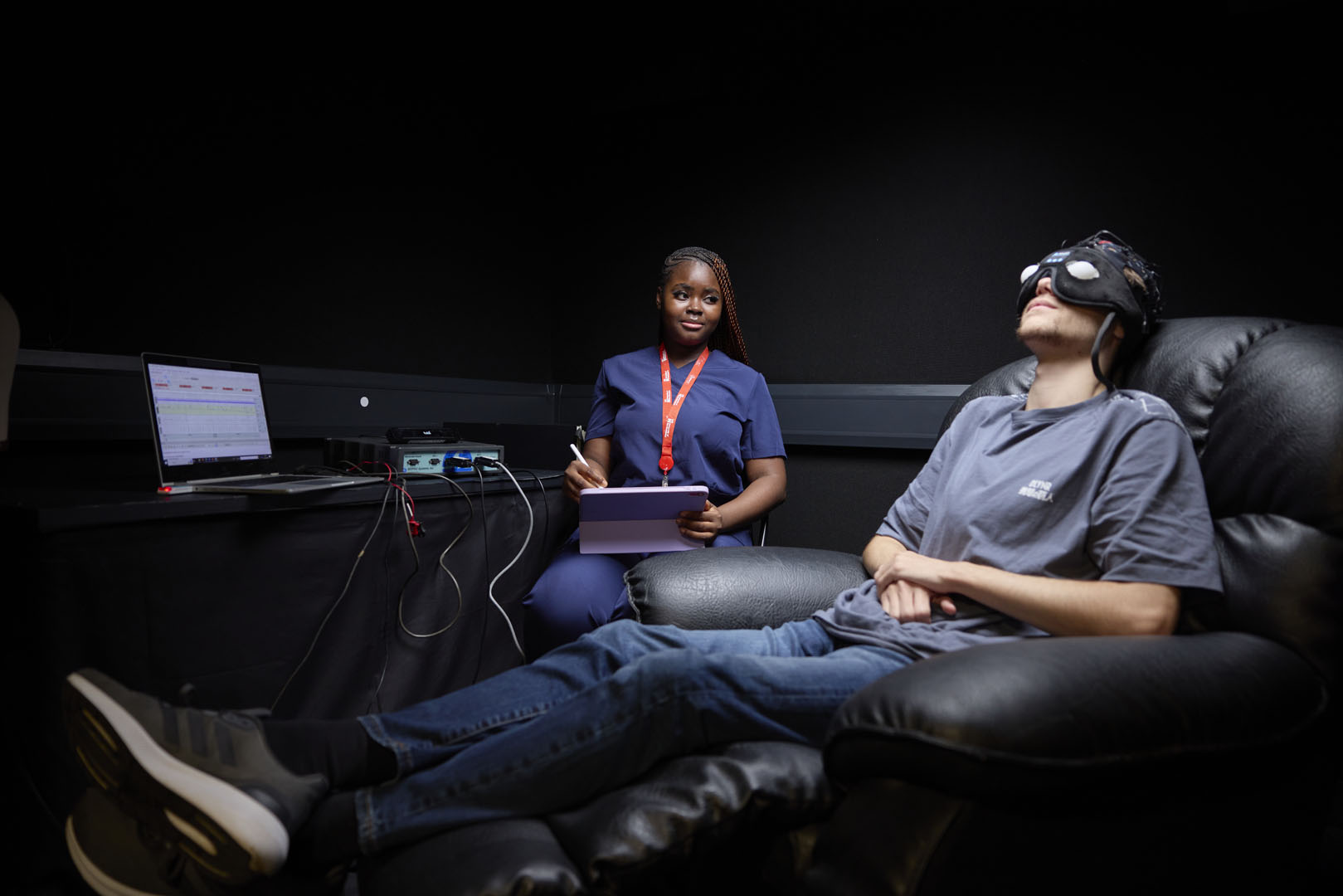


The Learning Hub is at the heart of the campus and home to the student information desk.
View Facility