Richard Whitehead
Senior Lecturer in Photography
UCAS Code
BA: W640
BA with Foundation: W642
Duration
Full Time: 3 years
Full Time Foundation: 4 years
Part Time: 4 - 6 years
BBC at A-Level or,
DMM at BTEC or
a Foundation Diploma in Art and Design
Full Time: £9,790
Part Time: £1,630 (per 20 credits)
Integrated Foundation Year: £9,790
Updated 14/10/2026
The University of Northampton’s undergraduate BA Photography degree takes a practical approach to exploring the photograph within a range of contemporary practices and contexts. This will extend to a critical understanding of photography subjects and allows the scope for you to develop your creativity and professionalism.
During our undergraduate photography course, we will challenge you to consider traditional silver processes and digital technologies, evaluating photographic production and studying the still image in relation to both the moving image and newer interactive technologies.
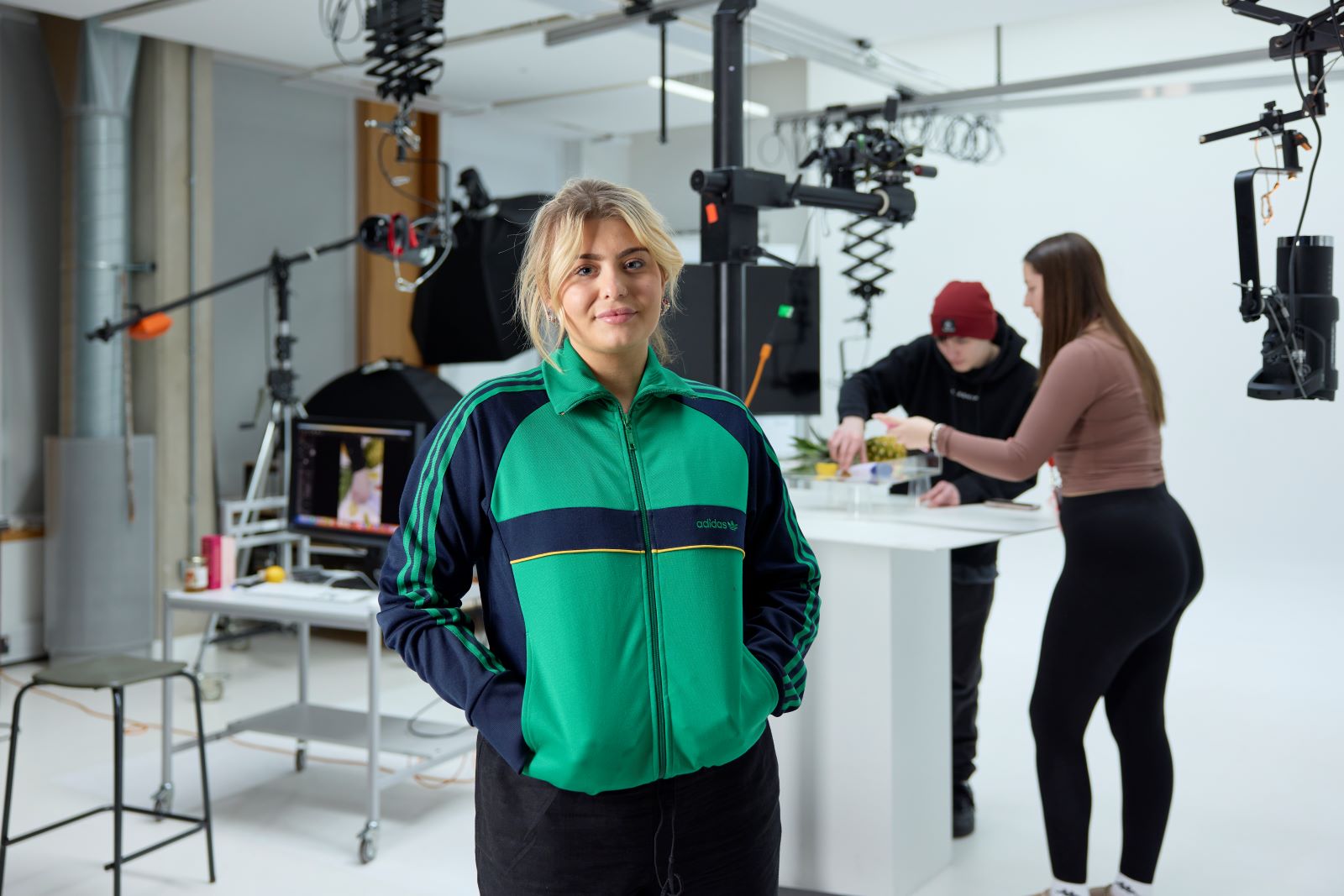
Students studying our degree in photography will also benefit from our industry standard photography studio facilities, which you can explore via the virtual tours below.
For Graduate Job Prospects in the Daily Mail University Guide.
For satisfied with feedback in the Guardian University Guide 2026
For Film Production & Photography in the Guardian University Guide 2026
Guardian data from the 2026 Film Production and Photography Subject table.
Daily Mail University Guide 2027.
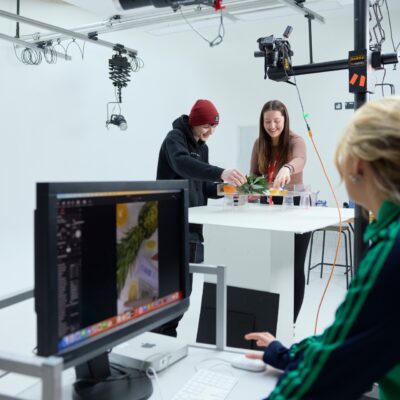
Students setting up a product ready to be photographed
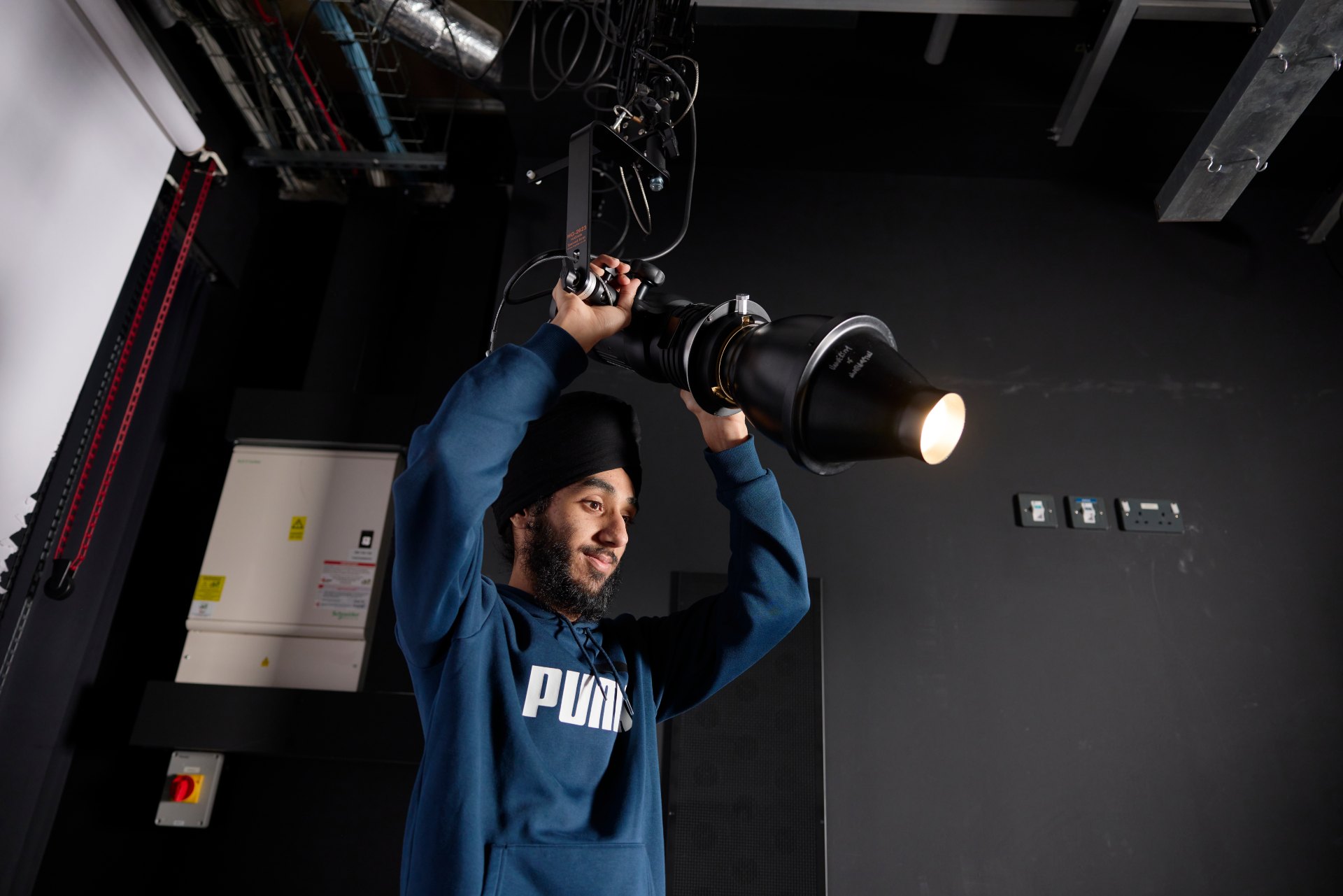
A student setting up a light in the photography studio
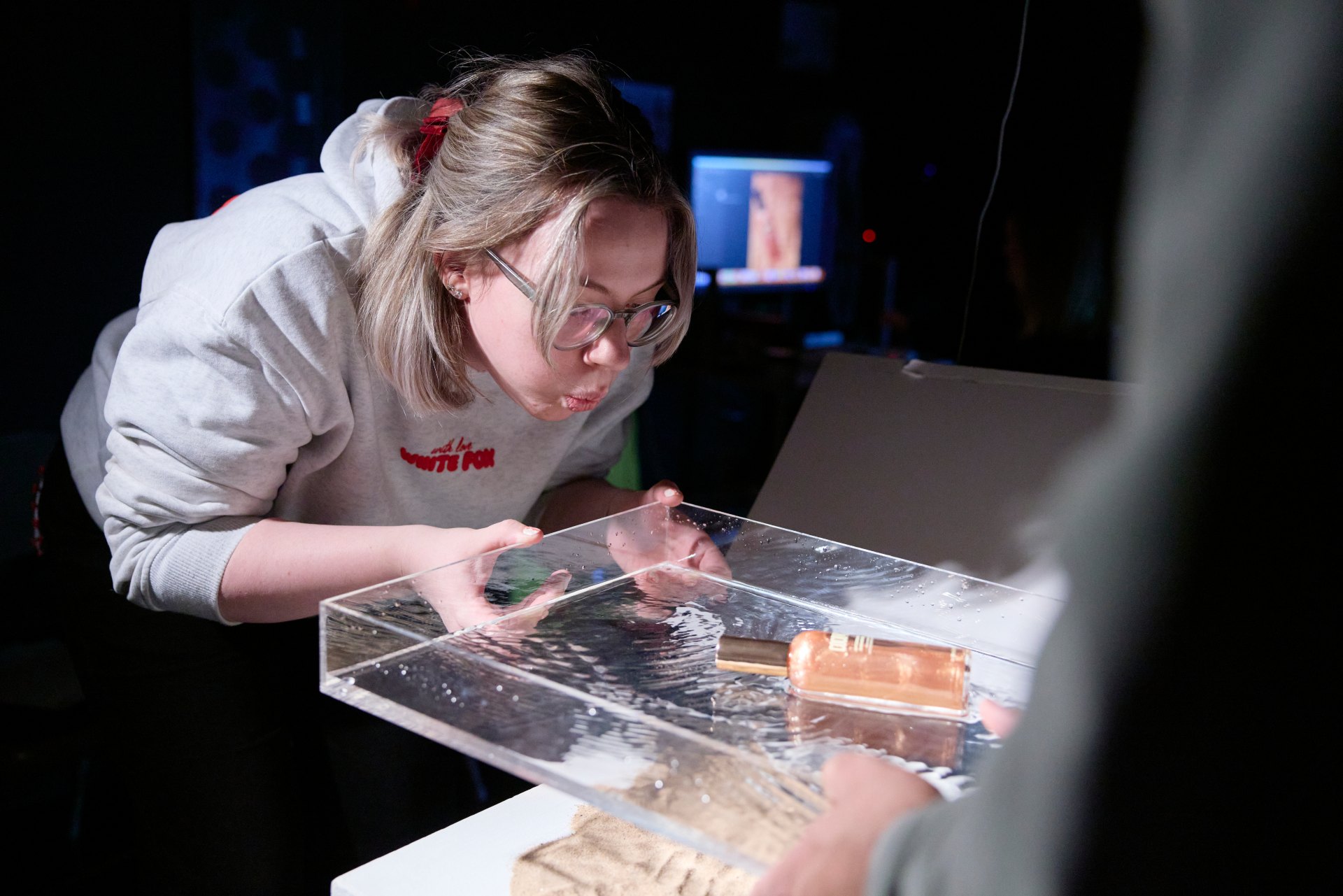
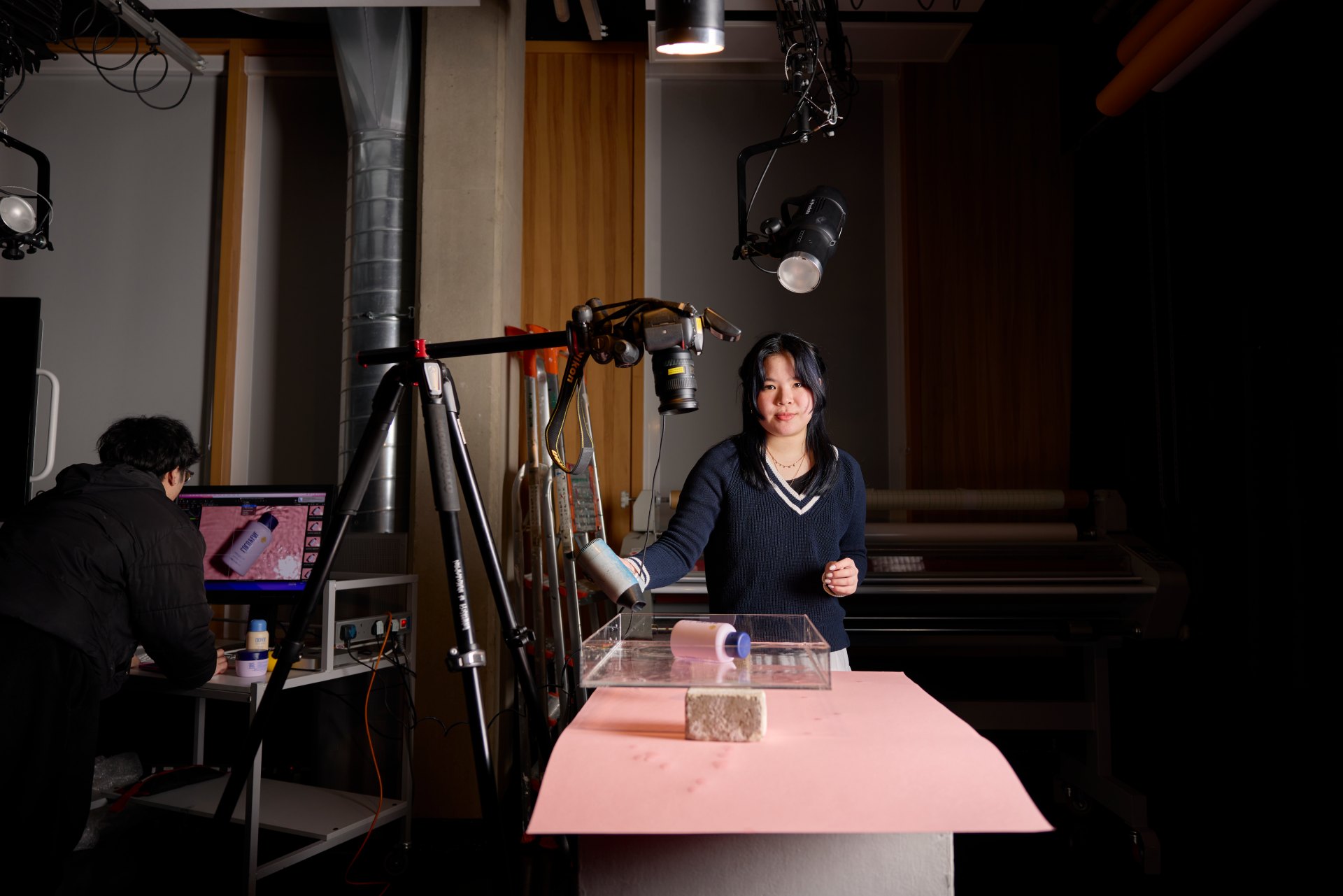
A student is setting up a product to be shot in the photography studio
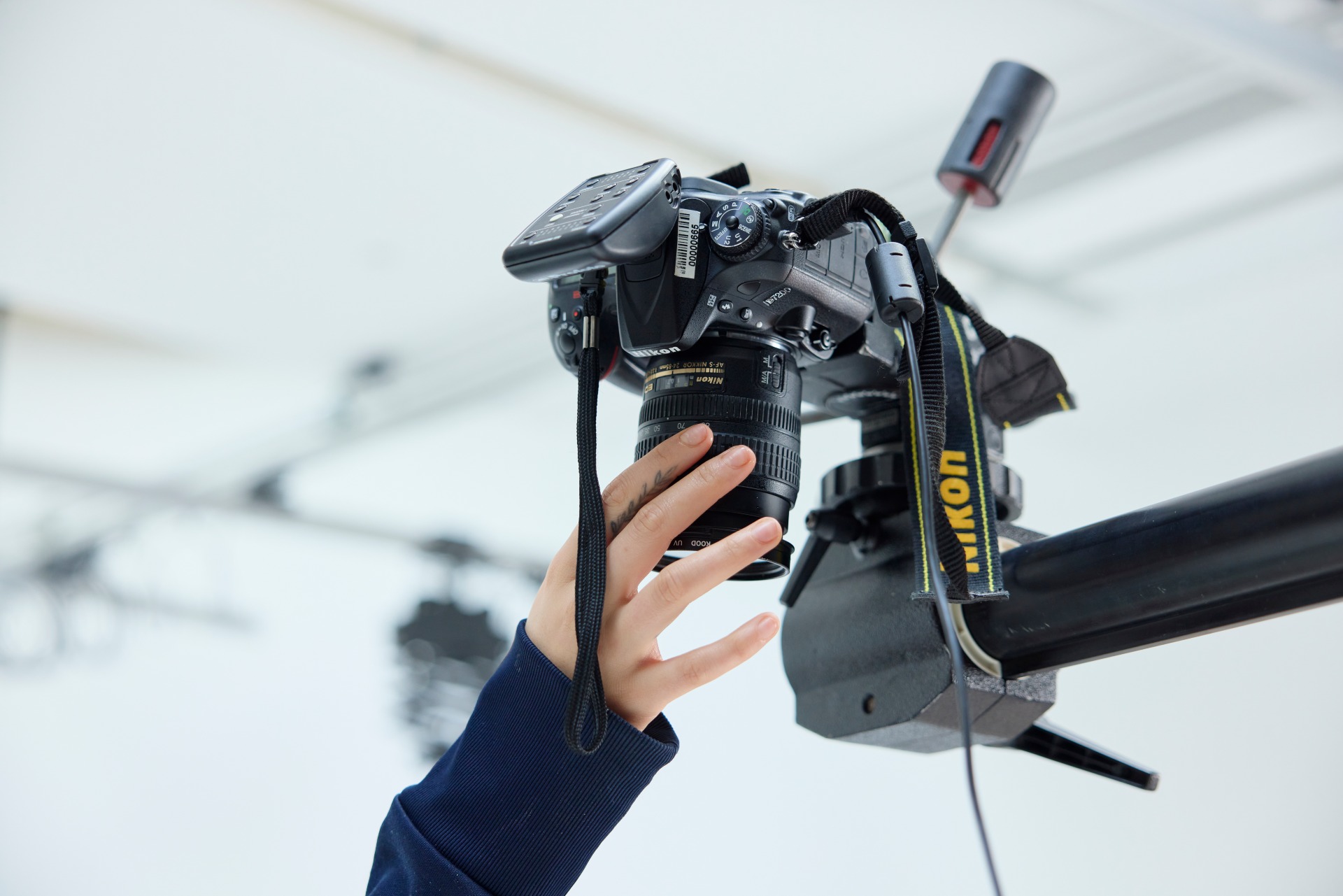
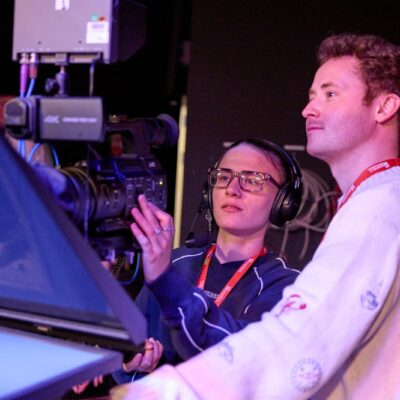
A camera being set up in a studio
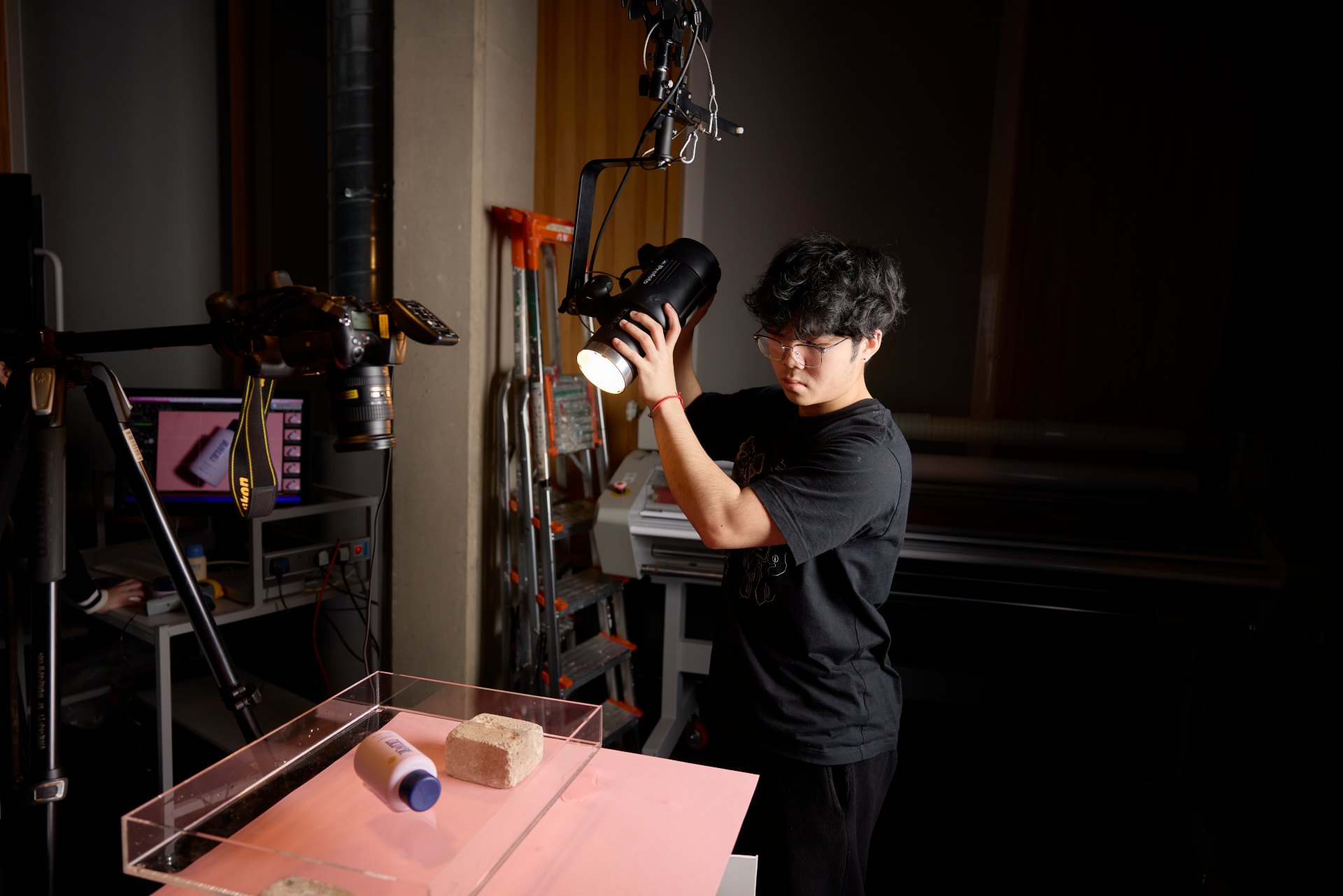
A student setting up a light over a product in the photography studio
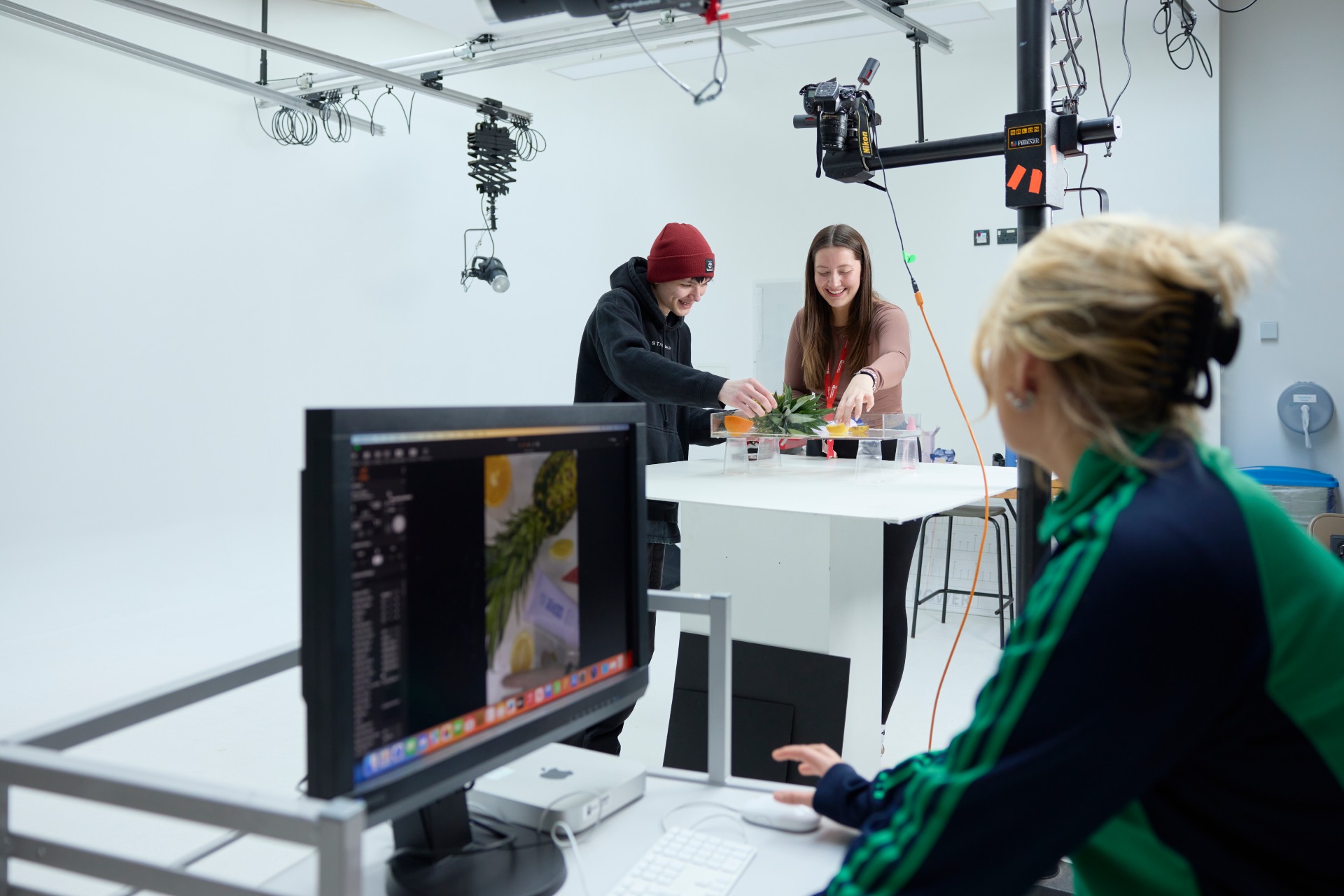
Three students working on a photography project in the studio
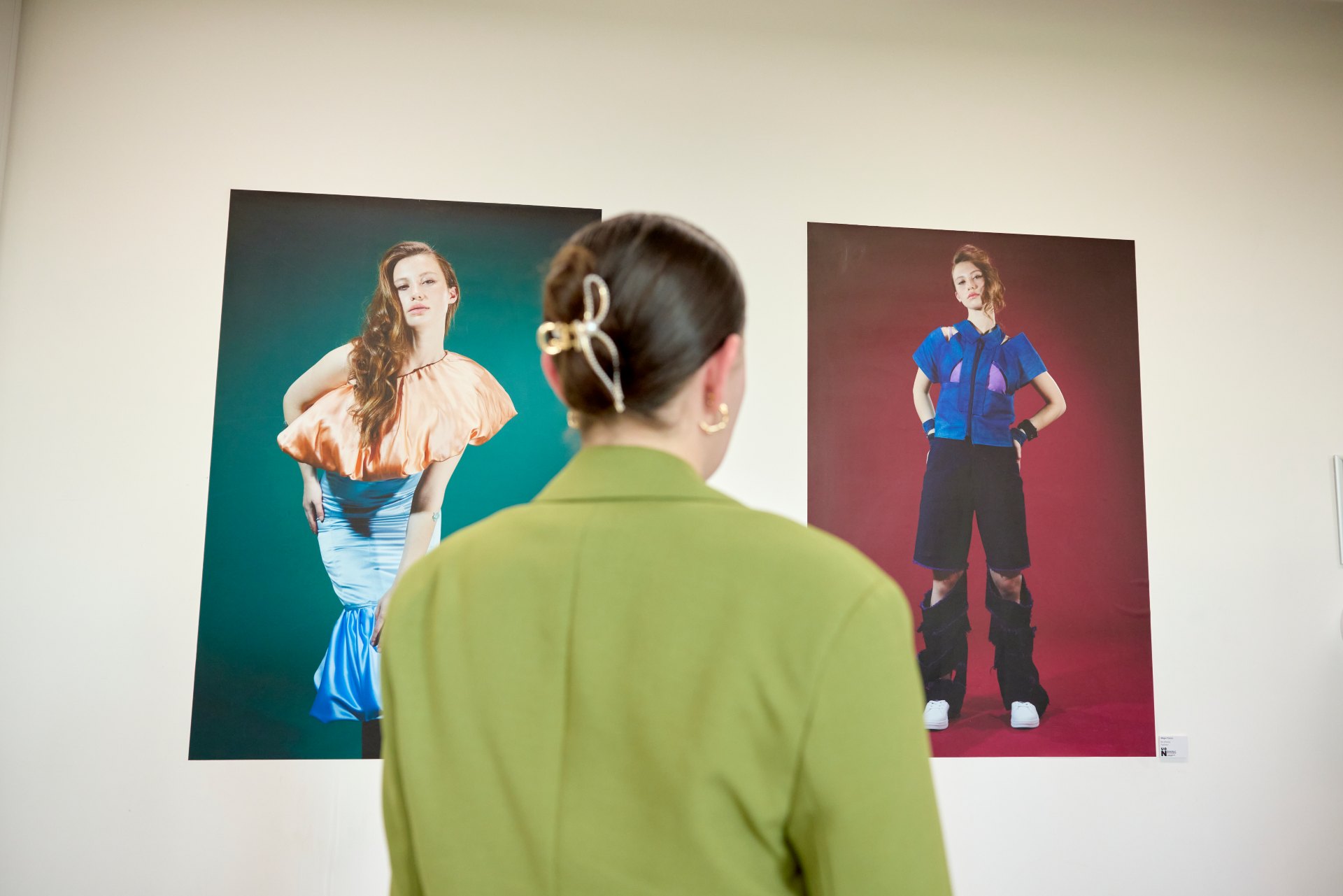
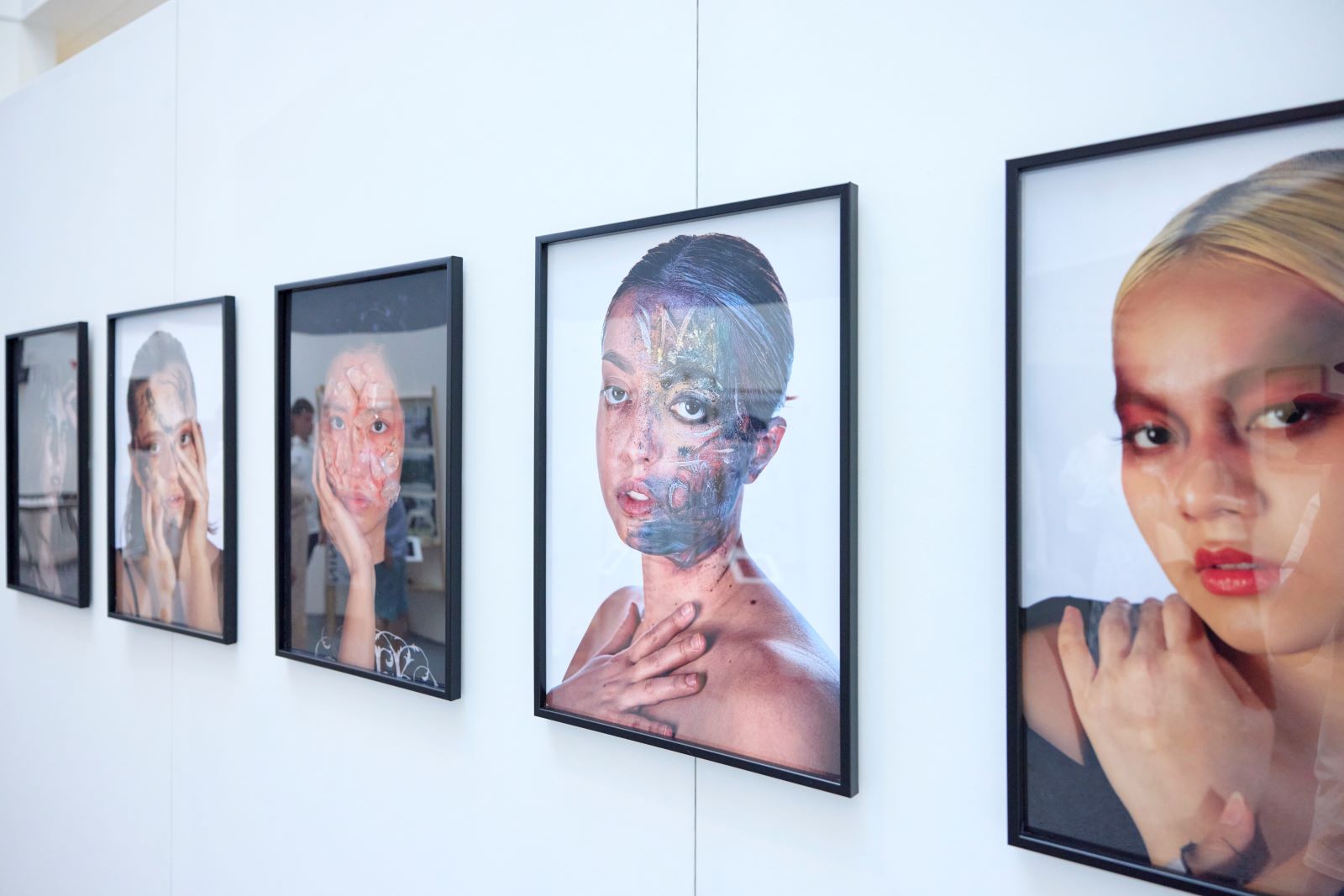
A visitor viewing student photography work at the Degree Show
A typical offer for a BA Photography degree would be:
We welcome applications from students with a mix of A levels and BTEC/Cambridge Technical qualifications.
International students may also submit their portfolio electronically. Students with a relevant HND or Foundation Degree with a suitable profile of achievement may be admitted onto year two or three.
For more information on how to make an application, please visit our How to Apply page.
If you are an International student and would like information on making an application, please see our How to Apply page.
Admission to this foundation photography degree is normally:
We welcome BA Photography applications from students with a mix of A levels and BTEC/Cambridge Technical qualifications.
However, we would also like to hear from you if you have professional or industry experience instead, a range of other qualifications or self-developed subject knowledge that relates to the programme you wish to study.
All International and EU students applying for a photography course with us must meet the following minimum English language requirements:
For information regarding English language requirements at the University, please see our IELTS page.
Every year, our Photography students take part in Student Futures Week, which is aimed at showcasing industry careers and opportunities. The week includes masterclasses, key-note speakers, demonstrations and specialist events. This year, our Photography students took part in an ‘Industry Day’, which included a professional photoshoot!
On our BA Photography, you will develop your understanding of contemporary photographic and video work within a diverse set of visual art, commercial and fashion contexts, to understand the impact that still and moving images can have and the change they can inspire. We encourage you to explore the photograph and moving image within art, editorial, product, fashion, and entertainment industries. You will develop skills independently, so that you can work to client and exhibition commissions and function as a professional following graduation in photography.
The purpose of this module is to introduce students to the various uses of digital moving image production within content production skills. What is understood as still photography constantly evolving. The moving-image is also considered in relation to digital storytelling, AI and AR, immersive applications, projections & social media.
The purpose of this module is to lay the foundation for practical digital skills, including lens-based techniques. By utilising industry-standard workflow software, and understanding emerging technologies students have the opportunity to respond to a visual brief and through practice start embedding contemporary camera practices while building a portfolio.
The purpose of this module is for students to acquire an understanding of business and professional creative skills essential for graduate career success¿ whether being commissioned as a freelancer or being engaged in employment in the creative industries. Students produce and reflect on work for an internal University client.
The purpose of this module is for students to understand the range of methods and strategies of physical and virtual presentation available to present images as printed objects, books and exhibition. They engage with producing a series of images that address a concept from a broad socially engaged theme.
The purpose of this module is to embed a range of digital, traditional and emerging technologies in studio and on location to provide a wide range of imaging opportunities. Students develop an individual, response to a brief, aligning process and intention to achieve a distinctive creative outcome.
The purpose of this module is to support the photographic practice developed throughout the academic year. It provides the foundations to develop an understanding of the key theoretical and historical debates surrounding photography. The module also encourages the initial development of research, writing and visual analysis skills.
Please note the modules shown here relate to the academic year 26/27. The modules relating to the academic year 27/28 will be available from June 2027.
At the University of Northampton, everything we do, from funded trips to paid internships, is to give you everything you need to make a difference when you leave.
If you join this full time Photography degree at the University of Northampton, you will receive a laptop when your course begins*. The laptops are built to a bespoke custom specification ideal for use in the seminar room, collaborative group work or studying at home.
Whatever your ambitions, we’re here to help you to achieve them. We’ll support you to identify the skills you’re learning during your course, find your strengths and secure practical experience so that when it comes to applying for jobs or further study you’ll feel confident in standing out from the crowd. We’ve created the Northampton Employability Promise because we are so confident that if you focus on your studies and complete one of our awards you’ll be highly employable by the time you graduate. Putting you in a great position to secure employment or continue your studies.
To check out the full list of perks, visit our Student Perks page or dedicated International Perks page.
*UK fee payers only (see Terms and Conditions for further details).
The Integrated Foundation Year (IFY) offers a new and exciting route into studying for a degree in photography, attracting ambitious and driven students who are willing to learn and advance.
If you have non-standard qualifications or do not quite meet the admissions requirements we can offer you a fantastic opportunity to study a four year programme which includes an Integrated Foundation Year. The Integrated Foundation Year will help you develop the theoretical/practical and academic skills you need, in order to successfully progress to the full award.
Our four-year photography courses will enable you to successfully follow the degree pathway of your choice while gaining essential study skills. The foundation year of your chosen degree will be studied on a full-time basis and is aimed at supporting the transition to higher education. Years two, three and four are then studied as a standard degree programme.
By studying photography at a university, you will build and develop your skills, creativity and technical abilities – which are essential elements to success. You will also have the benefit of accessing our studio facilities, building a portfolio, and participating in external exhibitions to prepare you for your professional career.
Which course is best for photography?Finding the best photography course for you depends on your circumstances and goals. Studying a BA Bachelors in Photography is perfect for developing your wider skills and obtaining an industry standard qualification.
How will I be taught on the BA Photography?We take a range of approaches to teaching throughout our photography degree, including lectures, seminars, practical workshops, individual tutorials and group critiques, to facilitate critical discussion and analysis.
How will I be assessed on the degree in Photography?Theory is assessed through blogs, essays, report, presentations and an extended research proposal. Practical work is judged through portfolio presentations, digital research journals, and displays/exhibitions, and aligned with individual module criteria.
Will I go on any trips to exhibitions?All Photography students are encouraged to attend exhibition trips that are organised throughout the year. We usually cover the cost of journeys by coach, but you will be expected to pay for any additional journeys by rail. The cost will depend on how far in advance you book tickets, whether you use a student rail card or if underground travel is required. Some of the bigger exhibitions at established institutions will charge an entry fee, which will be reduced if you show your student card.
Will I get to take part in any exhibitions?As well as your assessed coursework, we encourage you to present your work to the public. There will be additional costs included in contributing to and setting up exhibitions, such as gallery hire, printing, mounting/framing and transport. These will vary depending on the venue and the number of participants.
Is there any work experience on this Photography course?On the degree in Photography, you will have the opportunity to do photography work experience, either paid and unpaid, alongside your studies. Recently, students have had internships and work-based learning with West Northamptonshire Council, NN Gallery, FrasierShot, The Innovation Centre, The Sunley Hotel, Mind Northampton and Macmillan Cancer Charity.
Anything else I should know?This Photography degree has been designed to contribute towards achieving the following United Nations Sustainable Development Goals: SDG11: Sustainable Cities and Communities
Discover the work of emerging artists, designers, and creatives by visiting exhibitions, installations, and showcases from our final-year art, design, technology, media, and performance talent.
UON will adjust fees annually for UK (Home) Students up to the maximum allowable fee cap set by the Secretary of State for Education.
When assessing an applicant’s eligibility to pay home fees, we use the guidance provided by the UK Council for International Student Affairs (UKCISA) which sets out the regulations that have been decided by the UK Government Department of Education.
Tuition fees quoted for International Students apply only to the 2026/27 academic year. These fees may increase in future years in line with Consumer Price Index (CPI) inflation to reflect rising delivery costs. Any annual increase will be capped at a maximum of 5% of the previous year’s tuition fee. Updated tuition fees will be published on the UON website at least three months before the start of the next academic year.
In the summer before you start studying with the University of Northampton, you will be sent a list of necessities for the photography course, with recommendations of where to buy the products at a reasonable price. These include external hard drives, SD cards, portfolio boxes, sketchbooks, stationery etc., costing a total of approximately £100-150.
We have our own Art shop on campus, where you will be able to purchase many of these items.
While students are not expected to arrive with their own high-end cameras, many students do choose to buy their own DSLR by the end of their Level 5 (Stage 2/second year). A range of photography equipment is available to loan, subject to availability. Please be aware that our stocks of digital cameras are Nikon and we have a range of lenses that will fit this make. We also have some Canon bodies, Fuji bodies, Pentax medium format bodies and lenses to hire. We have a range of profoto studio and location lighting. Our equipment can be loaned for longer periods – for example over the summer vacation. However, we do ask that it’s insured for this purpose.
N.B. There is no cost to hire kit, and costs for this insurance are quite reasonable.
For independent work off-campus, you may need to provide your own hardware equipment such as laptops (not if you take up the free laptop offer) or MacBooks and printers. Digital imaging software such as Photoshop, Premiere Pro or Final Cut Pro or Adobe Creative Cloud is provided for all Photography students on and off campus.
On campus, there are digital workstations (Mac and PC) available for you to use as well as a networked top-up card printing facility (including colour) that you would pay per print for. There is also late night opening Mac Suite access for those studying BA Photography should you need it after hours.
You can choose to shoot on film (35mm, medium or large format) or other media such as polaroid. However, you’ll need to purchase your own film unless it is part of a Year 1 workshop. Black and white film processing and dish tray printing facilities are available for you to use free of charge. In the first year of your photography degree, you will be given two rolls of 35mm b/w film and one roll of colour film for their technical workshops.
Other costs on the Photography course may involve the production of a self-published book as part of a portfolio, project or exhibition and is usually produced and ordered through an online company.
Some projects will make use of screen-based images or projections, with no additional cost, however you will be required to print your photographs from other projects which will incur a cost. This will be dependent on scale, paper type and so on. We have an in-house printing and mounting service, offering reasonable prices for print orders. Alternatively, you can use professional labs for high-quality exhibition prints and finishing. For exhibition-based modules (in stage two and three), there are additional costs to consider regarding the display & presentation of work such as print mounting and framing. You will be able to use our scanner for colour film and our black and white darkroom facilities to dish tray print B&W film-based images, but you will need to provide your own paper, unless the printing is part of a taught workshop.
You are encouraged to enter competitions at cost and the AOP student competition is subsidised at approximately £10 for an entry.
Information on the scholarships available to you can be found on our scholarships page.
For more information about possible funding options, please visit our Fees and Funding pages.
Fees quoted for the photography degree relate to study in the Academic Year 2025/26 only and may be subject to inflationary increases in future years.

Senior Lecturer in Photography
Senior Lecturer in Photography

Senior Lecturer in Expanded Visual Practice

Associate Lecturer (Photography)

Associate Lecturer (Photography)
Our Photography degree is excellent preparation for a range of careers in fields such as the commercial and public sectors, marketing, public relations and specialised fields.
With the skills and knowledge developed on our photography undergraduate programme, our graduates have gone on to pursue a wide variety of different photography careers. Opportunities in the field of photography include, but are not limited to;
You could develop your practice as an independent artist and pursue collaborations, commissions, publication and exhibition opportunities. You would also be well positioned for master’s study.
Our master’s courses are a great way to enhance the skills you have already learnt. Benefit from our 20% alumni discount on master’s courses to give yourself a CV that will catch the eye of employers.
While studying for a degree in photography, you can make use of the top facilities available, such as our black and white darkroom in line with industry standards. Three large studios (one with daylight), and all with artificial flash lighting provide professional standard facilities for a wide range of studio-based photography using film or digital cameras.
There is a digital Mac suite, which is a dedicated digital photography training room. You will have access to a range of film and flatbed scanners (including the Hasselblad Flextight Scanner), and fully colour managed computers which are linked to the digital print room. You will also have access to a video editing suite, with industry standard software such as Adobe and Capture-One.
An in-house exhibition-standard printing and mounting service is also available.