Brendon Skinner
Senior Lecturer in Sport Rehabilitation and Injury
UCAS Code
BSc: C630
BSc with Foundation: C631
Duration
Full Time: 3 years
Full Time Foundation: 4 years
Part Time: 4-6 years
BCC - BBC at A Level or,
MMM - DMM at BTEC
Full Time: £9,790
Part Time: £1,630 (per 20 credits)
Integrated Foundation Year: £9,790
study@northampton.ac.uk
0300 303 2772
Updated 22/09/2026
The University of Northampton’s Sport Rehabilitation and Conditioning BSc course is aimed at students who are committed to working with the public, athletes and populations of all ages to support improvements in the public’s health and wellbeing. On this sports rehabilitation course, you will apply both academic and practical skills to assess, treat and rehabilitate people from injury and illness and develop injury prevention strategies.
This practical-based Sport Rehabilitation and Conditioning BSc degree will equip students with the hands-on skills needed while our active blended learning approach will engage and support students both during and outside of the taught sessions. Further to this, our careers and employability, and business and entrepreneurialism modules ensure that you are well-prepared for employment upon graduating.
For Student Satisfaction in the East Midlands
For student positivity in the National Student Survey 2026.
For Satisfied with Teaching in Sports Science
For Satisfied with Feedback in Sports Science
NSS Calculations are based on Office for Students (OfS) data from the average positivity score. Guardian data from the 2027 Sports Science subject table. Complete University Guide 2027, Sports Science Subject Area, For Student Satisfaction (East Midlands only)
As an accredited member of the British Association of Sport Rehabilitators and Trainers (BASRaT) you will be eligible for membership and benefit from the professional industry insight they provide.
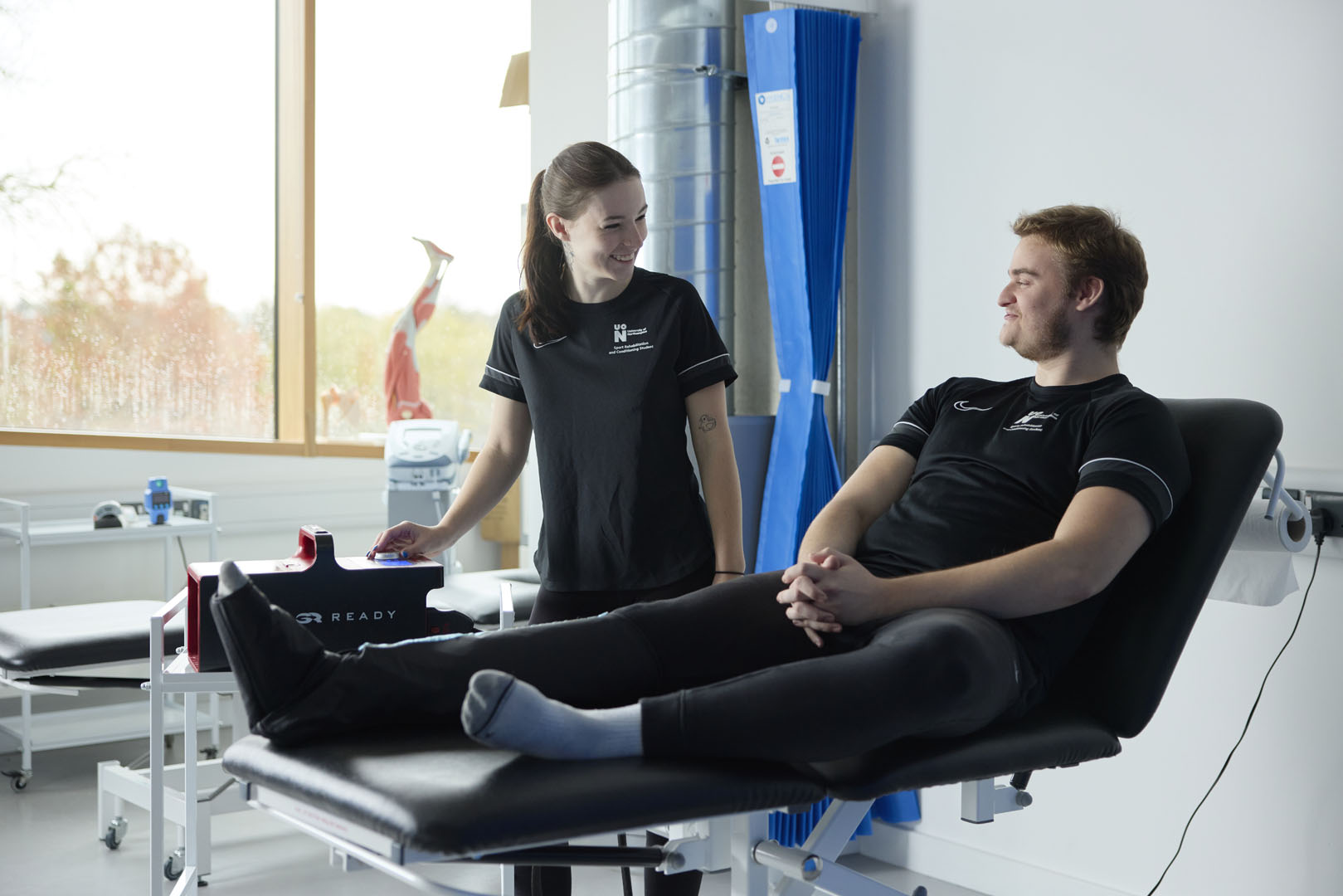
UON's Sports Injury and Rehabilitation Clinic offers a variety of treatments to students, staff and the general public.
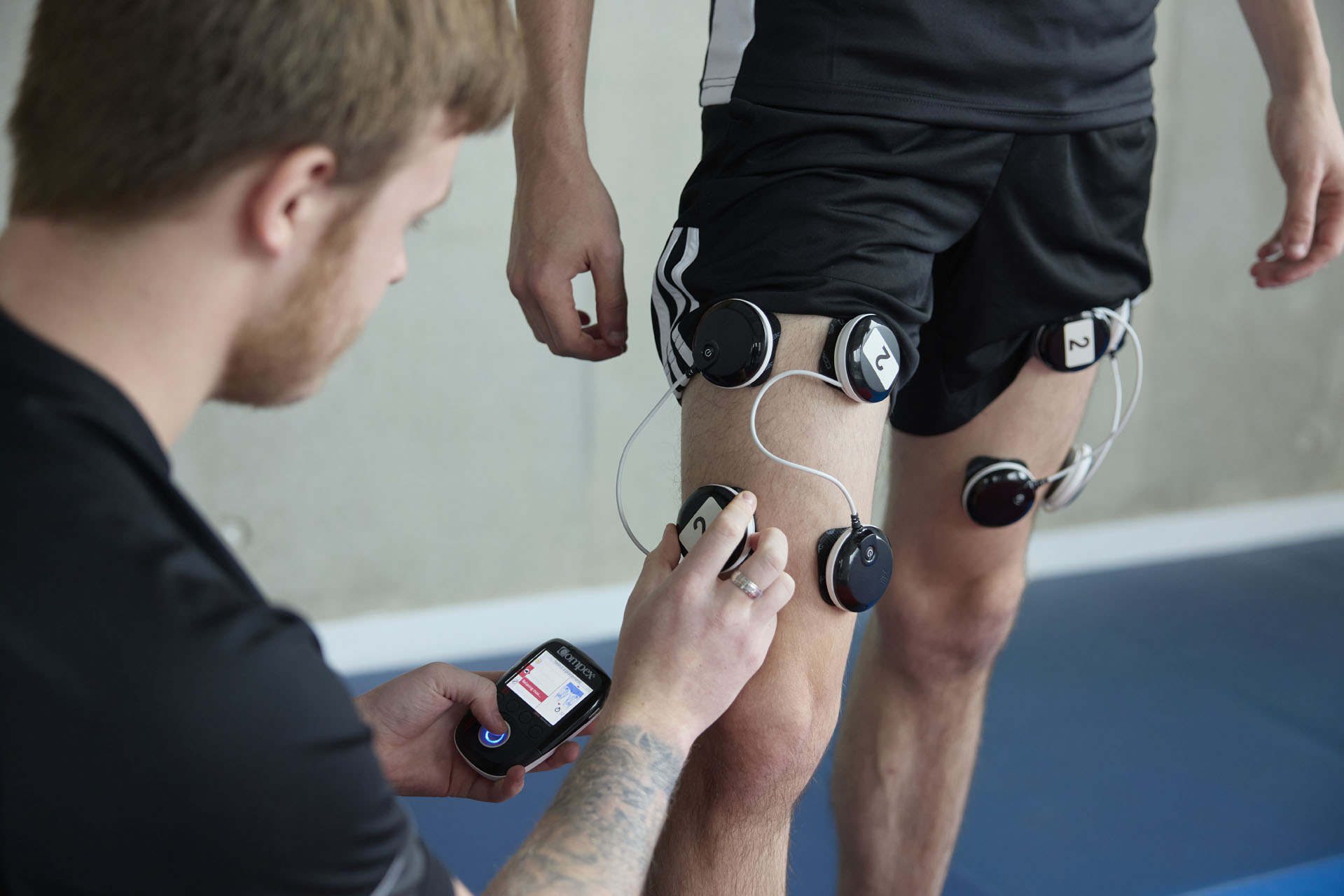
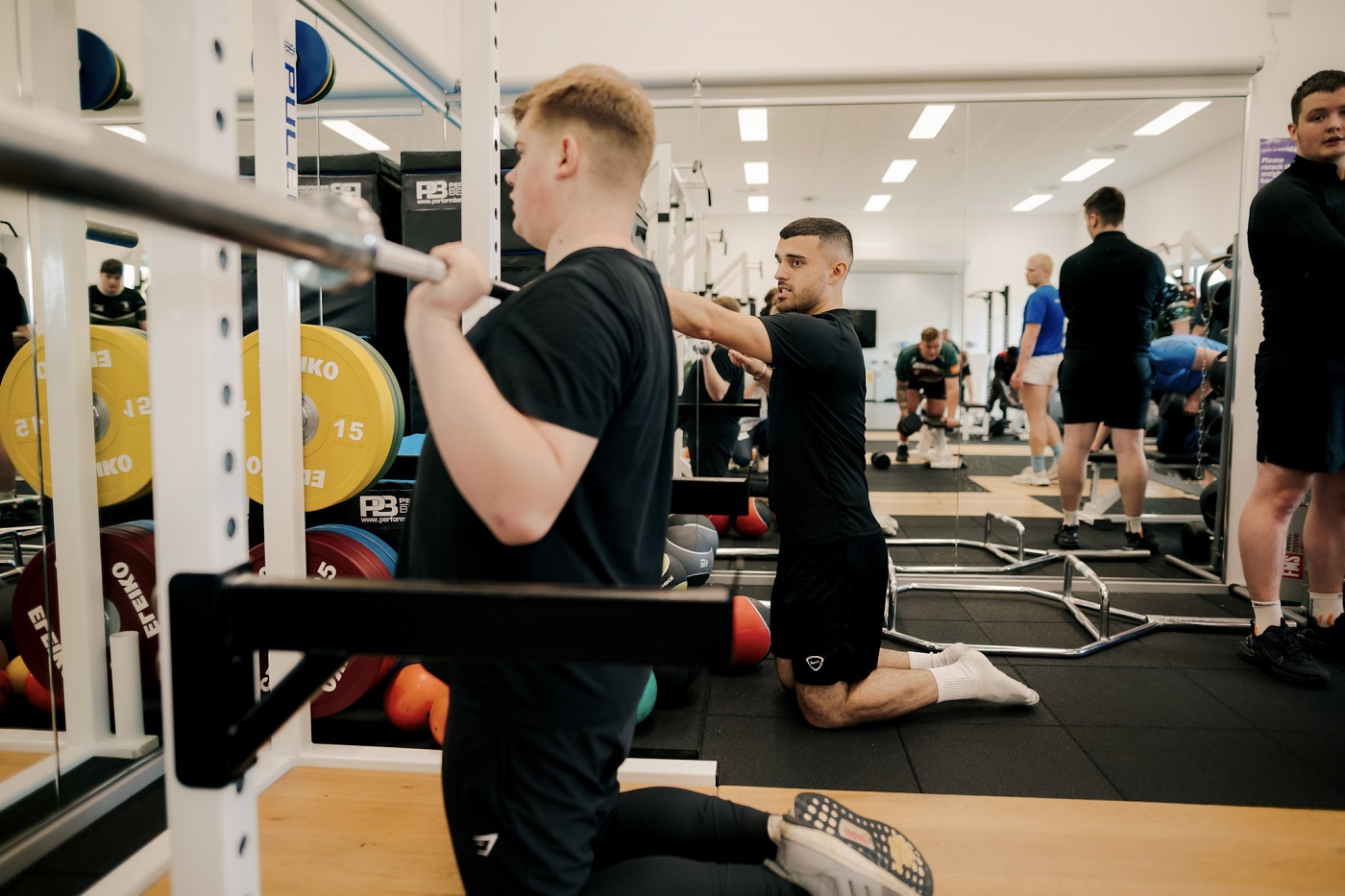
Students enrolled on our Sport Rehabilitation and Conditioning BSc can gain practical experience in our onsite Sports Injury and Rehabilitation Clinic (SIRC)
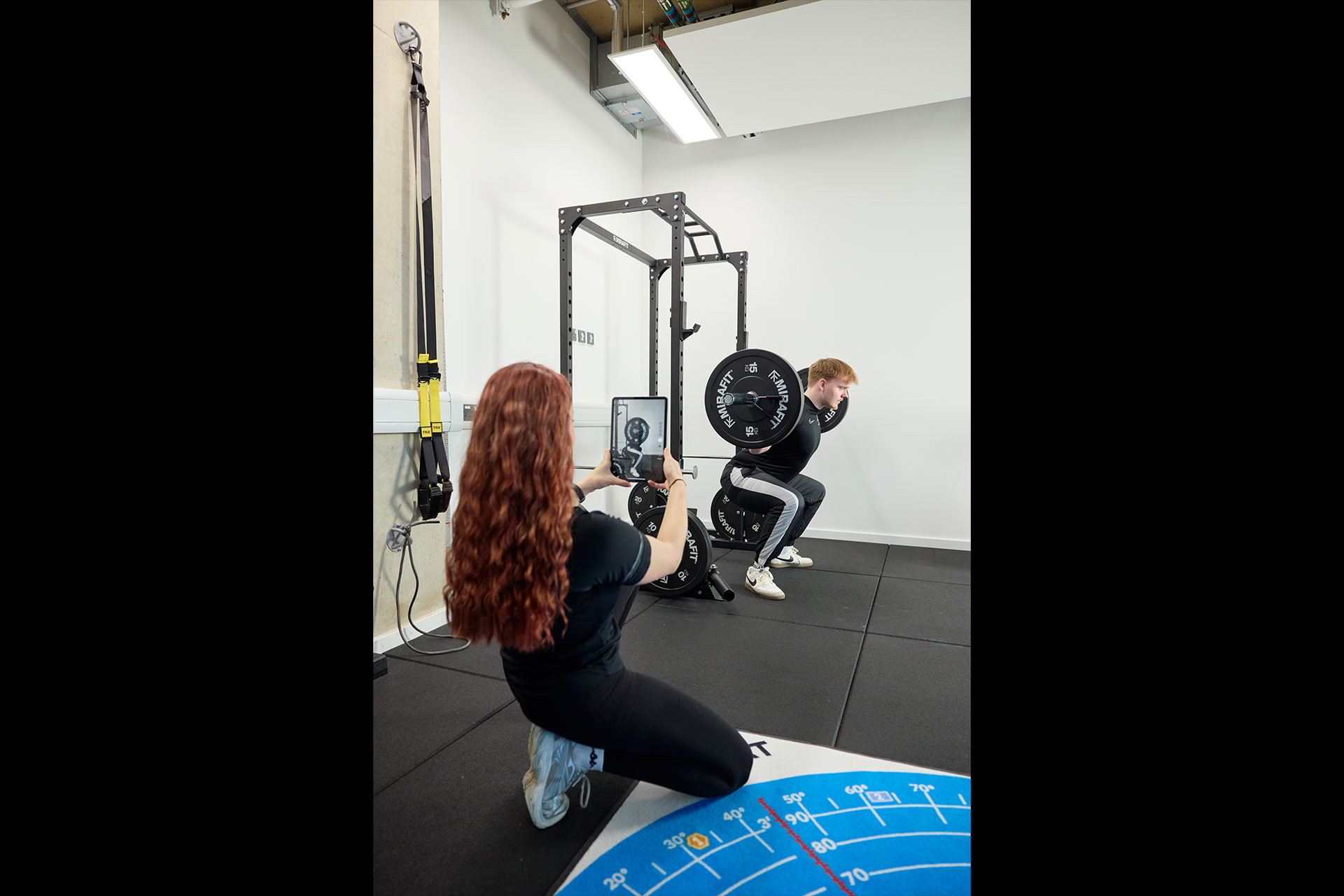
Our students gain hands-on experience in a variety of assessment and treatment methods in our onsite Sports Injury and Rehabilitation Clinic (SIRC)
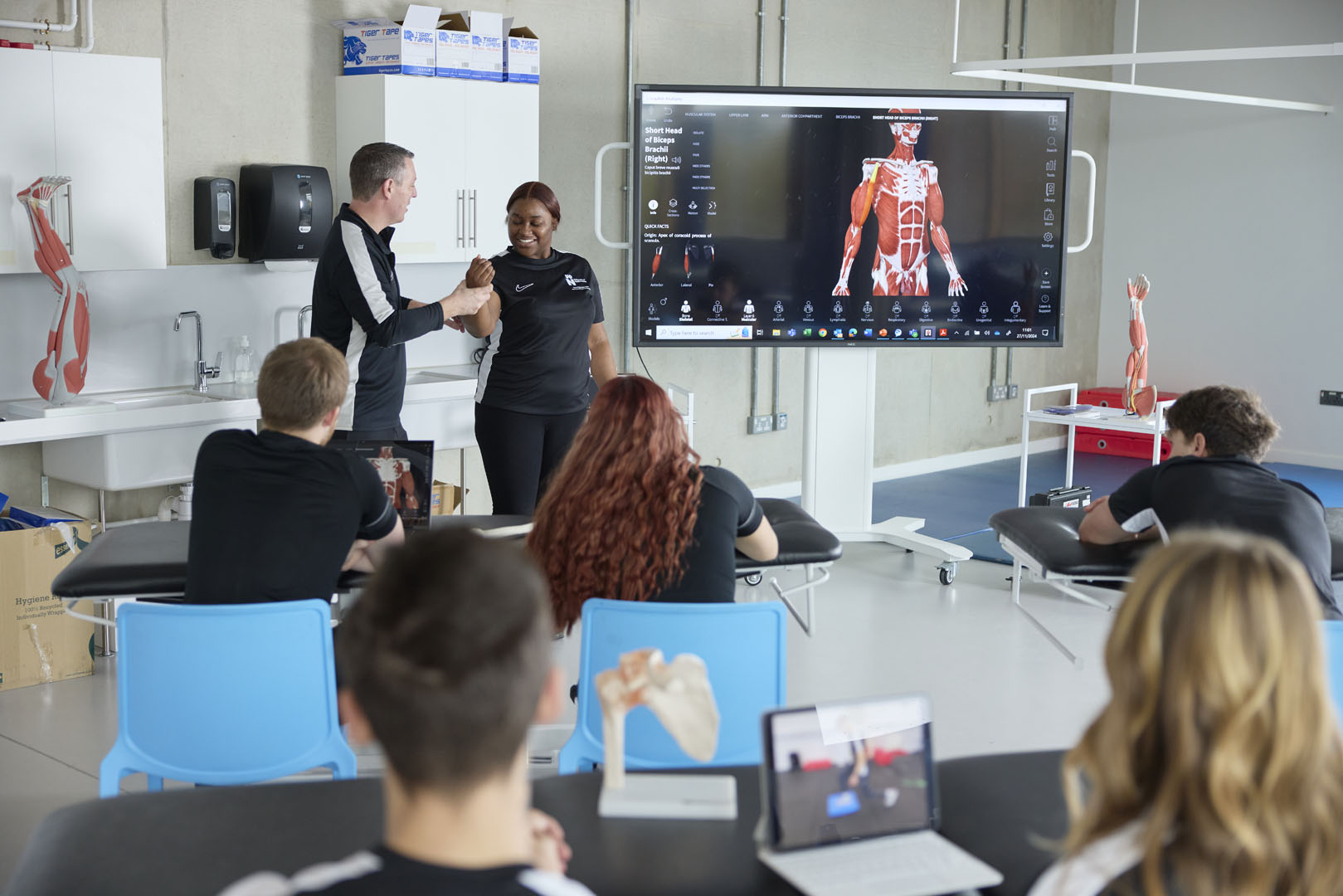
The Sport Rehabilitation and Conditioning course will develop you with the skills to prevent, manage and rehabilitate people from sport-related injuries.
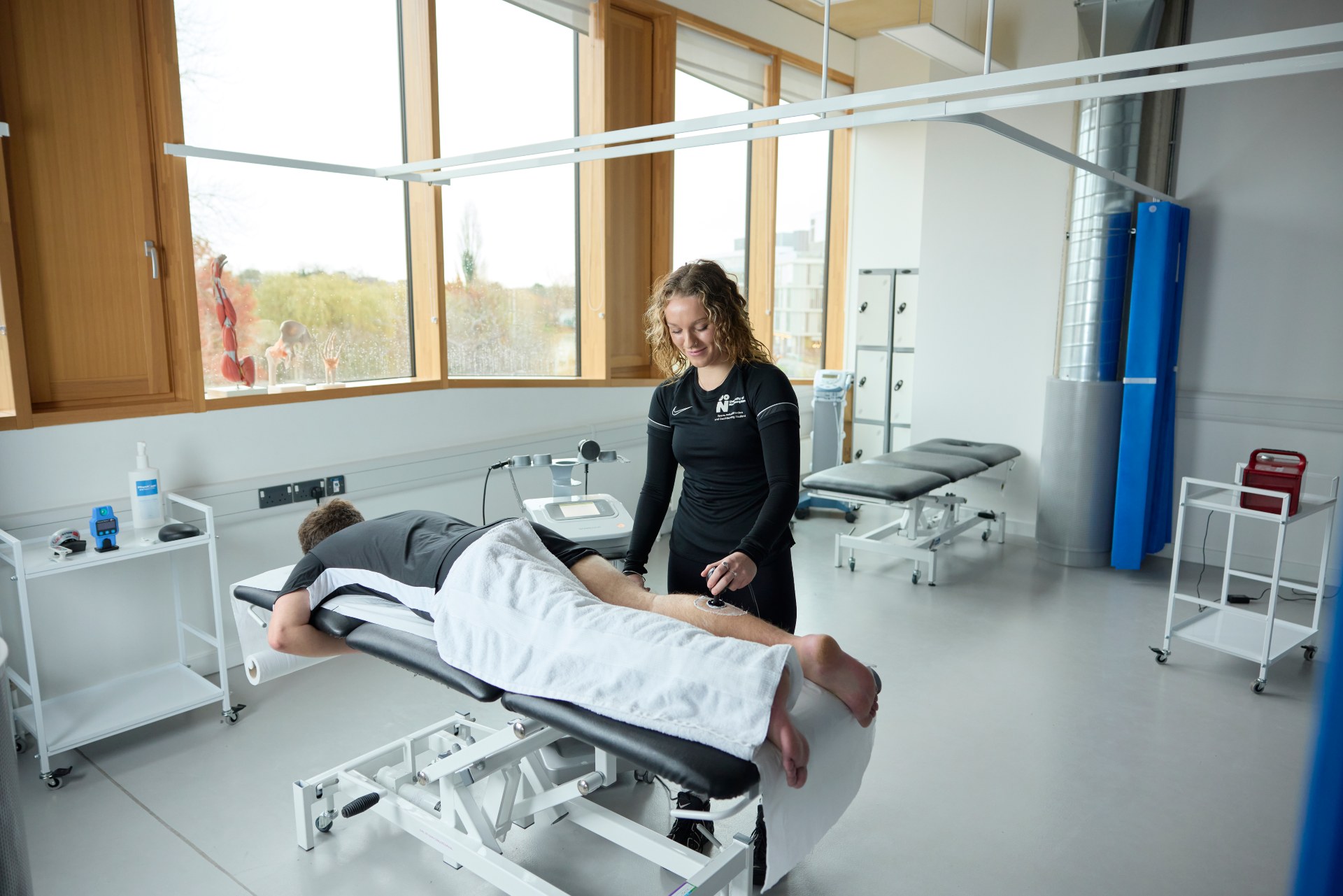
Treatment being administered on a patient whilst laid on a table.
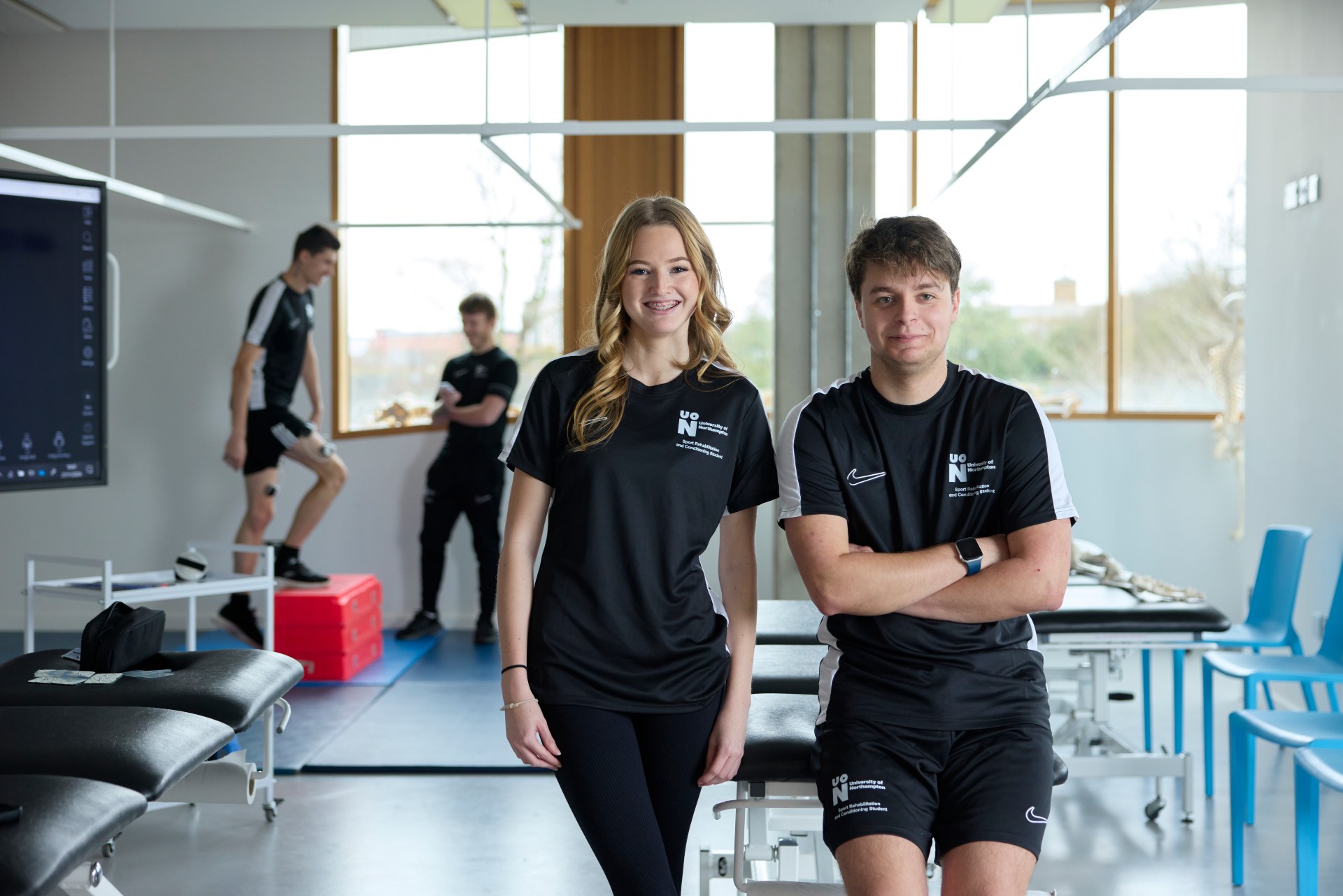
Two sports rehabilitation staff stood inside our cutting edge UON facilities.
A typical offer for the Sport Rehabilitation course would be:
We welcome applications from students with a mix of A levels and BTEC/Cambridge Technical qualifications.
In addition, you will need to have studied a sports coaching, physical education, sports science or science related subject at A Level or BTEC level 3 diploma. Relevant industry vocational qualifications would be considered where applicable.
You will be required to complete an Occupational Health Screening and a Disclosure and Barring Service (DBS) check on admission in order to go out on work placement, which is a mandatory part of the course.
For more information on how to make an application, please visit our How to Apply page.
If you are an International student and would like information on making an application, please see our How to Apply page.
Admission to this foundation sports rehabilitation course is normally:
We welcome applications from students with a mix of A levels and BTEC/Cambridge Technical qualifications.
However, we would also like to hear from you if you have professional or industry experience instead, a range of other qualifications or self-developed subject knowledge that relates to the course you wish to study.
All International and EU students applying for a course with the University of Northampton must meet the following minimum English language requirements:
For information regarding English language requirements at the University, please see our IELTS page.
“As part of my course, I’m completing a placement where I assist the University’s physio/ rehab team – this has been a big benefit as it enables me to use and develop my skills within a real-world setting.”
This sport rehabilitation degree is built upon the core competencies required and set by BASRaT which includes modules that develop your knowledge and skill in musculoskeletal injuries, athlete screening and injury prevention, manual therapies and strength and conditioning, as well as the underpinning sports-science disciplines modules such as physiology, anatomy, nutrition, psychological management of athletes and a research dissertation.
In addition to developing your own business and entrepreneurialism skills, you will complete a minimum of 400 hours of work-based learning to enable you to apply your knowledge in real-world settings and gain the valuable experiences needed for future employment.
In Year 1 you will develop skills across all core areas that underpin a graduate sport rehabilitator.
You will develop the skills to conduct a range of injury screening tests; understand how to deliver exercise prescription to help reduce injury risk; develop knowledge of a breadth of musculoskeletal injuries and learn the skills to assess injured clients; learn a range of manual therapies that enable you to treat a range of musculoskeletal symptoms and conditions.
Underpinned with extensive anatomy, physiology, academic and professional skills, by the end of this year you will be equipped and ready to embark on the work based learning modules outlined in year 2. You will also have the opportunity to gain an industry recognised pitch side trauma qualification.
The purpose of this module is to provide a strong understanding of the epidemiology, aetiology and presentation of a range of musculoskeletal conditions common to athletic and non-athletic populations. This module will develop a sound theoretical understanding of common injuries, illnesses and diseases to the musculoskeletal system, inclusive of the psychological impacts of these conditions, which will form the foundations to support the development of the practical skills necessary to assess a range of musculoskeletal injuries, illness, and disease.
The purpose of this module is provide students with a range of psychomotor (hands-on practical) skills that can be used by a sports rehabilitator in addressing and preventing neuromusculoskeletal conditions and dysfunctions. Student will also acquire a theoretical understanding of the mechanism, indicators for use and contra-indications of each form of manual therapy to ensure they can justify their inclusion in an individual¿s management and understand their application within the scope of practice of a sports rehabilitator
The purpose of this module is to give students the basis of sound academic and employability skills is addition to understanding the core principles that underpin the practice of a sport rehabilitator aligned to the industry requirements of a graduate sport rehabilitator (GSR) and the industry profession statutory body BASRaT.
The purpose of this module is to give students the grounding of skill, knowledge and competence in planning and delivering exercise-based activities to help reduce injury risk and support athletic development.
The purpose of this module is provide a comprehensive level of the structures and functions associated with musculoskeletal (MSK) performance including anatomy of the musculoskeletal, neurological and arthrological systems of the human body in addition to developing the underpinning knoweldge of physiological systems in the human body and their responses to exercise.
The purpose of this module is to develop students understanding of how to conduct athlete screening and testing processes, and record, interpret and analyse their outcomes for the purpose of minimising sports injuries. Students will also develop an evidenced-based understanding of the strengths and limitations of the procedures used.
Please note the modules shown here relate to the academic year 26/27. The modules relating to the academic year 27/28 will be available from June 2027.
At the University of Northampton, everything we do, from funded trips to paid internships, is to give you everything you need to make a difference when you leave.
If you join this full time sport rehabilitation degree at the University of Northampton, you will receive a laptop when your course begins*. The laptops are built to a bespoke custom specification ideal for use in the seminar room, collaborative group work or studying at home.
Whatever your ambitions, we’re here to help you to achieve them. We’ll support you to identify the skills you’re learning during your sports rehabilitation course, find your strengths and secure practical experience so that when it comes to applying for jobs or further study you’ll feel confident in standing out from the crowd. We’ve created the Northampton Employability Promise because we are so confident that if you focus on your studies and complete one of our awards you’ll be highly employable by the time you graduate. Putting you in a great position to secure employment or continue your studies.
To check out the full list of perks, visit our Student Perks page or dedicated International Perks page.
*UK fee payers only (see Terms and Conditions for further details).
The Integrated Foundation Year (IFY) offers a new and exciting route into studying for a sports rehabilitation degree, attracting ambitious and driven students who are willing to learn and advance.
If you have non-standard qualifications or do not quite meet the admissions requirements for the sports rehab degree we can offer you a fantastic opportunity to study a four year programme which includes an Integrated Foundation Year. The Integrated Foundation Year will help you develop the theoretical/practical and academic skills you need, in order to successfully progress to the full award.
The University of Northampton’s four-year courses will enable you to successfully follow the degree pathway of your choice while gaining essential study skills. The foundation year of your chosen degree will be studied on a full-time basis and is aimed at supporting the transition to higher education. Years two, three and four are then studied as a standard degree programme.
The teaching strategy adopted for this course is designed to prepare you most effectively for the skills you will require in each module. All practice and clinical skill based modules are taught in specialist practical lab sessions, with practical classes of approximately 18 students per class. Theory based content is delivered through a mixture of face to face, student centred workshops (approx. 25-30 per class), with some additional pre / post lesson activities and online learning to support your knowledge development.
How will I be assessed on the Sport Rehabilitation course?All our assessments have been developed with a few key points of focus:
Assessments include practicals, presentations, written essays, infographics, group tasks, reflective accounts, in class time constrained tests. The assessment structure is designed to give students from all preferences an opportunity to shine and achieve.
What jobs can you get with a Sports Rehabilitation degree?The job market for BASRaT accredited Sport Rehabilitators is a growing market. Our graduates have gone on to attain roles in the NHS; local authority community trusts; private healthcare; professional / semi-professional sports teams; stroke rehabilitation units; gyms; and continuation of their postgraduate education.
A UON course leader has completed his tutor training to deliver an FA-approved trauma credential recognised as the second-highest level of sport trauma training in football.
His achievement brings significant benefits to students, as Sport Rehabilitation and Conditioning undergraduates will complete the Level 4 ITMMiF qualification at the end of their degree programme, free of charge, as part of their British Association of Sport Rehabilitators (BASRaT) eligibility requirements.
UON will adjust fees annually for UK (Home) Students up to the maximum allowable fee cap set by the Secretary of State for Education.
When assessing an applicant’s eligibility to pay home fees, we use the guidance provided by the UK Council for International Student Affairs (UKCISA) which sets out the regulations that have been decided by the UK Government Department of Education.
Tuition fees quoted for International Students apply only to the 2026/27 academic year. These fees may increase in future years in line with Consumer Price Index (CPI) inflation to reflect rising delivery costs. Any annual increase will be capped at a maximum of 5% of the previous year’s tuition fee. Updated tuition fees will be published on the UON website at least three months before the start of the next academic year.
For information on the scholarships available to you, please see our scholarships page.
For more information about possible funding options, please visit our Fees and Funding pages.
Fees quoted relate to study in the Academic Year 2025/26 only and may be subject to inflationary increases in future years.
Fees quoted relate to study in the Academic Year 2025/26 only and may be subject to inflationary increases in future years. UON will adjust UK fees annually in line with Government Policy.

Senior Lecturer in Sport Rehabilitation and Injury
Senior Lecturer in Sport Rehabilitation and Injury
Lecturer in Sport Rehabilitation and Conditioning
Lecturer in Sport Rehabilitation and Conditioning

Lecturer in Sport Rehabilitation and Conditioning
This Sports Rehabilitation Degree provides you with the skills necessary to secure employment in a range of sectors including sport rehabilitation, sport therapy, soft tissue therapy, sports teaching, and strength and conditioning in both sports and private practice settings. Graduate sports rehabilitators can also pursue careers within specialist military medical and rehabilitation centres.
You will develop excellent communication and analytical skills on this sport rehab degree, which will give you a great advantage when looking for employment. You also have the opportunity to continue your academic study, and have the option to progress onto our master’s programmes.
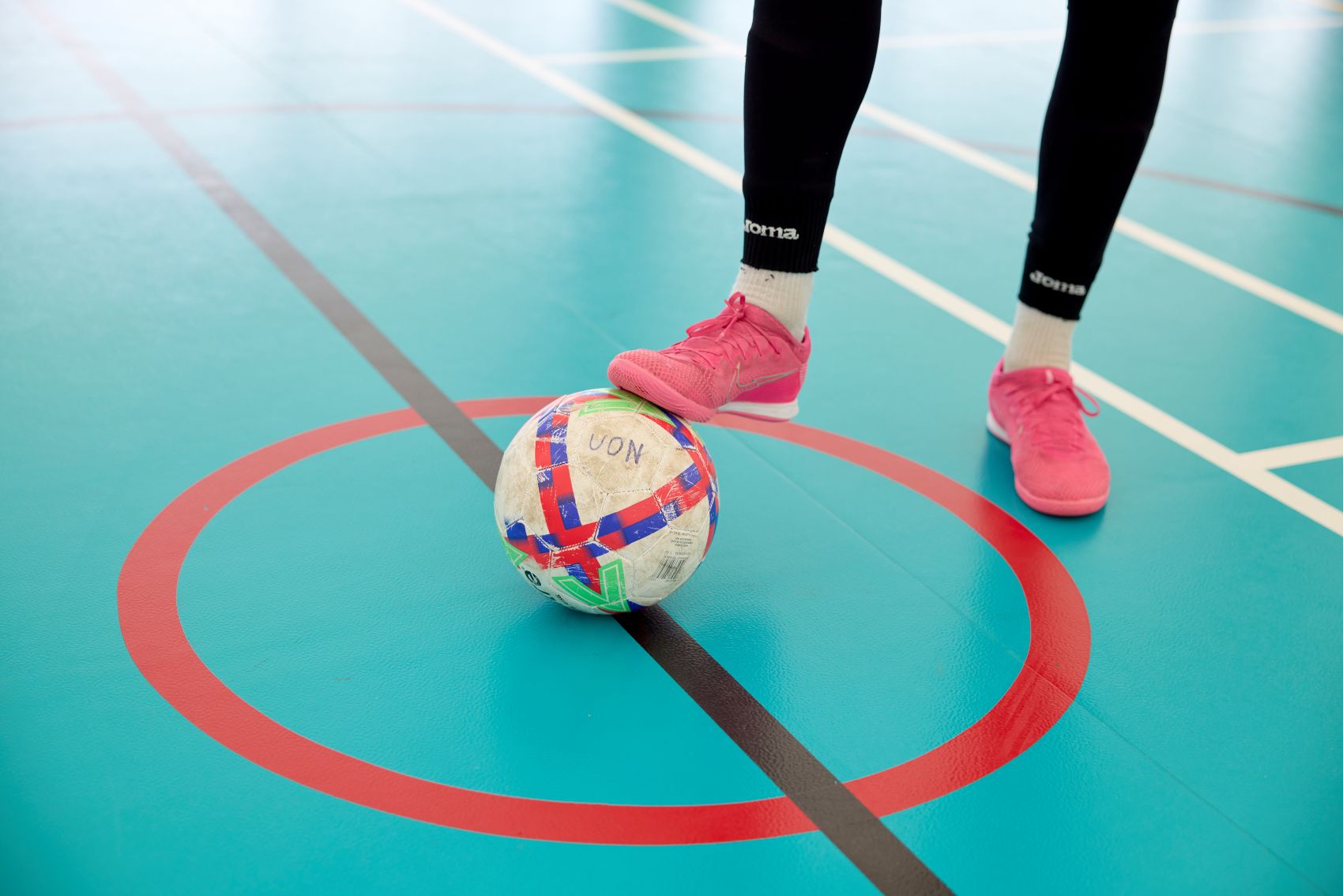
On the University of Northampton’s sports rehabilitation degree, you will have access to the Sports Zone at Waterside, which is home to a multi-use sports dome suitable for a variety of sports, including football, badminton and netball. The facilities include two sports performance labs, a pair of teaching rooms and changing rooms. In addition, there also are three outdoor multi-use games areas, and floodlit full-size all-weather sports pitch. The sports dome is used for teaching, research and recreational activities.