



Scott Parker
Senior Lecturer in Social Work
To ensure we guide you through the correct application process, we just need you to answer a few quick questions.
Already applied?
Log in to view updates.
This course offers two separate application routes, depending on whether the application is submitted by the student or an international agent.
Please select your desired length of study from the available options.
This course includes a placement option. Please indicate whether you’d like to apply with or without a placement.
Please select where you would like to study.
All the available academic years are displayed below.
All the available start months for the selected academic year are listed below.
Please review the information below carefully before continuing.
If you need to make any changes, click the < Back button to return to the previous step.

Duration
2 years Full-time
Level
Master'sPG MA
Year 1: £6,490
Year 2: £6,490
£20,000
study@northampton.ac.uk
0300 303 2772
Updated 20/03/2026
Applications for January 2026 are now closed, the next intake will be January 2027.
The University of Northampton’s MA Social Work degree offers a dynamic two-year course which equips students with the requisite skills, knowledge and capabilities to graduate as a professional Social Work practitioner ready to make a difference within the contemporary social care arena.
Social Work continues to be a key professional role within UK society, seeking to promote social justice, address inequality and facilitate self-determination in those individuals and families requiring formal support. Successful completion of the masters in Social Work course enables students to be eligible to apply to register with Social Work England.
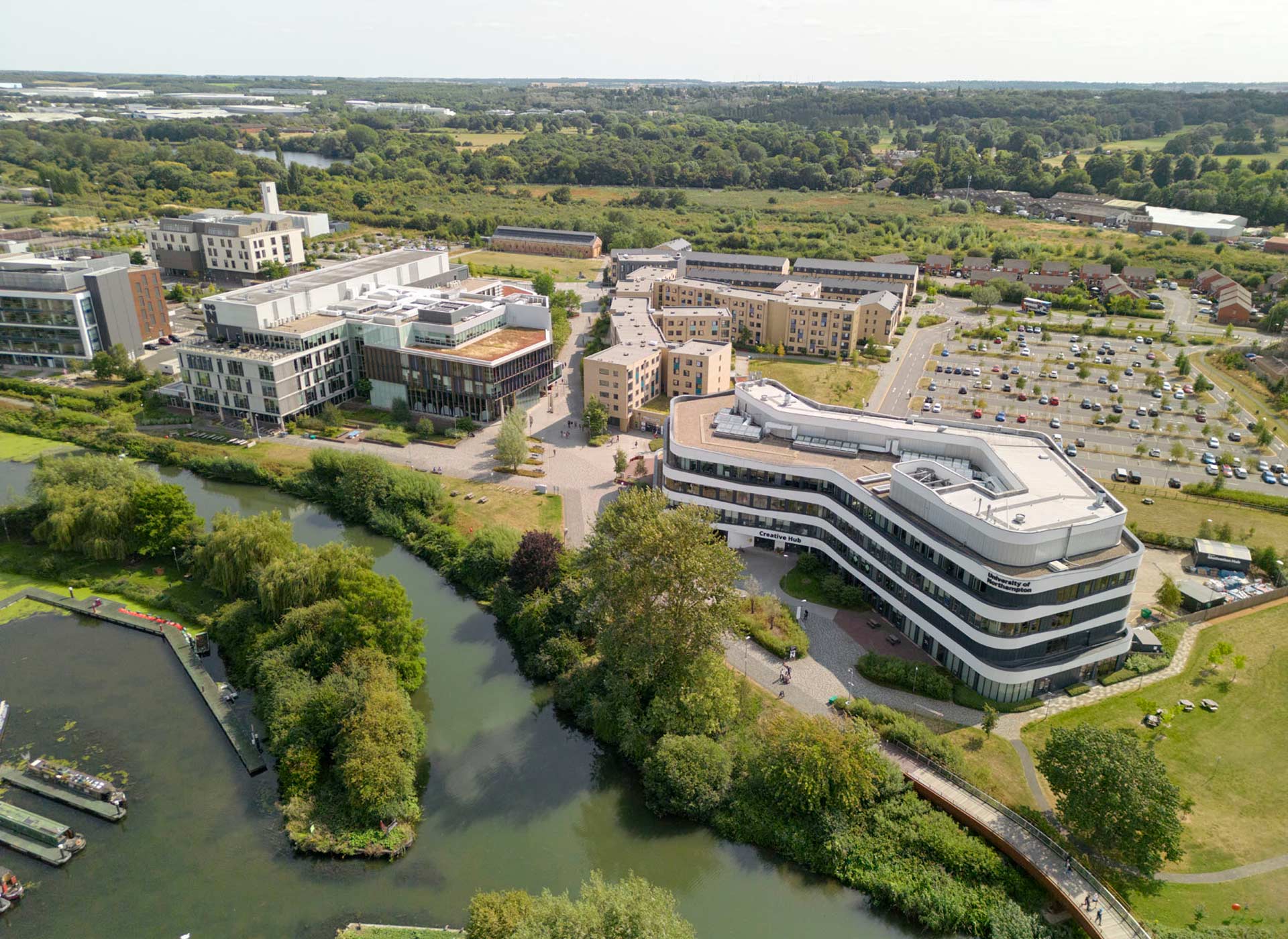
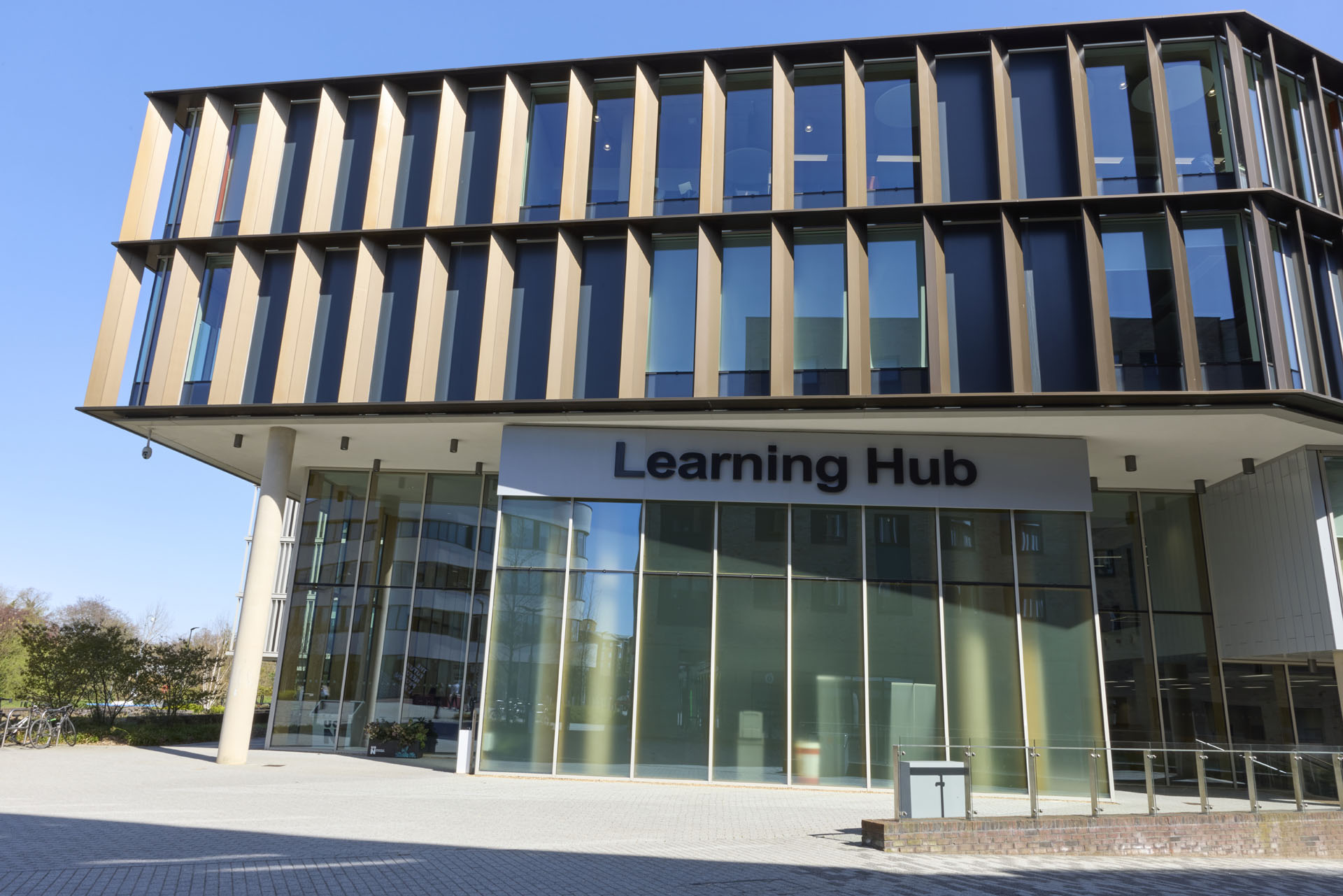
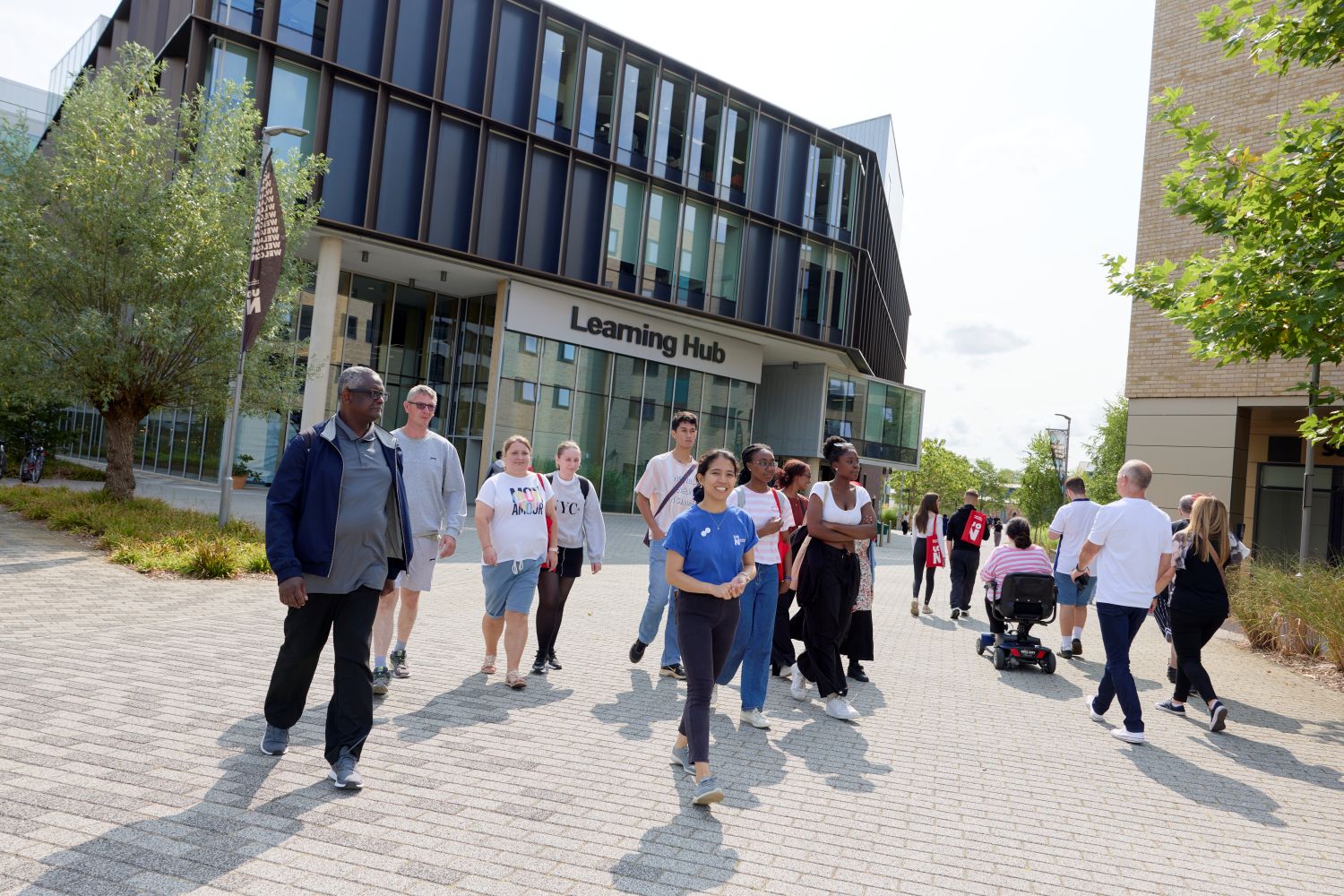
Waterside campus has everything students needs from: Learning Hub featuring 24/7 library, Creative Hub, on-site shop, restaurant, cafes and food outlets, multi-faith chaplaincy, student village hall, Students' Union and more. With only a short walk over the bridge into the town centre.
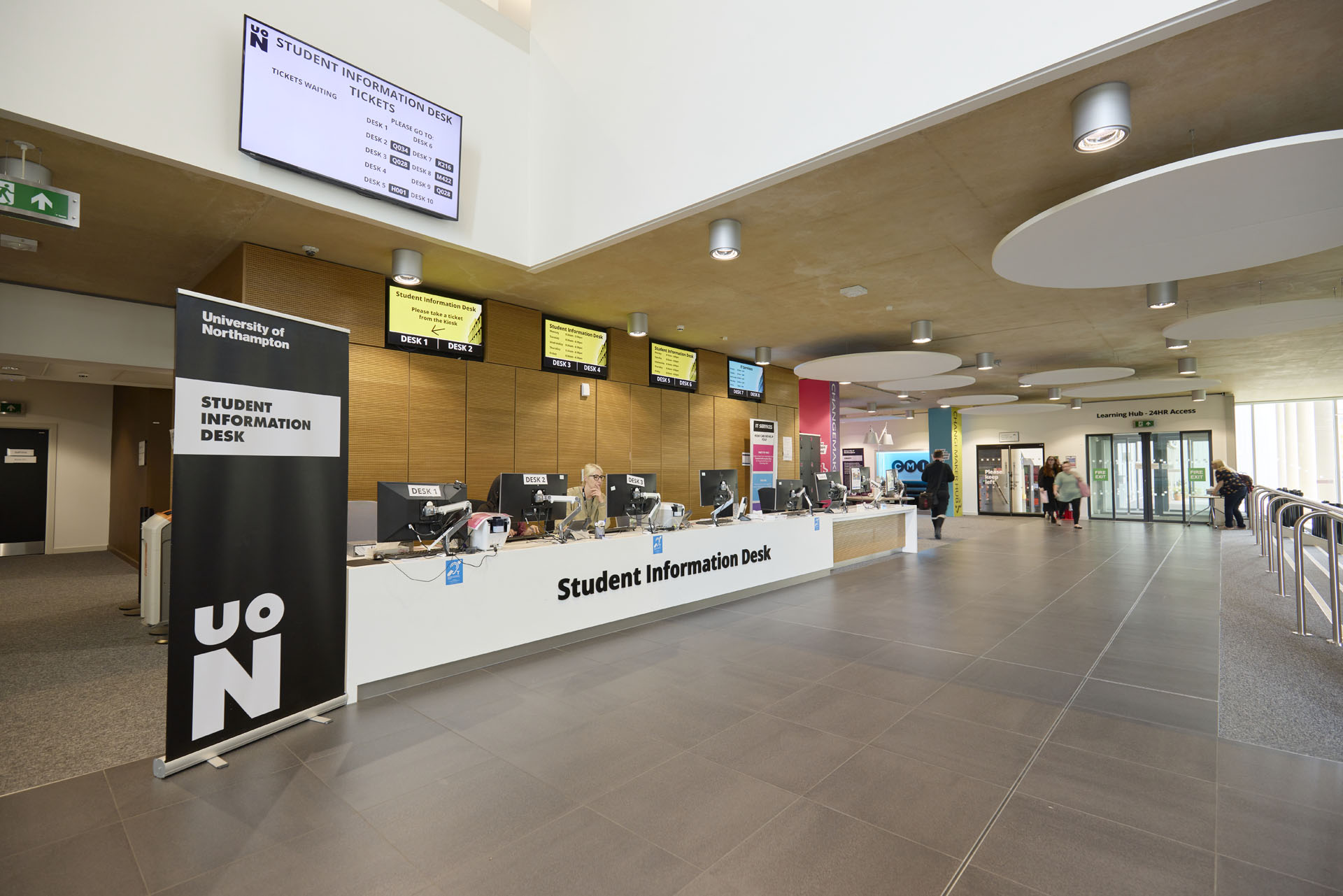
The Learning Hub and Student Information Desk would be a student's first point of call when needing support.
Our library covers three floors of the Learning Hub, with IT rich learning environments, including silent and group study spaces, physical books. Don't forget there are plenty more resources available online!
The Student Information Desk is the first place a student should go if they need any help. Here the team can direct you to academic support, mental health support, financial support, IT support, and more.
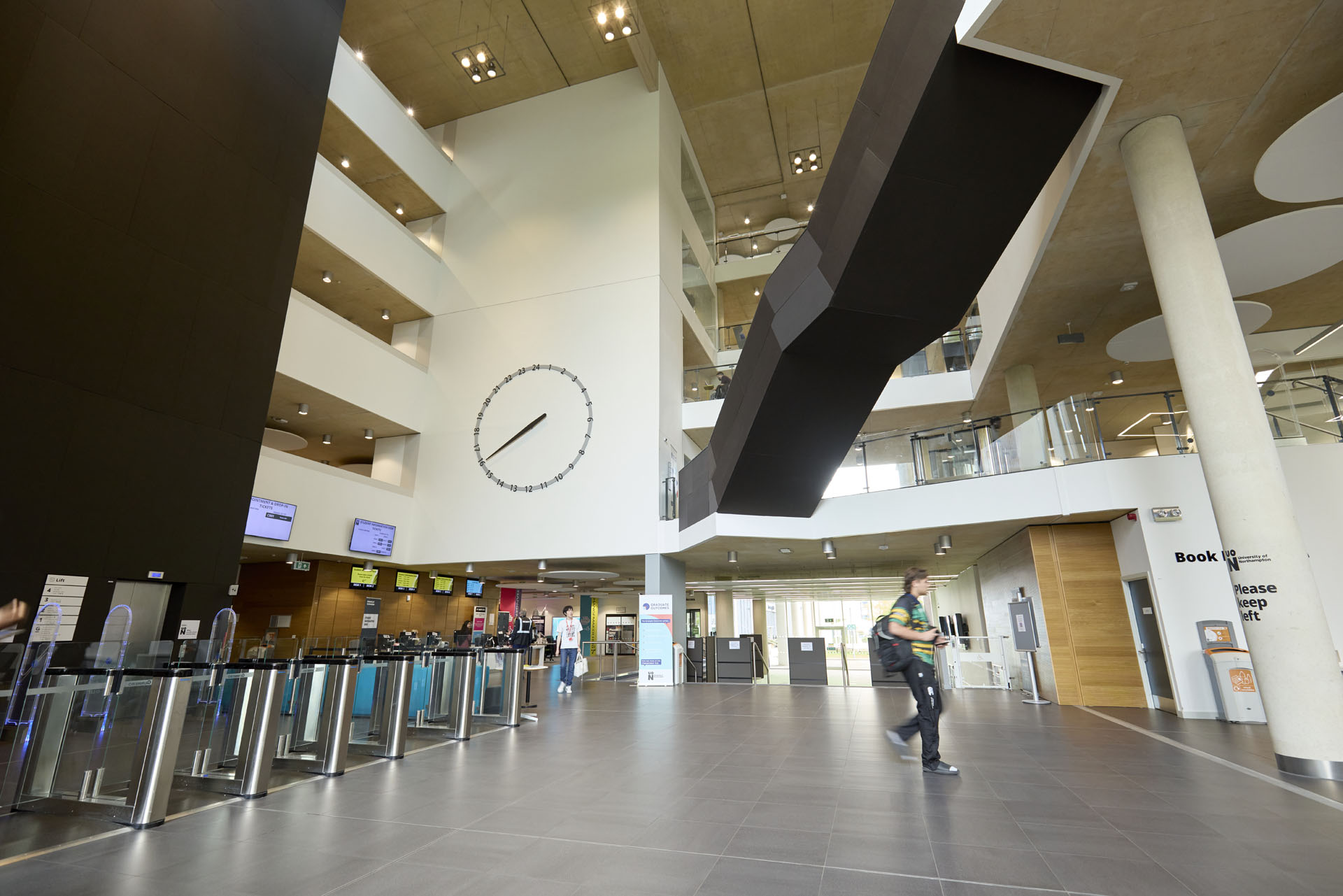
The Learning Hub is where every student will go for library support and classes, as well as food outlets and social events.
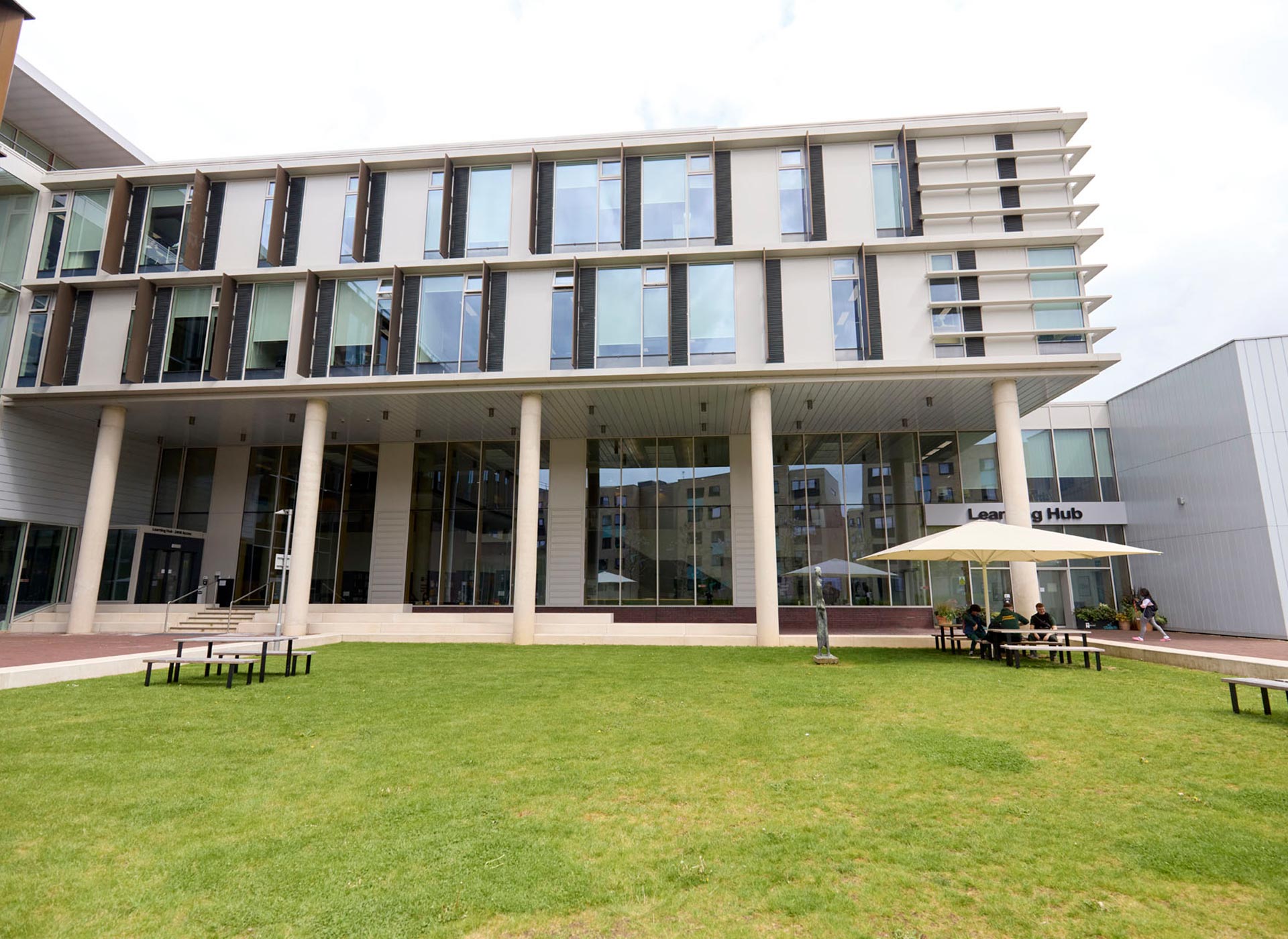
The Learning Hub also has lots of outdoor space for meeting with friends or finding some silent time between classes.
The Learning Hub is the biggest building on campus, home to our Student Information Desk, 24/7 library, teaching spaces, cafes, and more.
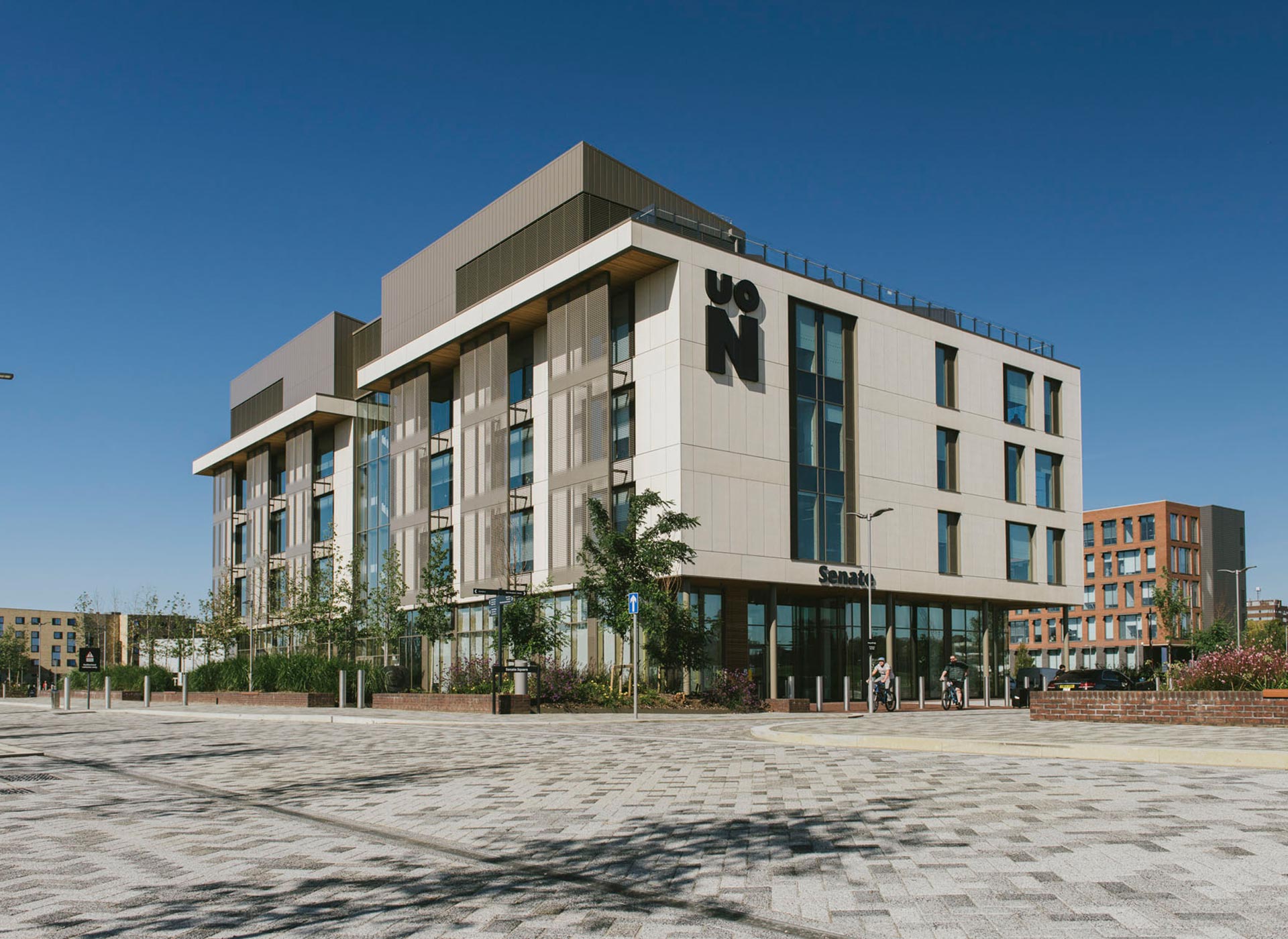
The big and spacious modern Senate building has various types of learning spaces, teaching rooms, our Bloomberg suite, Morley Room lecture hall, and cafes.
Please note: candidates must meet ALL of the following criteria to be considered for the social work master’s degree:
Students yet to graduate should ideally provide an academic reference (although a professional reference would be acceptable).
Students who have already graduated should provide a professional reference.
All offers of a place on our masters in social work are subject to:
Please note, entry requirements must be maintained as the programme is endorsed by Social Work England.
For more information on how to make an application, please visit our How to Apply page.
All International and EU students applying for a course with the University of Northampton must meet the following minimum English language requirements:
If you are an international applicant and would like more information on applying for Social Work MA, please visit our How to Apply page.
Open Days give you the best experience and insight to courses, people and facilities that interest you. Make your choice easier and come meet us.
Book NowThe MA Social Work postgraduate programme aims to prepare students for professional practice through a 2-year Master’s course that blends key academic modules and rigorous placement experiences which focus on required professional standards appropriate to the delivery of assessment and support for those in need within our communities.
The Social Work MA course has been designed to contribute towards achieving the following United Nations Sustainable Development Goal: SDG3 of Good Health and Wellbeing.
Our MA Social Work degree is a challenging but ultimately rewarding route to professional qualification within a dynamic and multi-faceted career. The Social Work masters program itself is aligned with the education and professional standards of the current professional regulator – Social Work England. Additionally the academic and practice-focused material links with the British Association of Social Workers and Professional Capabilities Framework which starts at entry to the programme and follows professional development through to qualification.
Studying for a Social Work MA degree offers opportunities to develop academic and professional skills, such as: analytical report writing; assessing and managing risk; developing an understanding of the application of legislation in practice; evidence-based and theory linked practice plus direct work with families, children and other professionals. A key focus within the programme is the skills development linked to practice placement experiences which enable students to further, test, analyse and develop their Social Work skills with a range of organisations and individuals.
We have a broad range of placement providers which enables us to match students to suitable placements in the arenas of children in need, adults with mental health needs, youth offending, child protection and adult safeguarding, domestic abuse and education. All Social Work masters placements are quality assured by our dedicated placement team and full support is offered to all students whilst on placement via on-site or long-arm Practice Educators.
The purpose of this module is to give students the opportunity to work under supervision in a professional practice setting for 70 days. Students will be supported to extend and develop learning and practical skills which commenced within the Readiness for Practice Module. Students will also draw upon academic learning and experience gained in the three first year modules already completed. This will ensure students are able to apply theoretical perspectives, statutory legislation, anti-oppressive practice and promote social justice, whilst considering the ethical and professional boundaries of Social Work practice.
The purpose of this module is to give students the opportunity to work under supervision in a professional practice setting for 100 days. Students will be supported to extend and develop learning and practical skills which commenced within their 70 day placement module within the first year of the MA programme. Students will be expected to take on a more central and responsive role within placement, manage cases, make critical links between theoretical approaches to Social Work and current practice challenges, engage in analysis of the value of their interventions, work within statutory guidelines where required when working with other professionals and service users whilst seeking to achieve readiness for practice.
The purpose of this module is to provide an opportunity for students to acquire appropriate evidence, to critically reflect on the evidence, apply knowledge, concepts, and research techniques to a professional question or problem and make recommendations to improve professional practice. Students are required to identify an area of current practice and to identify potential developments using recognised techniques from health and social care (i.e. audit or evaluation or systematic review).
The key purpose of this module is to prepare students for their 70-day practice placement. It focuses on a range of core skills and tools including rapport building, communication, interviewing, reflective practice, professional curiosity, self-awareness, emotional intelligence and personal resilience. The module incorporates the requirements for skills practice set out by the relevant regulatory bodies.
The module seeks to develop students¿ understanding of the theory and application of safeguarding processes, policy and law. Students will investigate the evidence base of safeguarding principles within a multi-agency context, consider service provision and delivery from a safeguarding and risk perspective, whilst analysing the outcomes for service users.
Please note the modules shown here relate to the academic year 25/26. The modules relating to the academic year 26/27 will be available from June 2026.
The Masters program in Social Work was approved by the Health Care Professions Council (HCPC) and by the current regulator Social Work England (SWE).

The Social Work masters programme enables graduates to register with Social Work England as Social Workers.
By the end of the Social Work master degree you will have been assessed against the Professional Capabilities Framework and Social Work England (SWE) Professional Standards will be able to apply to Social Work England for registration.
The University of Northampton is central to the Northamptonshire Social Work Teaching Partnership. This Department of Education led initiative ensures that there is a close working relationship between the University of Northampton, as education providers of qualifying Social Work degree programmes (BA Hons Social Work and MA Social Work) and the statutory services of Northamptonshire Children’s Trust and Northamptonshire Adult Social Services, who provide services for a wide range of identified need in the county. This also means that as a University, we work closely with our partners to develop the Social Work curriculum to ensure it is current, innovative and reflective of practice, identify practice placement opportunities within statutory settings (Children, Mental Health, Adult Services) and prepare graduates for employment.
The Teaching Partnership will additionally progress partnership working between a range of programmes at The University of Northampton that offer training and education in Health and Social Care, Youth Work and a range of statutory and non-statutory service providers.
All students have two practice placements which are 5 full-time days per week, currently these are 70-days and 100-days in length.
These are core mandatory elements on the programme and students must pass these elements (in addition to all other modules) to receive the full Social Work award.
Placement learning opportunities can be outside of Northampton to cover diverse placement opportunities to meet your learning and practice needs.
You will need to be able to travel independently. Placements are situated within a 65-mile radius of the University. Independent travel is required, and not being able to drive may limit the range and availability of statutory placements.
For more information about social work, professional bodies, adult and children services, community work and more, please see the useful websites:
This Social Work masters prepares you for professional social work practice and enables you to develop your practice skills. You will develop your skills and knowledge in working with other professions. Social Work MA raises your political awareness and encourages you to be a creative, critical and reflective thinker.
The Social Work subject team are committed to the International Federation of Social Work definition of social work and the curriculum is informed by it. Digitisation of Social Work features throughout all modules.
The Social Work masters degree is designated as full-time and as such all modules, delivered sessions and placements are mandatory which also reflects the professional underpinning by the regulator Social Work England.
Assessment is varied and can be in the form of essays, reports, presentations, practice assessment and there is a law exam.
The Social Work MA degree is modular in design with all modules listed on the award map being mandatory and a pass grade is required on all items of assessment to ensure students can claim the full Social Work award. All assessments are marked and moderated by academic staff from the Social Work team in line with the module learning outcomes.
The programme has an External Examiner who also oversees samples of student work on each module, providing feedback at a modular and programme level supporting the development of the student experience.
The programme has an External Examiner who also oversees samples of student work on each module, providing feedback at a modular and programme level supporting the development of the student experience.
“I developed many employability skills during my placements, such as excellent assessment skills, anti-discriminative skills, communication with different vulnerable groups, adaptability, and organisational and leadership skills amongst others.”
Fees quoted relate to study in the Academic Year 26/27 only and may be subject to inflationary increases in future years.
When assessing an applicant’s eligibility to pay home fees, we use the guidance provided by the UK Council for International Student Affairs (UKCISA) which sets out the regulations that have been decided by the UK Government Department of Education.
Tuition fees quoted for International Students apply only to the 2026/27 academic year. These fees may increase in future years in line with Consumer Price Index (CPI) inflation to reflect rising delivery costs. Any annual increase will be capped at a maximum of 5% of the previous year’s tuition fee. Updated tuition fees will be published on the UON website at least three months before the start of the next academic year.
International students that have opted to enrol on January intake with accelerated pathway will be required to pay deposit of £7,000 required for their re-enrolment onto their second year in September. We therefore urge that you consider preparing necessary funds to cover the enrolment fee in advance.
There are limited numbers of postgraduate Social Work bursaries awarded by the NHS Business Service Authority for those enrolled on our MA Social Work programme. Postgraduate students studying for a masters in social work can apply for a bursary to help you with your living costs. If you’re eligible for a bursary, you’ll get a contribution towards your tuition fees. To be eligible for the Social Work Bursary, you must satisfy the residency conditions. For more information and to apply, please visit the NHS website.
Please note that if you are successfully awarded the Postgraduate Social Work bursary, you will not be able to apply for the student finance.
If you aren’t allocated a bursary, but meet the eligibility criteria, you’ll receive a PTA of £862.50 towards your travel expenses at the beginning of your academic year.
If you’re allocated a bursary, your PTA will be included as part of your bursary so you won’t receive any further help for travel.
Placement learning opportunities can be outside of Northampton to cover diverse placement opportunities to meet your learning and practice needs. You will need to be able to travel independently. Placements are located within a 65 mile radius of the University.
For more information about possible funding options, please visit our Fees and Funding pages.
January 2026 Intake
Fees quoted relate to study on the Social Work MA degree in the Academic Year 25/26 only and may be subject to inflationary increases in future years:
Senior Lecturer in Social Work
Senior Lecturer in Social Work
Lecturer in Social Work
Lecturer in Social Work
Senior Lecturer in Social Work
Senior Lecturer in Social Work
Employment prospects for graduates with a masters in social work are excellent and you will be able to pursue various social work careers across the country. Successful completion of the course enables Social Work masters students to be eligible to apply to register with Social Work England. If you leave the course before completion, you may be able to be awarded an intermediate award, this will not enable you to register as a social worker.
Clearly this Social Work Postgraduate Program is designed specifically to prepare and train for the Social Work profession and it can be utilised to develop onward skills in specific/specialist roles that link to the core Social Work qualification.






The purpose of this module is to enable students to develop their understanding of statutory legislation and guidance relevant to effective Social Work practice. Students will also gain insight, understanding and appreciation of the impact of political ideology, populist views and the media within UK social policy. This will offer a guide to historical concepts of welfare and support within the UK and contrast/comparison with contemporary attitudes of social justice, drivers for social policy development and the socio-economic impact upon individuals and families which Social Workers engage with through their practice.