






Phillippa Bennett
Senior Lecturer in English & Creative Writing
To ensure we guide you through the correct application process, we just need you to answer a few quick questions.
Already applied?
Log in to view updates.
This course offers two separate application routes, depending on whether the application is submitted by the student or an international agent.
Please select your desired length of study from the available options.
This course includes a placement option. Please indicate whether you’d like to apply with or without a placement.
Please select where you would like to study.
All the available academic years are displayed below.
All the available start months for the selected academic year are listed below.
Please review the information below carefully before continuing.
If you need to make any changes, click the < Back button to return to the previous step.
UCAS Code
BA: Q300
BA with Foundation: Q301
Duration
Full Time: 3 years
Full Time Foundation: 4 years
Part Time: 4 - 6 years
BBC at A Level or,
DMM at BTEC
Full Time: £9,790
Part Time: £1,630 per 20 credit module
Integrated Foundation Year: £5,760
study@northampton.ac.uk
0300 303 2772
Updated 25/03/2026
The University of Northampton’s dynamic and diverse English BA degree provides a thorough exploration of English Literature, where you can plot your own pathways through a range of themed strands and in-depth module topics, all regularly taught by dedicated, enthusiastic and research-active tutors. We offer a supportive learning environment where you can feel safe and empowered to explore new ideas, develop your love of literature and learn vital life skills for your future career.
At the centre of our newly updated BA English programme is diversity and relevance. This means we study texts representing a range of voices and identities, embracing the latest cultural debates and searching out literary expressions from revolutionaries or the marginalised, but also looking deeply into the rich heritage and history of the literary arts across the ages and through the full range of literary genre. We care deeply about what literature can show us of the world in all its complexity, and the degree in English taps into this passion for hearing all voices and witnessing the history and breadth of literary expression.
Overall student positivity in the National Student Survey 2025.
NSS Calculations are based on Office for Students (OfS) data from the average positivity score.
Two students seated at a table during an English workshop, reading books and using laptops in a focused study environment
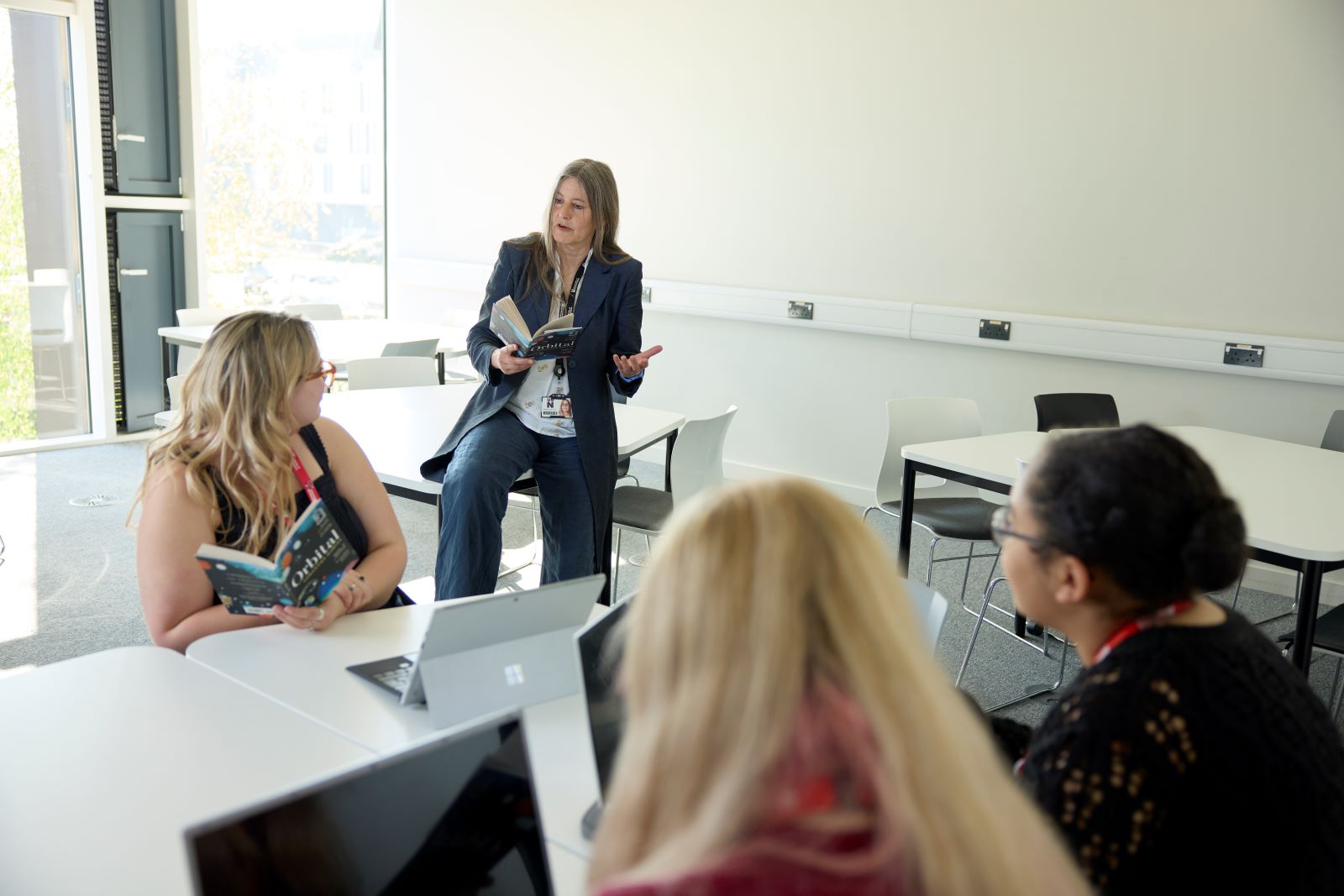
Three students seated at a table with laptops and notebooks, listening to a lecturer who is standing and reading from a book during a UON English workshop.
Student seated at a table in a classroom or study area, reading a book titled 'Orbital' during an English workshop
View of two pairs of hands of students holding books while seated at a table during an English workshop. On the table in front of them are two open laptops.
Lecturer presenting to a group of students in a bright classroom during an English workshop, with students seated at tables using laptops and engaging in discussion.
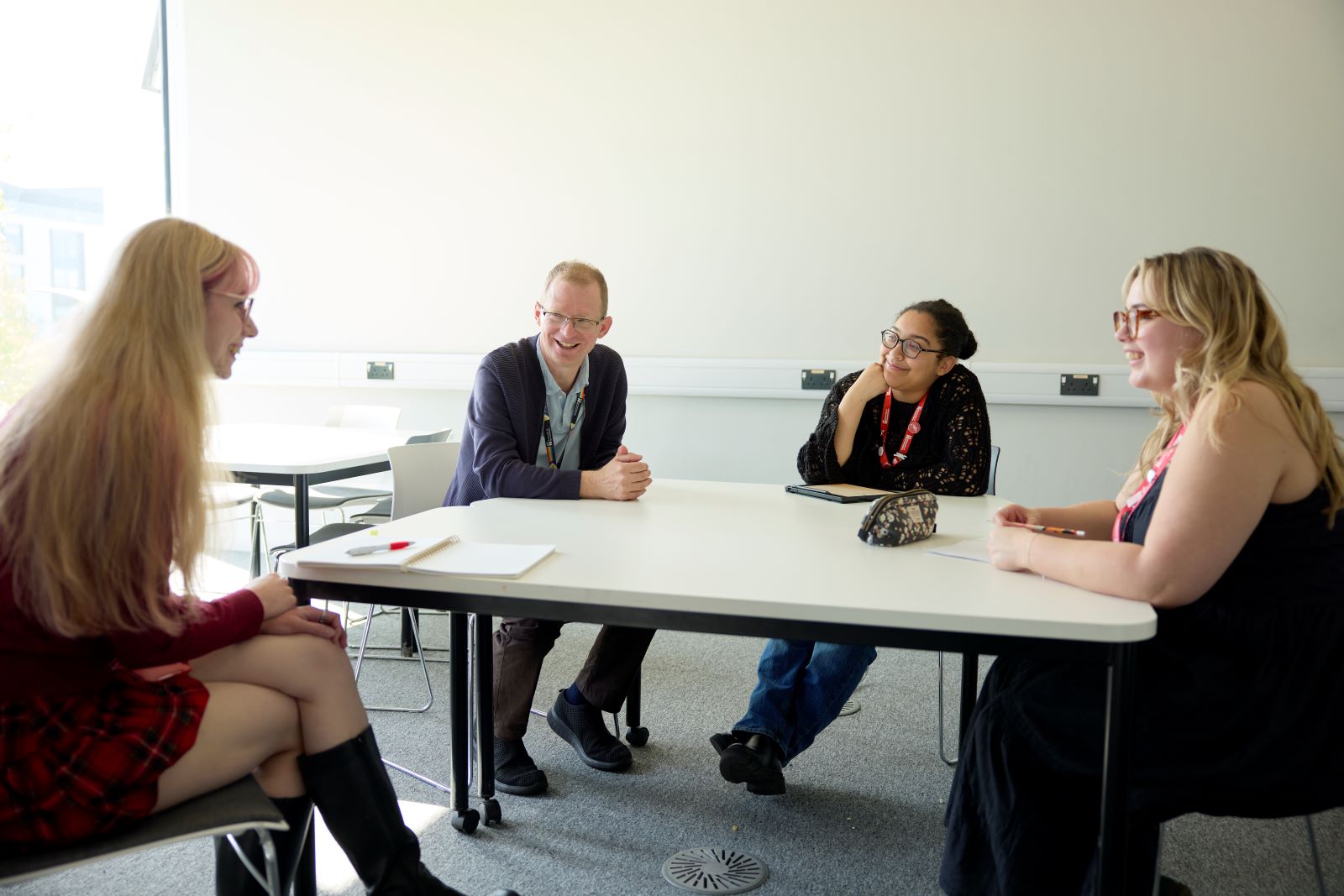
Three students and a lecturer seated around a table in a bright classroom, engaged in discussion with notebooks and papers during an English workshop
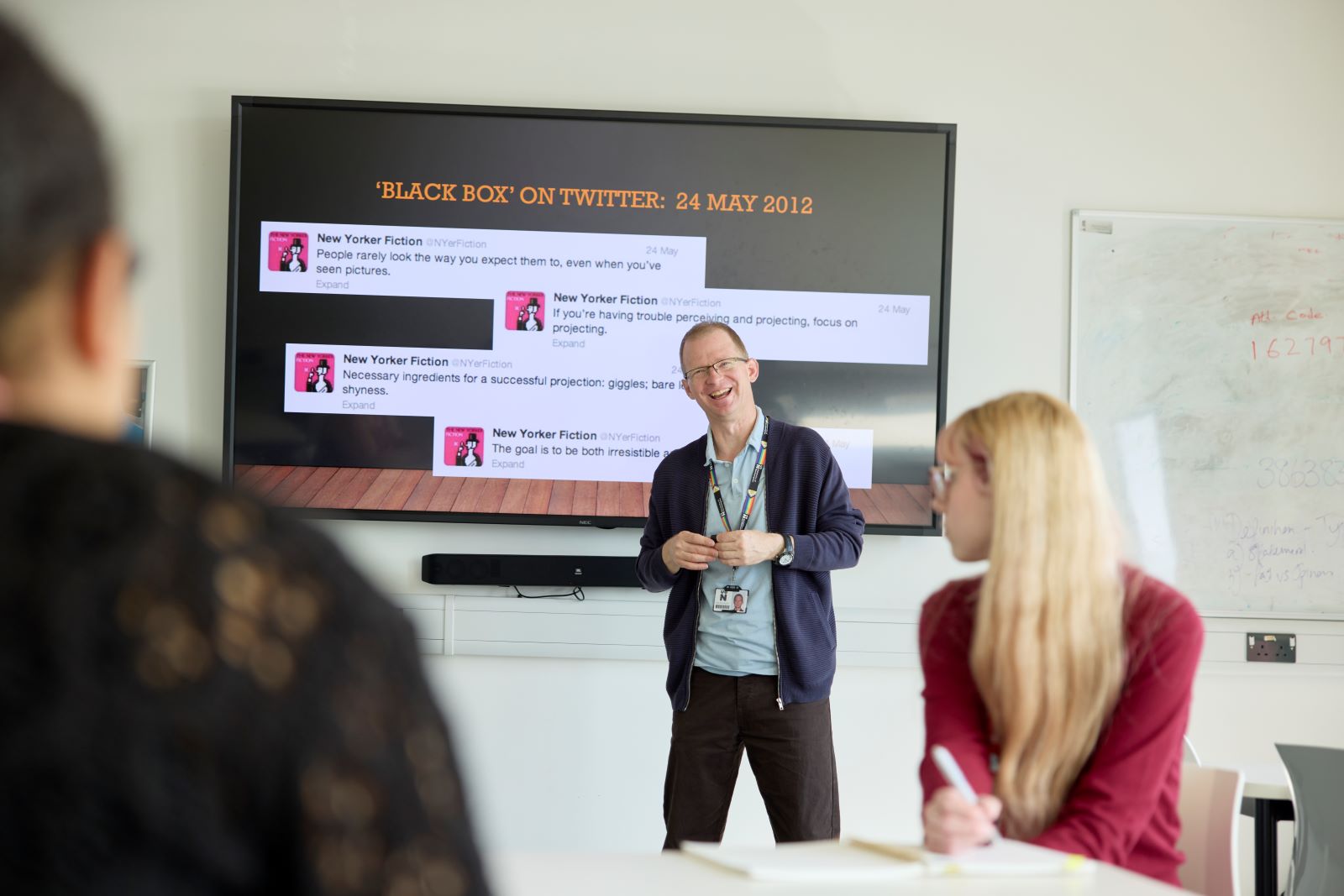
Lecturer presenting tweets from 'New Yorker Fiction' on a large screen during an English workshop, with students taking notes in a classroom setting.
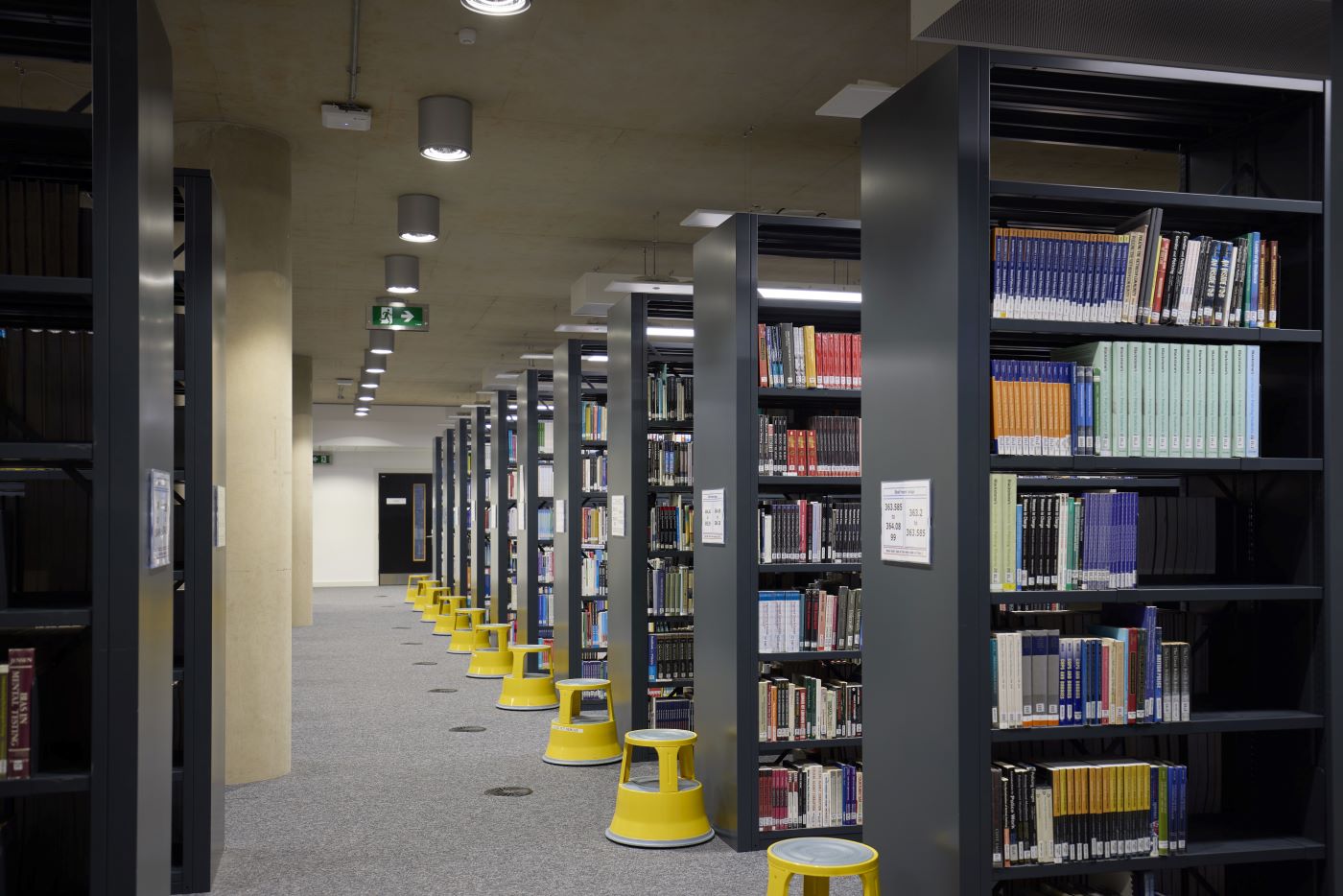
UON's Learning Hub offer a 24 hour library environment with access to all of the core texts that you will need for your course.
A typical offer for our English course would be:
We welcome applications from a range of non-traditional education or professional qualifications, and from students with a mix of A levels and BTEC/Cambridge Technical qualifications.
For more information on how to make an application, please visit our How to Apply page.
We welcome applications from students with a mix of A levels and BTEC/Cambridge Technical qualifications.
If you are an International student and would like information on making an application, please see our How to Apply page.
Admission to this foundation English degrees is normally:
However, we would also like to hear from you if you have professional or industry experience instead, a range of other qualifications or self-developed subject knowledge that relates to the course you wish to study.
All International and EU students applying for a course with the University of Northampton must meet the following minimum English language requirements:
For information regarding English language requirements at the University, please see our IELTS page.
“As well as the course content, the teaching environment was a draw for me – the academic team promised small class sizes and seminar style lessons, which was a learning environment I knew would fit my style of learning best.”
All our BA English modules are rooted in staff expertise and a shared passion for literature. In offering modules focusing on ecology and the environment, children’s and young-adult writing, contemporary revisioning of the works of Shakespeare, American literature and culture, gothic worlds, and digital culture, the course offers every student a breadth of topics that will stimulate your imagination and hone your critical thinking. By your final year, you get to follow your own passions and expertise, by selecting a dissertation on a literary topic of your choice and really showing what you can accomplish.
The team of English degree lecturers is big enough to offer a variety of modules, but small enough to provide you with a close-knit learning environment. You will know your tutors personally and see them regularly and you will regularly find someone to help you with your academic study, and to provide pastoral support hand-in-hand with Northampton’s excellent student support services.
The purpose of this module is to introduce students to the dual roles involved in the construction of textual meaning: writing and reading. In exploring imaginative and critical reading and writing practices in a range of genres, students will engage in identifying the relevance of textual creativity to real-world applications.
This module offers an introduction to British Literature post-1945 to the present day. It considers key developments in poetry, drama and the novel in the context of literary movements and social change.It examines a range of writers portraying the mainstream and margins of British culture. It is designed to develop students’ skills in reading a variety of contemporary genres, and to encourage them to begin to apply theoretical and critical considerations to liteature.
The purpose of this module is to introduce students to the study of Shakespeare¿s plays at University level (along with essential historical backgrounds and scholarly methodolgies) and to explore the range of meanings illuminated in the plays by contemporary cultural concerns, recent critical perspectives, and forms of adaptation into other artforms and media, including film and stage performance. Students will be encouraged to play an active role in debating these meanings and advancing persuasive arguments in defence of their own interpretations, thus enhancing key analytical and evaluative skills for degree-level study of English.Note: For the Essay with Annotated Bibliography assignment, students will be expected to write about themes and interpretations of the plays, using a range of contemporary perspectives. The focus of the Presentation will be upon contemporary cultural uses and appropriations of Shakespeare.
The purpose of this module is to introduce students to the relationship between literature and evolving media culture and technologies, with emphasis on the modern age. Understanding print and digital formats within mediated cultural frameworks allow for exploration of contemporary understandings of new skills and capabilities for reading now.
This module takes up the challenge of the Black Lives Matter movement to ask the question: what does it mean to decolonise the literary canon? It explores literary representations of global ethnic majorities within a range of texts written in English and drawn from different historical periods.
This module explores literary representations of the natural world and the diverse ways in which writers have responded to the wild and the non-human. The module emphasises the significance of literary texts in contributing to contemporary debates regarding our relationship with the environment and other animals.
The purpose of this module is to provide students with a survey of key American texts and writers from the Colonial period to the Middle of the Twentieth Century to explore how literature offers perspectives on the key thematic and formal concerns of US fiction.
Please note the modules shown here relate to the academic year 25/26. The modules relating to the academic year 26/27 will be available from June 2026.
The modules on this English BA degree are organised into distinctive strands that allow students the chance to develop their knowledge from year to year and apply skills they’ve learned across different stages. For example, in a strand called ‘Rethinking Identities’, we raise the question of which authors are taught right from the start in a module called ‘Decolonising the Bookshelf’, with a particular focus on race and ethnicity. But these same ideas return in the second year of the BA English degree with ‘Representing Class: Stories and Conflict’ and in the third year with ‘Bodies and Performances: Sex and Gender’, and in this way students are able, if they choose, to fully develop their understanding of literary expression, representation and recognition across a broad range of literary texts.
While one strand focuses on literary periods, perspectives and historical contexts, another focuses on types of writing and other media in the digital age, or how society both shapes and is shaped by literature. Yet none of the strands exist in isolation, with meaningful connections between modules at each level.
While one strand is focused on skills and applications – with explicit focus on how to develop your abilities on the programme and for the workplace beyond – these skills are used and developed in every module, and every strand offers opportunity to demonstrate your employability.
At the University of Northampton, everything we do, from funded trips to paid internships, is to give you everything you need to make a difference when you leave.
If you join this full time BA English degree, you will receive a laptop when your course begins*. The laptops are built to a bespoke custom specification ideal for use in the seminar room, collaborative group work or studying at home.
Whatever your ambitions, we’re here to help you to achieve them. We’ll support you to identify the skills you’re learning during your english literature course, find your strengths and secure practical experience so that when it comes to applying for jobs or further study you’ll feel confident in standing out from the crowd. We’ve created the Northampton Employment Promise because we are so confident that if you focus on your studies and complete one of our awards you’ll be highly employable by the time you graduate. Putting you in a great position to secure employment or continue your studies.
To check out the full list of perks, visit our Student Perks page or dedicated International Perks page.
*UK fee payers only (see Terms and Conditions for further details).
The Integrated Foundation Year (IFY) offers a new and exciting route into studying for a degree, attracting ambitious and driven students who are willing to learn and advance.
If you have non-standard qualifications or do not quite meet the admissions requirements for the degree in English, we can offer you a fantastic opportunity to study a four year programme that includes an Integrated Foundation Year. The Integrated Foundation Year will help you develop the theoretical/practical and academic skills you need, in order to successfully progress to the full award.
Our four-year courses will enable you to successfully follow the degree pathway of your choice while gaining essential study skills. The foundation year of your chosen degree will be studied on a full-time basis and is aimed at supporting the transition to higher education. Years two, three and four are then studied as a standard degree programme.
English modules are assessed through a variety of methods, including essays, individual and group presentations, blogs, participation in online discussion groups, creative writing, podcasts and formal examinations. From the outset on the English BA degree, we teach you the skills you will need through your degree and transferable skills that will be vital to your career.
You will engage with texts through extensive reading and consolidate your own responses by studying intellectual, theoretical and historical contexts. You will be taught through seminars and group discussions which will critically inform your ideas and allow you to share and discuss them with your fellow students.
We also provide the chance to develop your writing and apply your understanding of the world to employment-related tasks, with opportunities for working toward live-client briefs (where your success is measured against what real-world employers are looking for, rather than sticking only to tutor-led assessment briefs), to get a direct taste of work-based learning and real employment environments.
On the English degree, you will benefit from:
Studying a BA in English provides students with a wealth of highly transferable skills that lend themselves to a wide range of exciting career and further study opportunities.
Professions of a wide variety are crying out for people with analytical, critical thinking skills that are a foundation of this degree. Whilst, you will also have demonstrated excellent writing and communication skills that will make you highly employable.
Get all the info you need ahead of time, before you can apply for funding in Spring on our fees and funding pages.
UON will adjust fees annually for UK (Home) Students up to the maximum allowable fee cap set by the Secretary of State for Education.
When assessing an applicant’s eligibility to pay home fees, we use the guidance provided by the UK Council for International Student Affairs (UKCISA) which sets out the regulations that have been decided by the UK Government Department of Education.
Tuition fees quoted for International Students apply only to the 2026/27 academic year. These fees may increase in future years in line with Consumer Price Index (CPI) inflation to reflect rising delivery costs. Any annual increase will be capped at a maximum of 5% of the previous year’s tuition fee. Updated tuition fees will be published on the UON website at least three months before the start of the next academic year.
We do ask that you buy the prescribed primary texts for each module. We carefully review the costs of every module each year, so that they do not exceed £100 per module. In practice, by using libraries, freely available online resources and second-hand copies of books, costs are often less than half of this total figure.
On the English BA degree, you will have the chance to attend a range of research seminars, conferences, field trips and other activities beyond the curriculum for free or at minimal cost.
For information on the scholarships available to you, please see our scholarships page.
For more information about possible funding options, please visit our Fees and Funding pages.
Fees quoted relate to study in the Academic Year 2025/26 only and may be subject to inflationary increases in future years. UON will adjust UK fees annually in line with Government Policy.
Senior Lecturer in English & Creative Writing
Senior Lecturer in English & Creative Writing
Senior Lecturer in English & Creative Writing
Senior Lecturer in English & Screen Studies
Senior Lecturer in English & Creative Writing
English BA students who have studied with us have gone on to a variety of careers, including: