
Tim Reinke-Williams
Senior Lecturer in History

UCAS Code
BA: V100
BA with Foundation: V102
Duration
Full Time: 3 years
Full Time Foundation: 4 years
Part Time: 4 - 6 years
BBC at A Level or,
DMM at BTEC
Full Time: £9,790
Part Time: £1,630 (per 20 credits)
Integrated Foundation Year: £5,760
study@northampton.ac.uk
0300 303 2772
Updated 14/10/2026
Studying BA History at the University of Northampton will allow you to gain an excellent understanding of how historical events have shaped the contemporary world, as well as to develop key skills which are valued by diverse employers. Our History degree is delivered by a friendly group of deeply knowledgeable staff whose expertise encompasses the history of politics, warfare, society, culture, economics, religion, class, age & race, medicine, crime, gender, emotions & sexualities, and more.
Students study the distant and recent past, local communities and global networks, learning how to compare societies across time and space, but also how to engage critically with evidence and the arguments of other historians. Our History BA graduates emerge from their studies as intellectually enriched individuals who pursue interesting and rewarding careers in a diverse range of fields. Students also have the chance to undertake a heritage-focused project with a real professional client to boost their skills and enhance employability.
For Student Experience in The Times Good University Guide 2027.
For overall student satisfaction in the National Student Survey 2026.
For Spend per Student in the Guardian University Guide 2027.
For Satisfied with Feedback in the Guardian University Guide 2027.
Based on Office for Students (OfS) data from the National Student Survey (NSS).
The Times Good University Guide 2027, History Subject Area, for Student Experience.
Data from the Guardian University Guide 2027, History Subject Area

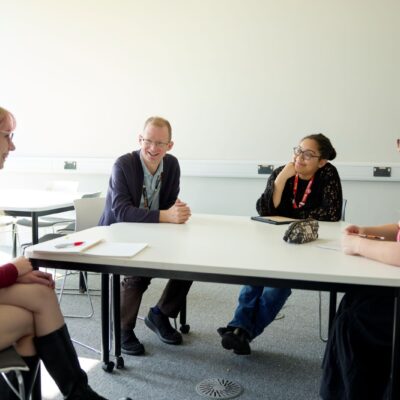
A History lecturer leading a workshop for History students
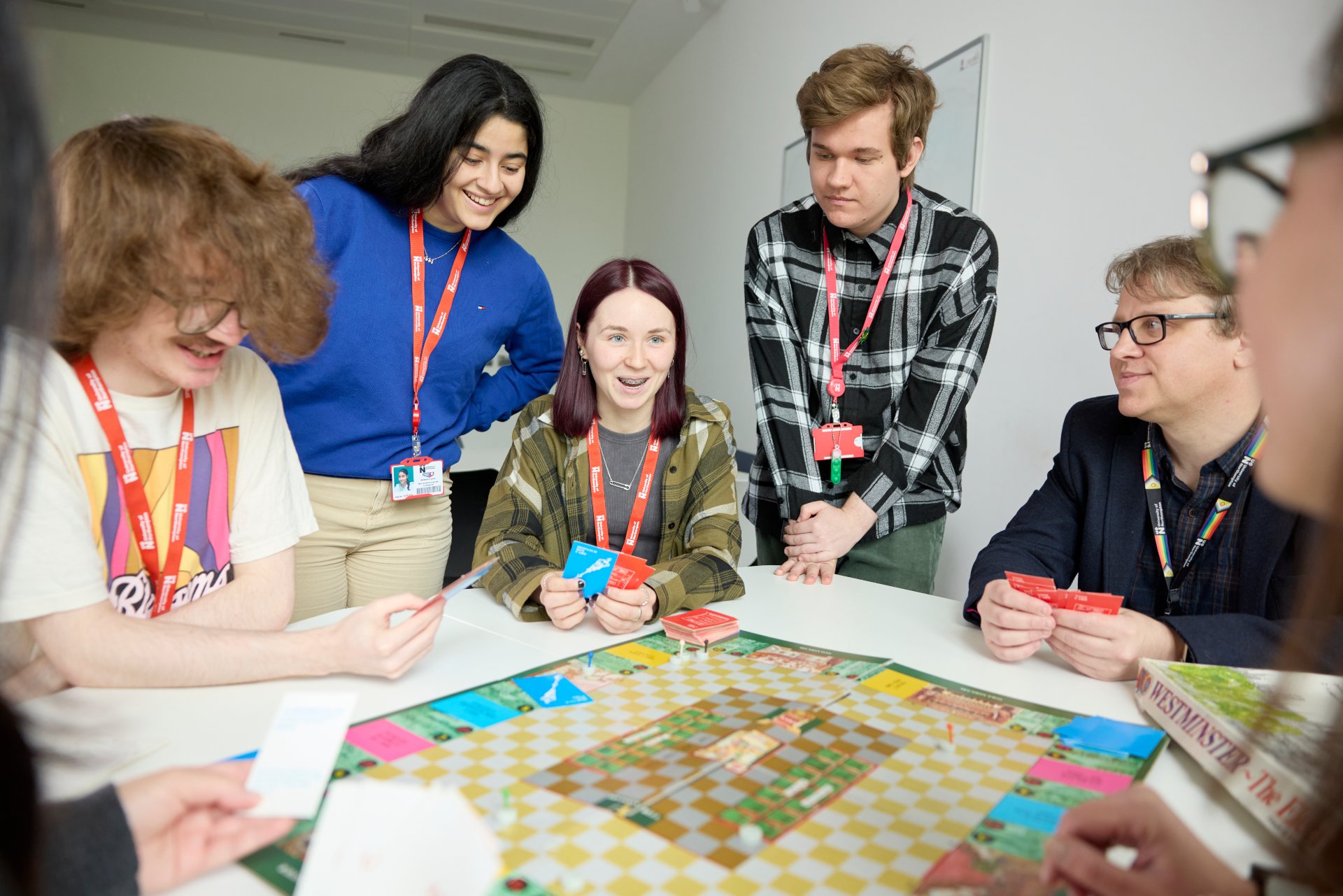
A group History students a History lecturer playing a history boardgame in a workshop
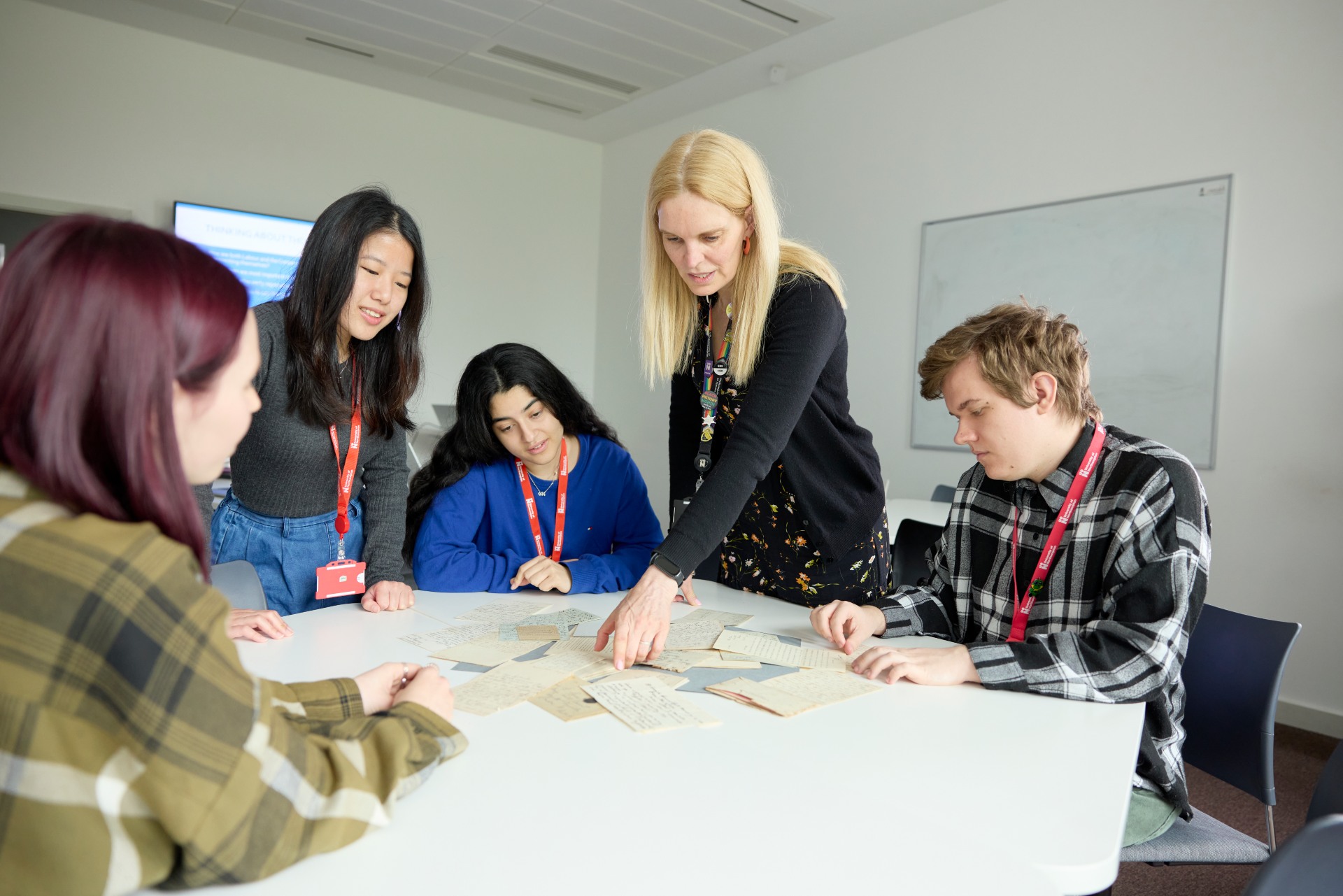
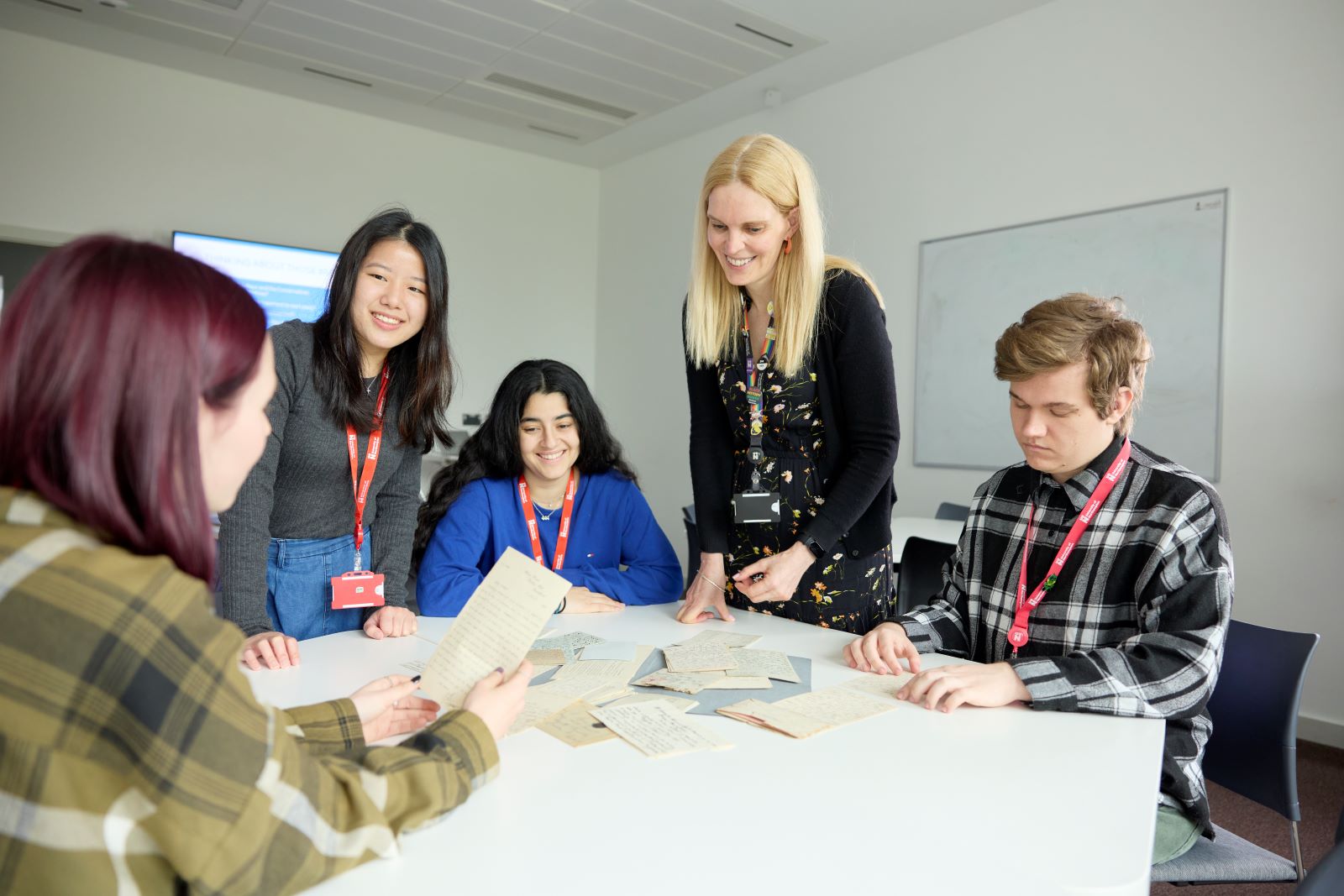
History students looking at historic papers with a History lecturer

A collection of historic papers
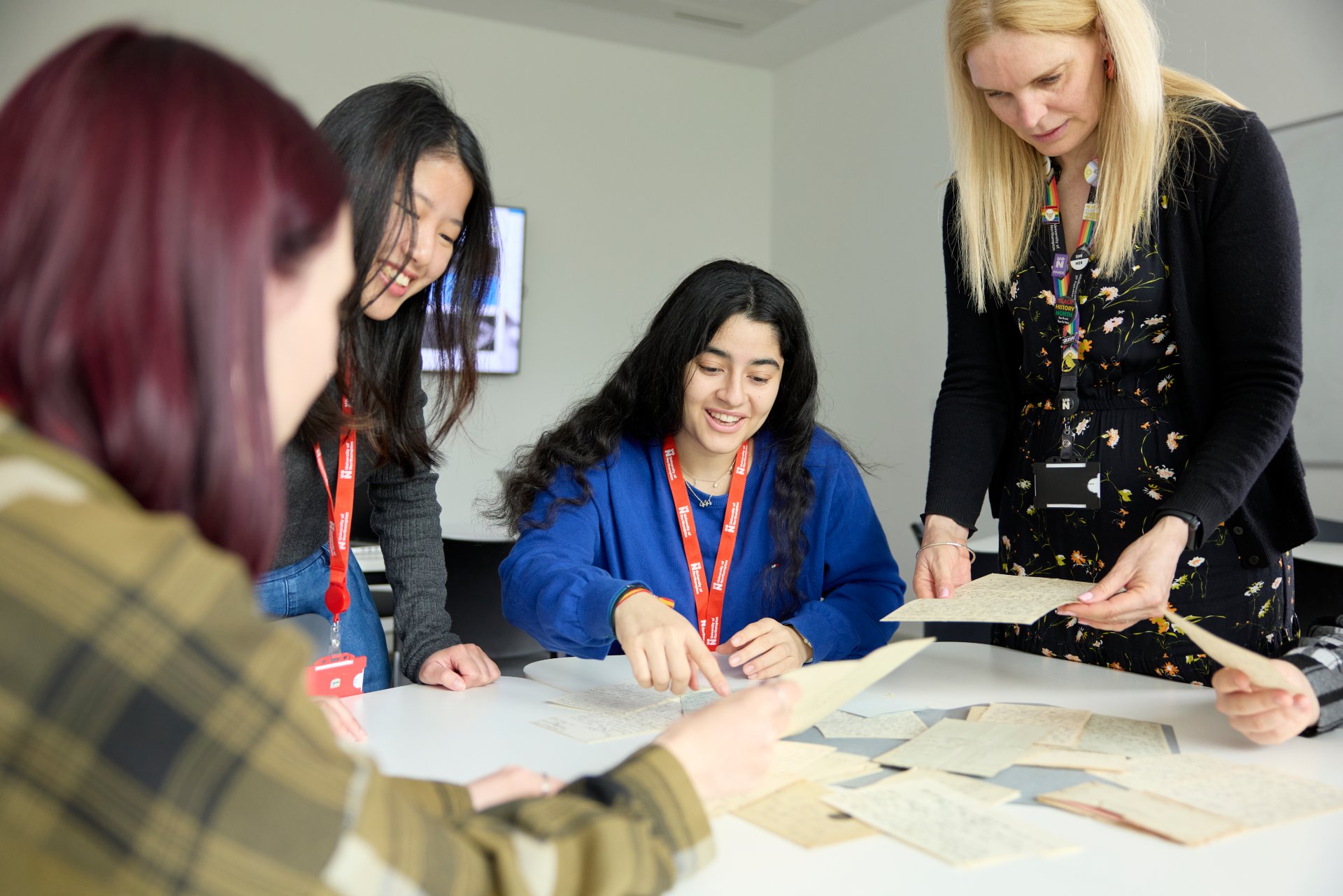
History students looking at historic papers with a History lecturer

A History student playing a history boardgame in a workshop
A typical offer for our degree in History would be:
We welcome applications from students with a mix of A levels and BTEC/Cambridge Technical qualifications.
For more information on how to make an application, please visit our How to Apply page.
If you are an International student and would like information on making an application, please see our How to Apply page.
Admission to this foundation programme is normally:
However, we would also like to hear from you if you have professional or industry experience instead, a range of other qualifications or self-developed subject knowledge that relates to the programme you wish to study.
All International and EU students applying for a course with the University of Northampton must meet the following minimum English language requirements:
For information regarding English language requirements at the University, please see our IELTS page.
Open Days give you the best experience and insight to courses, people and facilities that interest you. Make your choice easier and come meet us.
Book NowAll our History BA modules are constructed by experts in their respective fields who produce important books and peer-reviewed journal articles, appear on TV and radio shows, write for publications such as the BBC History Magazine, and act as expert advisors to government and heritage groups.
During your History degree, they will help you develop valuable skills in communication and analysis by working with online datasets, investigating historical texts, objects and images, and engaging with arguments put forward by leading historians. The History team are a small, friendly group who care about the quality of your experience, learning journey and destination in the workplace. The lecturers are there for you if you need support and will empower you to develop into independent learners who can thrive in the workplace.
In the first year of your degree, you learn about the study of history as an academic discipline and gain the key skills you need to complete assignments. Medieval and Early Modern history are core parts of the degree, and those intrigued by the distant past can study major events and processes which occurred between the late Middle Ages and the Enlightenment.
North American history is covered in depth too, enabling students to explore the rise of the USA as a global superpower. Those fascinated by Modern history can study warfare and diplomacy in nineteenth-century Europe as well as the Holocaust and its legacies, while those interested in the History of Medicine can investigate attitudes to and experiences of disease and disability from the ancient world to the early twentieth century.
The purpose of this module is to introduce students to the study of academic History at undergraduate level. It introduces them to some of the many types of History that are practised today. It also shows how evidential and referencing standards are maintained within the discipline.
The purpose of this module is to explore and contextualise the history of the body, health and healing and its contemporary parallels and relevance. The module will investigate how ideas about body and healing interacted with, and were embedded within, historical understandings of gender, society and culture.
This module focuses on the high and late Middle Ages in global context. Taking a thematic approach, students study politics, society, culture and religion to gain an understanding of the events and cultural mindset of the period. Using historiography, primary documents and material culture students examine medieval institutions and systems, but also learn about women and men at all social levels, including marginalised groups such as queer people and immigrants who are excluded from some historical narratives.
The purpose of this module is to explore the history of the United States through the interaction of war and society. The student will thus gain an understanding of the interplay between conflict, ideologies, and societal development prior to, during, and after the foundation of the Republic. This will be executed in a series of segments in chronological sequence.
The purpose of this module is to introduce students to the key cultural, religious, economic and political developments which occurred in the sixteenth, seventeenth and eighteenth-centuries. Students will engage with ongoing historiographical debates about the early modern period and will investigate various forms of surviving textual and visual evidence.
This module will introduce students to the main developments of the Holocaust, and will allow them to contextualise genocide in a wider historical awareness of race and politics in Europe. It will explore the ways the Holocaust unfolded in different parts of the continent, and will critically examine how forms of genocide impacted on a range of target communities. It develops a critical understanding of important historiographical debates, and source analysis skills.
This module will introduce students to how British politics and society developed after the end of the Second World War, and the historical debates surrounding these developments. It will explore how and why ideas and experiences of class, gender, sexuality and race altered in relation to the broader political and social changes in Britain during this period. Students will develop the ability to engage critically with important historiographical debates, and to analyse both diverse kinds of primary sources.
The purpose of this module is to explore, through conventional and experiential learning, the causes of the First World War. This process will also facilitate a deeper understanding of how historical causation can be analysed and how academic historiographies evolve.
Please note the modules shown here relate to the academic year 26/27. The modules relating to the academic year 27/28 will be available from June 2027.
At the University of Northampton, everything we do, from funded trips to paid internships, is to give you everything you need to make a difference when you leave.
If you join this full time History degree, you will receive a laptop when your course begins*. The laptops are built to a bespoke custom specification ideal for use in the seminar room, collaborative group work or studying at home.
Whatever your ambitions, we’re here to help you to achieve them. We’ll support you to identify the skills you’re learning during your History course, find your strengths and secure practical experience so that when it comes to applying for jobs or further study you’ll feel confident in standing out from the crowd. We’ve created the Northampton Employability Promise because we are so confident that if you focus on your studies and complete one of our awards you’ll be highly employable by the time you graduate. Putting you in a great position to secure employment or continue your studies.
To check out the full list of perks, visit our Student Perks page or dedicated International Perks page.
*UK fee payers only (see Terms and Conditions for further details). For more information about possible funding options, please visit our Fees and Funding pages.
The Integrated Foundation Year (IFY) offers a new and exciting route into studying for a History degree, attracting ambitious and driven students who are willing to learn and advance.
If you have non-standard qualifications or do not quite meet the admissions requirements we can offer you a fantastic opportunity to study a four year programme which includes an Integrated Foundation Year. The Integrated Foundation Year will help you develop the theoretical/practical and academic skills you need, in order to successfully progress to the full award.
Our four-year courses will enable you to successfully follow the degree pathway of your choice while gaining essential study skills. The foundation year of your chosen degree will be studied on a full-time basis and is aimed at supporting the transition to higher education. Years two, three and four are then studied as a standard degree programme.
During your studies, you will have regular opportunities to discuss theories about the past and examine historical evidence. Most modules are taught in weekly four-hour blocks which allow time to explore complex topics in significant depth, as well as to ask questions of the experts who lead classes.
Typical debates you engage with include whether there was a Scientific Revolution in the seventeenth century, did the law discriminate against women in the eighteenth century, what were the causes of the First World War, and how should western societies respond to calls for reparations from former colonies?
To answer these sorts of questions throughout your BA in History, you’ll examine autobiographies, diaries, letters, conduct manuals, newspapers, portraits, charters, pamphlets, legal and medical records, and objects such as eighteenth-century shoes, in the classroom and during field-trips, but also read, discuss and engage in constructive dialogue with the arguments of other historians.
How will I be assessed?Assessments on this History degree enable students to display their knowledge of historical processes and events, and to demonstrate how they can use evidence to communicate their ideas about the past. Short essays are a key form of assessment, but students also communicate what they have learned through blogs, posters and podcasts.
History lecturers at UON want students to treat assessments as exciting opportunities to display their knowledge and offer guidance on how to structure and what to include in assignments, as well as extensive feedback once work has been completed.
Will I build any skills during the History degree?Throughout your History degree, you are encouraged to build and develop your skills for the future, and our students go on to have a wide range of interesting careers. This includes a focus on digital literacy skills, such as creating blogs, podcasts and recorded presentations, as well as working with groups, researching and writing detailed essays, working to deadlines and becoming a subject specialist in an area that interests you. In the second year, you will have the opportunity to undertake a research project for a library, archive or heritage organisation. By the end of your degree in history, you will be well prepared for the graduate job market or future study opportunities available.
Are there are any work placement opportunities?During your second year of this BA History course, you will have an opportunity to develop your analysis and communication skills by undertaking a work-focused research project connected to an archive, library or heritage organisation through a dedicated work-based learning module. This is designed to help you develop into a work-ready graduate, and will enable you to:
We also have links with many local and regional employers, especially those linked to the heritage sector. In recent years, our students have undertaken projects for:
We also work closely with the university’s Student Futures team, which has a wide range of links with local and national graduate employment opportunities and run regular events on campus for students.
What is it like to study History at the University of Northampton?The University of Northampton is a fantastic place to study for a BA History degree, located near the heart of a diverse, historic market town in a county which witnessed key historical events including the trial of Thomas Becket and the execution of Mary Queen of Scots.
Studying History in Northampton involves daily physical contact with the past in the form of medieval churches, Tudor townhouses, a listed Victorian Guildhall, the National Museum of Leathercraft, and a local record office with primary sources dating from the Middle Ages to the present day.
What is the Searchlight Archive?The Searchlight Archive, a rich collection of materials related to twentieth-century social and political history, is housed at UON, while the civil war battle-site of Naseby and numerous country houses are within easy reach of campus. For those wishing to explore historical sites further afield, Birmingham, Coventry, Leicester and London are within easy reach by public transport.
Get all the info you need ahead of time, before you can apply for funding in Spring on our fees and funding pages.
UON will adjust fees annually for UK (Home) Students up to the maximum allowable fee cap set by the Secretary of State for Education.
When assessing an applicant’s eligibility to pay home fees, we use the guidance provided by the UK Council for International Student Affairs (UKCISA) which sets out the regulations that have been decided by the UK Government Department of Education.
Tuition fees quoted for International Students apply only to the 2026/27 academic year. These fees may increase in future years in line with Consumer Price Index (CPI) inflation to reflect rising delivery costs. Any annual increase will be capped at a maximum of 5% of the previous year’s tuition fee. Updated tuition fees will be published on the UON website at least three months before the start of the next academic year.
Those studying BA History at the University of Northampton will have opportunities to join a range of fascinating study trips, which in recent years have included a Jack the Ripper tour in the East End of London, as well as visits to the Imperial War Museum and Bletchley Park. These trips are optional and typically you will only be asked to pay for your travel, with costs varying depending on where you book them from.
For information on the scholarships available to you, please see our scholarships page.
For more information about possible funding options, please visit our Fees and Funding pages.
Fees quoted relate to study in the Academic Year 2025/26 only and may be subject to inflationary increases in future years. UON will adjust UK fees annually in line with Government Policy.

Senior Lecturer in History

Senior Lecturer in History

Senior Lecturer in History

Head of School – Culture & Creative Industries

Professor in History

Head of Graduate School

Associate Professor in History

Professor in History