
James Mason
Senior Lecturer in Physical Education

UCAS Code
BA: C602
BA with Foundation: C604
Duration
Full Time: 3 years
Part Time: 4 - 6 years
Full Time Foundation: 4 years
BBC at A Level or,
DMM at BTEC
Full Time: £9,790
Part Time: £1,630 (per 20 credits)
Integrated Foundation Year: £9,790
study@northampton.ac.uk
0300 303 2772
Updated 13/11/2026
The University of Northampton’s degree in Physical Education and Sport BA degree explores the ways that sport, physical education and physical activity are organised across schools and local communities. During this physical education course, you are encouraged to think critically about current and historical practice in sport and physical education and reflect on your own experiences. A strong emphasis is placed on the application of theory to understanding real-world issues such as barriers to participation, performance pathways, coaching and teaching practice and government influence on sport. You will use this understanding in completing your assignments, these can take the form of essays, presentations, practical assessments, and posters.
This physical education degree allows you to study key disciplines within sport and physical education such as pedagogy, inclusive practice and physical development. It also includes an opportunity to undertake a work placement at a local sport or physical education provider. We have lots of partnerships with our local schools and large sporting organisations such as Northampton Saints, Northampton Swim Club, Northamptonshire Sport and Northampton Town Football Club.
On this PE degree, we offer a range of enrichment opportunities that will allow you to develop your skills, knowledge and understanding ready for graduating. These change regularly but in the past have included, coaching qualifications, volunteering, first aid, outdoor and adventurous activities, and student ambassador work.
For Student Satisfaction in the East Midlands
For Satisfied with Teaching in Sports Science
For Satisfied with Feedback in Sports Science
For student positivity in the National Student Survey 2026.
Complete University Guide 2027, Sports Science Subject Area, For Student Satisfaction (East Midlands only). Guardian data from the2026 Sports Science subject table. NSS Calculations are based on Office for Students (OfS) data from the average positivity score.
A typical offer for this PE degree:
We welcome applications from students with a mix of A levels and BTEC/Cambridge Technical qualifications.
If you have non-traditional qualifications or have experience working within sports coaching, sports development, physical education and/or youth sport then we will consider your application.
For more more information on how to make an application, please visit our How to Apply page.
If you are an International student and would like information on making an application, please see our How to Apply page.
You will be required to complete a Disclosure and Barring Service (DBS) check on admission in order to go out on work placement, which is a mandatory part of the Physical Education course.
Admission to this foundation physical sport course is normally:
We welcome applications from students with a mix of A levels and BTEC/Cambridge Technical qualifications.
However, we would also like to hear from you if you have professional or industry experience instead, a range of other qualifications or self-developed subject knowledge that relates to the course you wish to study.
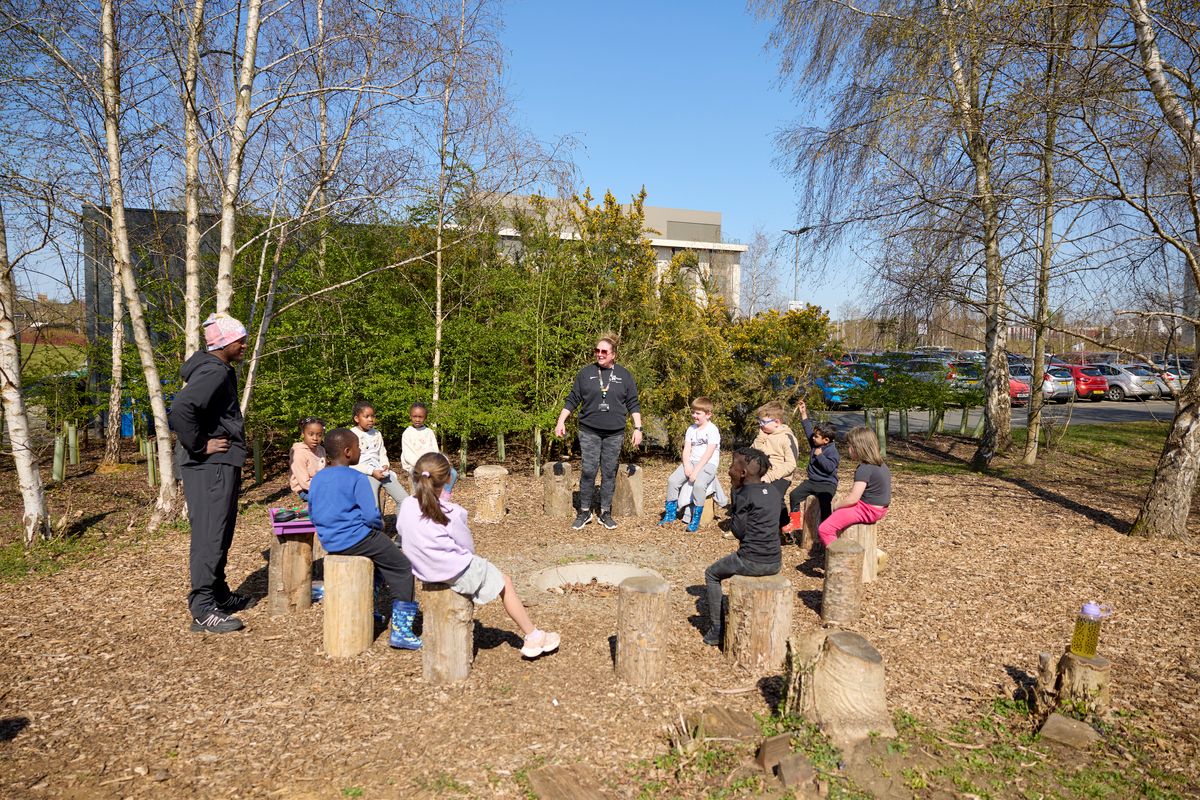
Sustainability and the natural world must be at the heart of children’s learning and we are excited about the opportunities this programme will bring to the health, education and wellbeing of our community.
The University of Northampton’s degree in physical education and sport provides a mixture of classroom-based sessions (to introduce theories and concepts) and practical activities that enable you to develop your own coaching/teaching delivery styles to children and adults.
Alongside the BA physical education degree, you are also encouraged to take an active engagement in practical work experience with internships at the local professional football, rugby and cricket clubs, and volunteering in community sports clubs. We also offer the opportunity of attaining coaching qualifications whilst studying, which often run on campus. This varies year to year, but in the past has included Level 1 NGB courses, lifeguard, first aid and disability inclusion training and we work closely with local sport partners to offer reduced rates on courses wherever possible.
In Learning Reimagined, you will investigate how curriculum choices can support or undermine people’s presence, participation and achievement in education. You will explore disruptive and inclusive approaches to curriculum and consider why these matter within a diverse society.
The module encourages you to question assumptions about how curricula are designed and experienced rather than treating existing approaches as fixed. Through this, you will develop your understanding of the relationship between curriculum, inclusion and participation and consider how different approaches can affect learners.
This provides an educational perspective that complements your study of physical education and sport, particularly where later modules address teaching, participation, social equality, special educational needs and inclusion.
In this module, you will explore influential and contemporary perspectives on how people learn and develop. These include cognitive, behavioural, social, constructivist, psychosocial and ecological approaches.
You will compare the contribution and limitations of different theories rather than considering learning and development from a single viewpoint. This will help you recognise how different theoretical perspectives can lead to different explanations of learning, development and transition.
You will also explore how these perspectives relate to educational, sporting, community, family and other professional contexts. This gives you opportunities to connect theory with different situations and develop your ability to consider which ideas are helpful when interpreting learning and development in particular contexts.
This module supports your transition into higher education while introducing you to the academic, ethical and reflective practices involved in studying children, young people and education.
You will begin to explore the language, concepts and perspectives that shape your course and consider areas of connection and difference between related disciplines. This helps you understand how subjects concerned with children, young people and education can approach questions and issues from different perspectives.
Alongside developing your understanding of the subject area, you will become familiar with the expectations and practices of university-level study. The emphasis on academic, ethical and reflective practice provides a useful starting point for later modules in which you will investigate educational issues, engage with research and undertake more independent study.
This module introduces the core principles of motor learning and skill acquisition and considers their relevance to teaching, coaching and sport. You will examine these ideas from both the learner’s and the teacher or coach’s perspective, helping you understand how knowledge about learning and skill development can inform practice.
An important part of the module is the relationship between theory and practical environments. You will consider how theoretical information about motor learning and skill acquisition can be applied within teaching, coaching and sport settings to support participation.
By examining both sides of the learning process, you will develop a stronger understanding of how people acquire skills and how those involved in teaching or coaching can use theoretical knowledge to inform their approach.
In this module, you will explore the foundations of physical education, developing the curriculum and subject knowledge needed to understand teaching and learning within this area. You will consider key principles of pedagogy, helping you understand how approaches to teaching can influence the learning experience in physical education.
You will also examine the safe and effective management of learners, connecting your developing subject knowledge with the practical considerations involved in physical education. By bringing together curriculum understanding, subject knowledge, pedagogy and learner management, the module introduces some of the central ideas that shape physical education.
This gives you a foundation for examining teaching and learning in greater depth later in the course, including through Teaching and Learning in Physical Education and Critical Issues in Physical Education.
Please note the modules shown here relate to the academic year 26/27. The modules relating to the academic year 27/28 will be available from June 2027.
We’re updating our courses to help you develop the skills and experience you’ll need for a changing world of work.
This may include more opportunities to work with students from other subjects and learn through a wider range of experiences. As this course is being refreshed, some information on this page may change before you start your studies.
We’ll make sure you have the latest information before you begin your course.
Find out more about our Curriculum Redesign.
The purpose of this module is to provide students the opportunity to gain work experience to develop professional behaviour and competencies. Students explore future career opportunities within the sport and exercise discipline and learn about the application of the theoretical knowledge in different settings such as sport clubs, governing bodies, NHS, industry, media or an research laboratories.
The optional placement year enables you to put into practice what you have learned on your degree and gain practical industry experience. Your degree is extended to four years and the placement is undertaken at the end of your penultimate year, this is for one year (48 weeks) and paid. If you meet the entry criteria, and choose to take up a placement year, you will find it an invaluable experience that helps you to apply your learning in your final year and prepares you for your career. We offer a lot of support in helping you to find a placement.
At the University of Northampton, everything we do, from funded trips to paid internships, is to give you everything you need to make a difference when you leave.
If you join this full time degree in physical education and sport at Northampton, you will receive a laptop when your course begins*. The laptops are built to a bespoke custom specification ideal for use in the seminar room, collaborative group work or studying at home.
Whatever your ambitions, we’re here to help you to achieve them. We’ll support you to identify the skills you’re learning during your sport education course, find your strengths and secure practical experience so that when it comes to applying for jobs or further study you’ll feel confident in standing out from the crowd. We’ve created the Northampton Employability Promise because we are so confident that if you focus on your studies and complete one of our awards you’ll be highly employable by the time you graduate. Putting you in a great position to secure employment or continue your studies.
To check out the full list of perks, visit our Student Perks page or dedicated International Perks page.
*UK fee payers only (see Terms and Conditions for further details).
The Integrated Foundation Year (IFY) offers a new and exciting route into studying for the Physical Education and Sport BA degree, attracting ambitious and driven students who are willing to learn and advance.
If you have non-standard qualifications or do not quite meet the admissions requirements we can offer you a fantastic opportunity to study a four year programme which includes an Integrated Foundation Year. The Integrated Foundation Year will help you develop the theoretical/practical and academic skills you need, in order to successfully progress to the full award.
The University of Northampton’s four-year courses will enable you to successfully follow the degree pathway of your choice while gaining essential study skills. The foundation year of your chosen degree will be studied on a full-time basis and is aimed at supporting the transition to higher education. Years two, three and four are then studied as a standard degree programme.
As long as you meet our entry requirements no prior experience is necessary. You should have a passion for working with children and adults in an educational/ sporting context as many roles that you can do with this degree include children and adults.
How will I learn on the BA Physical Education Degree?We work in class groups on this degree. You will be in a group of around 25 students both in the sports facilities and in classrooms. This means you get lots of time working in groups, pairs and with the tutors. We love conversation and debate. You will be taking part in practical sessions.
What can I do with a degree in physical education and sport?Any degree will give you graduate skills that make you employable, these include time management, organisation, public speaking and presenting. The Physical Education and Sport degree will specifically develop your skills in teaching and coaching through modules that study planning, teaching and assessment, coaching and sports development. These lend themselves to careers in teaching and coaching, working in the sports industry to develop initiatives to increase participation, community education work and events management. Lots of our graduates go on to train to be a teacher.
Placement OpportunitiesIn this Physical Education and Sport degree, you will complete a work placement in your second year at a local sport/ physical education provider. This will allow you to build your skills, knowledge and attributes in a career that interests you and leave us as an industry ready graduate. We have strong partnerships with our local schools, Northamptonshire Sport, Northampton Saints, Northampton County Cricket and lots more.
What do I do on a physical education and sport work placement?Your placement will be compulsory in your second year, and you can choose to do one in your third year of study. You can choose the setting, lots of our students choose coaching or educational settings. You will find your self supporting teachers and coaches with their delivery, taking small groups, supporting with planning and administration, attending events and looking for opportunities to develop your skills in the role. Your placement is what you want to get out of it and we encourage you to be proactive.
Get all the info you need ahead of time, before you can apply for funding in Spring on our fees and funding pages.
UON will adjust fees annually for UK (Home) Students up to the maximum allowable fee cap set by the Secretary of State for Education.
When assessing an applicant’s eligibility to pay home fees, we use the guidance provided by the UK Council for International Student Affairs (UKCISA) which sets out the regulations that have been decided by the UK Government Department of Education.
Tuition fees quoted for International Students apply only to the 2026/27 academic year. These fees may increase in future years in line with Consumer Price Index (CPI) inflation to reflect rising delivery costs. Any annual increase will be capped at a maximum of 5% of the previous year’s tuition fee. Updated tuition fees will be published on the UON website at least three months before the start of the next academic year.
Additional costs may be incurred if you decide to participate in optional field trips/visits as part of the Physical Education and Sports BA degree. The exact cost will depend upon the location chosen/ nature of the trip.
You will need to wear a suitable sports kit for practical sessions as part of this degree. You can purchase a kit but this is not compulsory. The exact cost of the kit will be provided at the start of the course.
The physical education course also requires you to complete a work placement module during your degree. You will be required to pay any transport costs incurred in completing your placement.
For information on the scholarships available to you, please see our scholarships page.
For more information about possible funding options, please visit our Fees and Funding pages.
Fees quoted relate to study in the Academic Year 2025/26 only and may be subject to inflationary increases in future years.

Senior Lecturer in Physical Education

Senior Lecturer in Education (ITE PE)
Our graduates from our Physical Education and Sport BA have, over the past couple of years, moved to study a Post Graduate Certificate in Education (PGCE) so they can become a teacher, this includes Further Education, special, primary and secondary training.
We currently offer the Primary Education 5-11 (QTS) PGCE. Others have moved into coaching and teaching in primary schools, working in sports development, personal training and some into postgraduate study. At the University of Northampton you can study for a Sport and Exercise MRes or Education MA.
There is a strong emphasis on employability with work placement opportunities for students at levels two and three.
We have a close partnership with local sports organisations including Northampton Saints, Northampton Town FC and Northants County Cricket Club.
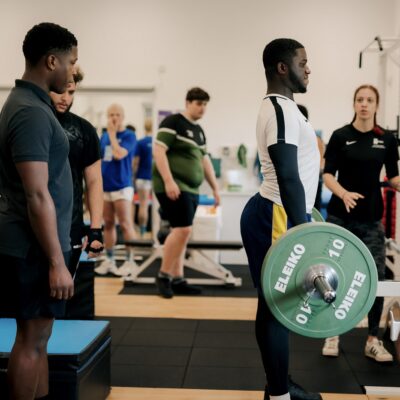
Sports Zone at Waterside is home to a multi-use sports dome suitable for a variety of sports, including football, badminton and netball. The facilities include two sports performance labs, a pair of teaching rooms and changing rooms. In addition, there also are three outdoor multi-use games areas and floodlit full-size all-weather sports pitch. The sports dome is used for teaching, research and recreational activities.
You will also have access to the following facilities:

In this module, you will critically examine contemporary social and welfare issues across a range of sporting contexts. You will approach these issues from several perspectives, drawing on sociology, policy and relevant research to develop a multidisciplinary understanding of the challenges affecting sport.
Case studies will provide a focus for debate and discussion, helping you explore contemporary issues and the strategies associated with them. By considering evidence and perspectives from different disciplines, you will develop your ability to analyse complex issues rather than relying on a single explanation.
The module extends the course’s wider examination of sport in society and provides an opportunity to bring together social, policy and research perspectives when considering current welfare issues within sport.