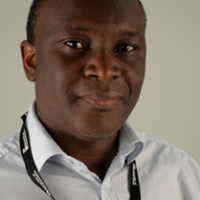

Michael Opoku Agyeman
Professor of Computer Engineering
Duration
MPhil Full Time (on and off-site): 12 months – 3 years
MPhil Part Time (on and off-site): 30 months – 5 years
PhD Full Time (on and off-site): 2 – 4 years
PhD Part Time (on and off-site): 3 – 6 years
PhD by Published Works Part Time (on and off-site): 1 – 2 years
Level
PostgraduatePG
See Fees and Funding
See Fees and Funding
study@northampton.ac.uk
0300 303 2772
Updated 08/04/2026
The PhD/MPhil and PhD by Published Works in Environmental Science at the University of Northampton harnesses a diverse spectrum of academic disciplines and staff expertise to drive research and enterprise initiatives.
These initiatives are dedicated to addressing real-world issues, uncovering facts, and building upon evidence to shape a vision for a sustainable tomorrow. Our investigative efforts are geared towards deepening insights into the intricate connections shared by our natural environment, humans, and wildlife.
Explore the groundbreaking research conducted in this domain, delve into the profiles of our distinguished experts, and learn about the transformative work undertaken by the Centre for Sustainable Futures. This could be your opportunity to contribute to research that inspires and makes a difference.
The closing dates for applications for the next October intake is the 1 August and for the next March intake is the 11 December
The standard academic entry requirement for this research program is a bachelor’s degree with upper second-class honours (2:1) in a pertinent field, or its international equivalent, or a master’s degree in a field that is directly applicable to the research, also recognised internationally.
Additionally, individual consideration may be given to applicants presenting a diverse array of qualifications, research, or professional experiences.
As a component of the evaluation procedure, candidates deemed appropriate must participate in an interview.
All offers of a place on the programme are subject to:
For further details on the application process, including locating a potential Supervisor and the necessary documentation, please refer to our How to Apply page.
Additionally, applicants are required to submit a 1,000-word research proposal, for which guidance can be found within our proposal writing instructions.
All applicants must exhibit proficiency in the English language. Those lacking a valid English Language qualification are required to undergo a recognized examination, achieving at least an overall IELTS score of 7.0, with no less than 6.5 in writing and in each other component. Applications presenting an IELTS score below 5.5 in any section will be automatically disqualified.
Open Days give you the best experience and insight to courses, people and facilities that interest you. Make your choice easier and come meet us.
Book NowThis PhD/MPhil and PhD by Published Works in Environmental Science research programme delves into a variety of research areas, including land use and urban planning, with a focus on the advantages of green infrastructure. It aims to enhance biodiversity and bolster community resilience in the face of climate change and biodiversity loss.
The programme explores challenges faced by both producers and consumers, integrating renewable energy, circular economy concepts, and eco-friendly materials like bioplastics. The PhD in Environmental Science also examines alternative technologies to lower energy consumption and innovative methods to reduce waste. Also, it encourages creative, interdisciplinary methods for teaching sustainability, instilling positive values, attitudes, and decision-making skills geared towards achieving sustainable development objectives.
As a research student, you will hone your expertise and technical abilities. The programme begins with comprehensive training across various disciplines and project-specific instruction, equipping you to undertake independent, effective research. Upon completion, graduates are well-prepared for research and development positions in the industry, academic roles, or managerial positions in business.
What is the difference between a full PhD and a PhD by Published works?
The key difference between a conventional PhD and a PhD by Published Works is the route taken to earn the doctorate. A PhD by Published Works offers a more condensed, part-time doctoral program tailored for individuals who have engaged in significant research over a considerable time span. Such candidates possess a collection of published works stemming from their research activities, which have been shared through various esteemed platforms or scholarly peer-reviewed journals.
Conversely, a traditional PhD, also known as a full PhD, adheres to the classic model of doctoral education. This type of programme is offered in numerous research fields. Embarking on a full PhD entails conducting original and independent research.
Doctor Of Philosophy Degrees
Doctor of Philosophy Degrees by means of Published Works
Including: Doctor of Philosophy (PhD) by means of published works.
Fees quoted relate to study in the Academic Year 26/27 only and may be subject to inflationary increases in future years.
When assessing an applicant’s eligibility to pay home fees, we use the guidance provided by the UK Council for International Student Affairs (UKCISA) which sets out the regulations that have been decided by the UK Government Department of Education.
Doctor Of Philosophy Degrees
Doctor of Philosophy Degrees by means of Published Works
Including: Doctor of Philosophy (PhD) by means of published works.
Tuition fees quoted for International Students apply only to the 2026/27 academic year. These fees may increase in future years in line with Consumer Price Index (CPI) inflation to reflect rising delivery costs. Any annual increase will be capped at a maximum of 5% of the previous year’s tuition fee. Updated tuition fees will be published on the UON website at least three months before the start of the next academic year.
Please visit the funding page for more details on how to fund your study.
Fees quoted relate to study in the Academic Year 25/26 only and may be subject to inflationary increases in future years.
Doctor Of Philosophy Degrees
Doctor of Philosophy Degrees by means of Published Works
Including: Doctor of Philosophy (PhD) by means of published works.
Professor of Computer Engineering
Senior Lecturer in Fashion
Senior Lecturer in Product Design
Senior Lecturer in Geography
Visiting Fellow
Senior Lecturer in Geography
Senior Lecturer in Geography
Senior Lecturer in Physical Geography and Environmental Science
After successfully completing their studies, graduates emerge fully equipped to tackle roles in research and development within the industry, pursue academic careers, or assume leadership roles.