Nadeem Aftab
Senior Lecturer in Banking & Finance
So we can start you on the right application process we just need you to answer some quick questions.
Already applied?Direct Applications - Login
This course offers two separate application routes, depending on whether the application is submitted by the student or an international agent.
Please select your desired length of study from the available options.
This course includes a placement option. Please indicate whether you’d like to apply with or without a placement.
Please select where you would like to study.
All the available academic years are displayed below.
All the available start months for the selected academic year are listed below.
Please review the information below carefully before continuing.
If you need to make any changes, click the < Back button to return to the previous step.

Duration
Full Time: 4 years maximum
Part Time: 6 Years maximum
Level
PostgraduatePG DBA
See Fees Section
See Fees Section
study@northampton.ac.uk
0300 303 2772
Updated 24/06/2026
The Doctor of Business Administration (DBA) is a prestigious professional doctorate that is equivalent in academic standing to a PhD. As one of the longstanding courses within the Faculty of Business and Law, the DBA features a distinguished alumni network, with graduates holding senior leadership positions around the globe.
Recently revalidated, the DBA programme strongly emphasises impact-oriented research and the professional development of its participants. The DBA at Northampton is designed to support executive development by enhancing professional practice through rigorous, applied research. Participants will gain contemporary research intelligence, develop evidence-based decision-making abilities, and cultivate responsible leadership alongside advanced critical thinking and analytical skills.
The programme empowers professionals to conduct high-impact research within their organisations/ industries, driving innovation and meaningful strategic change. The DBA is offered both part-time and full-time – with the full time route open to home and international students. Our Doctor of Business Administration programme adopts an active-blended learning model, combining flexible learning with close, one-to-one supervision and promoting a collaborative environment through valuable networking opportunities.
The closing date for applications is 31 July 2026.
For more information, contact:
Programme Leader: divya.shukla@northampton.ac.uk
Or email: dbaenquiries@northampton.ac.uk

An academic discusses a topic with students seated at a conference table in an MBA class.

An academic presents to a class during an MBA study skills session.

Three MBA students work together on a group project during a class.

An academic and two MBA students discuss a topic.

Students sit at a conference table during an MBA seminar.

An academic discusses a topic with students during an MBA seminar.

An academic discusses a topic with students during an MBA class.
Applicants must generally meet the following criteria:
1. Academic Qualifications: Applicants must be able to Accredit Prior Certified Learning (APCL) of 180 credits at Level 7, typically a Master’s degree in a relevant subject completed within the last 10 years prior to enrolment.
2. Professional Experience: Significant leadership experience and potential currency in recent roles.
3. Employment Role: Experience in a leadership or managerial position that can support achieving the course learning outcomes.
4. Master’s Degree Older than 10 Years: Applicants whose Master’s degree was completed more than 10 years prior to enrolment must demonstrate that they have updated their knowledge and skills to the equivalent of Level 7 within the past 10 years during the application and interview process.
5. Exceptional Cases: Applicants who do not meet the specified experiential requirements may still be considered if they can provide evidence of their professional standing, qualifications, and training, demonstrating their readiness to register for and benefit from the course.
We encourage diversity in all forms, welcoming individuals from varied experiences and especially encouraging the application from underrepresented groups. The Admissions process for this course is as follows:
The application and selection process are the same for home and international students. The document checks and English language requirements follow the standard UON process.
Please visit the Additional documents page for further information and download the Research Topic Form.
For more information on how to apply, please visit the how to apply for research degrees page.
All International and EU students applying for a course with us must meet the following minimum English language requirements:
For information regarding English language requirements at the University, please see our IELTS page.
Open Days give you the best experience and insight to courses, people and facilities that interest you. Make your choice easier and come meet us.
Book NowThe DBA provides the opportunity for you to cultivate the skills needed to find better solutions for intractable problems and develop new paradigms for the increasingly complex, turbulent and interconnected business environment by:
The thesis element of a professional doctorate programme provides the student with the opportunity to demonstrate high level research skills in a written thesis and defend those at an oral examination.
This module provides in-depth understanding of contemporary leadership theories and models relevant to change and innovation. It endeavours to develop responsible leadership practices through self-reflection and critical analysis of organisational/industry needs and its relevance to the student¿s research problem. It imparts knowledge and tools to lead sustainable and ethical change initiatives.
In this module, students will enhance their critical thinking and decision making skills, and apply them in evaluating evidence. Specifically, they will learn how to evaluate extensive sources and evidence, and conduct a systematic review of literature in their respective field.
The purpose of this module is to equip students with advanced knowledge of contemporary and ethical research methodologies and tools in business. It covers quantitative, qualitative, and mixed-method approaches, alongside emerging digital technologies, to enhance data collection, analysis, and presentation skills for complex business research.
This module develops skills to design and execute research to drive impactful and sustainable change. Students will plan and conduct the research within their chosen area of investigation, applying ethical approaches to decision making and develop reflections on research methodological approaches. They will present and defend their research design and dissemination plan to a relevant audience.
Please note the modules shown here relate to the academic year 25/26. The modules relating to the academic year 26/27 will be available from July 2026.
Part-time – maximum 6 years to thesis submission – (open to Home and International students):
Please note that part time courses are not eligible for those requiring a student visa and there is no financial support for travel and residing arrangements.
The Northampton part-time DBA course typically runs over six years. The first two years are structured around facilitated modules that provide the foundations for the research project, the main element of the DBA. After that, the research project phase begins.
Full time – maximum 4 years – (open to Home and International students):
The full-time DBA course covers the modules taught in the first year, and then you enter the research project phase.
For both modes of delivery, the research project must significantly contribute to professional practice by developing existing theories and knowledge.
Students benefit from a range of academic and research development opportunities through events organised by the University of Northampton Research team and the Graduate School, both in terms of participation and engagement. They are encouraged to contribute to the University’s research culture and develop their identity as researchers.
Content:
It may seem obvious, but please fill out your application in full. Missing information can cause delays in processing your application. It’s really important that you include a current email address that is personal to you and one that monitor regularly, as we use email to arrange interviews and to get back to you with any additional information that we may need for your application. It’s also important to include a current mobile telephone number (with the country code). This is just in case we need to contact you urgently about your application. Our first form of contact will be email but there are occasional situations when we may need to call you so make sure to include your contact number.
Remember that one of the entry requirements for the DBA is that you are in a senior management/leadership position. Those reviewing your CV may not be from your industry and so you will need to include the roles and responsibilities associated with your job title – we need the key points.
It may be that you are involved with another organisation outside of work, such as a professional body or charity. Remember to include it so it can be taken into consideration.
Another entry requirement is five years experience at an appropriate level. Does your CV show how you meet this requirement?
Make sure you give all your qualifications from your Bachelor’s degree onwards. Please include professional qualifications as well as academic qualifications, if you have them.
If you were awarded your Masters 10 or more years ago we will need to understand how you might have kept up to date with developments in management and your functional area since then. One way of doing this may be through training and development, so make sure that you include it. Even if you have recently completed your Masters it is still important to include this because it strengthens your CV and application.
Make sure you give information about who provided the training/development, what it was, when and whether or not it was certificated. If you have written or delivered conference pages include that information also.
For all the areas you do not have to write a lot but what you do write must be specific to your situation – avoid general statements.
You need submit two references with your application. If you do not do this your application may be delayed.
Ideally, one of your references should come from your current manager and another from an academic from your Masters programme.
If a reference from your manager is difficult, try to get someone who is not your manager but knows you and is senior to you. It is very helpful if the reference can show that the organisation will support you in undertaking the DBA by being flexible so you can attend workshops and giving you access to information to complete assignments based on your workplace.
Getting an academic reference may be harder if it is a while since you did your Masters and we do understand that. Make sure that the reference is for a DBA and not a PhD. Please do not use a reference written for another course or University.
If it is not possible to get one or both if the above, then we will accept other references. If the referee wants to submit the reference directly to the University please contact pgradmissions@northampton.ac.uk for advice on doing this.
Make sure your references are recent, they should not be more than 4 months old when submitted.
Please make sure you provide a scanned copy of all your degree certificates (together with their transcripts), any professional qualifications and your passport. Your application cannot be processed without them.
If you are not a native English speaker, for Doctoral level of study, you will be required to demonstrate language capability equivalent to IELTS 7.
Normally those with Masters from the UK will meet this requirement.
If you are successful in being offered a place, and the place is conditional on language capability, you will need to take IELTS or an equivalent recognised language test.
We’ve put together a document for Research Topic form guidance, which provides all the details you’ll need for filling out the form. We have also completed an example form so you can see how it should look.
If your application form and research topic form pass the initial review you will be invited for an interview. The interview is a vital element of the selection process of the DBA.
The interview will cover all aspects of your application, so you should be prepared to discuss and expand on anything you submitted. Typically, most time is spent discussing the Research Topic Form. This means that you need to be very familiar with what you have written and the sources you have used. You will need to be prepared not only to explain and defend your thinking but to consider alternative ideas and approaches that the interview panel may wish to discuss.
All interviews are conducted by a panel of at least two people. Once a suitable panel has been formed, with a time and date that all members of the panel can make, you will receive a calendar invitation with a Go-to-Meeting link. You must accept this invitation as soon as possible.
If you are unable to make the time and date of the interview again let us know as soon as possible and we will look to rearrange the interview. Please note it may take a week to find a new time and date and the new interview maybe two to three weeks after the original date.
If we have not heard from you within 5 days of sending out an interview invitation, the interview will be cancelled, and the application rejected.
It is important that you undertake the interview on a laptop or desktop (not a smartphone or tablet) and that you have checked out the internet connection as well as your camera (yes we do need to see you!), microphone and speakers. We often find that bandwidth can be an issue so it is important that you arrange to be somewhere with a strong internet connection for your interview.
Interviews normally last 35 – 45 minutes and need to start within 5 minutes of the time given. If you are not there then the interview will be cancelled.
The Doctor of Business Administration programme is part of the Enhanced Learning Credits Scheme (ELCS). The ELCS is an opportunity for members of the Armed Forces to further or expand on their education. The scheme offers support financially in a maximum of three separate financial years for higher level learning of a nationally recognised qualification at a Level three or above.
DBA does not require the GRE/GMAT score, but strong academic performance and research readiness are evaluated during application.
Can I apply without a Master degree?A master’s degree is mandatory to pursue the DBA degree. However, if this is availed more than 10 years ago, an applicant must demonstrate considerable learning evidence showcasing their persistent learning craving.
Is there any application deadline?Yes, application deadlines vary every year. For example, this year, the deadline is 30 June 2025.
Can I study the DBA in an online mode of delivery?The learning in DBA is mostly hybrid. You will have a few modules delivered online and a few with face-to-face settings. Currently, there is not fully online or distance learning provision.
What kind of support will I receive during the research journey?You will have consistent pastoral support. In the first two years, you will be given a personal academic tutor; from the third year onwards, you will have your supervision team. In addition, you can take advantage of all the PGR development support events and learning resources.
Is the research project work-related or academic? Do I have to develop a theory?The DBA research is usually work-based or practice-oriented, focusing on issues relevant to your organisation, industry, or leadership practice. You must apply the appropriate theory to your research problem for DBA and create new knowledge that informs practice and academia.
Can I move from the Part-time to the Full-time course mode?There is no provision for delivery mode transfer; hence, you must decide well in advance for the mode you would like to go as this is level 8 degrees and thus demands significant time and effort.
What is a research problem, and how can I develop one?Your research problem is critical for the selection of a DBA course. It should be evidenced in your proposal that your addressing contemporary research issues in your practice area. This should clearly outline a core research problem with stipulated research questions and highlight the background, context and possible research beneficiaries. This should demonstrate the seminal literature discussion, and the theoretical underpinnings required, highlighting possible research approaches and ways to collect the needed data. This should present a strong expected timeline for the completion of the study.
Importantly, this should highlight what and how the proposed research is being conducted, as well as the target audience and beneficiaries. In addition, this should highlight the potential of the contribution of results to practice and academia. You may find more information on how to prepare a research plan on our Additional documents and interview information page.
What is the interview structure, and how should I prepare for this?The interview structure will be given at the time of the interview invitation. Ideally, it lasts 45 minutes to an hour, where you must demonstrate your passion and ability to complete the proposed research with potential contributions. Be prepared to discuss your research questions in both practical and academic contexts. Be informed about the theoretical and seminal work in your field and present an evidence-based defence. Please explore the research centres and information on the UON webpage and be informed about the DBA well in advance.
Do I need to produce the language proficiency evidence at the time of application.Yes, you need to demonstrate the English language proficiency as the university’ regulations of level 8 entry requirements (please see the entry criteria).
Fees quoted relate to study in the Academic Year 26/27 only and may be subject to inflationary increases in future years.
Please note: If you are granted an extension for your thesis submission, you may be subject to additional fees, which vary depending on your university’s policies.
When assessing an applicant’s eligibility to pay home fees, we use the guidance provided by the UK Council for International Student Affairs (UKCISA) which sets out the regulations that have been decided by the UK Government Department of Education.
Please note: If you are granted an extension for your thesis submission, you may be subject to additional fees, which vary depending on your university’s policies.
Tuition fees quoted for International Students apply only to the 2026/27 academic year. These fees may increase in future years in line with Consumer Price Index (CPI) inflation to reflect rising delivery costs. Any annual increase will be capped at a maximum of 5% of the previous year’s tuition fee. Updated tuition fees will be published on the UON website at least three months before the start of the next academic year.
There are no additional costs for this course for students beginning their studies in September 2026. Should this change, applicants and students will be contacted by the university with details of the costs.
For more information about possible funding options, please visit our Fees and Funding and Scholarships pages.
Fees quoted relate to study in the Academic Year 25/26 only and may be subject to inflationary increases in future years.
Please note: If you are granted an extension for your thesis submission, you may be subject to additional fees, which vary depending on your university’s policies.

Senior Lecturer in Banking & Finance

Senior Lecturer in Accounting

Associate Professor of AI for Business & Strategy

Head of School - Professional Business Education

Senior Lecturer in Cross-Cultural Management

Senior Lecturer in Marketing and Entrepreneurship
Senior Lecturer in Accounting
Senior Lecturer in Leadership & Organisational Behaviour

Senior Lecturer in Logistics and Supply Chain Management

Senior Lecturer in Human Resource Mgmt
Senior Lecturer in Logistics and Supply Chain Management
Associate Professor (Env. Psychology & Sustainable Business)

Senior Lecturer in Project Management
Senior Lecturer in Banking & Finance

Senior Lecturer in Human Resource Mgmt & OB
DBA facilitates the expertise in your respective area of research and permits you to be established as a credible individual in your organization. The program prepares you to enhance your career opportunities in your existing career or allows you to transition to academia as well. It will permit you to be an effective executive with joining possibilities of multiple professionals such as management consultants, research executives and chief executive officers, practice-oriented professors, etc.
By choosing the University of Northampton to study your Doctor of Business Administration DBA, you will have access to our on-campus study areas, facilities, and services.

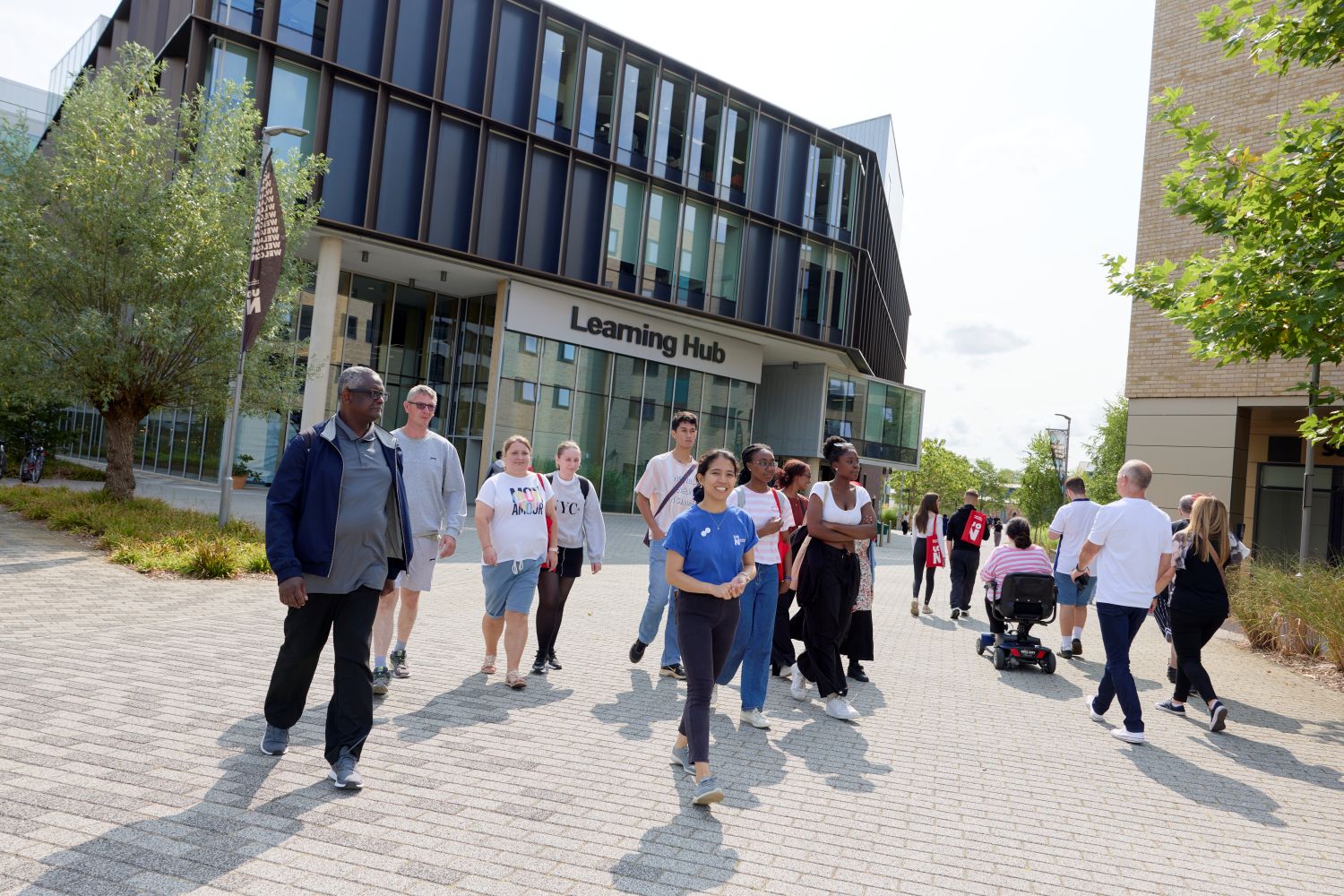
The Learning Hub is at the heart of the campus and home to the student information desk.
View Facility