level:UG;top_up:true;international:true;foundation:false;clearing:false;full_time:true;part_time:true;start_month:September;location:Waterside

Engineering (Top-Up) BSc (Hons)
Key Facts
-
UCAS Code
H10A
-
Duration
Full Time: 1 year
Part Time: 2 years
-
Full Time: £9,790
Part Time: £1,630 per 20 credit module -
Full Time: £18,500
Get in touch
UK STUDENTS ENQUIRIES
study@northampton.ac.uk
0300 303 2772
INTERNATIONAL STUDENTS ENQUIRIES
Updated 11/03/2026
Overview
The Engineering sector is a fascinating, multifaceted industry that is integral to advances all around the world, from the development of facilities using renewable energy resources to the expansion of sustainable communities that drive lasting change. This Engineering top-up degree will show you the influence that engineering has on the world and the contribution that you can make.
This course will meet the further learning academic benchmark requirements for registration as an Incorporated Engineer (IEng).
Highlights
- Top up your existing qualifications to a full BSc degree in 1 year.
- Progression courses available.
- Flexible part-time study option available.

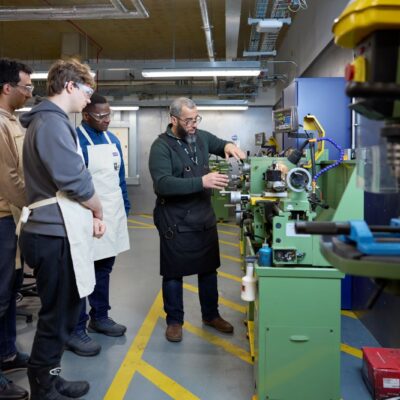
Working collaboratively on a project to build a mechanism.
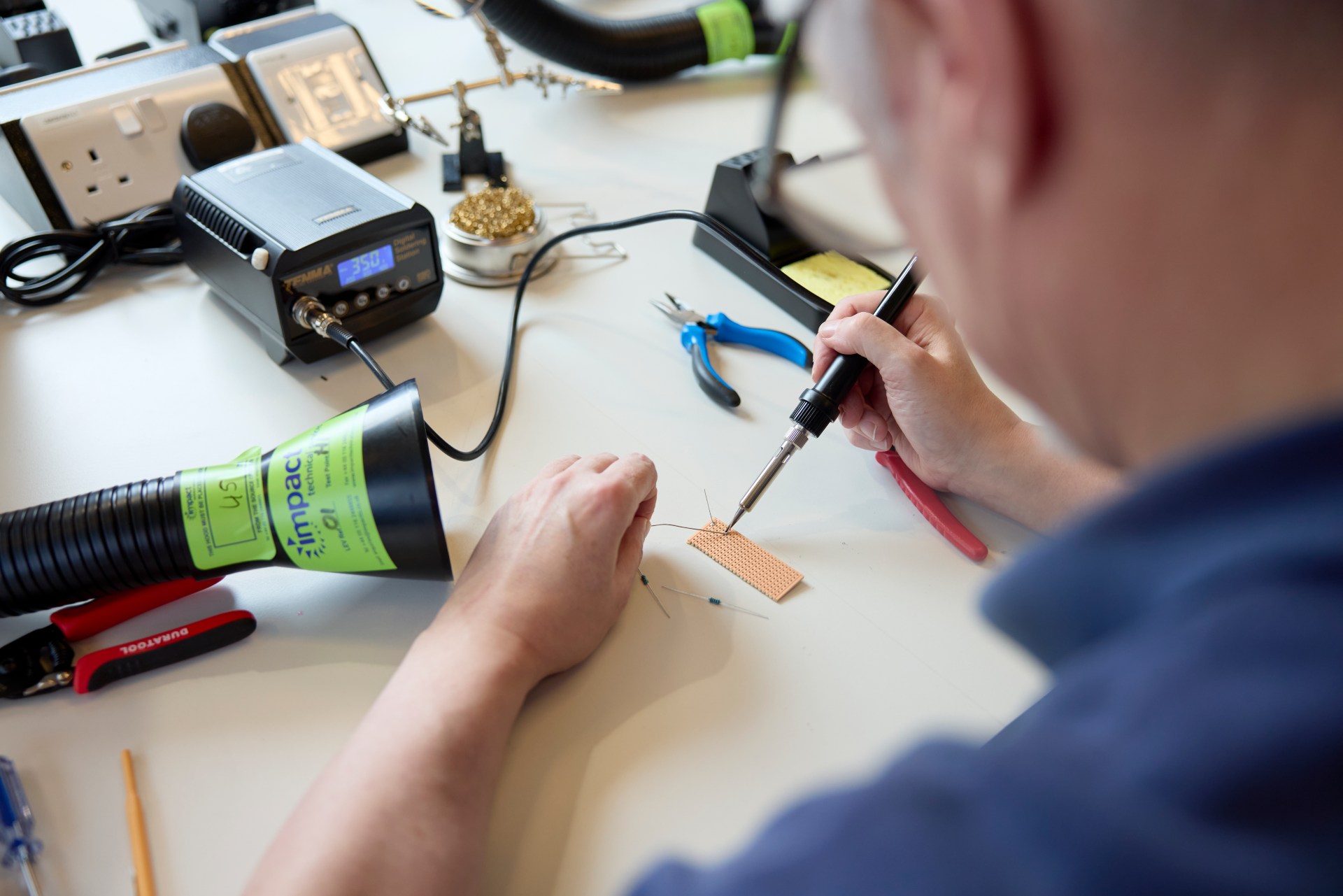
An engineer uses a soldering iron to assemble electronic components on a circuit board.

A CNC milling machine engraving patterns onto a copper circuit board.

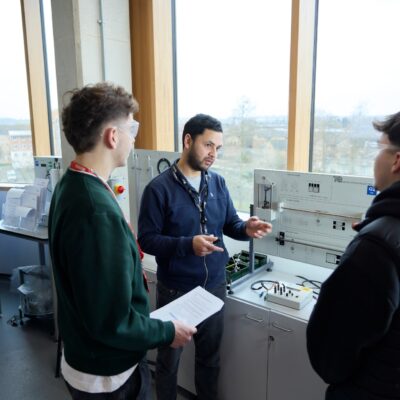
Adjusting monitors and measurements.
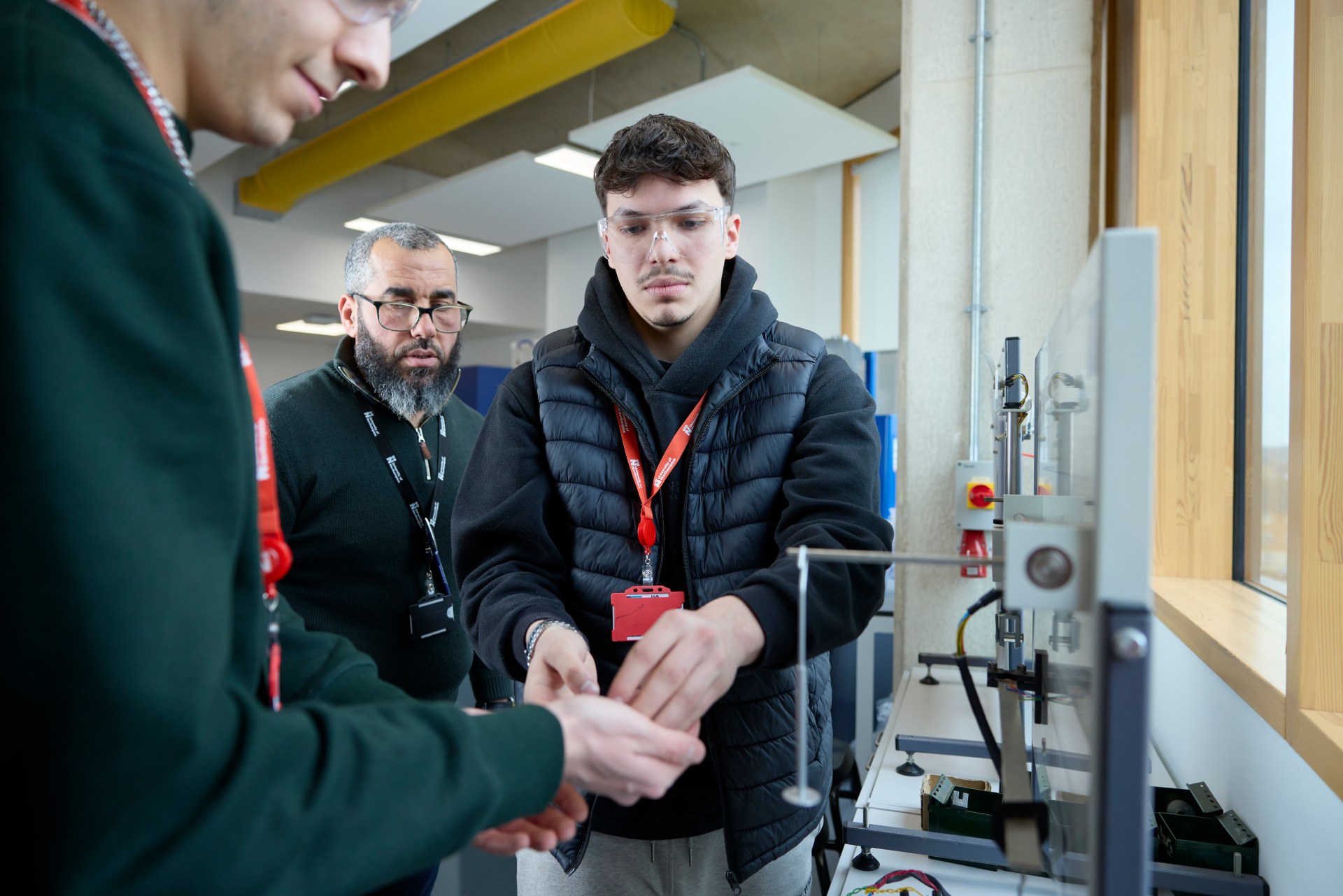
Handing over screws for adjusting a device and undertaking observation.

Laboratory apparatus commonly used by engineers and students.

Viewing diagrams on a laptop in a classroom session.

Engineer working and concentrating at a laboratory bench.
Entry Requirements
In order to study this course, you must have completed an HND or a Foundation Degree or an equivalent qualification in Engineering.
You should be able to demonstrate prior knowledge of electronic and mechanical engineering to an equivalent of level 5 (Year 2 of a UK Bachelor’s degree). Qualifications in Civil Engineering are not accepted.
For more information on how to make an application, please visit our How to Apply page.
If you are an International student and would like information on making an application, please see our How to Apply page.
All International and EU students applying for a course with us must meet the following minimum English language requirements:
- IELTS 6.0 (or equivalent) with a minimum of 5.5 in all bands
for study at undergraduate level
For information regarding English language requirements at the University, please see our IELTS page.
Upcoming Open Days
Open Days give you the best experience and insight to courses, people and facilities that interest you. Make your choice easier and come meet us.
Book Now
What You'll Learn
This one year BSc Engineering Top-Up course advances your knowledge of electronic and mechanical system design, as well as analysing the applications of engineering technology in new and innovative ways. You will be taught by industry experienced academics who focus on relevant, cutting edge topics that are sought after by employers.
You will cover a range of topics that would be expected of a modern professional engineer, including computer simulation, lean manufacture and quality applications. A substantial part of the course is a major project (normally industrially based).
Within the BSc Engineering programme, you will undertake a wide variety of activities and encounter new challenges that develop your theoretical learning. You will utilise your previous experience and, with the help of your tutors and module leaders, develop and apply this knowledge in new, innovative and imaginative ways.
Compulsory Modules
Optional Modules
Computer simulation modelling techniques offer savings in time and money in many company activities and are a valuable aid to management decision making. This module introduces students to computer modelling techniques and software and gives them the opportunity to practice the technique in the solution of problems.
This module has four key themes, which are vital in supporting technological industries. Focusing on the application of Quality Principles, Manufacturing improvement techniques, project management and personal performance and leadership. Many of the topics are discussed and evaluated using relevant industrial scenarios, applying knowledge gained to solve problems.
This module teaches the design of electromechanical systems which integrate mechanical, electrical, and control systems engineering. Laboratories form the core of the module. These cover topics such as transducers, signal conditioning, filters, closed loop control, digital logic, embedded systems and PLCs. Labs involve Arduino and PLC software such as Codesys.
This module provides students with instruction in the fundamentals of theory of machines. The theory of machines and mechanisms provides the foundation for the study of displacements, velocities, accelerations, and static and dynamic forces required for the proper design of mechanical linkages, cams, and geared systems.
This module provides the opportunity to apply and develop theoretical knowledge in an individual project and individual report. By completing the module students will gain experience of researching the necessary technical information, of solving cross-disciplinary technical problems. This module could form the assessment for any University approved industrial placement opportunity.
This module provides the opportunity for students to undertake the research and self-management of a project. Students will gain experience of managing the development of a substantial piece of work, to develop their research methods and to demonstrate a professional approach to work.
Please note the modules shown here relate to the academic year 25/26. The modules relating to the academic year 26/27 will be available from June 2026.
What is the teaching schedule?
This course is delivered on one day per week, allowing you to be flexible with your studies and fit them in around your work and personal life.
How will I be assessed?
You will be assessed through:
- coursework
- oral presentations
- group work
- practical reports
- critical reviews
- end of module exams.
Are there any specialist features?
- The course has a high practical industry focus which allows you to advance the understanding that you already have, whilst developing your confidence and theoretical knowledge of a wide range of topics relevant to the engineering industry.
- You will also examine the use of computer simulations to build physical systems, thus reducing the need for wastage of failed or flawed products whilst improving the speed and sustainability of the design and manufacturing processes.
- High employability for our students.
Fees and Funding
2026/27 Tuition Fees
- Full Time: £9,790
- Part Time: £1,630 per 20 credit module
UON will adjust fees annually for UK (Home) Students up to the maximum allowable fee cap set by the Secretary of State for Education.
When assessing an applicant’s eligibility to pay home fees, we use the guidance provided by the UK Council for International Student Affairs (UKCISA) which sets out the regulations that have been decided by the UK Government Department of Education.
- Full Time New students: £18,500
Tuition fees quoted for International Students apply only to the 2026/27 academic year. These fees may increase in future years in line with Consumer Price Index (CPI) inflation to reflect rising delivery costs. Any annual increase will be capped at a maximum of 5% of the previous year’s tuition fee. Updated tuition fees will be published on the UON website at least three months before the start of the next academic year.
Additional Information
For information on the scholarships available to you, please see our scholarships page.
For more information about possible funding options, please visit our Fees and Funding pages.
There are no additional costs for this course for students beginning their studies in September 2026. Should this change, applicants and students will be contacted by the university with details of the costs.
- UK – Full Time: £9,535
- UK – Part Time: £1,585 per 20 credit module
- International – Full Time: £17,000
Fees quoted relate to study in the Academic Year 2025/26 only and may be subject to inflationary increases in future years. UON will adjust UK fees annually in line with Government Policy.
Careers and Employability
This course will enable you to enter careers in a number of engineering sectors, such as:
- manufacturing
- chemical/pharmaceutical
- automotive
- civil
You will also be able to go into job roles in scientific writing and journalism, marketing and sales.