
Patrice Seuwou
Associate Professor in Learning & Teaching
So we can start you on the right application process we just need you to answer some quick questions.
Already applied?Direct Applications - Login
This course offers two separate application routes, depending on whether the application is submitted by the student or an international agent.
Please select your desired length of study from the available options.
This course includes a placement option. Please indicate whether you’d like to apply with or without a placement.
Please select where you would like to study.
All the available academic years are displayed below.
All the available start months for the selected academic year are listed below.
Please review the information below carefully before continuing.
If you need to make any changes, click the < Back button to return to the previous step.

Duration
Full Time: 1 Year
Level
Master'sPG MSc
Full Time: £8,700
Full Time: £19,000
Updated 29/06/2026
In today’s data-driven landscape, businesses are facing a pressing challenge: finding graduates who possess the right qualifications and skills to tackle complex analytical tasks. This demand for skilled business analysts continues to soar, creating a significant gap between the abilities of recent graduates and the requirements of employers. That’s where our cutting-edge MSc Business Analytics programme comes in.
Our comprehensive programme is tailor-made to bridge this gap and empower you with the expertise needed to excel in the realm of data analysis. By enrolling in this master’s programme, you will unlock a world of career opportunities, enhance your employability prospects, and become a sought-after asset for any company looking to gain a competitive edge.
One of our current Business Analytics students, Thelma, is available on Unibuddy to answer any questions you may have about the MSc Business Analytics and questions about student life at UON.
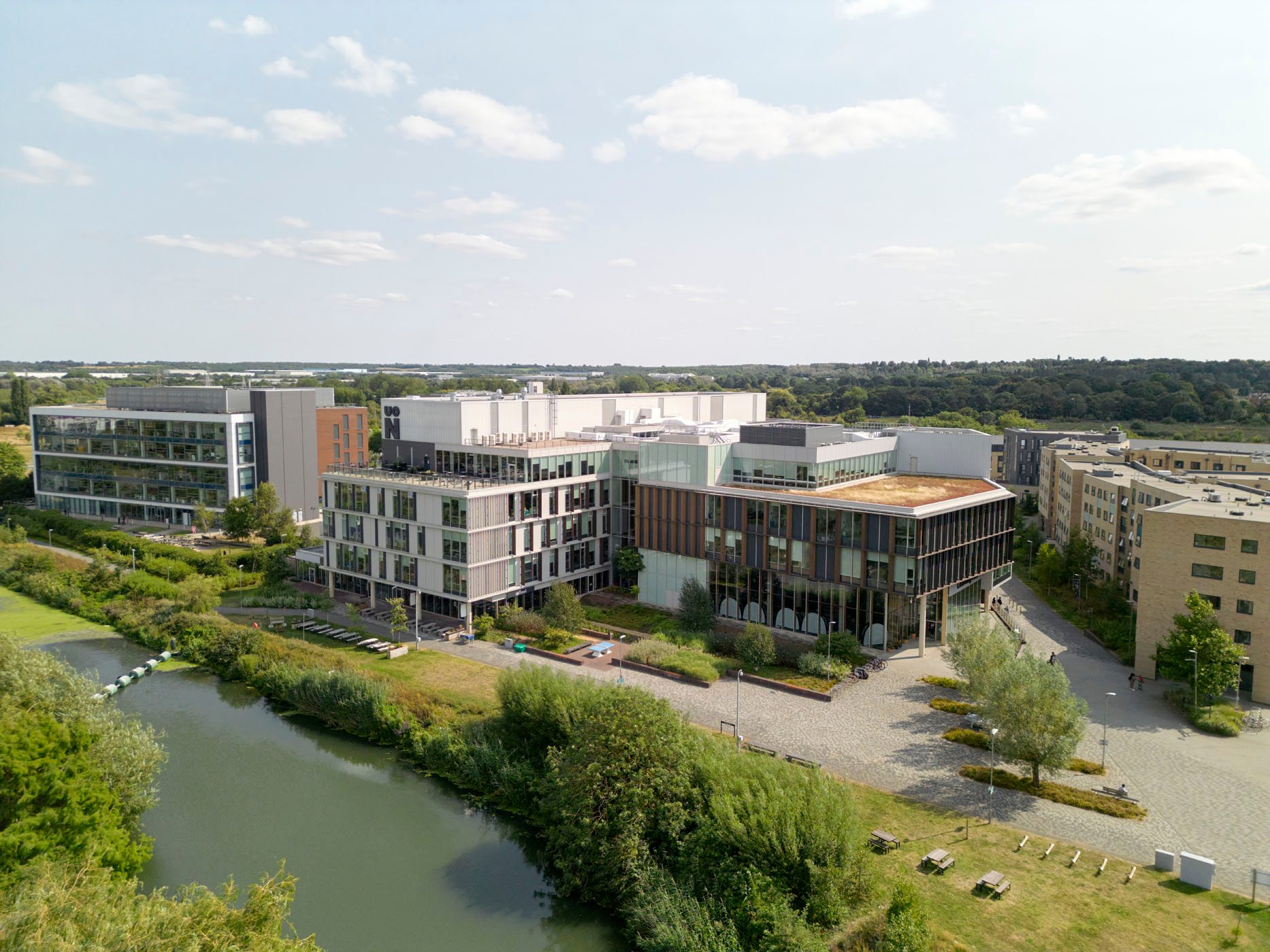
Image shows an aerial view of the Learning Hub on Waterside Campus. Also visible are various green spaces next to the River Nene, as well as several university buildings including Halls of Residence.

Image shows the atrium inside the Senate building, which overlooks the lobby area. The building is modern-design, white walls with wooden accents, and is bright and airy.
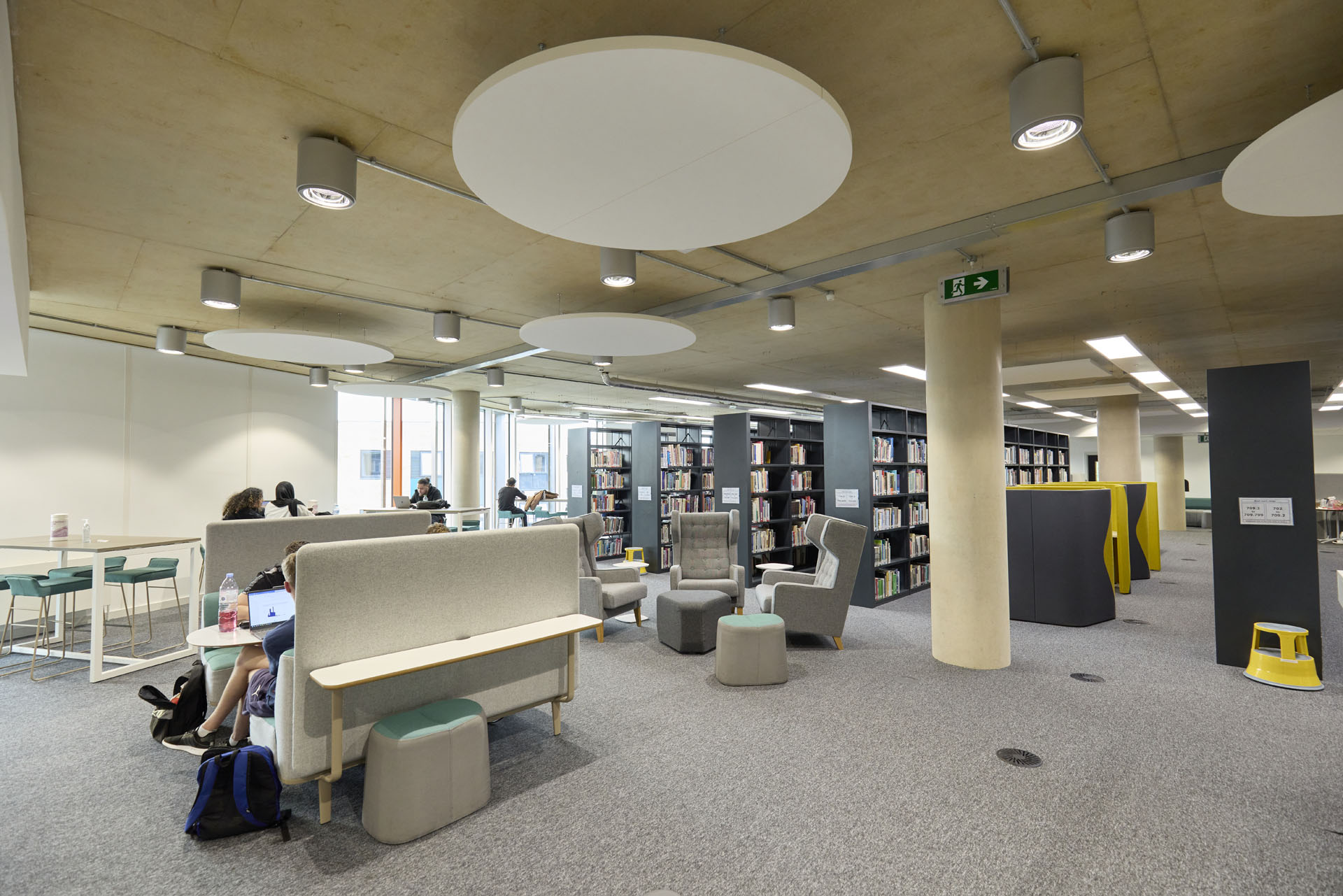
Image shows a modern library interior with people reading at tables and seated on cushioned chairs in the Learning hub. Shelves filled with books are visible in the background under circular ceiling lights.
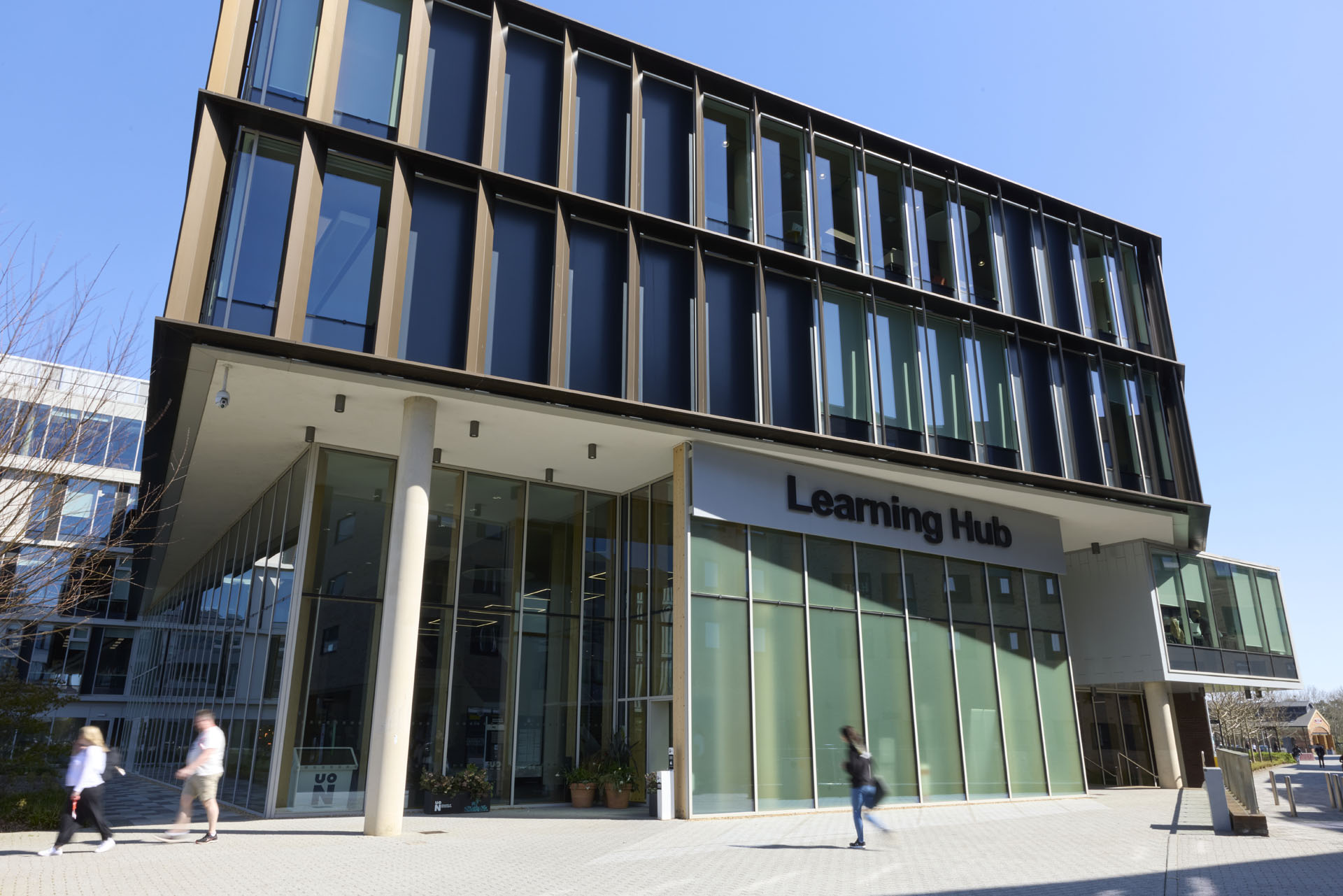
Image shows the main entrance to the Learning Hub, which is a large, multi-storied building with many large windows, with ‘Learning Hub’ in large letters on the front. It is a sunny day, and several blurred people are walking outside.

Image shows a large, modern lobby with high ceilings, circular light fixtures, and an upper floor visible. People are sitting on yellow seats and moving around. Stairs and a black staircase are also present.
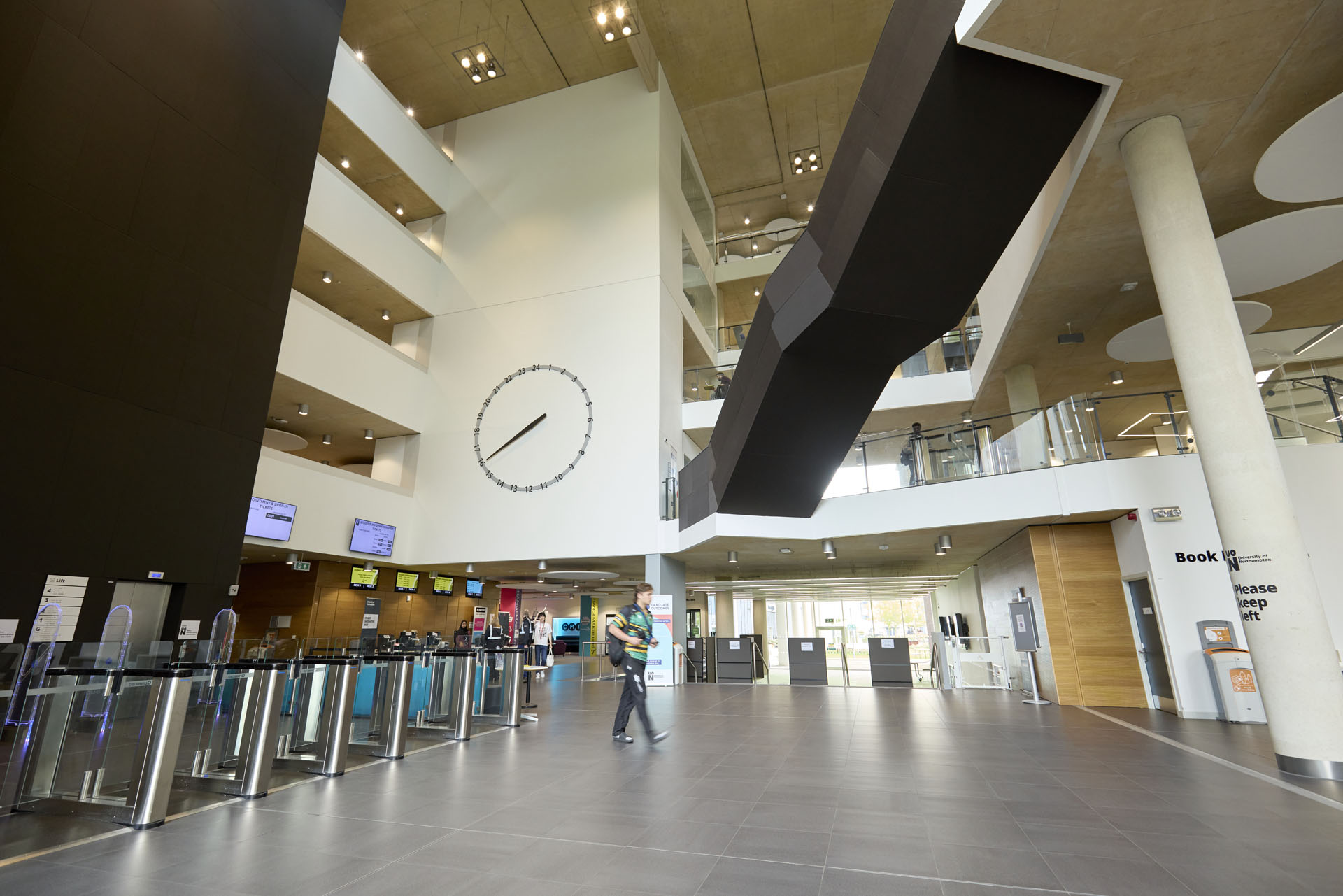
Image shows the ground floor of the Learning Hub; it is a large, modern atrium with high ceilings, a large clock on the wall, turnstile gates, and an angular black staircase. A student carrying a backpack is walking through the space.
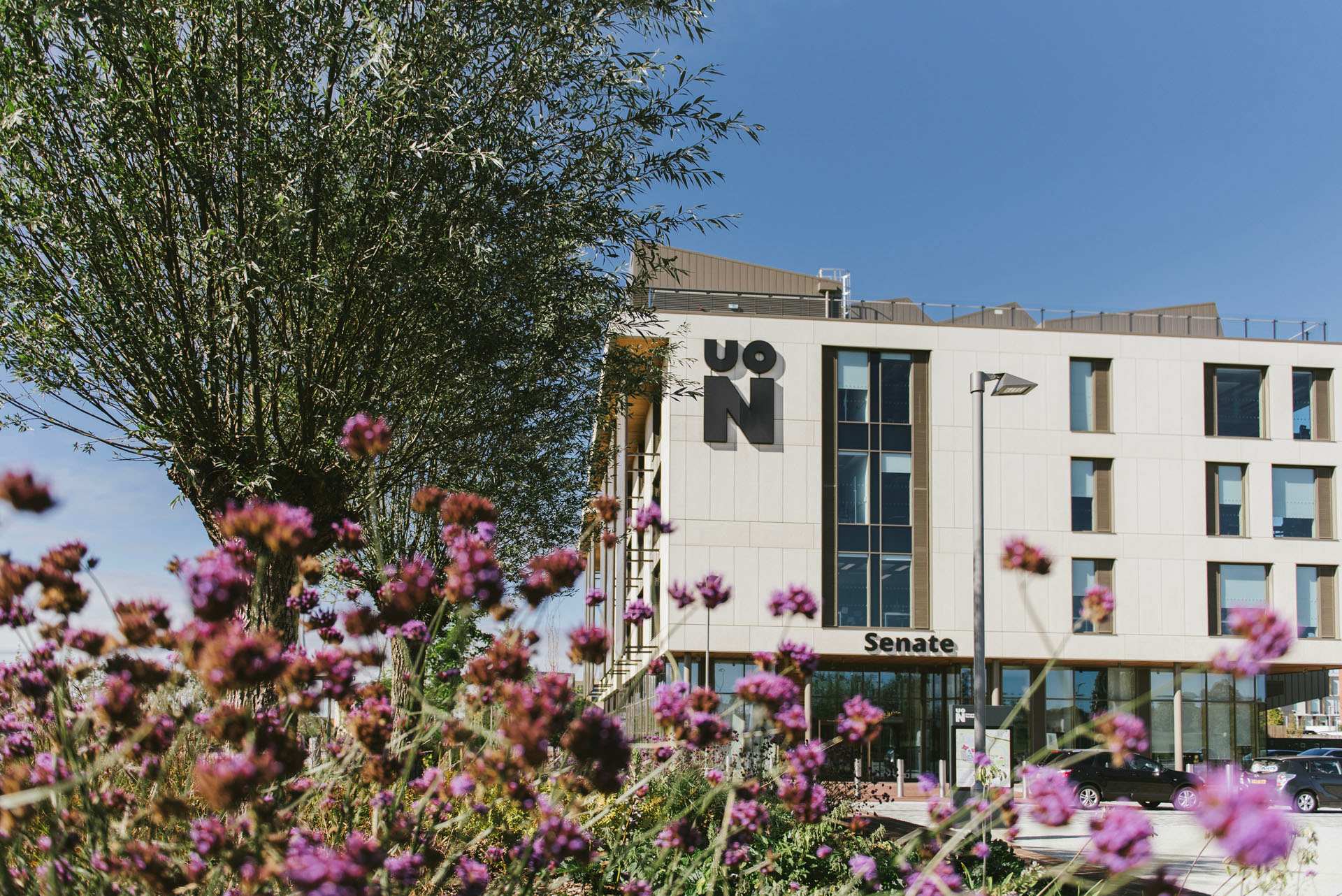
Image shows external view of the multi-storey Senate building, which features many large windows. In the foreground is a tree and purple flowers. The sky is blue and cloudless.
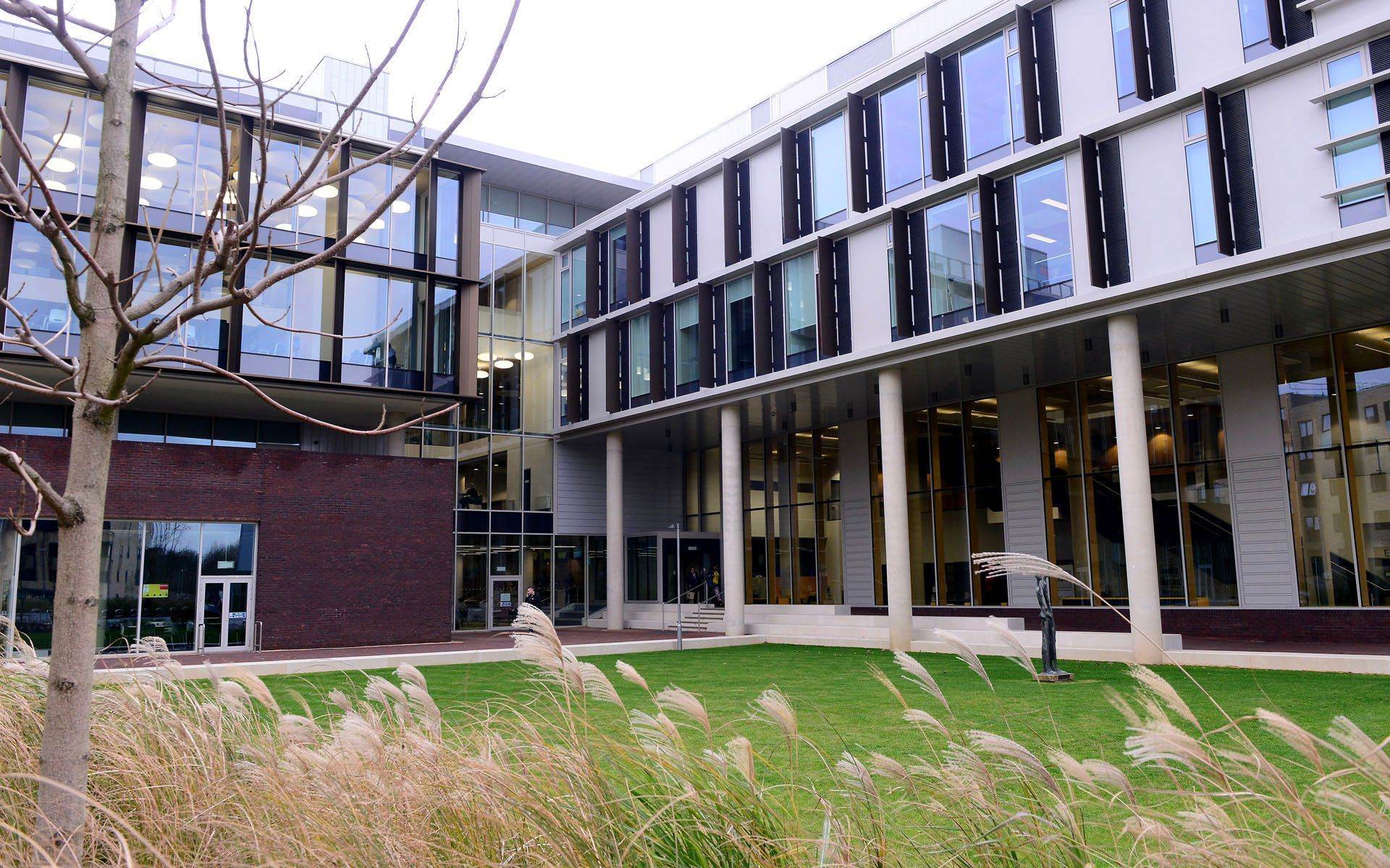
Image shows view of the lawn and courtyard outside the Learning Hub, featuring a bare tree, ornamental grasses, and an abstract sculpture. The building has several stories and features large windows.
If you hold a recognised first or second-class honours degree (or equivalent) in Business, Management, Information Systems, or Information Technology-related courses, you will be eligible to apply for this business analytics course.
This course will be suitable for recent graduates of Business, Management, Information Systems, and Information Technology related degrees. It will also be appropriate for professionals employed in the business sector who wish to progress in their current roles.
Graduates of the following Engineering disciplines are particularly suited to this programme and would be considered:
Biomedical, Chemical and other Engineering disciplines may be considered after being referred to the tutor.
The master in business analytics may also be very attractive to many international applicants.
If you would like information on making an application, please see our How to Apply page.
All International and EU students applying for a course with us must meet the following minimum English language requirements:
For information regarding English language requirements at the University, please see our IELTS page.
We offer a 20% discount on master’s tuition fees for students who have previously studied a full time undergraduate degree at the University of Northampton.
Throughout the course, you will delve into a wide range of topics, including data science tools and techniques, leadership skills, data visualisation for decision science, and project management concepts. You will also have the option to work on projects sponsored by the UK Ministry of Defence (MoD). With this diverse knowledge base at your disposal, you will be equipped to extract valuable insights from data, make informed decisions, and drive organisational success.
Immerse yourself in the world of data analytics as you master industry-standard tools and techniques. Our experienced faculty will guide you through hands-on exercises, real-world case studies, and collaborative projects, ensuring that you develop a solid foundation in the application of analytics in a business context. You’ll learn to navigate complex datasets, uncover patterns and trends, and generate actionable recommendations that can transform businesses.
Moreover, our master’s programme is designed to nurture your leadership abilities, as we believe that effective data analysis goes hand in hand with strong leadership. You will gain valuable insights into the management of data-driven projects, enhancing your ability to lead teams, communicate findings, and drive change within organisations.
As you progress through the programme, you will witness the power of data visualisation first-hand. Discover how to create compelling visual representations that communicate complex insights in a simple and impactful manner. By developing the skills to present data visually, you will not only captivate your audience but also facilitate better decision-making and accelerate business growth.
Fast moving dynamic development within organisations means that having a basic `toolkit¿ of modern and de facto project management techniques, with an emphasis on applying these is a vital requirement for project management students. This module develops students¿ understanding of theoretical practices, practical tools and techniques, and equips them to face the challenges facing project managers today.
The module will provide a holistic overview of the theoretical perspectives of leadership within a digitally transforming business environment. It will enable students gain in-depth understanding of how organizations are initiating digital transformation and working towards achieving digital readiness. It will explore key topic associated with current IT trends.
The purpose of this module is to introduce students to the main concepts, techniques and challenges involved in Data Science applications. Students gain practical experience in the whole Data Science lifecycle (data cleaning, data transformation, data analysis and results interpretation and reporting), using suitable software packages.
Emerging technologies are changing the way companies innovate and create value. It can also assist organisations in scaling on demand, improving resiliency, minimising infrastructure investments, and deploying solutions quickly and securely. Within this module, students will explore the impacts of Emerging Technologies on businesses and related ideas and practices.
This module introduces different forecasting techniques that can be used to predict future events and how organisations make effective decisions from data. The module will provide effective skills in forecasting in business for decision-making.
The purpose of this module is to provide an overview of approaches in business and systems analysis. A range of systems analysis approaches are covered, with an emphasis on Systems Thinking and Business/System Dynamics.
Students learn advanced analytical and decision science capabilities required to address complex business problems. Students critically evaluate quantitative and mixed method approaches, advanced analytics tools, and decision-making frameworks to design, justify, and communicate robust solutions. Emphasis is placed on professional practice and real-world application through advanced case studies and project-based learning.
In this module, students develop skills to investigate, analyse and propose solutions to a business problem as well as balancing stakeholders¿ views, dealing with ambiguity and persuasion with relevant tools and methods. The consultancy project can fall into at least one of those: project-based learning, a creative or work artifact.
Please note the modules shown here relate to the academic year 26/27. The modules relating to the academic year 27/28 will be available from June 2027.
Full Time Study: This master in business analytics is only available for full-time study. The course duration will be one year, split into three semesters.
The assessment methods used within the business analytics masters programme varies from a module to another. The main assessment methods used within the programme are Assignment (Report, Critical reflection/Journal, etc.), Essay, Presentation (Oral or Poster).
However, some modules may expect to take tests, exams or hands-on activity. Students on the MSc programme will have to submit a dissertation as part of their Business Research Project Module.
What is the award for this course?To be eligible for the award of MSc Business Analytics, you must successfully complete 120 credit modules and the 60-credit Dissertation.
To be eligible for the award of PG Dip Business Analytics, you must successfully complete 120 credit modules.
To be eligible for the award of PG Cert Business Analytics, you must complete the following three 20-credit modules: Applied Systems Analysis, Strategic Management of IS and Information System Methods.
Are there any special features on this course?Some of the master in business analytics modules will offer external academic and industrial guest lectures. This will enable you to become familiar with the emerging technologies, research works and industrial trends in the wider environment.
There will also be the opportunity to participate in external visits open to all our postgraduate taught students.
Fees quoted relate to study in the Academic Year 26/27 only and may be subject to inflationary increases in future years.
When assessing an applicant’s eligibility to pay home fees, we use the guidance provided by the UK Council for International Student Affairs (UKCISA) which sets out the regulations that have been decided by the UK Government Department of Education.
Tuition fees quoted for International Students apply only to the 2026/27 academic year. These fees may increase in future years in line with Consumer Price Index (CPI) inflation to reflect rising delivery costs. Any annual increase will be capped at a maximum of 5% of the previous year’s tuition fee. Updated tuition fees will be published on the UON website at least three months before the start of the next academic year.
There are no additional costs for this master in business analytics for students beginning their studies in September 2026. Should this change, applicants and students will be contacted by the university with details of the costs.
For more information about possible funding options, please visit our Fees and Funding pages.
Fees quoted relate to study in the Academic Year 25/26 only and may be subject to inflationary increases in future years.

Associate Professor in Learning & Teaching
Possible career paths for the graduates of this programme:
By studying our MSc Business Analytics postgraduate degree, you will be able to access and use University of Northampton on-campus services, facilities, and study areas.
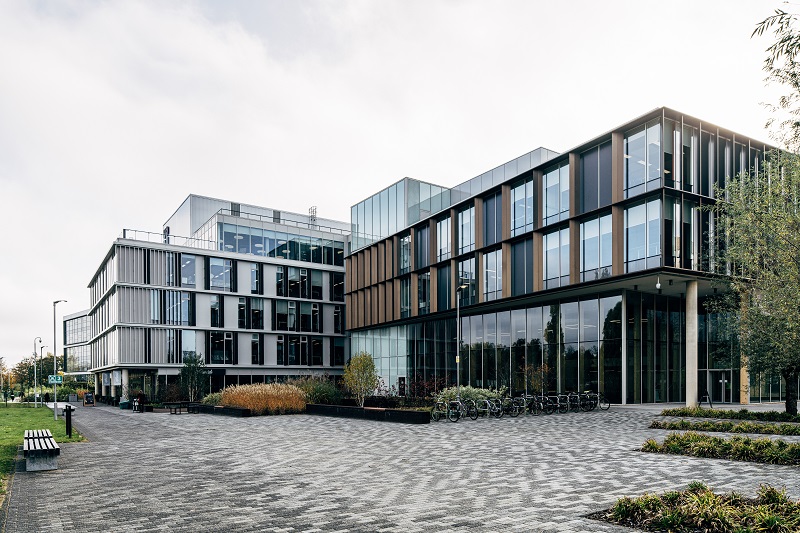
The Learning Hub is at the heart of the campus and home to the student information desk.
View Facility