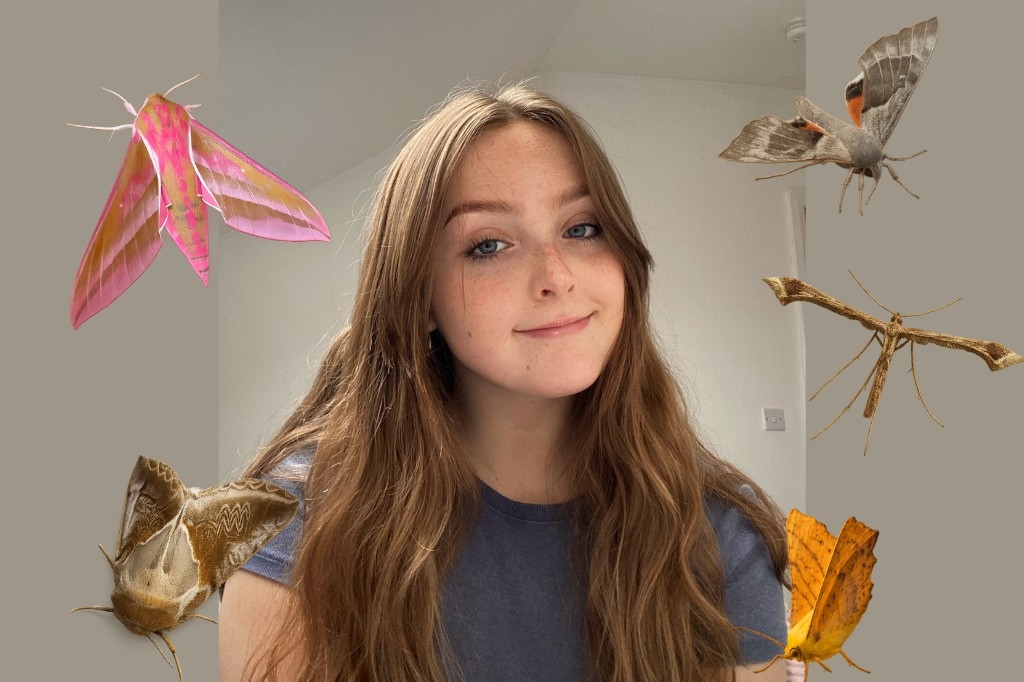
History has been made by one student at the University of Northampton, whose research has rediscovered a local species of moth which hasn’t been spotted in the county for more than 80 years.
Last summer, final-year Biological Sciences student, Jamie Waller embarked on her dissertation research at local heritage site, Delapré Abbey to ethically trap (and release) moths in a bid to identify the insect’s community, record which species were present, and examine changes to understand the impact of environmental factors like temperature, weather and season.
Throughout the 13-week study, Jamie recorded a total of between 1,300 and 1,500 moths, individually identifying species using photographs, field guides and an artificial intelligence (AI) identification app.
After logging her research findings with local active field group, Northamptonshire Moth Group (and after being verified by a county moth reporter) Jamie was shocked to find she had made a monumental discovery – having logged the first sighting of a Hollyhock Seed Moth (Pexicopia malvella) since 1940.
Prior to 1940, there has only ever been three previous local records dating back to 1906.
“In my research, I committed to photographing every moth I captured to ensure my identifications were as accurate as possible,” explains Jamie.
“When I submitted the Hollyhock, an alert popped up to say this species isn’t very often found, and that it might not belong in the area. After speaking with a county moth recorder, my findings were verified, and we were both excited at the news.”
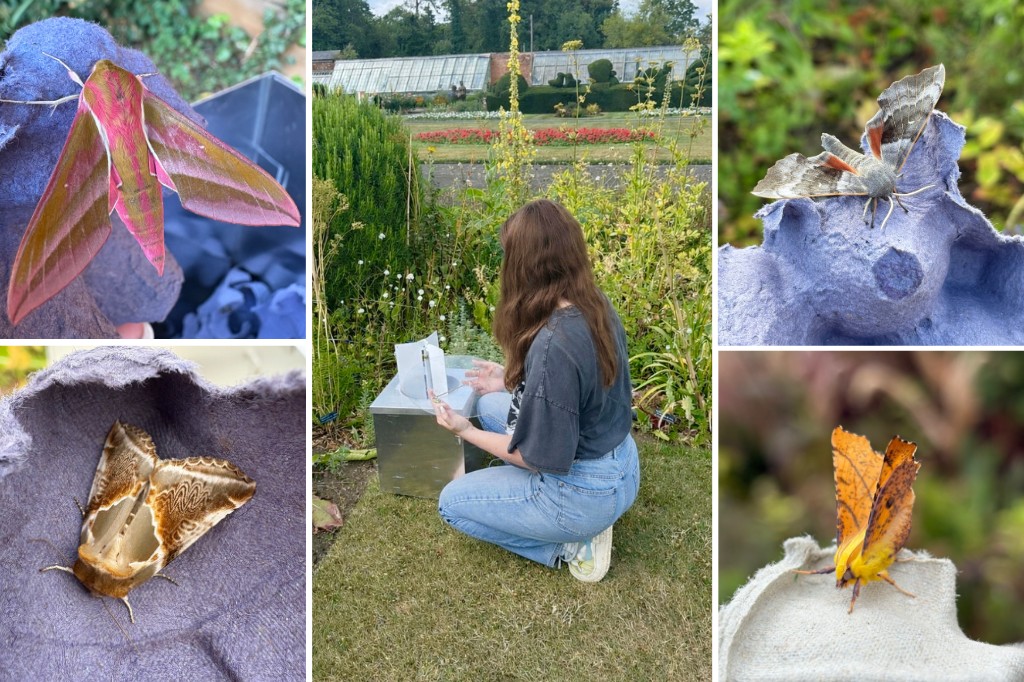
Jamie, who moved to Northampton, UK from Colorado, USA when she was eight years old, has always been drawn to pursuing science as a career, choosing to transfer to the University of Northampton after her first year of study at another university in Wales after discovering the course offered more module flexibility to pursue her passion for environmental science fieldwork over lab-based research.
This was welcome news for those closest to her, who shared her passion for all things ‘science’: “The process of conducting the research for this project was really enjoyable, and it was lovely to be joined in nature by a fellow science enthusiast – my mum.
“My mum achieved her own degree in Biological Science – the same as my course – and has gone on to work with primary school children which, coincidentally, is also my dream career path.”
Beyond contributing to her final-year dissertation, Jamie’s research highlights the ecological importance of moths, particularly as nocturnal pollinators, which are often overlooked compared to butterflies.
The project contributes valuable biodiversity data for Northamptonshire and Delapré Abbey, and marks her name – alongside that of the Hollyhock Seed Moth – in local environmental history for years to come.
“Moths are often forgotten because people tend to focus on butterflies, but they’re really important pollinators, especially for flowers that open at night” explains Jamie.
“Since beginning this research, I didn’t really appreciate how diverse and beautiful moths are – some of them rival butterflies!
“It’s feels great to have contributed something to my local town in a field I’m passionate about, and in an area which is so often underappreciated. Through my studies, I’ve discovered a new passion, and I look forward to continuing moth-sighting as a hobby.”
Chief Executive, Delapré Abbey Preservation Trust, Richard Clinton said: “We have been happy to support Jamie’s research and are delighted with her discovery. At Delapré Abbey, our gardens are more than a beautiful setting—they are a living landscape with a vital role to play in supporting biodiversity.
“We are deeply committed to protecting and enhancing habitats for wildlife, from pollinators to native plant species, ensuring the gardens continue to thrive for future generations while contributing positively to the wider natural environment.”
Find out more about studying Biological Sciences or Environmental Science at the University of Northampton.