Psychological Science of Sport and Exercise BSc Welcome Pack
Welcome to Psychological Science of Sport and Exercise BSc 2025.
I am delighted to welcome you to our exciting undergraduate course, the BSc (Hons) Psychological Science of Sport and Exercise. This course focusses on the factors affecting sport, exercise, and physical activity psychology, covering a fascinating range of historical and contemporary topics within the fields.
The course has an excellent variety of modules dealing with real-world topics, providing you with opportunities to put many of the theories, approaches, techniques, and methods that you learn about into practise. This course has current accreditation from the British Psychological Society (BPS) and has received the following commendations:
- The BPS team commended the course team for providing outstanding support to their students, which fostered a sense of community.
- The BPS team commended the course team for the use of authentic and innovative assessments to encourage application of knowledge and theory to real-world examples.
You will cover six modules in your first year of study (listed below), three in the first semester and three in the second. Your assessments will enable you to show us how you can apply your learning of psychological science to real-world scenarios in sport and exercise.
All of the modules below have been created with a strong emphasis on active blended learning (ABL), the point of which is to encourage you to engage in and take ownership of your learning. We work hard to accommodate your own ways of learning and are committed to supporting your success for the future.
Your first semester (Sept 25- Jan 26) will involve the following modules;
- SPO1039 – How to be successful (Module Leader – Dr Rob Lyon)
- PSY1003 – Introduction to Psychology (Module Leader – Dr Matthew Hopkins)
- SPO1024 – Introduction to Sport and Exercise Psychology (Module Leader – Dr Rob Lyon)
Your second semester (Feb 26 – May 26) will involve the following modules;
- SPO1051 – Doing Sport and Exercise Psychology in a Digital Age (Module Leader – Dr Mairi Mulvenna)
- SPO1057 – Introduction to Motor Learning and Skill Acquisition (Module Leader – Lee Waters)
- PSY1006 – Becoming A Psychologist (Module Leader – Dr Alasdair Gordon Findlayson)
So, what do you need to do now?
Please make sure you do the following in preparation for starting the course:
- Please attend the virtual meeting on 10 September – full details below.
- Please make your choice of the free offers when enrolling onto the course.
- Please read through the award map and make sure you are familiar with the modules you will study on this programme.
- Subscribe to our social network pages @UONSEPP on Twitter and @uonsepp on Instagram, along with other tutors you may know of or find at UON.
- Make sure you come to the first meet and greet session on Tuesday 23 September in the Sports Pavillion – full details below.
Your Course Leader

Dr Robert Lyon
Senior Lecturer Exercise and Health Psychology
Welcome and Induction Sessions
This is your induction timetable with online sessions starting on Wednesday, 10 September, and in-person sessions starting on Tuesday, 23 September. If you have any questions please do not hesitate to contact me: Robert.lyon@northampton.ac.uk
We understand that going to university represents a huge change to your life. It can be incredibly exciting but also quite daunting. To support your first steps at UON, we have created an online support session for you to find out what’s what – from where to go on your first days and weeks of study, to where to find the library and other learning resources.
This is an excellent opportunity to ask us any nagging questions you may have about the course before you start. The big thing you’ll often hear me say is ‘there’s no such thing as a stupid question, except the one you don’t ask’ – so whatever you need to know, never be afraid to ask!
Wednesday, 10 September
Session: Introduction to new students for BSc Psychological Science of Sport and Exercise. Where to go on your first day, how to read a timetable, how to use NILE, meet the programme leader and teaching team.
- Time: 11am onwards (BST)
- Link: Introduction to new students for BSc Psychological Science of Sport and Exercise
Please arrive early for the session and remember the session will be recorded (for data protection purposes)
Monday 22 September – Friday 3 October
Welcome Week activities
From karaoke to outdoor cinema, wellbeing walks to Silent Disco, and much more – there’s something suitable for everyone.
See our Welcome timetable to find out more.
Tuesday, 23 September
Session: Welcome Week Induction and activities sessions – Meet the course leader, teaching team, and your Personal Academic Tutor in person. We will also tour the campus, and have a physical activities session!
- Time: 10am onwards (BST)
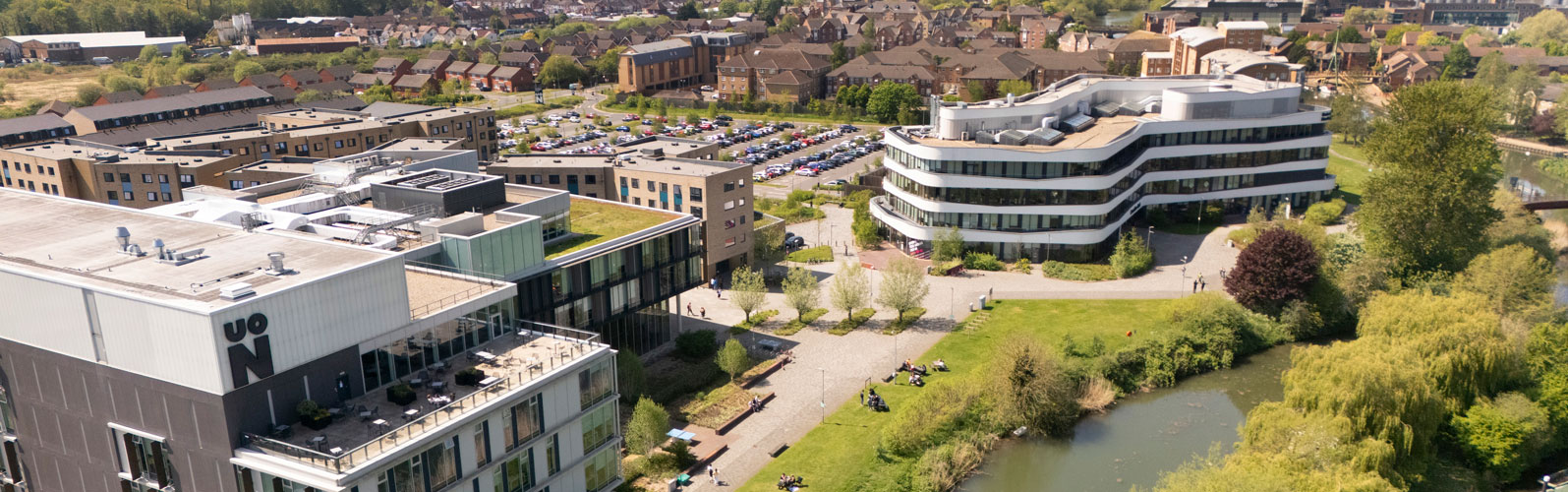
- Location: Sports Pavillion, Lab 4, Waterside campus – we will meet here to tour the campus.
Please make sure you arrive in good time, as you may miss important information.
There will sport activities to join over the course of the day & week, so make sure you have some kind of fitness clothing if you’d like to join in with the activities. Further details of these to follow.
Equipment
You are not required to purchase any mandatory kit or textbooks to start this course. All learning resources are provided for you. In addition to this, you will have the option of choosing one of three offers when you begin your studies – a free HP laptop, £500 off accommodation, or ‘campus credits’. It’s your choice but the laptop would be our recommendation because of the nature of your study and because your programme requires you to use a variety of academic software.
As with all sport-related courses you may require sportwear for times when you find yourselves in the sports dome or fitness labs. We do offer you a very cool free Nike sport t-shirt, branded to your specific programme, but you can purchase further programme-specific kit from Kit Locker. While purchasing this is not mandatory, we do encourage students to consider an additional pair of tracksuit bottoms/leggings for practical teaching circumstances and for times when you may be representing your course and institution e.g. sporting events, etc.
Enhancing skills, building networks and engaging in the wider University community
In order to enhance your networking and engagement in the wider academic communities relevant to your studies, it would be a great idea to create a number of social network profiles such as LinkedIn, Twitter, and Researchgate. Part of the benefit of this is that you are able to develop contacts with a world-wide range of academics relevant to your field. Many of these post content about the most current research they are involved with, and many of the academics at UON post relevant content they come across that will potentially help your studies.
Developing your network can also help you with finding placement positions, full and part-time jobs, and future employment. Creating your online professional profiles can help your future development in what is a highly competitive field, and I’d encourage you to take every opportunity to give yourselves an edge.
We have sport and psychology-specific network groups you can join and I’d encouraged to link in with or follow as many of the tutors on your programme as you can.