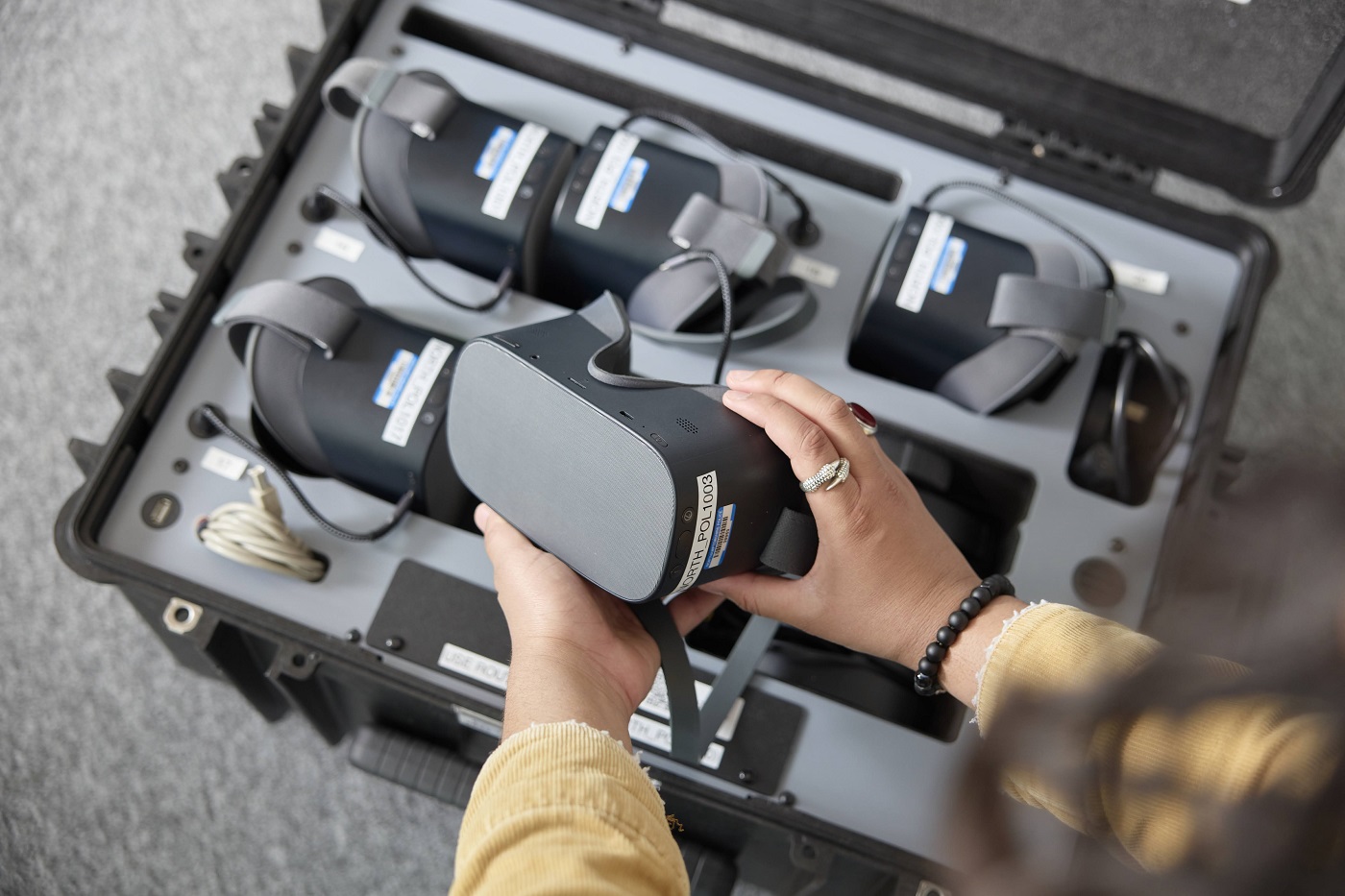
IR technology is a highly effective tool for helping children and young people rehearse travel scenarios in a safe, interactive, and game-like setting. Familiarity with these simulations reduces anxiety, fosters independence, and decreases the need for one-on-one interventions. The resource bank will provide essential training and resources for educators, reducing individualised travel costs and enabling pupils to participate in a wider range of experiences, including field trips. Additionally, the project has broader community benefits, as increased travel confidence encourages families to engage more with public transport, local shops, and services.
The VR simulations provided realistic travel scenarios, including problem-solving exercises, to help pupils develop coping strategies. Through pupil voice, the project Headsets for Travel project identified key challenges such as route changes and small adjustments that significantly improved their experience, like listening to personal music, reducing strong air freshener smells, and receiving advance notice of delays or diversions.
Headsets For Hope Project Aims:
The project focuses on developing a resource bank of IR materials to support young individuals with SEND and mental health challenges in building independent life skills and improving wellbeing.
Our Partners
This initiative brings together a strong network of external partners who will play key roles in its implementation:
- Digital Northants/West Northants Council (Richard Beards, Innovation Officer): Leads the steering group and connects the project with local businesses, schools, and digital teams.
- VR Therapies (Rebecca Gil, CEO): Provides expertise in designing and evaluating therapeutic IR programs and ensures pupil involvement in content development.
- Billing Brook School (Nicola Holland, Assistant Head): Acts as an educational consultant, facilitating feedback and evaluation with SEND pupils.
The project will engage local Northamptonshire schools, including primary, secondary, and SEND institutions. Three flagship schools will be recruited to create and trial resources, offer feedback, and develop bespoke 360-degree films. The children and treachers in our partnet schools will be important stakeholders in the designing, making and evaluation of the immersive hub. This will be supported by our Student researcher (TJ Singh) and Joanne Barrow (Senior Lecturer in Education).
By demonstrating the value of an IR resource bank, the project aims to encourage the adoption of similar initiatives across the region. Schools will gain access to cutting-edge resources that support smoother transitions and travel independence for pupils with additional needs. This initiative represents an important step in leveraging digital innovation to empower SEND pupils and support their independence. Through collaborative efforts, immersive technology can create lasting improvements in their daily experiences, helping them navigate the world with confidence.