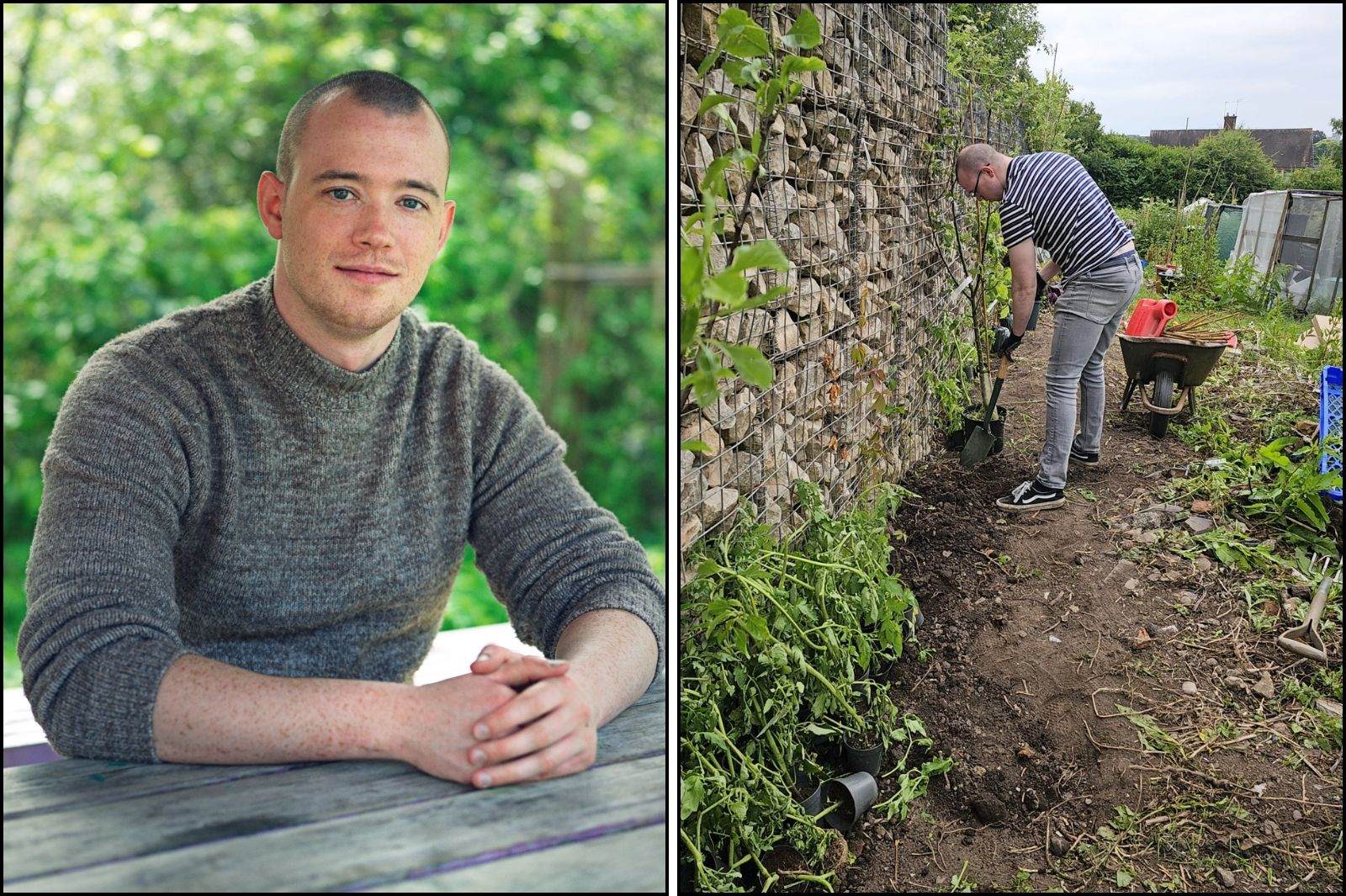
The long-term benefits of allotments for low-income people are revealed in new research led by a University of Northampton (UON) academic.
Dr Rhys Furlong, Lecturer in Positive Psychology, has found that allotment gardening over a year gives a significant boost to people’s sense of community, appreciation for the natural world and their personal wellbeing
Rhys Furlong and colleagues from the University of Derby followed up with seven gardeners from their previous research, a year after they started using St Ann’s Allotments in Nottinghamshire.
The team explored the connection people formed with the culture at the allotments to understand how their experiences changed over time. The findings reveal:
- Allotments can be spaces where low-income residents can become empowered by exercising ownership over a physical space and their decisions surrounding it, which is particularly important for people who have limited access to their own gardens.
- People gain a deeper connection with nature through allotment gardening, and this may lead to a greater desire to protect the environment.
The findings demonstrate the value of allotment gardening over time within low-income areas and could inform local and national government policy by:
- Highlighting the importance of allotments as spaces for community, empowerment and connection with nature and investing in them.
- Promoting allotments as spaces for community, empowerment and connection with nature.
Rhys conducted his research with Derby colleagues Dr Caroline Harvey, Dr Fiona Holland, and Dr Jenny Hallam, all Senior Lecturers in Psychology. He says: “In an ever-busy and crowded world, taking time out from the ‘rat race’ is as important as ever.
“Allotments are like oases in urban environments that support people’s wellbeing, especially those from low-income households, for whom a day in the countryside can be expensive and challenging to organise if they don’t have a car.
“This research highlights the benefits of allotment gardening over time and the importance of these spaces for building community, empowering local people and nurturing meaningful connections with nature. The team and I hope that decision leaders take time to reflect on our findings and invest more in these crucial ‘green within the grey’ spaces.”