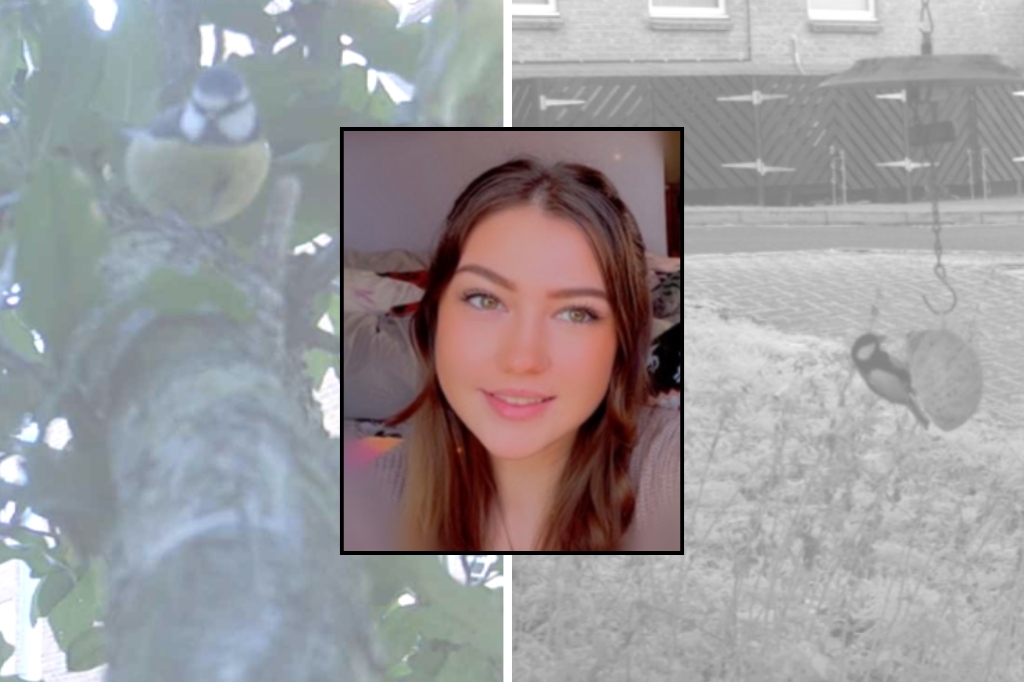
They say ‘the early bird catches the worm’, which is true for one student at the University of Northampton, whose research at dawn has discovered how traffic noise is changing the way some of the town’s most familiar birds sing.
Third-year Environmental Science student, Aaliyah Damon-Vergari, has spent the past four months studying how urban noise affects the songs of great tits and blue tits across Northampton, comparing busy town-centre green spaces with quieter areas in Delapré.
Between November and early February, outside the traditional breeding season, Aaliyah carried out early-morning recordings during the dawn chorus. Using miniature microphones with a 20-metre range, she recorded one-hour sessions at four sites: two urban green spaces near Northampton’s train and bus stations, and two quieter sites near the lake and woodland in Delapré.
Back home, she analysed the recordings using specialist audio software to measure frequency, amplitude, tempo and timing. Trail cameras and bird identification apps helped confirm species, while binocular observations allowed her to monitor behaviour carefully and minimise disturbance.
Although she initially expected blue tits to struggle more with urban noise, it was the great tits that showed the most remarkable adaptability. Many altered their songs by singing at higher pitches, increasing their volume and even pausing mid-song when traffic became too loud.
In her observations, Aaliyah also compared the two urban green spaces – one a managed garden with walls and structured vegetation, and the second an unmanaged open field directly next to traffic – to indicate vegetation and structural barriers mitigated noise pollution impacts on birds, and saw their birdsong volume noticeably decrease.
“I was fascinated to hear the birds singing louder when traffic noise was more prominent, and even pausing mid-song when traffic became too loud,” Aaliyah explains. “They adjusted their timing and resumed singing during the quieter gaps, so it’s almost like they were actively waiting for quieter moments to be heard.”
For many people, birdsong simply signals the start of spring. However for birds such as great tits and blue tits, these songs are essential for defending territory, attracting mates and forming pair bonds. When traffic noise interferes, birds may have to expend more energy singing louder or more often, which could increase stress levels.
“Birds rely on their song for their territory and for attracting mates, and increasing traffic noise just makes it way harder for them to communicate” Aaliyah said. “With that stress and with the fitness cost could come possible consequences for reproduction.
“In the long term, we could eventually see the numbers of these birds reduce significantly due to the negative effects it has on their reproductive success.”
During her research, one bird in particular became her unofficial mascot. While observing the unmanaged urban site, Aaliyah noticed a lone male great tit in a fragmented green space surrounded by roads, who she nicknamed ‘Gary’ – or ‘Gaz’.
“I was looking at this one great tit in this unmanaged urban area and he was on his own,” she said. “I thought to myself, if he can’t use his song effectively to find a mate, is he just going to be on his own for the rest of his life?”
Fortunately, Gaz’s story has a happy ending. After weeks of observation, Aaliyah eventually spotted a female joining him as pair bonding began ahead of the breeding season: “He got there in the end!”
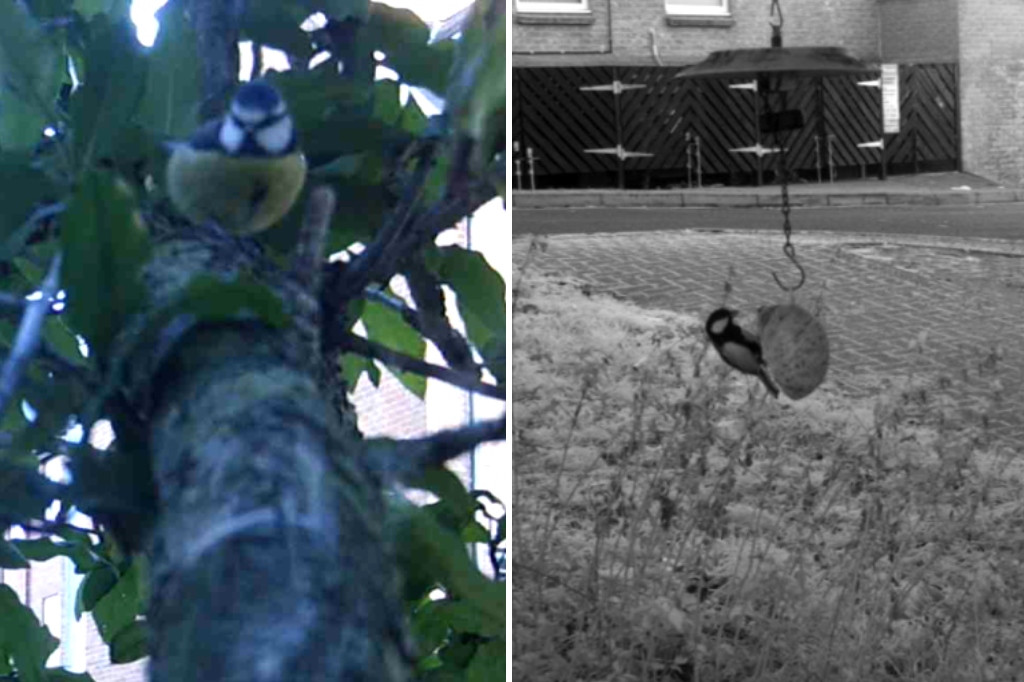
Gary and his newfound mate identified at local urban park.
As a self-taught pianist since the age of 12, Aaliyah’s interest in birdsong was led by her long fascination by sound and rhythm. Combined with childhood memories of feeding birds with her grandmother, it inspired her to turn a lifelong hobby into academic research – a passion which has begun to be followed by her young son.
Reflecting on the impact of her research, Aaliyah said: “The project has been challenging but rewarding, and it’s been great to combine my passion for birdwatching and environmental science.
“In college, I learnt about biomedical science, before deciding to follow environmental science. I thought – I’ve learned about the body, now I want to learn about the ‘full body of the earth.”
With traffic levels unlikely to decrease, Aaliyah’s work adds to growing evidence that human noise is reshaping natural soundscapes, and that even small changes to urban green spaces could help ensure birds continue to be heard above the roads.