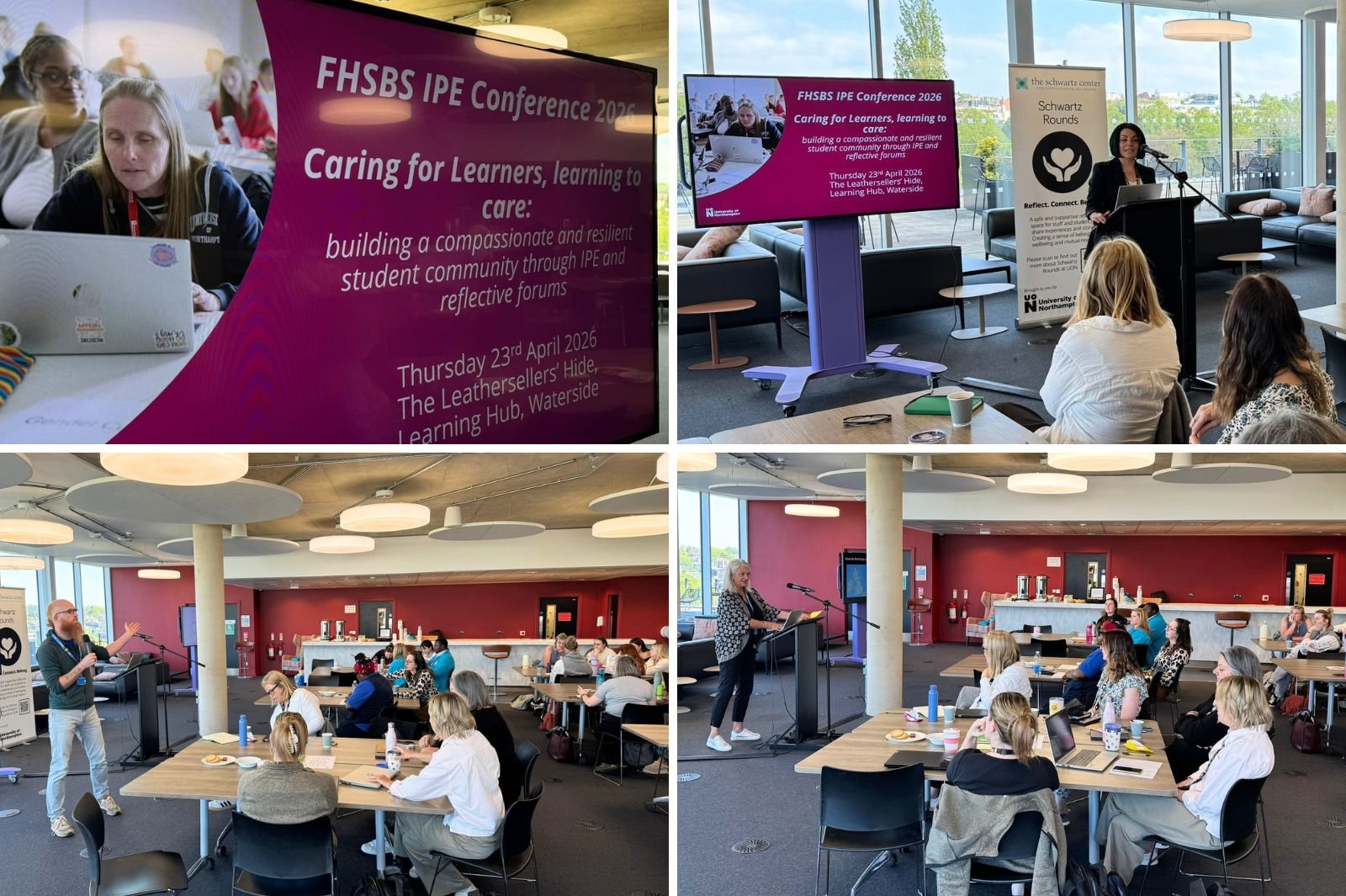
Students had expert insights about how compassion, empathy and resilience enhance how they care for people at a Waterside Campus event this week.
The University’s first conference about Interprofessional Education (IPE) – ‘Caring for learners, learning to care’ – which focused on building a compassionate and resilient student community through IPE – took place on Thursday 23 April.
The University’s Deputy Vice Chancellor and Chief Operating Officer, Becky Bradshaw, opened the conference by outlining the Interprofessional Education ‘offer’ at UON.
Keynote speakers and other activities during the day were:
- Jeremy Howick, Professor of Empathic Healthcare at Leicester University, talked about the benefits of empathic care, for service users and professionals.
- Paul Butler, former paramedic and now Grief and Life Coach, talked about his experience of burnout that led to him advocating the importance and power of self-care.
- Dr Julie Pearson, of Inclusive Primary PE, looked at care from the perspective of physical education and how it is now more inclusive of individual needs.
- Student IPE Champions spoke about their experience in this new role* at UON, promoting the benefits of this learning approach to their peers.
- A Schwartz Round was held. Schwartz Rounds are reflective forums to discuss the emotional and social aspects of working in health and care.
The University is one of the leading providers of 10 undergraduate healthcare courses. IPE, where students learn with, from, and about each other to become productive members of interprofessional teams, is woven through their modules.
With over 3,400 UON health and social care students on clinical placements each year, this means nearly 600,000 hours a year are provided for Northamptonshire people, and from students already prepared to work more cohesively.
Associate Professor Alison Power is the University’s Interprofessional Education lead. She co-created the conference with students and said: “We are proud that our students make a significant and direct contribution to local health services from the very start of their studies.
“Interprofessional Education brings students on different health and social care courses together, enabling them to develop a strong understanding of collaborative practice and how to operate as effective, integrated teams in the best interests of service users.
“Today’s conference provided an important opportunity for both students, staff and invited guests to listen, reflect, and take forward vital learning that will inform their practice.”