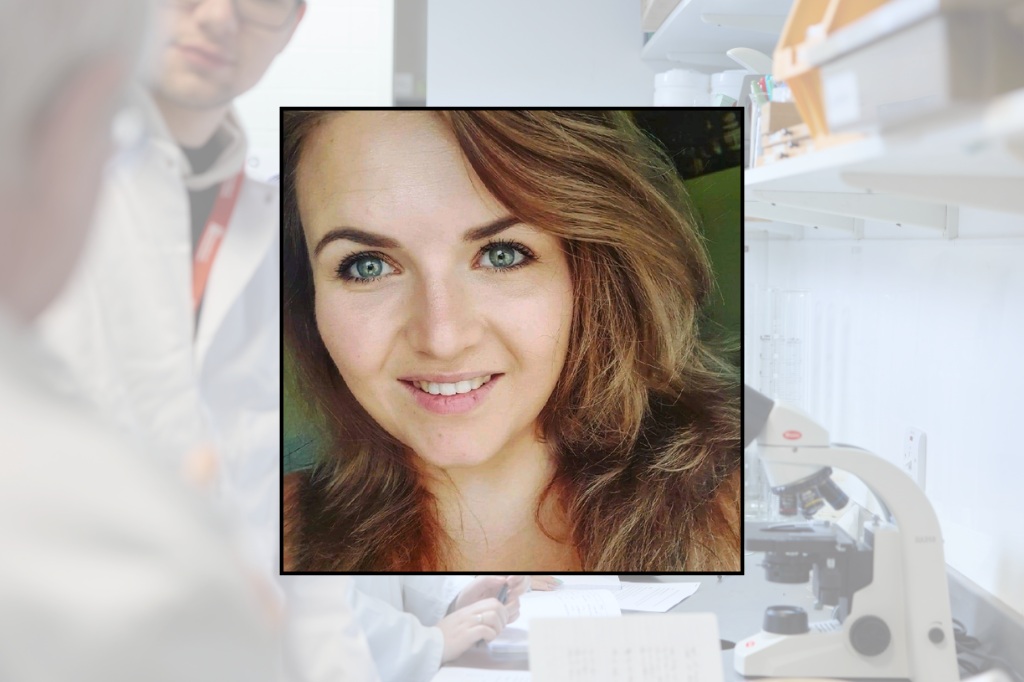
To mark Ovarian Cancer Awareness Day (8 May), researchers at the University of Northampton are shedding light on a potential link between endometriosis and ovarian cancer – with the aim of improving understanding, diagnosis and future treatment for women across the world.
Led by Senior Lecturer in Immunology, Danielle Jex, the research project focuses on how endometriosis – a chronic and often painful condition affecting around one in ten women – may influence the development and progression of certain ovarian cancers.
Endometriosis occurs when tissue similar to the lining of the uterus grows elsewhere in the body, leading to inflammation, pain and, in some cases, infertility. Despite its prevalence, diagnosis can take up to a decade, and the condition remains significantly under-researched.
“Endometriosis is still widely misunderstood and underdiagnosed, with many people waiting years for answers,” explains Danielle. “Through our research, we’re trying to better understand not only how the disease develops, but how it may interact with other serious conditions such as ovarian cancer.”
While the overall risk of ovarian cancer remains low, research shows that people with endometriosis are two to four times more likely to develop the disease. One particular subtype, namely ovarian clear cell carcinoma, has an especially strong association, with up to 70% of patients also showing evidence of endometriosis.
At the University of Northampton, researchers are investigating whether biological signals released by endometriosis cells can influence how cancer cells behave.
Using laboratory-grown cell models within innovative three-dimensional bioprinting functionality, the team is analysing whether these signals could help cancer cells grow, spread, or evade the immune system.
Danielle continues: “We’re looking at whether chemical signals from endometriosis cells can essentially ‘support’ cancer cells. For example, by helping them hide from the immune system. If we can prove that link, it opens the door to new ways of targeting those interactions in future treatments.”
The research also reflects a broader shift in medical science away from animal testing and towards more advanced laboratory models using human cells. By developing these systems, the team hopes to better replicate early-stage disease and gain insights that are difficult to capture through traditional methods.
Importantly, the project is also supporting the next generation of scientists, with current postgraduate students actively contributing to the research as part of their studies.
Danielle adds: “This work is not only about generating new knowledge, but also about building research capacity in an area that has historically been overlooked. Women’s health has long faced significant gaps in funding and understanding, and it’s vital that we continue to address that.”
The research is still in its early stages, with initial findings expected later this year. However, it lays the groundwork for future studies and larger funding applications aimed at deepening understanding of both endometriosis and ovarian cancer.
By highlighting this work as part of Ovarian Cancer Awareness Day, the University hopes to raise awareness of the condition and the importance of continued research into women’s health.
Danielle’s research was made possible by internal funding from the University’s Research and Knowledge Exchange (KEE) team. Funding and support from the KEE team can develop pilot data for larger, external grant applications, foster collaboration and public engagement, assist with bridging funding, or help create ‘spin-out’ businesses and other entrepreneurial ventures.