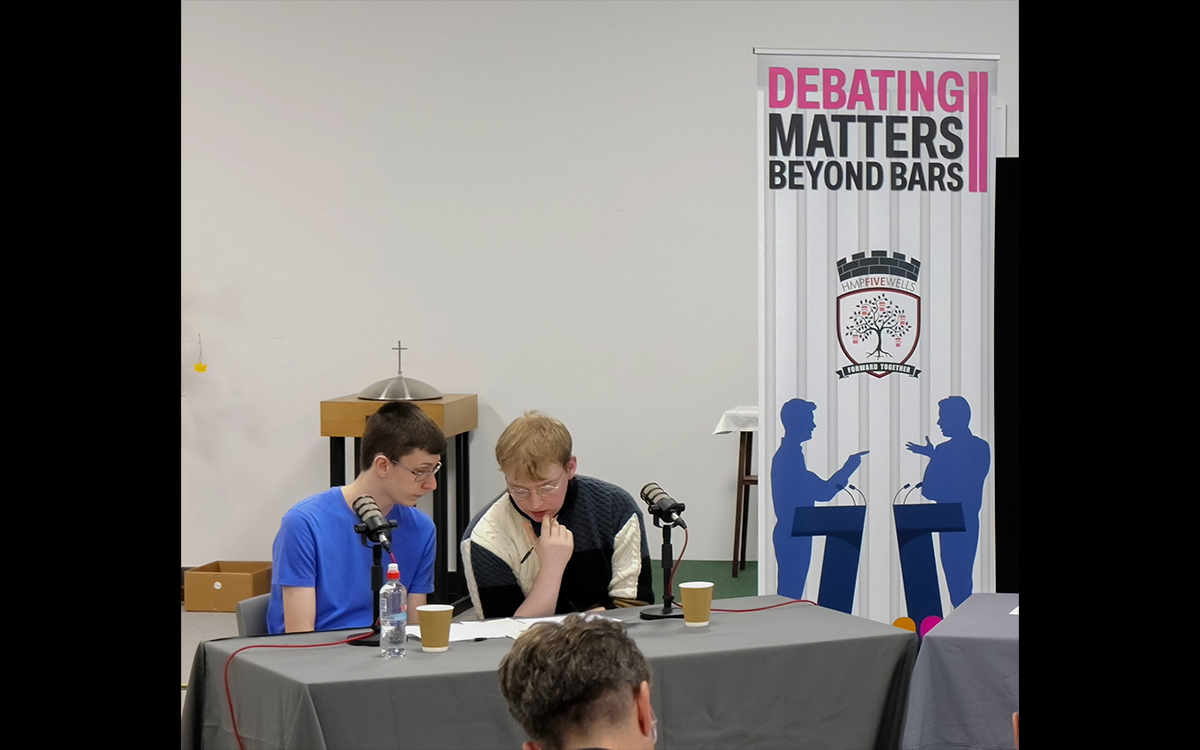
On 30 January 2026, colleagues and students from the University of Northampton had the privilege of taking part in a unique and powerful debate on artificial intelligence, hosted by Alex Waldron at HMP Five Wells. Organised by The Debate Society and Northampton Students’ Union, the event brought together university staff, students, prison staff and residents to explore the opportunities, risks and ethical questions surrounding the use of AI — through dialogue grounded in both academic thinking and lived experience.
The visit began with a tour of the prison for the UON staff and students, led by a group of inmates who were proud to share their environment and experiences. This was followed by the main event: a full formal debate on AI, attended by around 90–100 prisoners, alongside University of Northampton students and senior prison staff.
The debate itself was chaired in a conventional format, with speakers presenting arguments on different sides of the AI discussion before audience questions and deliberation. Two university speakers, Jason Sparkhall and Daniel Ronan, represented the Debate Society, supported by 16 fellow members in attendance.
The motion was “The pursuit of artificial intelligence with cognitive capabilities surpassing human intellect will ultimately benefit society.” With the university team for the motion, and the prison team against.
From the prison side, engagement was high, thoughtful and candid, with discussion shaped by real‑world implications of technology, justice, rehabilitation and future employability. By the end of the session, the prison team won the debate — a reflection of both the strength of their arguments and the importance of lived experience when discussing emerging technologies.
Senior engagement and shared dialogue
The event was also attended by senior figures, underlining its significance. These included the prison director, Pete Small, who was present in the audience, alongside other senior representatives connected to rehabilitation and governance. The debate was carefully judged by Gordon Brockington, President of Government Sevices, G4S, Dominic Goble, Deputy Lieutenant of Northamptonshire and Rob Howe, Head of Learning Technology at The University of Northampton.
What stood out throughout the session was the quality of dialogue. Rather than a one‑way discussion, the debate became a shared space where academic perspectives on AI ethics, governance and innovation met human‑centred concerns about fairness, impact and opportunity.
Why this matters?
This event demonstrated the value of taking conversations about AI beyond traditional university settings. Discussing technology in a prison environment challenged assumptions on all sides and highlighted the importance of inclusive, socially responsible approaches to digital futures.
It also reinforced the University of Northampton’s commitment to widening participation, civic engagement and responsible innovation — ensuring that conversations about AI are shaped not just by those who design systems, but also by those most affected by them.
There is strong appetite from both the prison and the University to continue this collaboration, with interest in further shared work and future opportunities to build on this dialogue.