Helping busy health and care professionals keep focussed on compassion for their patients and service users was at the forefront of a recent University of Northampton (UON) event.
On Tuesday 24 March, the University held its second Care and Compassion Conference, with the theme of creating a culture of compassion in interprofessional care.
Research from Healthwatch in January 2025 found that over half (56%) of people who reported experiencing poor NHS care took no action, largely due to low confidence in the system.
As health and social care professionals are busy with multiple duties, sometimes compassion in care can slip down their list of priorities.
The conference brought them together to reaffirm the importance of nurturing compassionate cultures within their respective fields as they work with other health and social care practitioners.
Led by industry experts, the event highlighted the many ways interprofessional collaboration can advance and empower the future of compassion within care. The talks covered:
- Professor Sir Al Aynsley-Green: The UK’s first Professor of Compassionate Care and a University Visiting Professor, related his personal experiences when care did not follow a compassionate course. His recommendations to create a ‘momentum for compassion’ include seeking the views of families and loved ones sooner and creating a ‘compassion coordinator’ in health and care settings.
- Emeritus Professor Eunice Lumsden: Professor Lumsden looked at care and compassion from the perspective of the early childhood profession. She also covered the barriers to overcome for women during pregnancy and following birth, particularly for non-white women, to ensure all children have the best start in life.
- Dr Hilda Hayo, CEO of Dementia UK: Outlined how, in her current position and harking back to her days as a nurse, compassion is not an optional extra and discussed how guests, after the conference, can be more compassionate with the care they provide.
At University of Northampton, the commitment to compassionate, interprofessional care is more than a discussion point – it is embedded in education and practice, underlined by presentations from a trio of UON postgraduate students:
- Tracy La Penna, Senior Lecturer in Midwifery: Tracey’s research will help her develop a toolkit to enhance compassionate care as part of UON’s Midwifery degree curriculum. Her work is also helping her reflect on how she delivers compassion for women and families.
- Claire Davies: For her PhD, Claire is investigating the support available for people who transition into the role of carer for people with dementia. Claire discussed the importance of her research methods being compassionate to record authentic and individual experiences.
- Elaine Williams: Elaine described her research that investigates why perimenopausal women seek Botox treatment, using their own voices and recorded as ipoems to record a powerful narrative of the cultural, economic and personal factors at play.
Associate Professor in Learning and Teaching and UON’s Interprofessional Education lead, Alison Power, was one of the organisers of the conference. She says: “Compassion is essential to safe and meaningful health and social care because it helps us see the whole person, not just their condition.
“When we extend that same compassion to staff and students, we create environments where people feel valued, supported, and able to give their best to those they care for. Providing this opportunity in an interprofessional context makes this conference even more impactful.”
Professor Aynsley-Green adds: “The University of Northampton makes great strides with teaching its health and social care students about the importance of compassion and what this means.
“Compassion, however, is more than just putting yourself in the shoes of others to give them the care you’d expect. It is about taking that to the next level, if they are obstructed from that aim, and doing something about it.
“This conference was an important opportunity for professionals and students to take time out, focus on these obstructions and start to think about whether the services and working cultures of their professional fields are as compassionate as they can be and what to do if they think not.”
Catch up on the discussions on the University’s Pure research portal.
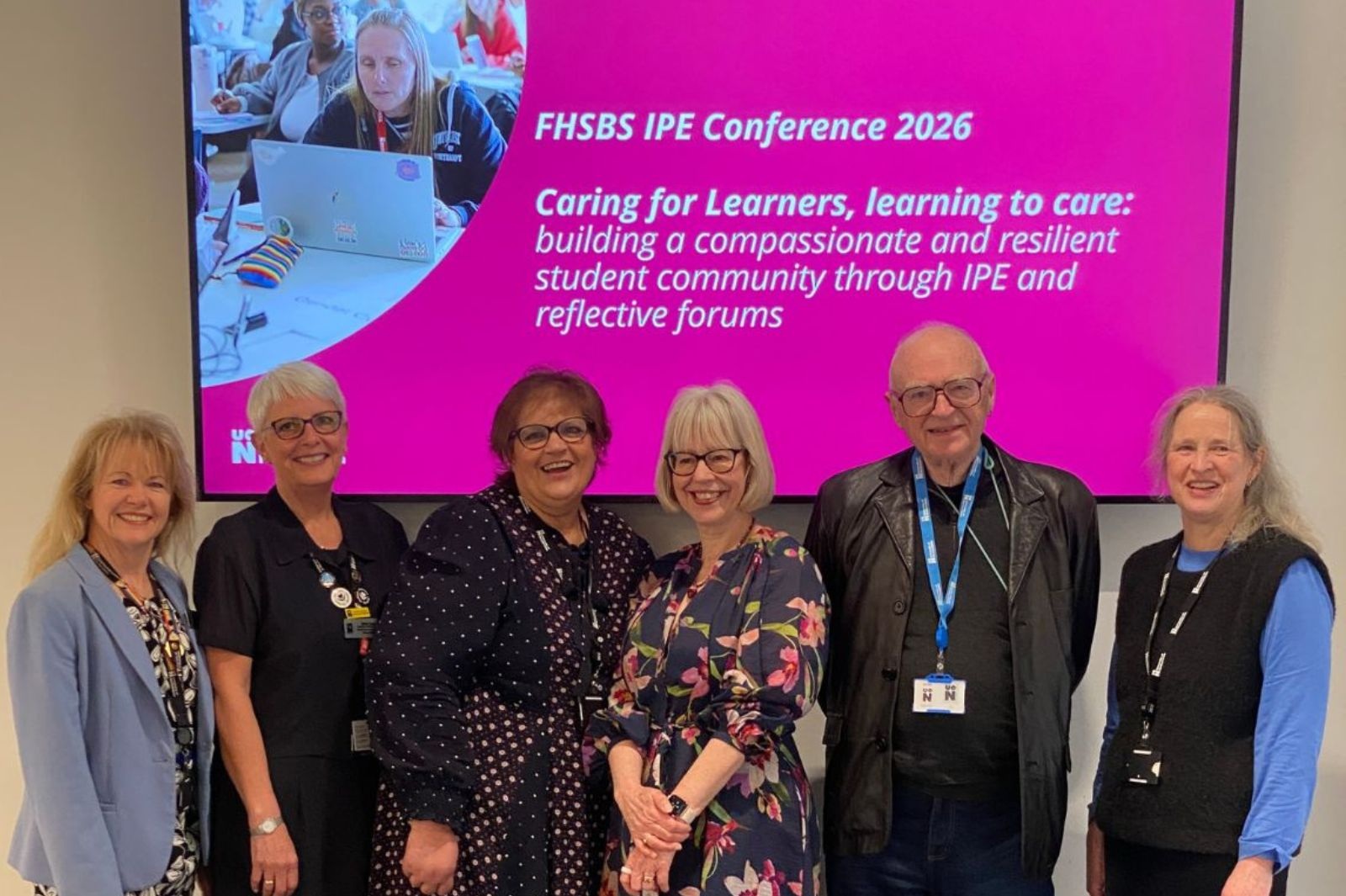
*Dr Power is pictured, with conference colleagues and speakers, second from the left promoting her next event, the Interprofessional Education Conference at Waterside Campus on Thursday 23 April.
The free conference is titled ‘Caring for Learners, learning to care: Building a compassionate and resilient student community through IPE and reflective forums’. There’s more information and a short form to book to attend in this news story.