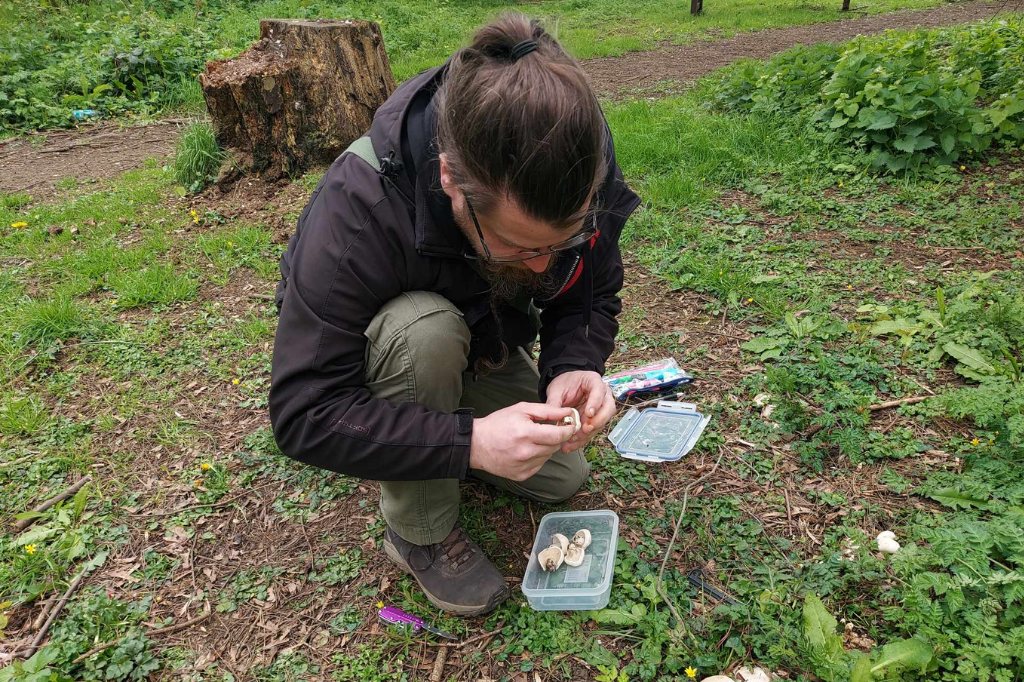
A quest to ‘save the world’ took an unexpected turn when one student from the University of Northampton discovered a rare, extinction-threatened mushroom during a biodiversity survey at local nature reserve, Stanwick Lakes.
Third-year Environmental Science student, Tom Haddon, has recorded the first-ever sighting of a rare ‘wrinkled peach’ (rhodotus palmatus) fungus within Northamptonshire – a species listed as vulnerable to extinction on the global International Union for Conservation of Nature Red List – during his eight-week biodiversity survey at Stanwick Lakes.
Remarkably, the mushroom was also Tom’s 2,000th specimen, and the final discovery on his final day of fieldwork which formed part of a research dissertation on the abundance of macrofungi in conservation-managed areas.
The wrinkled peach typically grows on elm and ash trees, both of which have declined dramatically in recent decades due to disease and habitat loss. Elm woodland has virtually disappeared across much of the East Midlands, making locally dependent fungi increasingly rare.
“The wrinkled peach was literally the 2,000th mushroom I counted, meaning my final find was arguably the most significant,” Tom explains. “It’s vulnerable to extinction globally, which is fairly astounding.
“In the midst of widespread habitat loss, my finding of the fungi (after hunting around the woodland flooring and spotting the mushroom nestled away on a heavily decayed log within a shaded corner of one of the wooded areas in Stanwick Lakes) was very exciting to say the least.
“My finding represents one of only 1,624 verified NBN Atlas sightings across the UK and the very first, verified iNaturalist observation in the county. It inspired me to ask the question: how do we protect this delicate species from being lost altogether?”
Tom’s findings have already been shared with Stanwick Lakes’ ranger team and are helping to inform future conservation plans, including proposals to reintroduce elm trees to support vulnerable fungal species like the wrinkled peach to thrive.
On understanding the importance of fungi in ecosystems, Tom explains: “Simply put, without mushrooms, we would have no soil as we know it. They’re the primary decomposers of all wooded material. If there were no mushrooms, our trees would be unable to properly decompose, and approximately 90% of plants need a fungal partner to survive.”
Tom added that many UK fungi are in decline, particularly waxcaps and species dependent on disappearing tree habitats – a trend made worse by how under-recorded fungi remain compared with plants and animals.
“Bluntly put, I think the reason there were no previous records is simply that fungi are so commonly disregarded and passed-by. Which, if this continues at the current rate, could have drastic consequences for our local and global ecosystems.
“In my humble opinion, plants are better than people, and mushrooms are better than plants – and our mushrooms need protection, preservation and futureproofing for a greener future.”
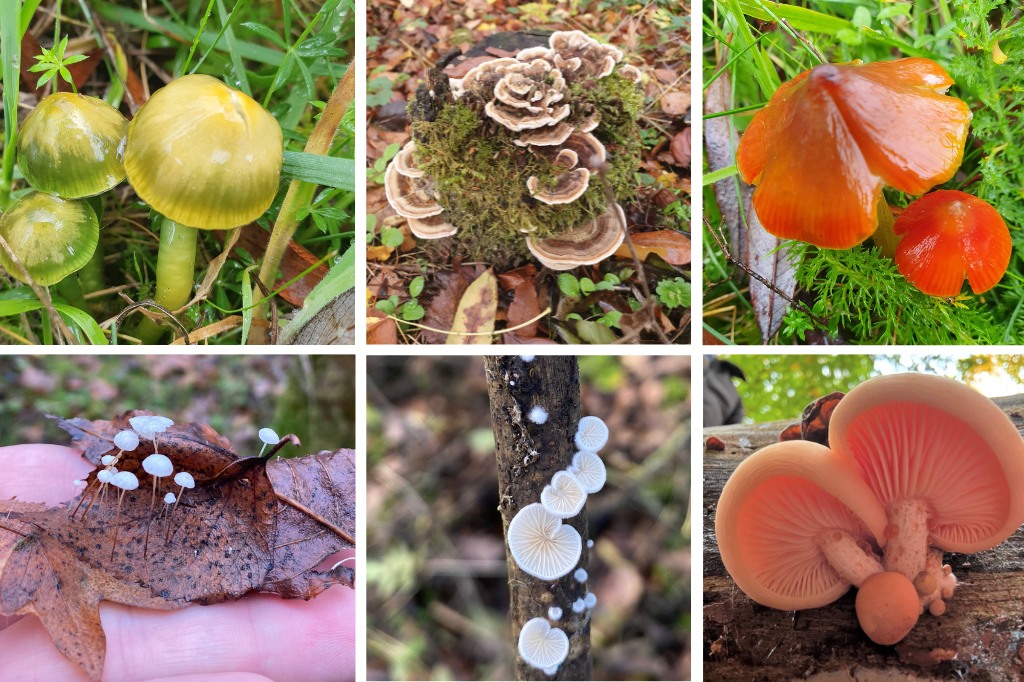
Now a regular volunteer at Stanwick Lakes, Tom helps with woodland clearance and trains other volunteers to identify fungi. He is also preparing a public presentation on fungi at the reserve once his research dissertation is complete.
While already making his mark as a self-proclaimed ‘Superhero for Mushrooms,’ Tom is excited to continue his research and passion for conservation – a passion he discovered during his time studying at the University as a mature student, after a varied career as a chef and police officer.
“My true ambition is to join the ranks of Britain’s very small numbers of professional mycologists, of which there are fewer than 50 in Britain, and contributing to the advancement of research in this hugely important field.
“When I started studying, I wanted to save the world. Now, I’ll settle for saving the mushrooms.”