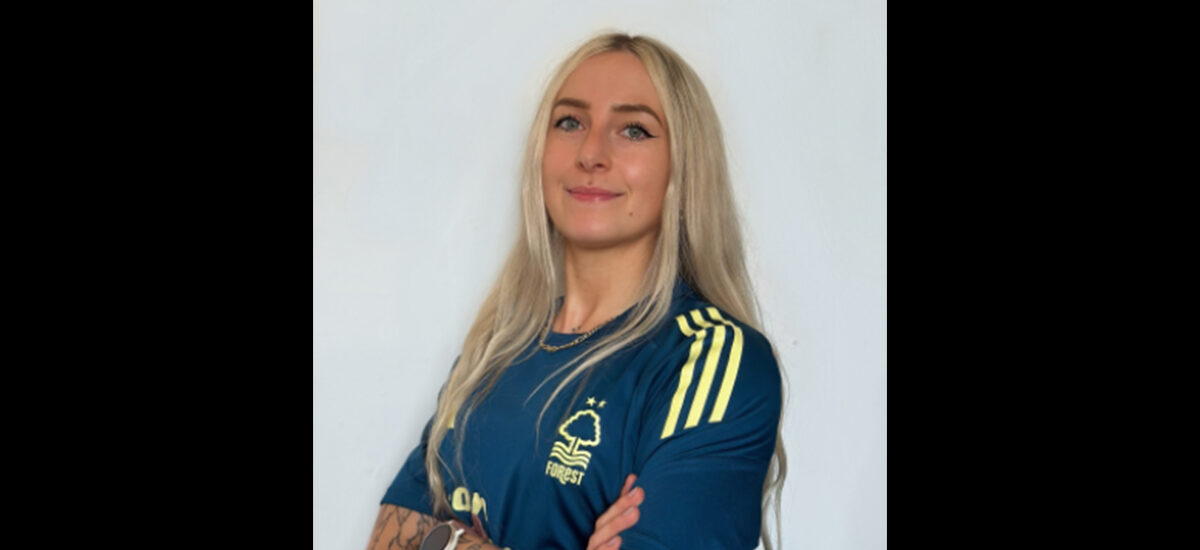
Briony Garner
Sport Rehabilitation and Conditioning BSc (Hons)
View the course- Year of graduation: 2023
- Current job title: Sports Rehabilitator
- Current employer: The Back and Body Clinic
- Industry sector: Healthcare and Sport
I chose this course as I’d been working as a Personal Trainer for a few years and wanted to do something more to help people. I had a few clients who were struggling with various injuries, and I didn’t have the knowledge or qualifications to be able to help them. I was initially weighing up this course against a Physiotherapy degree, but I have more of an interest in sport, so I feel I made the right decision.
I really enjoyed how practical the degree programme was, and how many cool opportunities came from it, especially in my second and third years. I loved how varied the different modules were – from learning different manual therapy techniques, to how to do sport-specific periodisation planning, to pitch-side trauma management (three of the things I enjoyed most). Also, my lecturers were amazing which made the course even more enjoyable!
I started my career by working part-time as a receptionist in a private physio clinic alongside my degree. Once I qualified, I transitioned to working as a sports massage therapist in the same clinic. Through word of mouth, I then got a job as the lead sports rehabilitator at a local Step 4 football club. After a year or so I was offered a full-time position in the same private clinic and was promoted from sports massage therapist to sports rehabilitator. I’m currently still doing private work and have also recently got a part-time job at a premier league football club working as an academy sports rehabilitator. One day, I’d love to be able to work with a first team in a premier league or championship club, but the main hurdle with this is that most clubs require someone with a lot more experience.
As part of my course, I completed a work placement at Northampton Saints Rugby Club, where I worked alongside their multidisciplinary team in the injury clinic. My role was to provide sports massage and manual therapy techniques to help the players with their recovery between games. It was great to get a feel for working within a team environment and alongside different clinicians (physios, osteopaths, other sports therapists, strength and conditioning coaches) – I learnt so much, including different manual therapy and assessment techniques, and how to communicate with other clinicians and deal with different athletes. It was insightful to see how fast-paced things can be in a sporting environment and how every person has their own part to play within a team.
The placement developed my teamwork and collaboration skills and gave me an understanding of how important this is when working with a group of athletes. It also highlighted the importance of time management skills – if you have an hour before the players go out to warm up and you have six athletes that need strapping up, it’s crucial that you plan your time effectively. No two days were the same, so I had to be flexible to adapt to the situations presented to me. Representing a professional rugby club meant I had to always be professional, including being reliable, punctual and respectful.
My time with the Saints helped me gain employment after graduating by providing me with real world experience. The course gave me so many different tools but getting to apply them to real life situations is where everything seemed to come together. It gave me the opportunity to build relationships and connections and get my name out there, so placements are important for networking.
My tips on applying for a placement are to put yourself out there and apply for everything you can, even if you think it’s something you won’t enjoy, as you may surprise yourself! Networking and talking to people in real life is much better than sending an email and hoping someone reads it and be prepared to travel as this may open more doors for you. When you start your placement say yes to everything, ask lots of questions and get involved as much as you can.
My work placement provided real life situations which enabled me to put all the tools I’d learned into practice and to develop my people skills – something which I believe can only really be achieved on the job.
Studying this degree has helped my career no end. It me a very strong foundation in anatomy, injury assessment, rehab and so much more, which I’m now able to use in my day-to-day practice. On a personal level, the course helped my confidence – both clinically and personally. It shaped how I approach different challenges, how I work within a team, and how I carry myself as a Sports Rehabilitator.
All the skills and knowledge gained on my degree are very useful in my current role. A good understanding of anatomy and biomechanics is essential, as well as injury assessment and rehabilitation planning. The trauma course we did in the third year is also crucial if you’re wanting to work pitch-side in sport – I wouldn’t have got where I am now if I didn’t have my trauma qualification.
The advice I’d give to undergraduates interested in this career path would be to say yes to every opportunity that’s thrown at you! Get hands on, be curious, ask questions and don’t be afraid to make mistakes.
My UON experience was challenging, rewarding, supportive, and a fantastic foundation for my career.