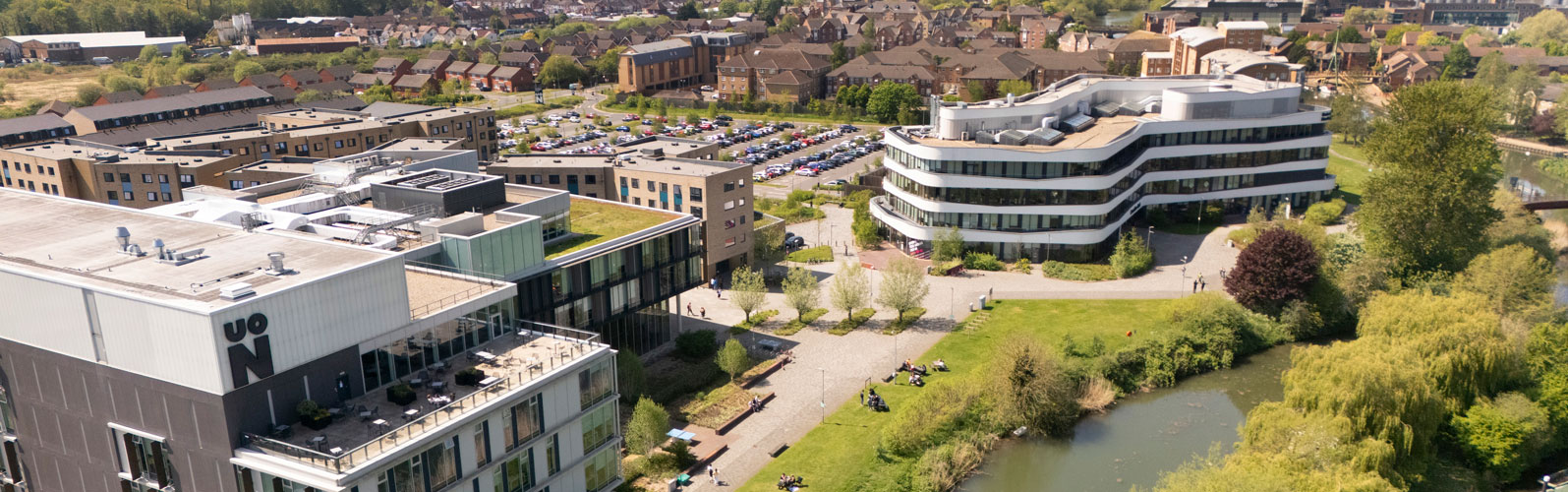
Engineering Top-Up BSc Welcome Pack
Welcome to Engineering Top-Up BSc – September 2026.
On behalf of the Engineering team I’d like to welcome you to the BSc Engineering Top-up. I look forward to meeting you at the welcome session. We are a very open team who enjoy engaging with our students, it gives us great pleasure to see our students succeed.
This course has been designed to provide you with a broad foundation in the fundamental topics within engineering, building upon knowledge you’ll have gained in the years prior to starting the course. Key areas include electronic and mechanical engineering, design, industry standards and your individual research project. As you’d expect we provide you with extensive support and guidance for your studies, but there will be an expectation that you’d undertake significant individual research and study. Learning is delivered through a range of methods, examples include lectures, seminars, lab-based activities and one to one project sessions.
The programme has a strong industry focus and throughout the year there will be opportunities for you to engage with industry should you wish to. Please see the enhancing skills section below.
Whilst the programme does require a high degree individual effort, we do find that students joining this course are highly focused and achieve very good results. We look forward to assisting you in achieving your degree ambitions.
Your Course Leader
 Tariq Chaudhary
Senior Lecturer in Mechanical Engineering
tariq.chaudhary@northampton.ac.uk
Your Course Leader is your primary point of contact throughout your studies and plays a key role in supporting your academic journey. They can provide guidance on module requirements, academic matters, and wider aspects of university life. We encourage you to make full use of their knowledge, experience, and support.
Additional staff
- Dr Mohammad Ghaleeh, Senior lecturer in mechanical engineering design and deputy subject leader (Engineering design, Machines and Mechanisms)
- Mr Stephen Hillyard, Senior lecturer in engineering (Mathematics and Electronics)
- Dr Nawar al-Esawi, Senior Lecturer in mechanical engineering (CFD, Heat Transfer)
- Mr Dan Bailey, Senior lecturer in engineering (Engineering Management)
- Dr Huijuan Su, Associate professor in engineering (Electrical and Electronics)
- Dr Mahmoud Moradi, Senior lecturer in engineering (Manufacturing Engineering)
- Dr Hamd Mohamed, Senior lecturer in engineering (Electrical and Electronics)
- Dr Tariq Chaudhary, Senior lecturer in mechanical engineering (Thermo-fluid Sciences, Engineering Projects)
- Dr Steve Mabbutt, Senior lecturer in mechanical engineering (Engineering Projects)
- Mr Soliman Milady, Lab technician (Mechanics, materials, thermofluidic sciences, machine shop, F1 garage)
- Mr Robert Walker, Technician Demonstrator – Electronics and Computer Engineering
Welcome and induction sessions
When you arrive at the University of Northampton, there’s plenty to get involved with during Welcome Week. However, there are specific sessions taking place as part of your course induction that’ll help you settle in and prepare for teaching to start the following week; your induction timetable for Tuesday 22 September is as follows:
Saturday 19 September – Sunday 4 October
Welcome Week activities
From karaoke to movie nights, wellbeing walks to craft brunch, and our immersive event ‘The Rise and Fall of Lazarus Kane’ – there’s something suitable for everyone. See our Welcome Week activities to find out more.
Tuesday 22 September
Session: Course Welcome activity
- Time: 10 – 10:30 am (BST)
- Location: LH223, Second Floor, Learning Hub, Waterside campus
This is an opportunity to meet and get to know the course leader as well as your fellow students.
Session: Introduction to the Course
- Time: 10.30 – 11:15 am (BST)
- Location: LH223, Second Floor, Learning Hub, Waterside campus
The course leader will go over a variety of material, including:
- Course structure, modules, assessments, and module delivery methods,
- Academic support for learning and development
- A tour of the campus, labs, facilities and library.
Session: Personal Academic Tutor (PAT) Meeting
- Time: 11.15 – 11:45 am (BST)
- Location: LH223, Second Floor, Learning Hub, Waterside campus
The role, purpose and importance of the PAT meetings will be explained, and brief initial individual sessions will be offered.
Session: Welcome by Funmi Obembe, Head of the School of Technology
- Time: 12 – 12.45 pm (BST)
- Location: LH017, Ground Floor, Learning Hub, Waterside campus
Join us for a warm welcome session where tutors and students will meet, receive key information about the academic year, and take part in introductory activities to help everyone settle in and get to know each other.
Session: Library Quest
- Time: 1.15 – 2.15 pm (BST)
- Location: Drop-In-Area, 2nd floor of the Learning Hub, Waterside campus
Join us for Library Quest, an opportunity to explore the library and discover the resources available to support your studies. You will take part in a guided tour, learn how to borrow, return and reserve books, explore online resources and e-books, and meet the library staff.
Engage with Student Union activities – After 2:15 pm, you will be free to explore the University independently and learn more about the opportunities and activities available through the Students’ Union (SU).
Preparation
The following is indicative understanding prior undertaking this course:
In terms of maths:
- Fundamental Algebra: one variable linear equations, one variable linear inequalities, two-variable linear equations, functions, linear equations and functions word problems, sequences, systems of linear equations, two-variable linear inequalities, absolute value and piecewise functions., expressions with rational exponents and radicals, introduction to exponential functions, polynomials, polynomial factorization, quadratic equations, rational and irrational numbers
- Matrix manipulation. Representing linear systems of equations with augmented matrices. Adding and subtracting, multiplying matrices, Matrix inverse, solving equations with inverse matrices.
- Basic Trigonometry. The unit circle definition of basic trigonometric functions. Graphs of trigonometric function.
- Trigonometry with general triangles
- Trigonometric equations and identities
- Integration and differentiation. Integration by parts, u-substitution, integration using trigonometric identities. Basic differentiation rules, power rule, differentiating linear functions, polynomial function differentiation, radical functions differentiation, exponential and natural logarithms differentiation.
In terms of electrical and electronic concepts:
- Kirchhoff’s Laws, Circuit Analysis – Nodal and Mesh
- Linearity and Superposition, Source Transformations, Thévenin and Norton Equivalents
- RC,RL, RLC circuits.
- Frequency response.
- Semiconductors, diodes and bipolar transistors.
- OPAMPS.
- Boolean algebra rules, logic gates and logic simplification using Karnaugh Map.
- Basic Arduino Programming.
Equipment
During the course you will use a range of specialist equipment and software to support practical elements of your studies, all provided and supported as part of your fees. You will need access to a laptop for study and coursework, and a scientific calculator is also required for your modules.
Preparation to the programme – support materials
We find that if some students have been out of learning for some time they may find some topics with mathematical content challenging. The following links will provide useful information, which will prepare you prior to and during the course.
The following Khan Academy links cover the Engineering Maths requirements:
- https://www.khanacademy.org/math/trigonometry
- https://www.khanacademy.org/math/algebra
- https://www.khanacademy.org/math/precalculus/precalc-matrices
- https://www.khanacademy.org/math/algebra-home/alg-matrices
- https://www.khanacademy.org/math/integral-calculus/definite-integral-evaluation-ic
- https://www.khanacademy.org/math/integral-calculus/integration-techniques
- https://www.khanacademy.org/math/differential-calculus/basic-differentiation-dc
The following Khan Academy links cover the Engineering Physics requirements:
- https://www.khanacademy.org/science/physics
- https://www.khanacademy.org/science/physics/one-dimensional-motion
- https://www.khanacademy.org/science/physics/two-dimensional-motion
- https://www.khanacademy.org/science/physics/forces-newtons-laws
- https://www.khanacademy.org/science/physics/centripetal-force-and-gravitation
- https://www.khanacademy.org/science/physics/work-and-energy
- https://www.khanacademy.org/science/physics/linear-momentum
- https://www.khanacademy.org/science/physics/torque-angular-momentum
- https://www.khanacademy.org/science/physics/mechanical-waves-and-sound
- https://www.khanacademy.org/science/physics/fluids
The following links are useful to get used to Arduino and electronics:
- Intro to Arduino (easy to follow). It helps grasping the basic syntax of Arduino programming.
The information above is only a guide and you will not be expected to have learned everything before you start the Programme, but the more you can consider the better prepared you’ll be upon starting the course.
Enhancing skills, building networks and engaging in the wider University community
Industrial Engagement
A key part of the course is ensuring that students have an appreciation and as far as possible prepared for employment. Our industrial partners through the Northampton Engineering Training Partnership (NETP) support the Course. The NETP provides a range of optional engagement opportunities such seminars, networking events and industry visits.
Please check out the NETP activities via the following link: http://www.netpengineering.co.uk/