 What happens when students are asked to use unfamiliar technology to respond to a real-world problem—and their lecturer does not claim to have all the answers?
For Dr Kardi Somerfield, Senior Lecturer in Advertising and Digital Marketing at the University of Northampton, that question became the basis of a long-running collaboration with the Northamptonshire Office of the Police, Fire and Crime Commissioner.
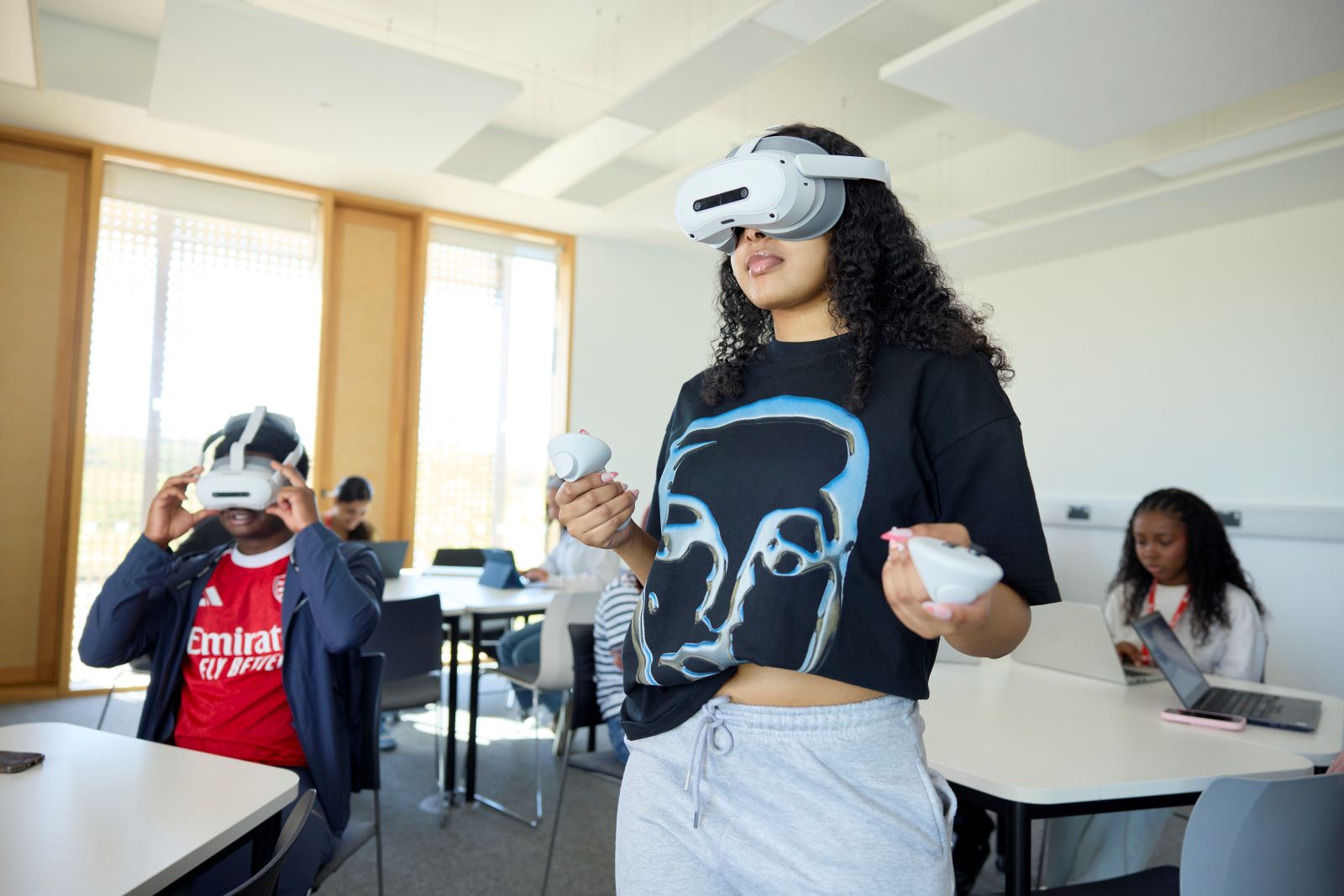
The partnership began when the OPFCC acquired a RiVR ‘Classroom in a Box’ containing virtual reality headsets, along with a 360-degree camera. The equipment created an exciting opportunity, but it also presented a practical problem: the OPFCC needed relevant content to make use of it.
The University was offered access to the equipment in return for students creating VR experiences connected with local safety priorities. What began as an opportunistic arrangement developed into a live client project with lasting value for both partners.
The technology was the invitation
Kardi is candid about the role that VR played at the outset. It was not simply a tool selected after a conventional learning activity had been designed. It was what made the opportunity attractive in the first place.
“The technology was the bait. It was what made us want to do the collaboration, and it was also what made the students want to work on a project like this.”
The subject matter was serious. During the Safer Streets phase, students explored violence against women and girls, with a particular focus on safety in Northampton’s night-time economy. VR gave them an engaging route into material that might otherwise have felt remote or difficult to approach.
However, Kardi soon realised that learning to make VR content was not the most important outcome. The real value lay in placing every student in an unfamiliar situation and asking them to work out how to respond.
Most had made conventional videos before. None had filmed in 360 degrees. This meant that everyone had to become a learner again.
“It is less important that the students learn about virtual reality. What matters more is that they encounter unfamiliar technology and figure out how to work with it.”
For students preparing for careers in digital marketing, that experience closely reflects professional life. Technologies will continue to change, so confidence in approaching the unfamiliar may be more useful than mastery of one platform.
A live brief embedded in the curriculum
The project was built into a semester-long module rather than offered as an optional activity. Students received a live brief from the client and explored the issue before being introduced to the equipment. They then developed a concept and produced a short VR experience as part of their assessed work.
One scenario used actors to communicate safety advice connected with going out in Northampton. Students had to find a tone that felt relevant without suggesting that the town was inherently dangerous. The experience also needed to be short enough to work in a pop-up setting, where viewers might encounter it at an open day or public event.
The students were not studying media production, so professional polish could not be the only measure of success. Kardi initially hoped that every finished experience would be suitable for public use, but gradually reframed her expectations.
“In reality, it does not matter if it is not good enough to use, because it is first and foremost a learning experience.”
This did not mean that quality was unimportant. It meant that the process of responding to the client and reflecting on the result mattered as much as the final film. Client expectations also had to be managed carefully. Professional VR production can be expensive, while these experiences were being made by students using the equipment for the first time.
VR as a ‘Trojan horse’ for meaningful discussion
The project’s ‘tech for good’ dimension emerged almost by accident. Yet it became one of its most significant features.
Around 40 students each year spent much of a semester thinking about issues connected with safety. To create credible content, they had to discuss difficult questions about behaviour and responsibility. The technology drew students into conversations that they might not otherwise have encountered within their course.
Kardi describes VR as a ‘Trojan horse’ for this learning:
“In the end, it was not the VR experience that mattered most. It was the process we went through. Even if nobody ever sees the finished VR piece, students have still spent hundreds of hours engaging with the topic.”
This shifts attention away from VR as a finished product and towards what happens while students are making with it. The equipment captures interest, but the learning develops through the decisions students have to make together.
Students’ reflective accounts suggest that the experience was memorable. Some described filming as their best day at university. The practical nature of the activity was important, as was the chance to create something for a real client.
Learning alongside the students
Introducing unfamiliar technology can feel risky for lecturers. There may be an assumption that the tutor needs to understand every function before bringing a tool into the classroom. Kardi’s experience suggests a different role.
“You can be a facilitator rather than an authority on the technology. You need some competence, but you definitely do not need to know it all.”
Some students became deeply interested in the equipment and taught themselves how to use it. They then brought that knowledge back to the group. Giving them the space to do this increased their sense of ownership.
This approach does require the lecturer to tolerate some uncertainty. Kardi describes it as a voyage of discovery shared with the students. That does not mean leaving everything to chance. Time must be built into the module for experimentation, and access to technical support helps the lecturer feel confident enough to begin.
The physical equipment also needs careful management. Headsets must be stored safely and checked when they are returned. Even small pieces of missing equipment can create problems when the kit is on loan.
Not every student will want to wear a headset, so an inclusive project needs alternative ways to participate. The module also required some flexibility for students who could not attend practical sessions. Without that, an experiential assessment could unintentionally create barriers.
Making room for experimentation
After several years, the project has developed knowledge that did not exist when the collaboration began. The team is now exploring AI-generated 360-degree environments, showing how one experiment can create the capacity for another.
For Kardi, this is also a story about institutional trust. The project was not part of a carefully controlled long-term plan. It happened because an opportunity appeared and staff were given enough freedom to see where it might lead.
“Sometimes you have to let the serendipity happen. We need a bit of institutional bravery around this kind of work.”
The project could have gone wrong. Some of the student work was more successful than others, and handling the equipment brought unexpected difficulties. Yet the willingness to take that risk created valuable learning and helped the University build expertise in immersive technology.
The wider lesson is not that every course needs a VR project. It is that unfamiliar technology can create rich learning when it is connected to a meaningful purpose. Lecturers do not need complete mastery before they begin, but they do need to know what the experimentation is intended to offer their students.
Sometimes the most valuable learning starts when nobody in the room knows exactly what will happen next.
Read more about the Digital Horizons Safer Streets project.