- Faculty/module/cohort: Fashion, Textiles & Footwear – Personal Creative Practice informing Levels 4 – 6 teaching
- AI Tool(s) Used: A range of text-, image-and video-based AI tools for creative exploration, concept development and visual experimentation.
- AI mode(s) used: Text prompting, AI-generated imagery, AI video generation and visual exploration.
What was the challenge?
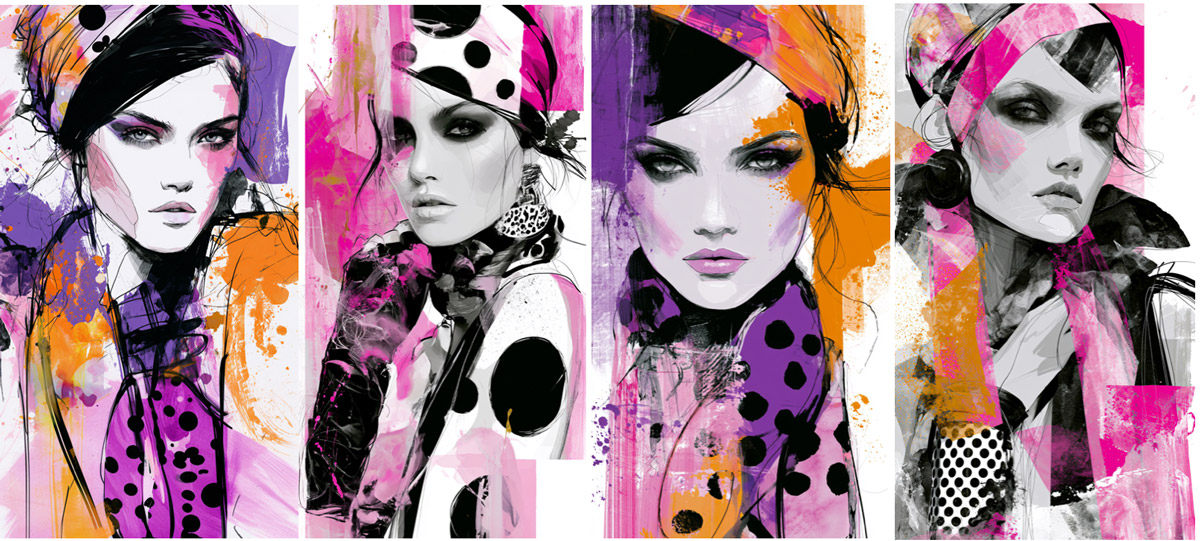
I have been exploring AI-generated imagery and creative experimentation in my own practice for several years. What began as curiosity about how emerging technologies might influence colour, texture, materiality and creative concept development gradually became an ongoing strand of my creative practice.
As AI became more visible within higher education, I found myself asking a different question. How could I encourage students to use these tools creatively and critically if I wasn’t continuing to explore them myself?
As both a designer and an educator, it felt important that I understood the possibilities, frustrations and limitations of AI first-hand. Rather than demonstrating techniques I had only read about, I wanted my teaching to be informed by my own experience of experimenting, editing, rejecting ideas and making creative decisions.
There was also a broader question around authenticity. If AI is becoming part of contemporary creative practice, then I felt it should become part of my own ongoing creative inquiry, not as a replacement for making, but as another material for thinking with.
What did you do?
Over the past few years, I have gradually incorporated AI into my own creative practice, using it to explore colour, line, texture, pattern, materiality, silhouette and early-stage concept development.
Rather than using AI to generate finished outcomes, I approach it as a space for experimentation. I test prompts, explore multiple visual directions, revisit ideas, reject many of the images it produces and refine the ones that spark something worth pursuing. Those explorations often become starting points for further thinking rather than conclusions in themselves.
This ongoing experimentation has become a form of practice-based research, helping me understand both the creative possibilities and the limitations of these technologies. Sharing that process with students has become a natural extension of my teaching. Rather than only showing polished outcomes, I share the prompts, unexpected results, unsuccessful experiments and creative decisions involved in developing ideas. Students see the thinking behind the images rather than assuming AI simply produces finished work.
Multimodal use
My creative process moves between text prompting, AI-generated imagery, video experimentation, sketchbook annotation, visual research and reflective writing.
AI-generated visuals often become catalysts for exploring colour, composition and materiality, while traditional design methods remain central. Digital experimentation sits alongside my sketchbook work, drawing, painting, making and reflective practice rather than replacing them. Sharing both digital and physical outcomes helps students understand how different modes of working can inform one another throughout the creative process.
What did this look like in practice?
Much of my work involves iterative experimentation. A single concept might develop through several rounds of prompting exploration before leading to something genuinely useful, while many ideas are discarded along the way.
Some AI-generated visuals suggest unexpected combinations of colour, form or material mixes that I might not otherwise have considered. Others are visually impressive but can be conceptually weak. Interestingly, those become some of the most valuable examples to discuss with students because they demonstrate that critical judgement remains essential, regardless of how sophisticated the technology appears.
Sharing both successful and unsuccessful explorations helps demystify AI. Students can see that creative practice still involves selecting, questioning, editing and making decisions, AI contributes ideas, but it doesn’t make the creative design choices.
What was the impact?
Working with AI within my own creative practice has fundamentally influenced how I introduce it into my teaching.
Because I’ve spent time experimenting with these tools myself, I feel much more confident discussing both their strengths and their limitations. Rather than presenting AI as something that produces answers, I can talk honestly about the experimentation, failed attempts and decision-making that sit behind the images.
Students quickly realise that AI is not replacing creative thinking, it is simply introducing another stage in the process and is just another tool.
Sharing my own work also seems to give students permission to experiment. They see that uncertainty, iteration and changing direction are all part of creative practice, whether AI is involved or not.
Perhaps most importantly, it reinforces that human creative judgement remains central. AI can generate possibilities, but designers still decide what is meaningful, what is worth developing and what should be left behind.
Ethical or practical considerations
Using AI within my own creative practice has prompted ongoing reflection around authorship, originality, bias and transparency.
It has reinforced the importance of acknowledging AI as one influence within a much broader creative process rather than presenting generated imagery as entirely original. It has also highlighted how easily AI can encourage visual sameness if ideas aren’t questioned, challenged and developed through individual interpretation.
Those experiences have strengthened my commitment to modelling ethical practice openly with students rather than discussing these issues only in theory.
Reflections and Advice What worked well?
Sharing my own creative process has made conversations around AI much more open and honest. Students appreciate seeing experimentation, uncertainty and unsuccessful outcomes alongside more resolved work.
It also helps position AI as something that requires creative judgement rather than technical expertise. That shift encourages richer conversations about design thinking, originality and professional practice.
What would I refine?
I’m increasingly interested in documenting the creative journey itself, capturing not only the final images but also the iterations, rejected ideas and reflective decisions that shape the work I do. I would also like to continue exploring how AI-generated concepts can be translated into physical textile experimentation and material practice, extending the dialogue between digital exploration and making.
What advice would I give colleagues?
Don’t be afraid to let students see your own creative process. Showing uncertainty, experimentation and critical reflection is often more valuable than demonstrating polished outcomes. When students see you questioning AI outputs, rejecting ideas and refining concepts, they begin to understand that creative expertise lies in judgement rather than generation.
Don’t be afraid to let students see your own creative process.
Any further reflections?
Exploring AI through my own creative practice has reinforced something I keep coming back to in my teaching: creativity isn’t found in the tool itself but in the decisions, we make while using it.
As AI develops, so does my own practice, and that ongoing experimentation continues to shape how I teach, how I design learning experiences and how I encourage students to approach emerging technologies with curiosity, creativity and critical judgement.
For me, AI has never been about making design easier, it has become another way of exploring ideas, asking questions and extending my creative thinking. That feels like a much more valuable role, both in my own practice and in the education of future designers.
Quick Start Guide for Colleagues
- Estimated time to set up: Ongoing. This approach develops through personal creative practice rather than a single workshop or activity.
- Digital skill level required: Moderate.
- Common pitfalls to avoid:
- Presenting only polished AI-generated outcomes rather than the creative process behind them.
- Allowing AI imagery to replace experimentation, sketching or material exploration.
- Avoiding conversations around authorship, originality and ethical use.
- Treating AI as a demonstration rather than an ongoing subject of creative inquiry.
- Best suited for: Creative practitioners, studio teaching, design research, professional practice, fashion and textile education, and staff development.