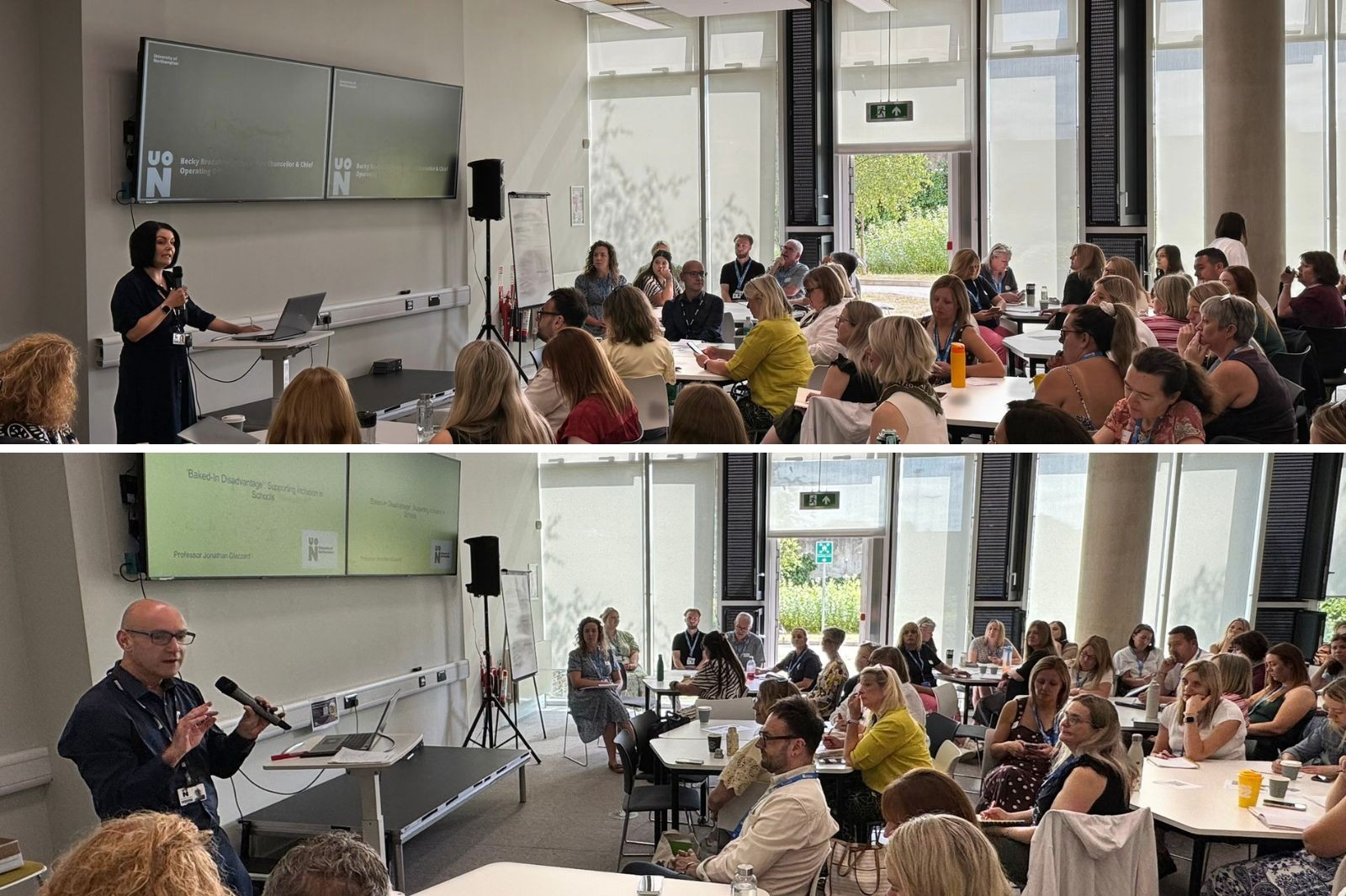
Education experts and practitioners came together at the University of Northampton to demonstrate the power of partnership in driving better outcomes for children and young people with special educational needs and disabilities (SEND).
Held at Waterside Campus on Friday 3 July, the Schools’ Inclusion Conference 2026 was jointly delivered by the University, North Northamptonshire Council, West Northamptonshire Council and the Northamptonshire Teaching School Hub.
With this year’s theme centred on mental health and wellbeing for students, Becky Bradshaw, UON’s Deputy Vice Chancellor and Chief Operating Officer, opened the conference by outlining the support offered in these areas by the University to ensure all receive the best student experience.
Becky also talked about how this aligns with UON’s Access and Participation Plan, which sets out how the University sustains or improves access to higher education, student success and progression.
Delegates heard from nationally recognised education expert Professor Jonathan Glazzard, the Rosalind Hollis Professor of Education for Social Justice at the University of Hull.
Professor Glazzard’s keynote address explored the challenges facing the SEND system and highlighted practical, evidence-informed approaches to strengthen inclusion while maintaining high expectations for all learners.
The conference showcased how collaborative working is helping schools across Northamptonshire respond to increasingly complex needs. Through nine specialist workshops, speakers shared successful approaches to adaptive teaching, therapeutic and trauma-informed practice, attendance and engagement, social, emotional and mental health support, transitions, internal inclusion provision and more.
The conference concluded with a panel discussion featuring education leaders and headteachers.
Dr Julian Brown, the University’s Head of the School of Education and Society, said: “This conference was a powerful example of what can be achieved when education professionals and organisations work together toward a common purpose, that inclusion is a shared responsibility.
“Our excellent range of speakers emphasised the importance of strong relationships between schools, local authorities, health services, families and young people themselves to ensure children receive the right support at the right time.
“Truly impactful, lasting change happens through partnership, shared learning and a relentless focus on the wellbeing and success of all children and young people.”