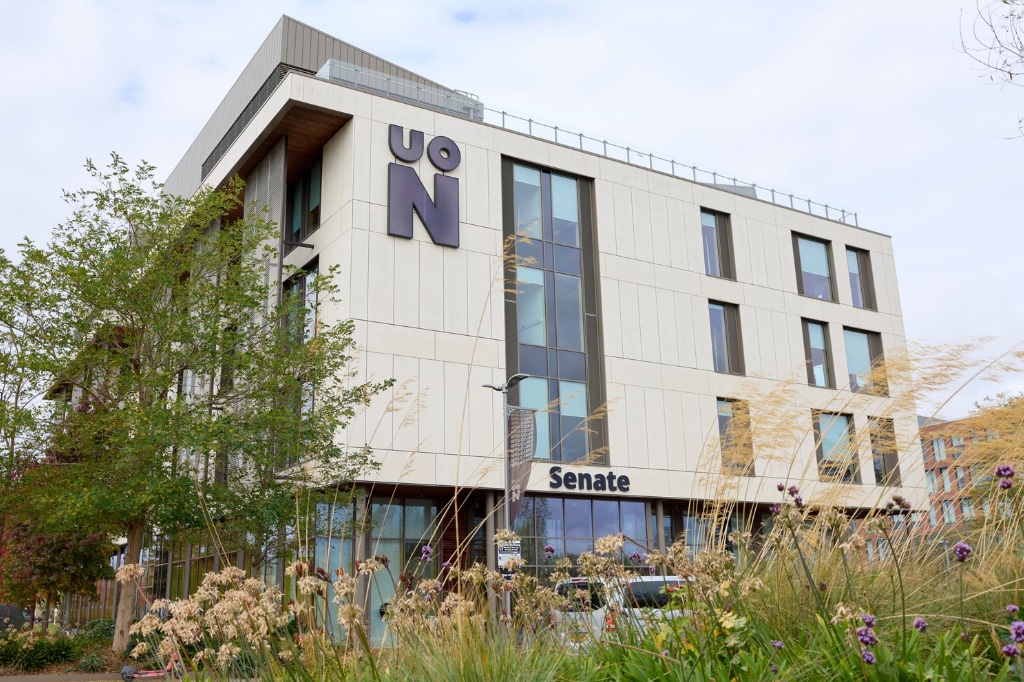
University of Northampton’s Interim Vice Chancellor Becky Bradshaw and Pro Vice Chancellor Alice Wilby reflect on how the higher education sector measures success and why social mobility deserves greater recognition alongside institutional prestige.
As a sector, we all seem to agree that we need to see transformative change to best serve our students and society as a whole. Where we cannot agree is how and what we need to change.
The rankings from the Social Mobility Commission, ‘Who gets in? University benchmarks for better social mobility’ offers us not only food for thought on how institutions could approach our civic obligations, but also how we can truly put social impact on an equally valuable footing alongside our economic contributions and relative prestige.
To do this, social mobility needs to be considered less as a matter of how many disadvantaged students are admitted to elite institutions and more as a question of whether universities are genuinely serving the qualified learners in their own communities.
This will help enable growth across the country and not the spread we have typically seen, concentrated in our larger cities. Meaning social mobility needs to be decoupled from geographic mobility.
With devolution high on the government’s agenda, there is an opportunity to both strike while the iron is hot but also find common ground and feed into initiatives already underway, rather than be reactive to government policy.
We know that more and more students are staying closer to home and many universities view themselves through a lens of their civic contributions, pivoting towards becoming place-based organisations.
How we build on this and transform local attainment into local opportunity is key. At Northampton we are super-charging our local pathways, recognising that while we were slowly becoming more integrated with our FE providers, it had to happen much faster and with a stronger connection to local employers to address the skills gaps they have been talking about for years.
In September 2025 we launched FutureSkills Northamptonshire with the two leading colleges in the county, offering a stronger progression pathway for local learners but also using market intelligence to make sure we are addressing local skills gaps. Universities like ours are not only offering life-changing opportunities to individuals but also power our national industries and will help us build thriving regional economies up and down the country.
For many of our students, the transformative effect of a degree is not necessarily tied to a university furthest away from where they grew up or the highest in the tariff hierarchy. Equally as valuable can be an institution that recognises their individual potential and enables students to succeed without requiring them to leave behind the networks, responsibilities and economies that have shaped their lives and likely will be the place they return to once they graduate.
That’s not to say leaving hometowns and experiencing different perspectives and challenges can’t be as equally transformational, but our point is that this isn’t the only valid route. For some students staying local or going to a university that knows how to support them might be their best opportunity to succeed and we must be able to deliver both.
Part of this can be addressed by how we view institutions across the sector. Prestige and the way we have typically valued universities has been a central concept of higher education for centuries. It shapes applicants’ choices, opportunities, networks, funding and beyond. We would argue that institutions that recruit and, crucially, support disadvantaged students should be viewed as equally as important, if not more so, for their contribution to society and impact on young people’s life chances.
Helping the most advantaged in society be more advantaged only compounds the problems facing our country. The hierarchies of prestige build in more inequalities to our system and as a sector we are guilty of reinforcing them. We could choose to be different, and this ranking is one glimpse of that. Perhaps a first step could be a league table where compilers could place more emphasis on community and social mobility in their rankings.
While this measure uses slightly older data than would be perfect, along with other social mobility measures, it will hopefully start to move us towards a more holistic approach to success and the value we place on social mobility.
And with a bit of goodwill and focus from enough leading voices, it could form a central pillar to the discourse about the future of our sector.
Read more about UONs performance in the rankings here, with the data placing us as the ninth English university outside of London.