Ecology
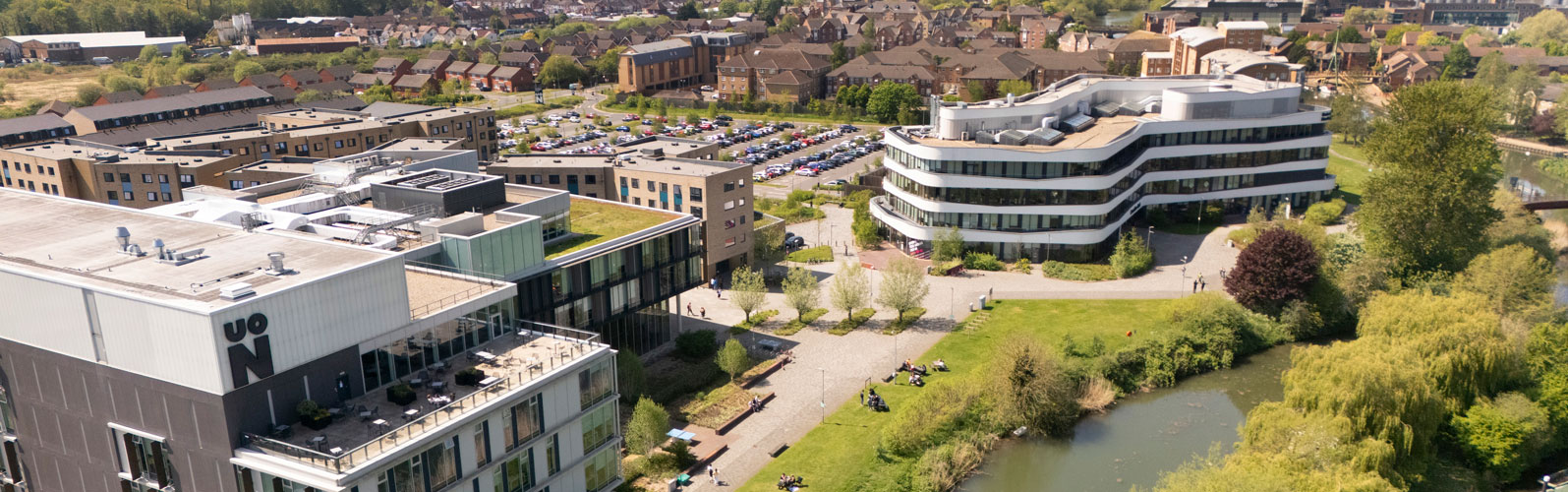
There are 12 Nature Improvement Areas (NIA) throughout England and our Waterside Campus sits within the Nene Valley Way Nature Improvement Area, making biodiversity of Waterside Campus a fundamental part of the university’s sustainability ethos. The generation of a Biodiversity Management Plan as part of our planning has provided the basis for enhancing the natural habitat and the creation of new habitat. This includes planting species that attract insects and pollinators, which in turn attracts birds, bats and other wildlife. We are committed to the aims set out in our Ecology Policy (PDF, 247KB) to ensure the continual management, conservation and education of ecology at the UON.
University of Northampton staff are actively involved in managing, monitoring and developing the flora and fauna on campus. Sightings of 78 bird species on or around the university grounds, species include the Peregrine, Kingfisher, Robin and Little Owl.
Ecology Zone
The Ecology Zone, created in 2017, uses natural soils and substrates to create a varied habitat for wildlife. A recent survey of the Ecology Zone by the Botanical Society of Britain & Ireland recorded a total of 65 plant species in the Ecology Zone, with a further 79 species recorded across Campus, including plants previously thought extinct or rare in the county such as the Small-flowered Catchfly. You can also expect to see otters, heron, kingfisher, wetland birds, bats, dragonflies, butterflies and bees on Campus. This is open to the public as well as staff and students and is perfect for wellbeing walks or walking meetings.
The Ecology Walking Route
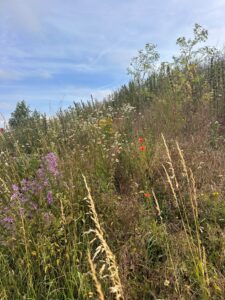
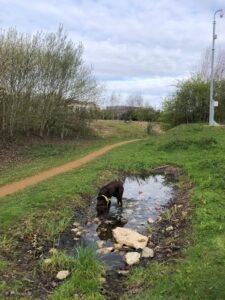 The route is very easy to follow thanks to paths that wrap around the campus with various starting points. Entering from Car Park 3, you walk past our Forestry School teepee and Engine Shed where you will see lots of wildflowers left to bloom. Cross over the little road whilst observing our Energy Tower on your left and Hardingstone Dyke which leads to Delapre Abbey on your right. Along this path you will see lots of buddleja bushes and various log piles left by our Grounds Team for wildlife, curve round alongside the sports pitch and in the wetter months you will see our natural pond. At the gate, head straight between the Sports Dome and Pavillion, over the road and head right along the large ‘Plot B’ bank. You will see the path again which takes you along the River Nene. Under the bridge which has sensor lighting, you may even spot swans and their fledglings. Just before you get to the end, on the right you can look out for the Small Flowered Catchfly. Cross over the road again and walk down between the river and hedges and end up at the Waterside Bar and Restaurant. This entire route is also covered by our Safe Zone app.
Photo Credit: Hollie Darby, June 2026
Our other sites
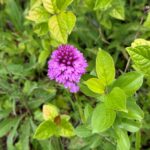
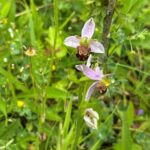 We also have areas of botanical interest at other UON sites. At Gallagher Fields, a piece of land left to bloom , you can see Common Spotted and Bee Orchids during the summer and the Development Hub has an outdoor pond where amphibians and grass snakes have regularly been spotted.
Photo Credit: John Sinclair, June 2026
Nature Positive Universities
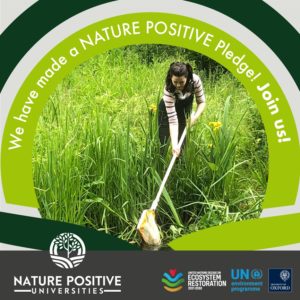
We depend on nature for our survival, and nature depends on us. This is a critical time to stand up for nature. We believe that as a university, we can use our power and influence to help lead our community on a Nature Positive journey, uniting both the climate and biodiversity crises to build more resilient ecosystems, help nature recover and limit climate change.
To be Nature Positive there must be a measured biodiversity baseline, timeframe, a target, clear actions, analysis of how actions add up, monitoring and transparent reporting. UON have made a pledge to become Nature Positive by 2030 and are currently writing our Biodiversity Plan in lines with this pledge, with an aim to have this in place by 2026/27.
Hedgehog Friendly Campus
UON are proud to have been awarded silver accreditation for the Hedgehog Friendly Campus awards 2025/26, which lasts for 2 years.
Hedgehog Friendly Campus is a national biodiversity engagement programme, that supports universities, colleges, students’ unions and primary schools to create positive change for hedgehogs and other wildlife on their campus. Criteria within our framework sets out to protect biodiversity, enhance habitats and educate staff and students on their own impacts.
As a University with great green spaces, we pledge to look after the wildlife on campus and hedgehogs are classified as vulnerable on the Red List of British Mammals. We have committed to having measures in place to nurture these animals such as a hedgehog house in the Ecology Zone, carrying out annual hazard audits, ensuring there is information readily available to help any sick or injured hedgehogs that may be found and having plants around campus that are hedgehog friendly for food. We have also raised a total of £157.27 to date holding fund raising events for the British Hedgehog Preservation Society.

In March 2026 as part of our Award, we collected items for Deanshanger Hedgehog Rescue such as puppy pads, newspapers and quality cat food. Around 90 items were donated and our Environment Advisor got a tour of the ICU where they treat injured or sick hedgehogs. This is the start of a great relationship as we pledge to continue with donation drives each year and have offered to be a release site for any hogs that cannot be re-released where they were found. Keep an eye on our engagement page for any future donation raising events.

What is Plantlife’s No Mow May?
Plantlife’s No Mow May is an annual campaign encouraging owners and managers of green spaces to refrain from mowing their lawn throughout the month of May. By this simple yet effective act, it gives nature a much-needed boost by:
- Helping native wildflowers and grasses
- Creating a buzzing buffet for bees and butterflies
- Locking away carbon below the ground
- Helping tackle pollution
Why are we taking part in Plantlife’s No Mow May?
As a university we believe that we have a responsibility to lead by example in protecting natural environments and halting nature loss. Allowing wildflowers to grow freely throughout May provides essential foraging and nesting sites for important pollinators, such as bees, butterflies and moths. As pollinators are responsible for the reproduction of many plant species, they play a critical role in biodiversity gain, underpinning healthy ecosystems.
The Environment and Sustainability Team and Grounds Maintenance Team have worked together to take part in Plantlife’s No Mow May each year since 2023 and in 2025, wooden posts were decorated by staff and students with spring themes and placed in the wild areas each year. You can read more about the event.
United Nations Sustainable Development Goals
We use the United Nations Sustainable Development Goals (SDGs) as a framework to guide our activity. Our ecology policy and projects are linked to the following SDGs:

Find out more about our impact on the SDGs
Project Awesome

Project Awesome was an initiative at the University which is a collective of students, academic and senior staff focusing on sustainability and wellbeing. The title of the group incorporates the group’s aims:
Accessing Waterside’s Ecosystem Services: Observing and Monitoring the Environment
The aims of the project were to:
- Enhance, conserve, and protect wildlife and the environment in and around Waterside Campus
- Make Waterside one of the most biodiverse university campuses in the UK
- Promote Waterside as a place that nurtures staff and student health and wellbeing
- Encourage both students and staff in volunteering, observing wildlife and monitoring the environment
The project was led by the following members of staff:
- John Howes (former External Services Manager)
- Dr Janet Jackson (former Senior lecturer in Environmental ecology and management)