The world of hair, makeup and prosthetics is evolving rapidly. While traditional techniques remain an important aspect of the craft, digital design and 3d printing are becoming increasingly prevalent within the film and television industry, transforming how artists design, prototype and create prosthetic pieces.
On the University of Northampton’s Hair, Makeup and Prosthetics for Stage and Screen course, students are exploring how cutting-edge technology such as the Bambu Labs P2S 3D Printers can support professional workflows, enabling them to take their digital concepts and produce high fidelity models in a matter of hours.
Chris Dombos & Stuart Bray: Battles with Bits of Rubber Episode 25 – Talking about 3d Printing “It’s adding something to your workflow to enable you to be more creative, without taking away from your budget, your time and your personnel”
HMPSS Students at UON have access to several of the new Bambu Labs P2S Printers in their studios. While being extremely beginner friendly, these printers have 0.4mm precision nozzles, allowing for high fidelity prints. Not only do these printers produce high-quality FDM prints, they also print at high speeds and come complete with a time-lapse camera for recording the print and AI print failure detection, to ensure no time is lost if a print does fail. For students, this means less time waiting for prints and more time refining their creative ideas.
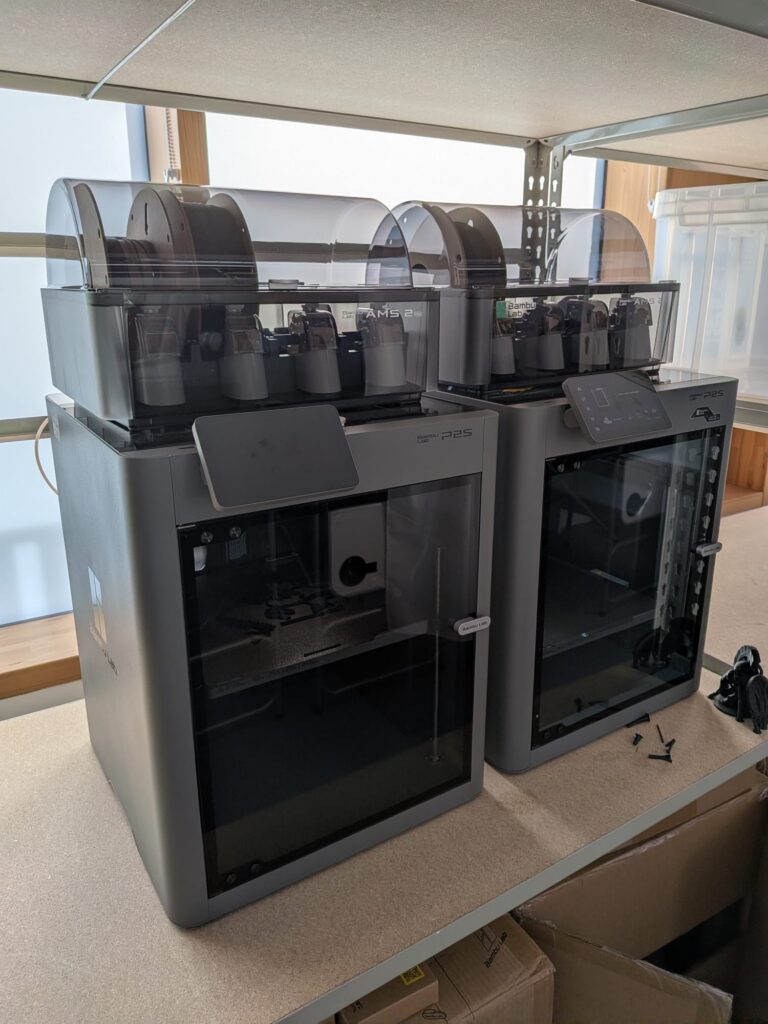
The use of these machines is primarily incorporated into the Level 6 Module Breaking the Mould: Advanced Prosthetics and Digital Design. This module integrates tradition prosthetic practices including sculpting, mould-making and art finishing with contemporary digital methods such as rapid prototyping, digital sculpting and emerging industry technologies. Today’s employers within the Film and Television industries value artists whose skillsets incorporate both traditional and digital abilities. By exploring a combined approach, HMPSS students develop a versatile skillset that prepares them for a range of roles across film, television, theatre and more.
While these technologies can streamline the prosthetic process, creativity is still at the heart of every project. The success of any prosthetic is a combination of artistic vision, storytelling and attention to detail. The most successful practitioners combine technical knowledge with imagination and creativity, as proven by our students each year.
As digital technology becomes increasingly important across the creative industries, learning how to integrate digital tools such as 3D printing into a prosthetics workflow can open exciting new possibilities. At the University of Northampton, students have the opportunity to explore both traditional creative practices alongside emerging technologies, preparing them for a future in an ever-evolving industry.
Find out more about Hair, Makeup and Prosthetics for Stage and Screen course or register for one of UON’s upcoming open days.