 For some learners, a school trip is not simply an exciting day out. It can be a source of significant anxiety. Unfamiliar buildings, new routines, different sensory environments, and uncertainty about where to go or what might happen next.
At Cavendish High Academy, a specialist high school in Runcorn for students aged 11 to 19 with moderate to severe learning difficulties, Sarah Wills and her colleagues are exploring how virtual reality can help students feel calmer, more prepared and more confident before they encounter new places in real life.
The project began as part of the school’s wider interest in action research. Sarah explained that Cavendish High Academy is constantly looking for ways to support students with complex needs, particularly those who experience high levels of anxiety, neurodiversity, and difficulty regulating when faced with unfamiliar situations.
After discovering the Headsets for Hope and Digital Horizons project, Sarah connected with UON researchers who recommended equipment and offered technical support. What followed was a practical, student-centred experiment about utilising immersive 360° footage to give learners the chance to rehearse unfamiliar experiences before they happened.
The first use case focused on a class visit to a local museum. As part of her normal pre-visit planning, Sarah took a 360° camera around the venue, with permission from anyone who might appear on camera. Rather than filming randomly, she followed the journey students would take on the day: arriving by minibus, walking to the entrance, finding the toilets, identifying where lunch would take place, and locating quieter spaces where students could go if they became overstimulated.
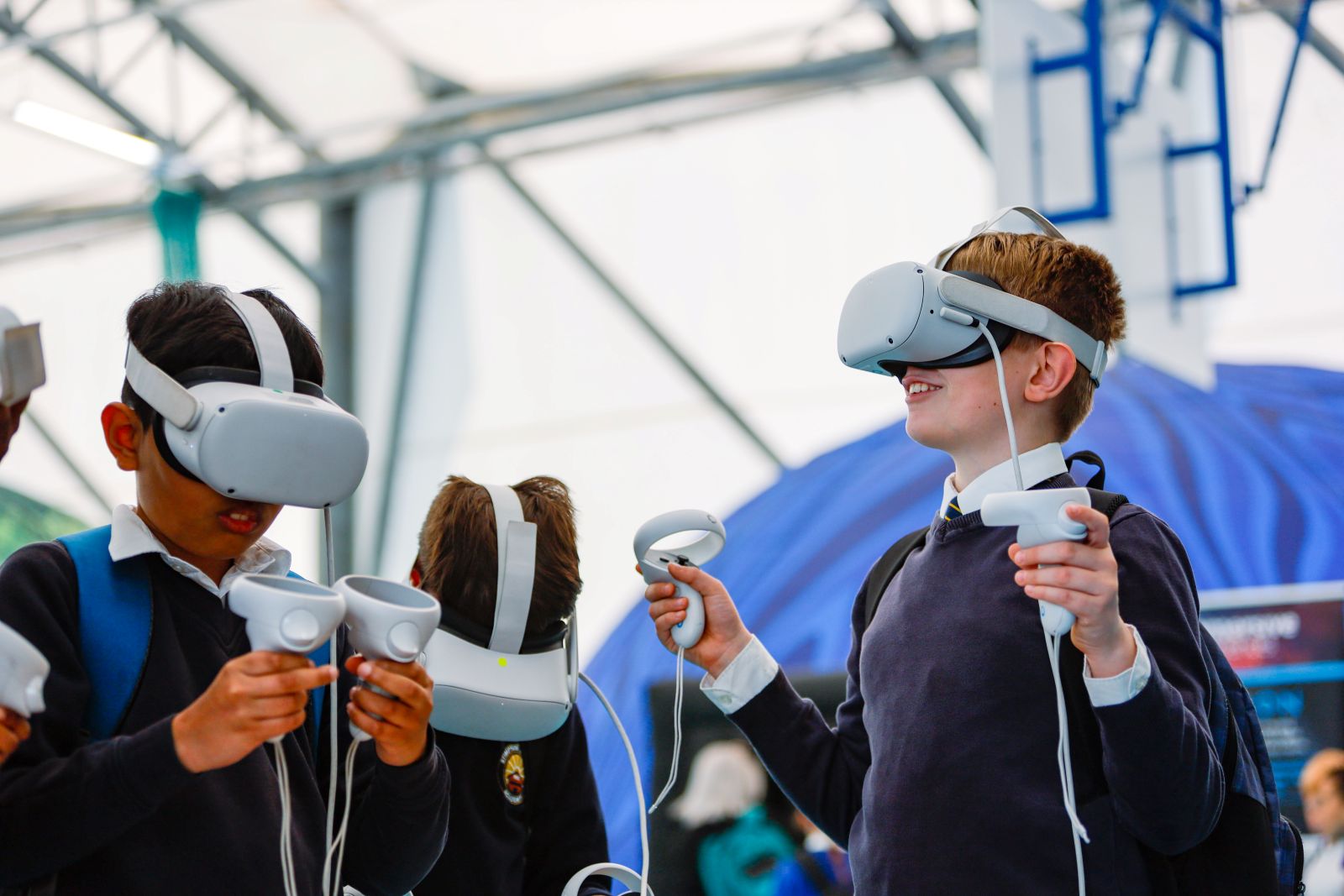
This meant the VR experience closely mirrored the real trip, helping students build a mental map before they arrived. In class, students used the headset to explore the museum virtually. They were able to look around independently, choose where to focus, and practice the route at their own pace.
Sarah noted that this felt very different from looking at photographs or watching a standard video. The immersive format gave learners a sense of agency: they were not simply being shown the space, but actively exploring it. For students who often need extra time to process new environments, that ability to rehearse was central.
The early impact was encouraging. The VR preparation helped reduce anxiety and build excitement before the visit. Only one student chose not to attend the museum trip, whereas the school would normally expect a few more students to opt out. She attributed this partly to the fact that students had seen the environment beforehand and knew what to expect. This approach was later applied to a prom venue for sixth formers, where students could preview another unfamiliar external setting before attending.
The project highlights how technology can be used thoughtfully rather than as a novelty. VR is a familiar and engaging medium for many young people, and so it can be redirected towards wellbeing and inclusion. Instead of asking students to read about a venue or look at a website, the school is using technology to make real-world participation more accessible.
In Sarah’s words, it is about making technology ‘work for us as a school’ and giving students life experiences they might previously have avoided.
Filming with the 360° camera was relatively intuitive, but transferring footage from the camera to a laptop, converting files, and loading them onto the headset proved more time-consuming. The first full cycle—recording, transferring, preparing the files and giving students their first experience—took around a working day once the correct equipment was available.
Accessibility also needs careful consideration. Some students and staff found the headset disorientating, and Sarah recognised that VR would not be suitable for everyone. For learners with sensory sensitivities, the sensation of immersion may be uncomfortable. The project therefore works best as one supportive option among several, rather than a universal solution.
Looking ahead, Sarah hopes the school can build a bank of immersive experiences for common trips and unfamiliar scenarios, such as walks to local shops, cafés, museums and external venues. Ideally, teachers would be able to borrow a headset, select an appropriate video from a resource library, and use it as part of normal preparation for off-site visits. A more cloud-based or easily accessible system would reduce barriers for staff and help the approach become embedded across the school.
Although still at an early stage, the project offers a powerful example of Tech for Good in practice. It shows how immersive technology can be used not simply to impress, but to remove barriers. For students who may find unfamiliar places overwhelming, being able to look around, practice routes and understand what will happen next can make the difference between opting out and joining in.
Sarah’s advice to colleagues looking for their own use case application is that staff need to resource the time as well as the equipment. The headset and camera are important, but they cannot create impact if they sit unused in a cupboard. Staff need protected time to plan, film, test, troubleshoot and reflect. With that support in place, VR has the potential to help learners rehearse unfamiliar situations, reduce anxiety, increase participation and make experiences beyond the classroom feel more achievable.