Clearing is open! Find out more or get in touch 01604 214808.

This one-day CPD course is designed to enhance clinical decision‑making, deepen understanding of functional biomechanics, and support podiatrists in delivering safe, effective, patient‑centred care across both paediatric and adult populations.​
level:PO;top_up:false;international:false;foundation:false;clearing:false;full_time:false;part_time:true;start_month:false;location:Waterside

Paediatric Red Flags and Musculoskeletal Podiatry

Key Facts

  • Duration

    1 Day CPD Event

  • Level

    Post RegistrationPO

Get in touch

CPD ENQUIRIES

CPD@northampton.ac.uk

Updated 30/07/2026

Overview


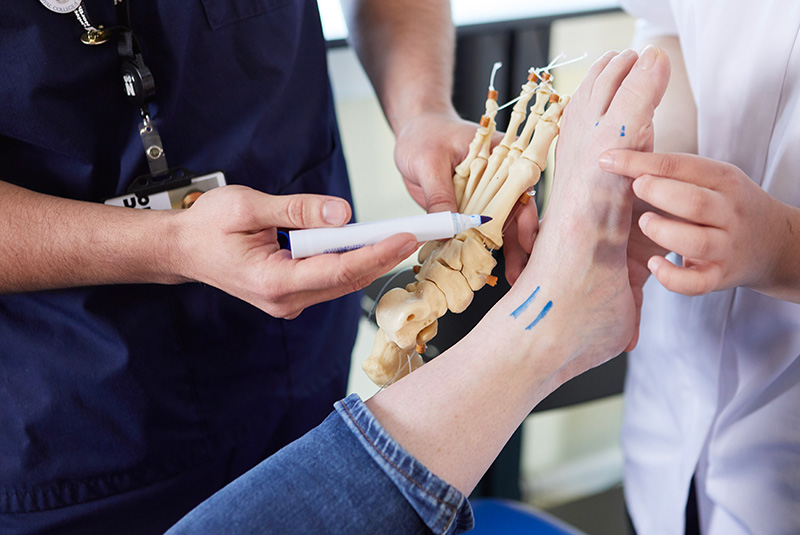
This CPD day is focused on ‘The Limping Child’ and ‘Musculoskeletal podiatry’. These sessions aim to enhance clinical decision‑making, deepen understanding of functional biomechanics, and support podiatrists in delivering safe, effective, patient‑centred care across both paediatric and adult populations.​

Highlights


  • ​​Approximately 6 hours of CPD with certificate of attendance provided
  • ​Explores the assessment of the limping child, covering congenital, developmental, inflammatory, infective, traumatic, neoplastic, and neurological conditions that affect gait and lower-limb function
  • ​Emphasises the podiatrist’s role in recognising biomechanical consequences, identifying red flags, and contributing to multidisciplinary management and timely referral
  • Evidence-based update on the assessment and management of common musculoskeletal foot and ankle conditions, including heel, midfoot, forefoot, Achilles, and ankle pain.

Entry Requirements


  • ​​Open to any registered Podiatrist
  • ​No formal prerequisites beyond HCPC registration.

CPD Mailing List

Sign up to our mailing list and we’ll email you about upcoming opportunities relevant to your professional development in Healthcare.

What You'll Learn


​​Session One: The Limping Child 

  • ​From a podiatric perspective, this session provides a comprehensive overview of the limping child with emphasis on foot and lower-limb function, gait assessment, and the biomechanical consequences of pathology.
  • ​It integrates congenital conditions such as developmental dysplasia of the hip and congenital talipes equinovarus as influences on foot posture and load distribution, alongside developmental disorders like Perthes disease and slipped capital femoral epiphysis that alter proximal mechanics and present with secondary gait changes.
  • Inflammatory and infective causes including juvenile idiopathic arthritis, reactive arthritis, transient synovitis, septic arthritis, and osteomyelitis are discussed in relation to joint involvement, pain patterns, and implications for off-loading and orthotic management.
  • ​The session also reviews common overuse and traction conditions such as Osgood–Schlatter disease, Sever’s disease, chondromalacia patellae, osteochondritis dissecans, fractures, and soft-tissue injury, highlighting activity-related biomechanical stress.
  • Consideration is given to neoplastic and neurological disorders that may manifest with gait deviation, as well as the importance of recognising red-flag features and safeguarding concerns, reinforcing the podiatrist’s role in early detection, functional management, and timely referral within the multidisciplinary team.

​Session Two: Musculoskeletal Podiatry Update 

  • From a musculoskeletal podiatry perspective, this session provides an integrated update on the assessment and management of common lower-limb pain presentations, focusing on heel pain, midfoot pain, forefoot pain, Achilles tendinopathy, and ankle pain within a functional and biomechanical framework.
  • ​It emphasises how regional interdependence, tissue stress, and gait mechanics contribute to symptom development, guiding clinicians in differentiating local pathology from proximal drivers.
  • ​The session reviews evidence-based management strategies including load modification, progressive exercise therapy, foot orthoses and pressure redistribution, footwear optimisation, taping and temporary off-loading, as well as patient education to support self-management.
  • ​Indications for imaging, recognition of red-flag features, and criteria for referral are incorporated throughout, reinforcing a structured clinical reasoning approach that enables podiatrists to deliver targeted, patient-centred care across the spectrum of musculoskeletal foot and ankle disorders.

Fees and Funding


Please contact cpd@northampton.ac.uk to enquire about group bookings.

Staff


Profile photo of Manju Mital