- Faculty/module/cohort: Level 6 Fashion, Textiles & Footwear modules
- Tool(s) Used: Video recording and editing tools, processing/editing tools
- Tool mode(s) used: Audio and video feedback, visual documentation, reflective review
What was the challenge?
One of the ongoing challenges in creative practice subjects is that feedback happens in the moment and then, fairly quickly, it fades. Students leave tutorials or formative reviews with good intentions but later struggle to recall specific comments, references, or suggested next steps, particularly when they are working across multiple projects at once.
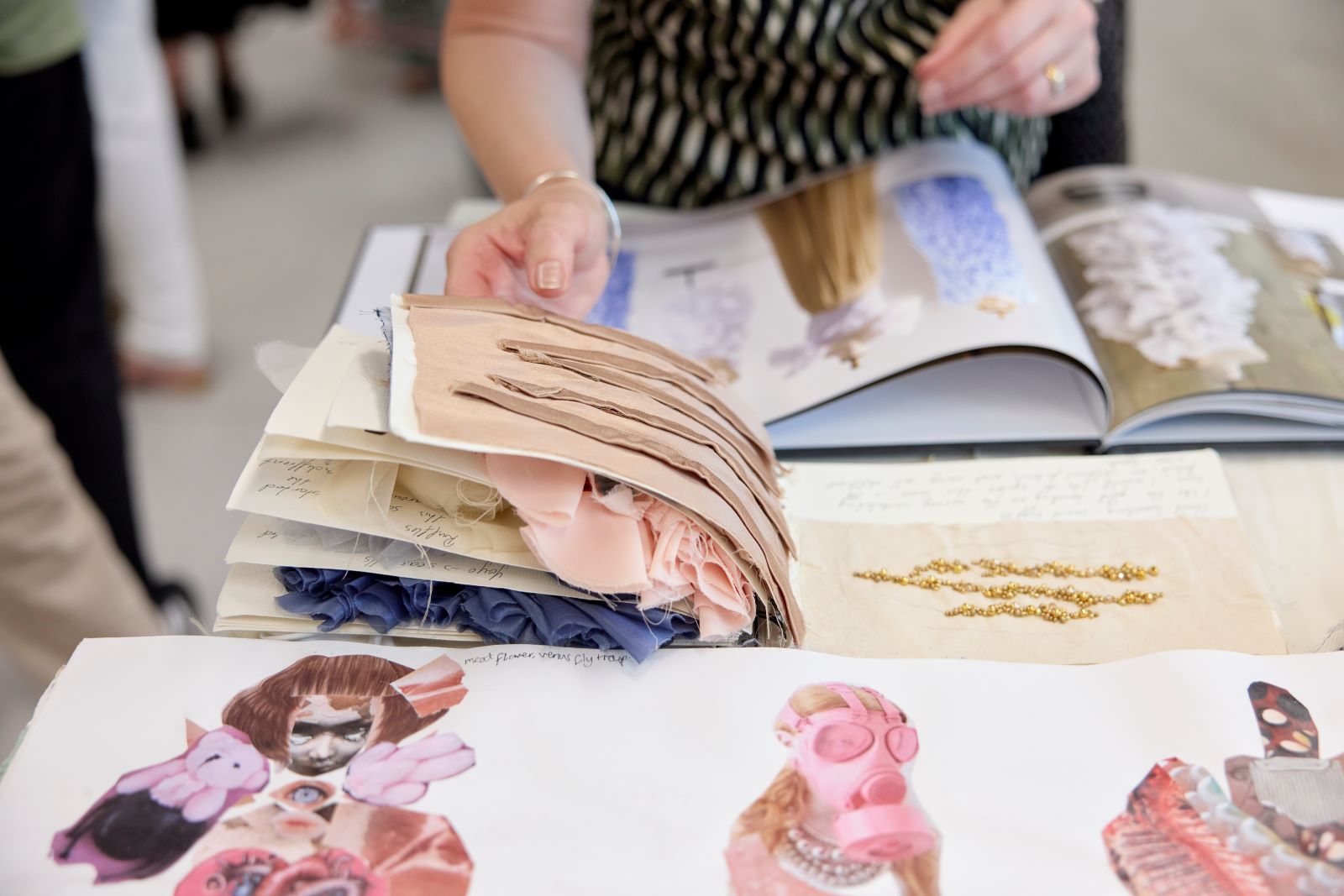
This is especially difficult in fashion and textile practice, where so much of the conversation happens around physical things: samples, sketchbooks, materials,
prototypes. Written feedback doesn’t always capture what was actually being discussed, or why a particular decision for a sample mattered. The aim was to explore whether video could create a more accessible feedback process, something students could return to in their own time, in their own way.
What did you do?
During formative review sessions, I recorded short videos of student presentations, discussions, and tutor feedback conversations. The recordings captured the student explaining their work, physical samples and sketchbooks, tutor observations and suggestions, and the live discussion around development and next steps.
Those videos were then shared with students after the formative feedback session. Rather than relying on written notes taken under pressure, students could pause, replay, and sit with the conversation while physically looking at their own work connecting the verbal feedback directly to visual examples, samples and material decisions. In some cases, light audio editing, topping and tailing or clipping was used to make the recordings easier to navigate, though this was kept minimal.
Multimodal Use
The approach combined spoken feedback, visual documentation, physical creative work, video recording, and reflective learning, which sounds like a lot, but in practice felt like a natural extension of how studio reviews already work. Because fashion and textile work is so visual and material-based, video kept the conversation connected to the actual work presented: samples, sketchbook pages, prototypes, construction details, silhouettes, and sampling experimental outcomes. It also supported students who benefit from hearing tone and emphasis alongside seeing the work being discussed, things that written feedback can’t easily convey.
What did this look like in practice?
The reviews felt more conversational than formal assessment situations, which I think helped. Students presented work-in-progress while we discussed strengths, possible directions, and areas needing further exploration or development. The camera moved between sketchbooks, samples, mood boards, garments, and the student explaining their thinking, following the conversation rather than trying to structure it.
Students revisited the recordings independently on Nile, often while continuing to work in the studio. That combination of watching the feedback while physically handling the work seemed to support a different kind of reflection than reading written comments does. The recordings also caught things that are genuinely hard to put in writing: gestures, pointing to specific details, comparisons between samples, immediate reactions to something visual. Those moments carry meaning that text tends to flatten.
What was the impact?
The most noticeable impact was the quality of reflection it seemed to encourage. Students engaged with feedback more carefully because they could return to it more than once, without the pressure of the live session. Students who find formal critique situations difficult appeared to benefit particularly, having space to process comments afterwards, away from the studio. There was also a stronger sense of continuity between tutorials, students could go back to earlier recordings and see how their thinking had shifted, which helped them track their own progression in a way that’s more difficult to do through written notes alone.
Ethical or practical considerations?
Consent and privacy needed careful handling from the start. Students were told clearly why sessions were being recorded, how the videos would be shared to them, and where they would be stored on their own Tutorial Feedback site on Nile. Keeping that conversation transparent felt important both ethically and in terms of maintaining a comfortable atmosphere in the room.
Practically, file storage, sound quality, and editing time all needed some thought in advance. Studio environments can be noisy, which occasionally affected audio clarity. Over-editing is also worth resisting, the value is in the authenticity of the conversation, not the video production quality.
Reflections and Advice What worked well?
Video slowed the feedback process down for students in a useful way. They became more reflective and seemed to engage more carefully with comments after the
session than during it, which is perhaps how it should be. It also captured the texture of studio-based discussion more effectively than written feedback can do.
What would I refine?
Shorter, segmented clips organised around key themes or action points would make it easier for students to find specific moments quickly rather than scrubbing through a longer recording, optional captions or transcripts to improve accessibility, although this is available to students.
What advice would I give colleagues?
Keep it informal and don’t over produce it, as the value comes from authenticity and clarity, not polished editing of the video. It works particularly well in studio-based or practice-led subjects where physical outcomes, sample, process work, and visual discussion are already central, the video just makes those conversations retrievable.
Any further reflections?
What this reinforced for me was how much students understand feedback through multiple channels at once, seeing, hearing, and contextualising simultaneously. A written comment about a sample is one thing, but watching someone point at it while explaining why it isn’t working yet is quite another.
Quick Start Guide for Colleagues:
- Estimated time required to set up: Low preparation time, though file organisation and sharing systems and uploading to Kaltura are worth consideration and planning.
- Digital skill level required: Low to Moderate
- Common pitfalls to avoid: Over editing unnecessarily, letting sessions run on for too long, keep to the timing of the slot, poor sound quality in busy studio spaces, and not having a clear conversation with students about consent before you start.
- Best suited for: Studio-based learning, creative practice modules, formative critiques, portfolio development, and visually led disciplines such as fashion, textiles, art, and design.