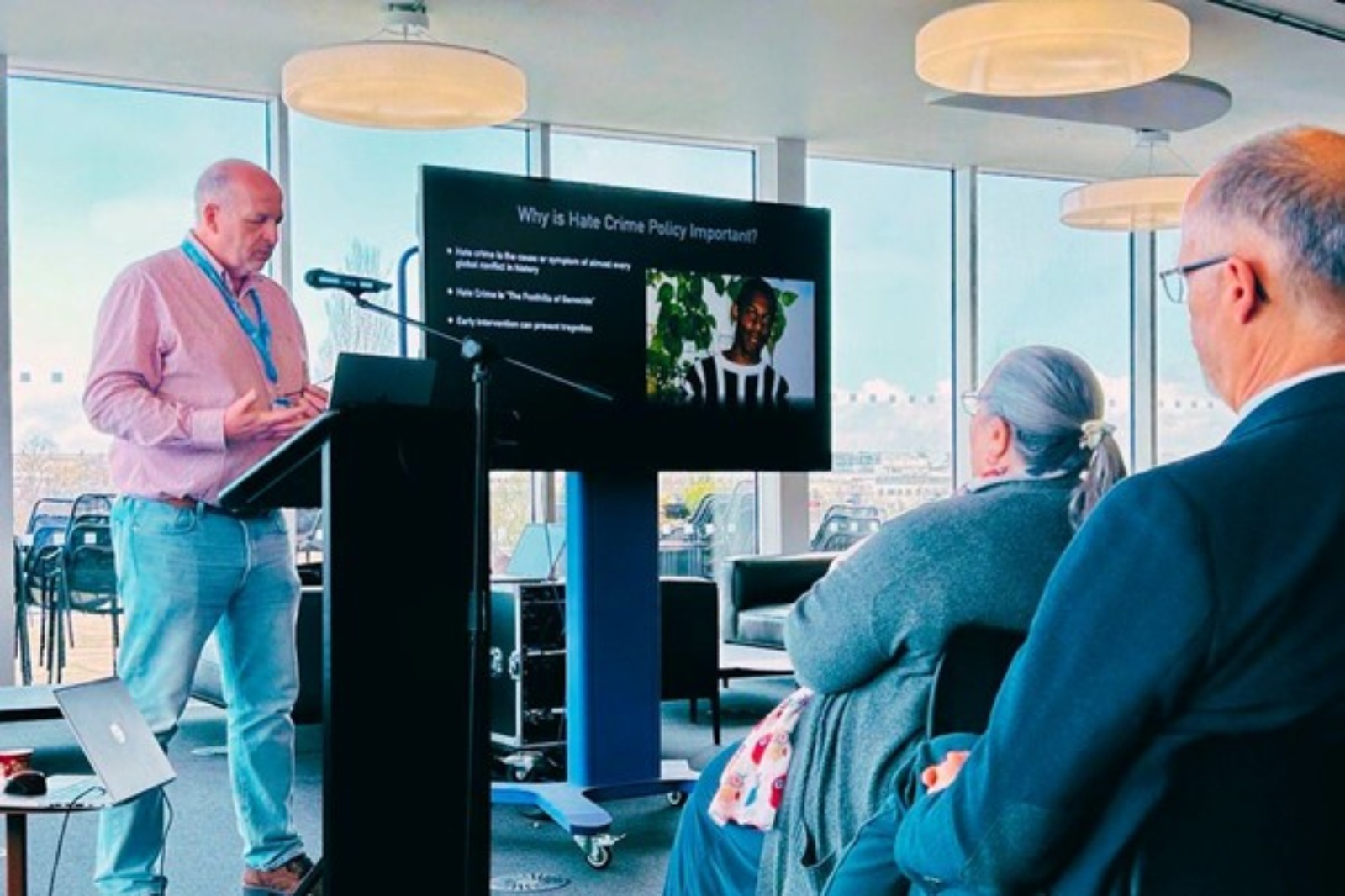
The second University of Northampton (UON) Hate Crime Conference: Stories, Strategies and Systems for Cohesion, was held on Wednesday 25 and Thursday 26 March at UON’s Waterside Campus.
The two‑day event brought together leading national figures in hate crime prevention, policing, victim advocacy and community cohesion to examine the rising challenges facing communities across the UK, and to explore a more effective response.
Day One featured a series of powerful keynote talks mapping the current landscape of hate crime and its impacts. Day Two feature intensive systems‑mapping workshops designed to identify opportunities for reform.
Opening the event, Karen Jones, UON’s Dean of the Faculty of Business and Law, said the conference came at a time of ‘heightened tension, insecurity and social division across Britain,’ reminding the audience that hate crime is not only a criminal justice issue but a threat to wellbeing, institutional trust and social cohesion.
“Behind every statistic lies a human story,” she said. “Stories of individuals targeted for who they are; stories of professionals striving to provide safety within systems that are often fragmented or overstretched.
“This conference embodies our mission to connect research with frontline practice and to challenge prejudice and violence wherever they appear.”
The day’s first keynote was delivered by Alison Vincent, CEO of the Sophie Lancaster Foundation, who used the platform to highlight the enduring human impact of hate‑motivated violence.
The foundation was created after the murder of 20‑year‑old Sophie Lancaster, attacked along with her boyfriend simply for her alternative appearance. Nineteen years on, Alison said the foundation continues to support alternative subcultures who still face discrimination and hostility.
She added: “Our work is about listening to people who experience prejudice every day.
“It’s about supporting them – and most importantly, educating others so we can change mindsets.”
Mike Ainsworth, Chair of the UK Government and NPCC Independent Advisory Groups on Hate Crime, delivered a stark assessment of the national picture.
Describing a “really depressing” rise in hostility, he warned that principles established after the Stephen Lawrence Inquiry are being eroded, leading to a 20% increase in hate crime and a collapse in confidence among disabled and trans communities.
Mike argued that the UK had once been a world leader in tackling hate crime, with cross‑government collaboration, strong civil society partnerships and a victim‑centred approach.
“But the UK is moving away from those principles,” he said, criticising the abandonment of the national Hate Crime Action Plan, the weakening of non‑crime hate incident guidance, and the growing political rhetoric around a hierarchy of hate.
He emphasised that effective change requires no additional public spending, only political will: “The collapse of community cohesion can be reversed – and reversed speedily – if we return to evidence‑based practice, civil society partnership and human rights‑led policing.”
Reflecting on the conference co‑organiser Abdul‑Hye Miah, Senior Lecturer in Criminal Justice Studies, said the first day was designed to bring people into “shared understanding” before moving into collaborative systems workshops on day two.
“Day one perspectives helped us frame a deeper discussion on Day Two about the political, cultural and social forces shaping hate crime today,” he said. “Workshops allowed practitioners and academics to map how our systems interact – and how they can respond more effectively.”