
Robert Lyon
Senior Lecturer in Exercise and Health Psychology
To ensure we guide you through the correct application process, we just need you to answer a few quick questions.
Already applied?
Log in to view updates.
This course offers two separate application routes, depending on whether the application is submitted by the student or an international agent.
Please select your desired length of study from the available options.
This course includes a placement option. Please indicate whether you’d like to apply with or without a placement.
Please select where you would like to study.
All the available academic years are displayed below.
All the available start months for the selected academic year are listed below.
Please review the information below carefully before continuing.
If you need to make any changes, click the < Back button to return to the previous step.
UCAS Code
BSc: C600
BSc with Foundation: C603
Duration
Full Time: 3 years
Part Time: 4 - 6 years
Full Time Foundation: 4 years
BCC - BBC at A Level or,
MMM - DMM at BTEC
Full Time: £9,790
Part Time: £1,630 (per 20 credits)
Integrated Foundation Year: £9,790
study@northampton.ac.uk
0300 303 2772
Updated 16/04/2026
Our BSc Sport and Exercise Science degree focuses on the scientific principles that underpin sport and exercise. Our course is practical-based, stimulating, well-structured and research-informed, covering a range of topic areas including biomechanics, physiology and psychology. The practical elements of our course makes use of purpose-built laboratories to develop your knowledge and understanding of the key issues within sport and exercise science.
We have a strong applied focus and we work consistently through the year with the big three sporting clubs in the area (Northampton Town Football Club, Northampton Saints Rugby and Northants County Cricket) to help you transition from your degree to a real world / working environment.
Based on overall student positivity out of all universities in England
For Satisfied with Teaching in Sports Science
For Satisfied with Feedback in Sports Science
Based on Office for Students (OfS) data from the National Student Survey. Guardian data from the 2026 Sports Science subject table.
This course is endorsed by the Chartered Association of Sport and Exercise Sciences (CASES), the professional body for sport and exercise sciences in the UK. You can read about the benefits of choosing a CASES-endorsed degree course on the CASES website.
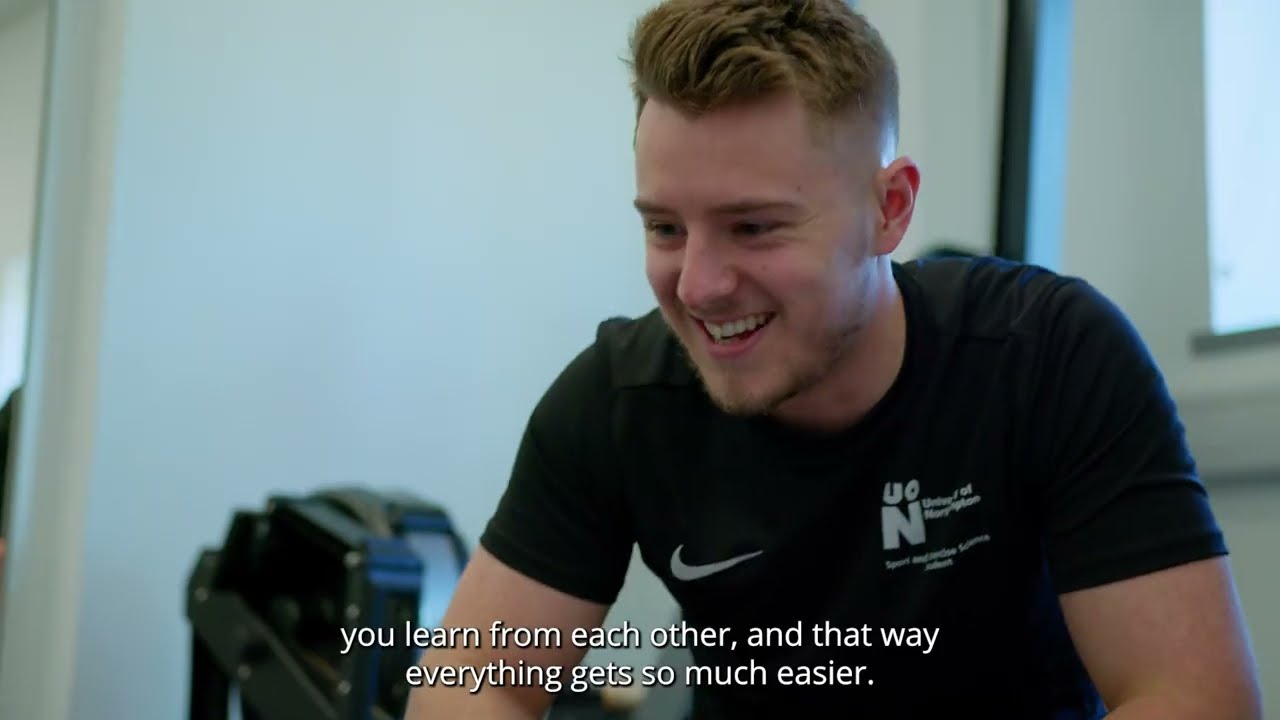
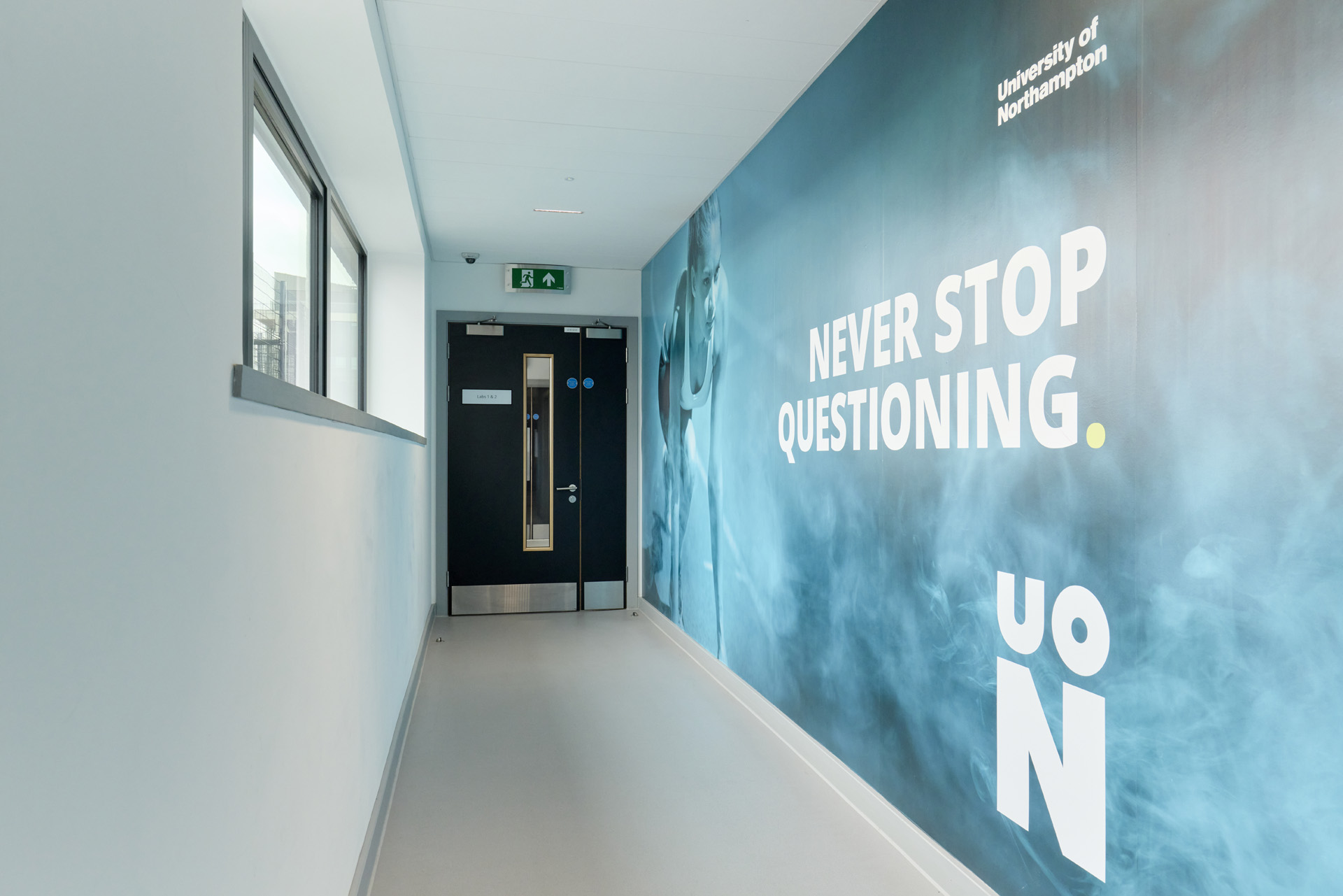
The corridor of the Sports Lab. This is where students can do some of their study.
A typical offer would be:
We welcome applications from students with a mix of A levels and BTEC/Cambridge Technical qualifications.
In addition, you will need to have studied a physical education, sports science or science related subject at A Level, BTEC level 3 diploma or equivalent qualification.
For more information on how to make an application, please visit our How to Apply page.
If you are an International student and would like information on making an application, please see our How to Apply page.
We are also able to welcome applications for September 2025 through clearing
Admission to this foundation sports course is normally:
We welcome applications from students with a mix of A levels and BTEC/Cambridge Technical qualifications.
However, we would also like to hear from you if you have professional or industry experience instead, a range of other qualifications or self-developed subject knowledge that relates to the course that you wish to study.
All International and EU students applying for a course with us must meet the following minimum English language requirements:
For information regarding English language requirements at the University, please see our IELTS page.
“[UON] offered a good environment for the course – I didn’t want to feel like I was just a number in a big lecture room, and I’ve always worked better when my lecturers/teachers know my name and who I am.
At times I can find it hard to focus or give an input in lessons, so being in a condensed class with lecturers that know me has always been a much better and more welcoming environment for me.”
Our purpose-built laboratories allow you to develop your physiological, biomechanical and psychological practical skills. The first year of this exercise science degree provides you with an introduction to the core disciplines that underpin the academic analysis of sport, allowing you to develop your knowledge, understanding and practical/laboratory skills. In years two and three you can choose from a range of modules, allowing you to tailor your studies towards a particular area of interest within Sport and Exercise Science.
In year one you will gain a sound understanding of the fundamentals of Sport and Exercise Science studying topics such as biomechanics, physiology, fitness training methods and psychology.
Once you’ve developed your theoretical knowledge you will explore more specialised areas of sport and exercise science, such as anthropometry and biomechanical analysis, along with further work in the main science-based subjects.
The purpose of this module is to introduce students to the fundamental aspects of pertinent areas of physiology. Recent years have seen a rapid rise in the application of scientific principles to sport performance and within this module links are made between these aspects and exercise performance.
The purpose of this module is provide an introduction to fitness training methods. It is specifically designed to provide an opportunity for students to gain knowledge and understanding of the components of health and fitness, the associated training principles and the methods used to train these components for a variety of populations (sedentary to athlete).
Sport and exercise psychology is an exciting discipline area providing the opportunity to explore the psychological influences on human behaviour. The module offers an introduction to key psychological theories and concepts relevant to sport, exercise, physical activity and coaching contexts.
This module introduces key concepts and practices in applied sport science, developing students¿ academic, research, and professional foundations. Through lectures, practical workshops, and independent tasks, students build understanding of core disciplines, apply basic technical skills safely, interpret evidence effectively, and begin reflective development to enhance professional practice and employability.
This module introduces students to the principles and practices of research in sport and exercise science. It develops foundational skills in designing, conducting, analysing, and presenting research using both quantitative and qualitative methods. Students will learn to identify research questions, review relevant literature, and apply suitable methods to study topics related to sport performance, physical activity, sport performance and health. Emphasis is placed on building basic academic, analytical, and data-handling skills essential for scientific study.
The purpose of this module is provide an introduction to the anatomy of the neuromusculoskeletal system of the human body and how movement is achieved. The broad knowledge base of this subject will be applied to underlying principles of human movement, ranging from the miscroscopic to macroscopic level. The module will help students to develop a hollistic understanding of anatomy and biomechanics of movement varying from athletes to clinical populations.
Please note the modules shown here relate to the academic year 25/26. The modules relating to the academic year 26/27 will be available from July 2026.
At the University of Northampton, everything we do, from funded trips to paid internships, is to give you everything you need to make a difference when you leave.
If you join this full time BSc Sports Science degree, you will receive a laptop when your course begins*. The laptops are built to a bespoke custom specification ideal for use in the seminar room, collaborative group work or studying at home.
Whatever your ambitions, we’re here to help you to achieve them. We’ll support you to identify the skills you’re learning during your course, find your strengths and secure practical experience so that when it comes to applying for jobs or further study you’ll feel confident in standing out from the crowd. We’ve created the Northampton Employment Promise because we are so confident that if you focus on your studies and complete one of our awards you’ll be highly employable by the time you graduate. Putting you in a great position to secure employment or continue your studies.
To check out the full list of perks, visit our Student Perks page or dedicated International Perks page.
*UK fee payers only (see Terms and Conditions for further details).
The Integrated Foundation Year (IFY) offers a new and exciting route into studying for a sports degree, attracting ambitious and driven students who are willing to learn and advance.
If you have non-standard qualifications or do not quite meet the admissions requirements we can offer you a fantastic opportunity to study a four year programme which includes an Integrated Foundation Year. The Integrated Foundation Year will help you develop the theoretical/practical and academic skills you need to successfully progress to the full award.
Our four-year courses will enable you to successfully follow the degree pathway of your choice while gaining essential study skills. The foundation year of your chosen degree will be studied on a full-time basis and is aimed at supporting the transition to higher education. Years two, three and four are then studied as a standard degree programme.
The Sport and Exercise Science degree is delivered through well-designed, coherent and up-to-date modules that cover a wide range of topics. Our teaching staff are all active researchers in their specialist areas and this feeds into the content of the modules. We aim to provide an environment that maximises your engagement, involvement and enjoyment. In addition, you will undertake a variety of activities and encounter new challenges that support your learning, such as your ability to undertake performance analysis and measurements. Throughout the course, you will be exposed to different project designs and will develop your ability to apply both quantitative and qualitative approaches to research questions.
Our modules are delivered within the classroom, sports hall and laboratories in a structured manner. All sessions are supported by our online learning environment, NILE. You can expect two hours of online or face to face contact time each week for each module. Classes are delivered in a variety of methods including lectures, seminars and practical sessions. Our aim is to provide you with opportunities to become actively involved in your learning. For each two hours of contact time you have there will be an additional two – three hours of non-contact directed study. Personal tutorials, and meetings with a personal academic tutor are additional to the time spent in the class.
Our careers and employability module ensures that you are well-prepared for employment.
Evidence supporting the need for exercise for fitness and health is now widely accepted in industry, education, medicine and sport. This increasingly important role has led to a demand for scientific evidence to improve sport performance making sport and exercise science courses a rapidly advancing area of study.
Our BSc Sports Science degree aims to develop your critical skills, allowing you to investigate and analyse issues from a scientific perspective, as well as enhancing your personal and transferable skills.
You will be assessed through coursework and examinations on the BSc Sports and Exercise Science course.
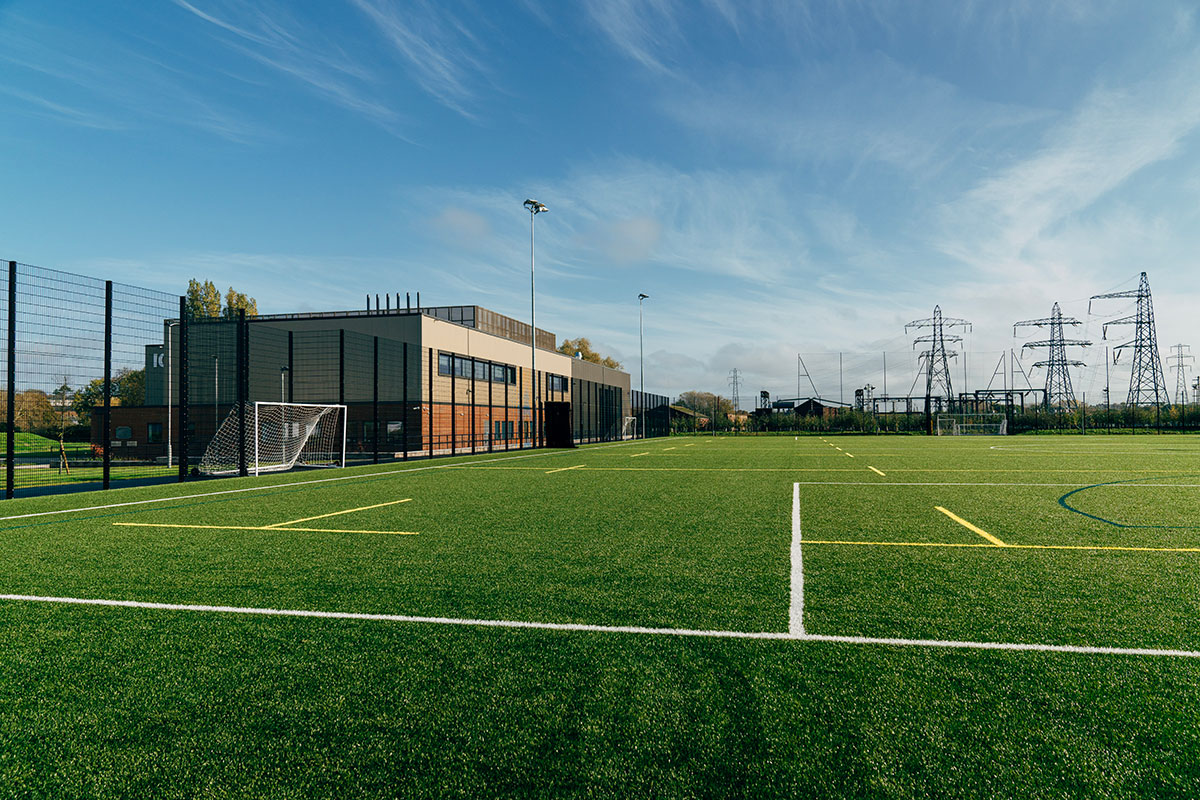
Sports Zone at Waterside is home to a multi-use sports dome suitable for a variety of sports, including football, badminton and netball. The facilities include two sports performance labs, a pair of teaching rooms and changing rooms. In addition, there also are three outdoor multi-use games areas and floodlit full-size all-weather sports pitch. The sports dome is used for teaching, research and recreational activities.
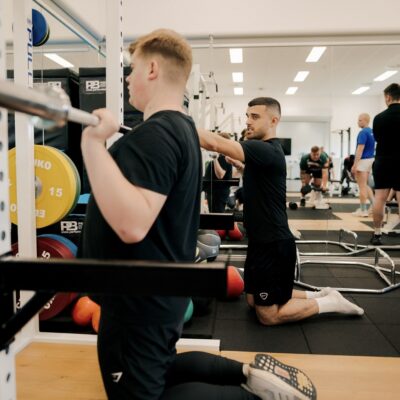
Our purpose-built laboratories and research facilities enable you to undertake performance analysis within a supportive environment.
You are encouraged throughout Sports and Exercise Science degree to become members of the Chartered Association of Sport and Exercise Sciences (CASES). There is also the opportunity for you to gain additional coaching qualifications during the course.
Our BSc Sport and Exercise Science course offers you internship opportunities with three local professional sports clubs in the area.
A sports and exercise science degree lends itself to many different career paths, including sports management, research and working for professional sports clubs.
Further study can lead to specialised roles like sports psychologist or exercise physiologist.
Get all the info you need ahead of time, before you can apply for funding in Spring on our fees and funding pages.
UON will adjust fees annually for UK (Home) Students up to the maximum allowable fee cap set by the Secretary of State for Education.
When assessing an applicant’s eligibility to pay home fees, we use the guidance provided by the UK Council for International Student Affairs (UKCISA) which sets out the regulations that have been decided by the UK Government Department of Education.
Tuition fees quoted for International Students apply only to the 2026/27 academic year. These fees may increase in future years in line with Consumer Price Index (CPI) inflation to reflect rising delivery costs. Any annual increase will be capped at a maximum of 5% of the previous year’s tuition fee. Updated tuition fees will be published on the UON website at least three months before the start of the next academic year.
Additional costs will be incurred if you decide to participate in optional field trips/visits as part of your sports & science course. The exact cost will depend upon the location chosen for the trip.
You will need to wear suitable sports kit for practical sessions as part of the course. We can purchase Sport and Exercise kit (polo shirts and hoodies) but these are not compulsory. The exact cost of kit will be provided at the start of the course.
Costs associated with producing a poster for the final year conference.
For information on the scholarships available to you, please see our scholarships page.
For more information about possible funding options, please visit our Fees and Funding pages.
Fees quoted relate to study in the Academic Year 2025/26 only and may be subject to inflationary increases in future years.
Fees quoted relate to study in the Academic Year 2025/26 only and may be subject to inflationary increases in future years. UON will adjust UK fees annually in line with Government Policy.

Senior Lecturer in Exercise and Health Psychology

Senior Lecturer in Sports & Exercise Science

Lecturer in Sport, Exercise & Health
Senior Lecturer in Sport and Exercise Physiology

Senior Lecturer Sport Exercise Science (Biomechanics)
Professor of Cardiovascular Physiology

Professor of Biomechanics

Associate Professor in Physical Activity & Health
This BSc Sports and Exercise Science degree at the University of Northampton provides you with the skills necessary to secure employment in a number of careers in a range of sectors including opportunities in sport science support, teaching, coaching, performance enhancement and the health and fitness industry.
You will develop excellent communication and analytical skills which will give you a great advantage when looking for employment. You also have the opportunity to continue your academic study.