
Paula Bowles
Senior Lecturer in Criminology
To ensure we guide you through the correct application process, we just need you to answer a few quick questions.
Already applied?
Log in to view updates.
This course offers two separate application routes, depending on whether the application is submitted by the student or an international agent.
Please select your desired length of study from the available options.
This course includes a placement option. Please indicate whether you’d like to apply with or without a placement.
Please select where you would like to study.
All the available academic years are displayed below.
All the available start months for the selected academic year are listed below.
Please review the information below carefully before continuing.
If you need to make any changes, click the < Back button to return to the previous step.

UCAS Code
BA: M930BA with Foundation: M931
Duration
Full Time: 3 Years
Foundation: 4 Years
Part Time: 4 - 6 Years
BBC at A Level
DMM at BTEC
Full Time: £9,790
Part Time: £1,630 (per 20 credit module)
Foundation: £5,760
Updated 08/04/2026
The BA Criminology degree is designed for those who have an interest in crime and the criminal justice system. Through class discussions and independent study we explore both theoretical and practical perspectives of crime.
Criminology tackles questions such as what is crime? How are laws enforced? Why is crime concentrated in particular areas? How do you judge and evaluate evidence? How can crime be prevented? Our Criminology degree provides you with a gradual development of criminological knowledge that progressively advances across the years.
Our Criminology team are celebrating 25 years of Criminology at UON!
Undergraduate students on the Criminology degree receive a student membership to the British Society for Criminology.
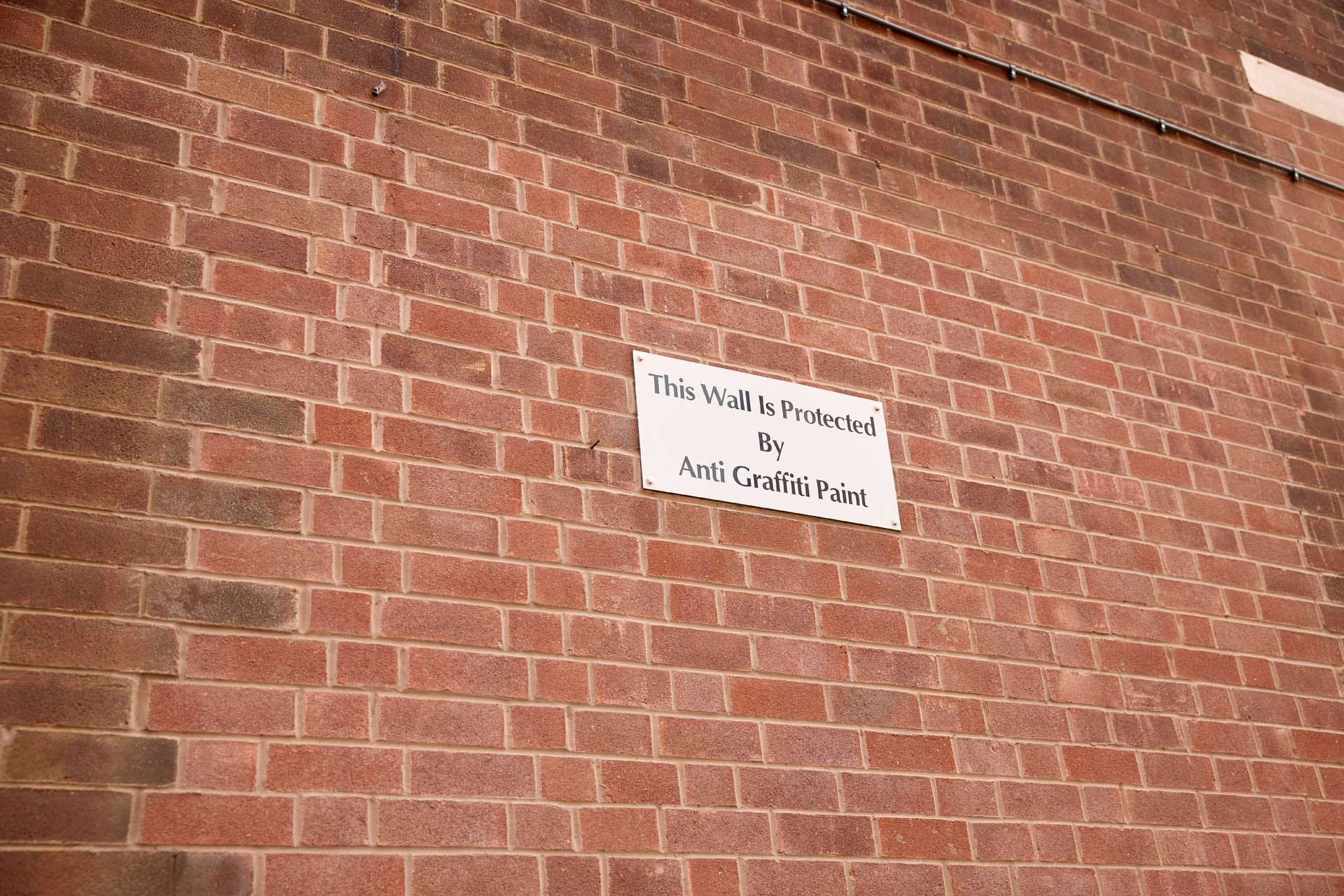
Anti-graffiti sign on a wall in Northampton town centre

A large set of metal shutters showing graffiti in various colours.

Graffiti art on an underpass wall depicting a blue cross-legged elephant figure.

Graffiti on a concrete underpass wall under a bridge
We welcome applications from students with a mix of A levels and BTEC/Cambridge Technical qualifications.
In addition, you will be expected to have achieved GCSE Maths and English at Grade C/4 or above.
An Access Course must include 30 level 3 credits at Merit.
We welcome international applications and applications from those with a range of non-traditional educational or professional qualifications. If you have a lively interest in issues of crime and justice and are prepared to pursue and develop that interest through reading and study then you will be considered for this course.
For information on how to apply to study with us, please see our How to Apply page.
We welcome applications from students with a mix of A levels and BTEC/Cambridge Technical qualifications.
For more information on how to make an application please visit our How to Apply pages for Home and EU, and International students.
All International and EU students applying for a course with us must meet the following minimum English language requirements:
For information regarding English language requirements at the University, please see our IELTS page.
Get all the info you need ahead of time, before you can apply for funding in Spring on our fees and funding pages.
Criminology is a broad discipline that covers a wide range of criminalities, as has been said many times before, the spectrum of crime runs ‘from graffiti to genocide’. The range of Criminology allows people to explore different areas and investigate crime using a variety of perspectives. The focus of Criminology on this degree is multi-disciplinary allowing our graduates to seek employment in fields that suit their knowledge, talents and interests.
Crime is a social construct. This is a lesson that our students learn early on. Therefore, crime is about conventions and perceptions which makes Criminology a theoretical discipline with real life effects. It is those that we consider and measure. Crime is harm, and the way we view it and discuss it, allows us to look our society widely and provide some critical views and interventions.
The ability to critically evaluate and to understand theories on crime gives us the ability to look at the same picture from a different angle. Where others see an object, we see an opportunity for social interaction. When we hear of a crime story, we explore it beyond the media representations. If one asks for an explanation, we provide a perspective of how things are and what could be.
The purpose of this module is to explore a range of theories relating to crime and criminality and to locate these within the broader contexts of social divisions and structural inequalities.
The purpose of this module is to explore the scientific evidence used in relation to questions of crime. A combination of perspectives from positivist, biological, anthropological all the way to forensics will be explored in order to understand of the roots and motivation of criminal behaviour.
This module includes a range of activities designed to facilitate academic development and learning throughout the programme. This module allows students to enhance their existing skills, building confidence towards ‘becoming a criminologist’.
The purpose of this module is introduce students to a variety of concepts and theories, allowing them to understand the scope of criminology as a discipline, and its applicablity to wider academic and public discourse. It will emphasise the importance of evidence based research and how this differs from populist representations of crime.
The purpose of this module is to introduce students to life course criminology, and provide a holistic and crititcal understanding of onset, continuance and desistance. Through engaging with a number of theoretical perspectives, which address the life-course, students will begin to develop an understanding around how delinquency can manifest into criminal careers.
The purpose of this module is to introduce students to the diverse range of research methods applicable to the study of criminology. The module combines practice and theory to allow students to appreciate the variety of ways the study of crime and deviance has been developed through time.
Please note the modules shown here relate to the academic year 25/26. The modules relating to the academic year 26/27 will be available from July 2026.
At the University of Northampton, everything we do, from funded trips to paid internships, is to give you everything you need to make a difference when you leave.
If you join our full-time course, you will receive a laptop when your course begins*. The laptops are built to a bespoke custom specification ideal for use in the seminar room, collaborative group work or studying at home.
Whatever your ambitions, we’re here to help you to achieve them. We’ll support you to identify the skills you’re learning during your course, find your strengths and secure practical experience so that when it comes to applying for jobs or further study you’ll feel confident in standing out from the crowd. We’ve created the Northampton Employment Promise because we are so confident that if you focus on your studies and complete one of our awards you’ll be highly employable by the time you graduate. Putting you in a great position to secure employment or continue your studies.
To check out the full list of perks, visit our Student Perks page or dedicated International Perks page.
As a Criminology university student you will have the added perk of being a member of the British Society of Criminology for the duration of your degree. Benefits of the membership include access to e-bulletins and newsletters, access to free BSC seminars and events, discounted rates to attend BSC events and many more. Check out the full Member Benefits list.
*UK fee payers only (see Terms and Conditions for further details).
The Integrated Foundation Year (IFY) offers a new and exciting route into studying for a degree, attracting ambitious and driven students who are willing to learn and advance.
If you have non-standard qualifications or do not quite meet the admissions requirements for Criminology we can offer you a fantastic opportunity to study a four year Criminology programme which includes a Integrated Foundation Year. The Integrated Foundation Year will help you develop the theoretical/practical and academic skills you need to successfully progress to the full award.
Our four-year courses will enable you to successfully follow the degree pathway of your choice while gaining essential study skills. The foundation year of your chosen degree will be studied on a full-time basis and is aimed at supporting the transition to higher education. Years two, three and four are then studied as a standard degree programme.
Please see our Integrated Foundation Year page for more details.
The Criminology programme offered at the University of Northampton has been established for over 20 years. From the outset, the programme has incorporated a research placement whereby second year students undertake a piece of empirical research in a criminal justice agency. We are one of the few, if only, programmes which offers student membership of the British Society of Criminology, which enables students to engage with some of the important criminological thinkers across a range of different opportunities.
Every Criminology student receives an undergraduate student membership to the British Society of Criminology (BSC) for the entirety of their degree. Benefits of the student membership include access to e-bulletins and newsletters, access to free BSC seminars and events, discounted rates to attend BSC events and many more. Check out the full Member Benefits list.
A criminologist is a social scientist who studies crime, criminal behaviour, and the criminal justice system. They analyse crime statistics, conduct research to determine the causes of crime, and develop theories about criminal behaviour. They also study the responses of the criminal justice system to crime, including law enforcement, courts, and prisons.
There are a variety of assessments used on the BA Criminology degree including essays, case studies, posters and end of year examinations. The assessments allow you to engage with the subject to nurture your talent and cultivate your success.
Completing a criminology degree opens up pathways to a wide range of careers within law enforcement and the legal system. The analytical and critical thinking skills that are gained on this course will provide many transferable and in-demand skillsets that a range of employers will value.
Graduates can go on to have exciting careers* within many different fields including:
*Some of the above careers may require further qualifications after completing a Criminology degree.
The starting salary for a criminology graduate is on average around £24,000. However, there is scope to increase your salary with experience and progression in the criminology space.
As well as the research placement available in year two, there are a variety of opportunities for you to volunteer and gain work experience within a wide range of institutions and organisations of criminological interest. At various points during our criminology course we invite visitors and guest speakers from diverse backgrounds to talk to you about their organisations and the voluntary and paid opportunities with them.
For over quarter of a century now, the University of Northampton has been offering Criminology utilising innovative curricula and developing learning approaches that open doors for the future. We see our students as our future colleagues and our passion and dedication is transferred to them. Our graduates work across the sector; from working in the courts, the probation service, the police, council services, the civil service, the prison service, fraud detection and many other areas. The knowledge and skills they acquire whilst studying Criminology gives them an extra boost and confidence.
This degree in Criminology has been designed to contribute towards achieving the following United Nations Sustainable Development Goal: SDG10 of Reduced Inequalities.
Full Time: £9,790
Part Time: £1,630 per 20 credit module
Integrated Foundation Year: £5,760 for the foundation year; thereafter standard fees apply
Fees quoted relate to study in the Academic Year 2026/27 only and may be subject to inflationary increases in future years. UON will adjust UK fees annually in line with Government Policy.
When assessing an applicant’s eligibility to pay home fees, we use the guidance provided by the UK Council for International Student Affairs (UKCISA) which sets out the regulations that have been decided by the UK Government Department of Education.
Full Time New students: £17,000
Full Time Continuing students: £16,300
Integrated Foundation Year: £17,000 for the foundation year; thereafter standard fees apply
Tuition fees quoted for International Students apply only to the 2026/27 academic year. These fees may increase in future years in line with Consumer Price Index (CPI) inflation to reflect rising delivery costs. Any annual increase will be capped at a maximum of 5% of the previous year’s tuition fee. Updated tuition fees will be published on the UON website at least three months before the start of the next academic year.
There are no additional costs for our criminology courses for students beginning their studies in September 2026. Should this change, applicants and students will be contacted by the university with details of the costs.
For information on the scholarships available to you, please see our scholarships page.
For more information about possible funding options, please visit our Fees and Funding pages.
Fees quoted relate to study in the Academic Year 2025/26 only and may be subject to inflationary increases in future years. UON will adjust UK fees annually in line with Government Policy.

Senior Lecturer in Criminology

Senior Lecturer in Criminology

Senior Lecturer in Criminology

Lecturer in Criminology
Senior Lecturer in Criminology
Lecturer in Criminology

Lecturer in Criminology

Lecturer in Criminology

Senior Lecturer in Criminology
Our Criminology degree is a popular course that will provide you with excellent career prospects. You will develop a range of analytical and critical skills related to criminology that can also be applied to a variety of working environments related to the subject. The course provides a broad critical grounding which could be relevant to careers in policing, probation work, the prison service, the Home Office, the criminal courts, and postgraduate studies.
As the problem of crime has increasingly become a matter of public and political concern, the prevention of crime has been prioritised as a matter of social policy. Whilst traditional ways of working have come under pressure or changed, new innovative and ethically minded perspectives have begun to emerge. The knowledge and skills accumulated by our graduates throughout their studies enables them to become extremely reflective and adaptable. Furthermore, the development of attributes such as empathy, problem-solving, ethical awareness, combined with a strong sense of social justice, make our graduates increasingly relevant and desirable for a variety of different career paths.




The purpose of this module is to engage in debates about critical social issues such as human rights and social harm. The module will draw from theoretical debates in the areas of border criminologies and social harm, considering the roles of social institutions and states in both perpetrating and protecting from harm.